

Quick answer
If a hot air gun is not heating but the blower still runs and the airflow feels normal, the heating element is the usual suspect and the part to check first. If the airflow is weak, uneven or intermittent instead, the fault is usually in the blower — commonly worn carbon brushes. If nothing runs at all, start at the outlet and the cable before opening the tool. On a gun that cuts out after a while and restarts once cool, look at airflow restriction rather than the element.
A hot air gun not heating is a frequent fault on a plastic welding gun, and it is also an easy one to misdiagnose. When the blower keeps running but the air comes out cold, the tool is already telling you something specific about which part has stopped working. Working out whether the fault sits in the heating element, in the motor and its carbon brushes, or in the electrical path from the outlet to the tool saves a wrong purchase and a second repair.
This guide covers the three fault areas we see on the Weldy energy hot air guns we supply, a diagnostic flowchart you can work down in a couple of minutes, and the spare parts that put each fault right.
Hot Air Gun Not Heating: Quick Diagnosis
Before opening anything, describe the fault in terms of what still works. A hot air gun has two active systems — a heating element and a blower — and one supply path feeding both.
| Symptom | What it tells you | Where to look first |
|---|---|---|
| Air flows normally but comes out cold or only slightly warm | The blower and the supply path are working; the heating circuit is not | Heating element |
| Airflow weak, uneven or intermittent; motor noisy, rough or sparking; the gun stops as it warms up | The heat side may be fine, but the blower is no longer delivering enough air | Blower motor and its carbon brushes, then the air inlet and filter |
| Nothing runs — no airflow and no heat | The fault is upstream of both systems | Outlet, plug, cable, extension lead, then the tool's own switch and internal supply |
| The gun runs correctly, then cuts out and restarts once cool | Where a tool has a thermal cut-out, it can interrupt the heating circuit until the tool cools | Restricted airflow: blocked air inlet, contaminated filter, blower condition |
Why Is My Hot Air Gun Blowing Cold Air?
Blowing cold air with the blower running is the symptom we are asked about first, and there are only a handful of realistic causes. They are worth knowing in order, because the fix and the part are different for each one.
- A failed heating element. The element turns electrical energy into heat. If it fails, it can leave an open circuit; the blower keeps working exactly as before and the nozzle stays at ambient temperature. This is the usual cause of cold air on a gun with healthy airflow.
- Restricted airflow damaging the element. When the air inlet or the dust filter is blocked, less air passes over the element and it runs hotter than it should. That shortens element life, can trip the tool's protection, and is a common reason a second element fails after the first replacement.
- A tired blower motor or worn carbon brushes. The motor may still turn, but too slowly to move enough air across the element. Air coming out warm rather than hot, with a weak flow, points here.
- The wrong supply voltage version. The energy hot air guns are supplied in separate 120 V and 230 V versions. A 230 V unit is not rated for direct operation from a 120 V supply and may not operate correctly. Do not use it this way. If you are unsure which version you have, the rating plate settles it — our 120 V vs 230 V hot air gun guide covers how to read it.
- Voltage drop on a long extension lead. Excessive voltage drop reduces the heating power available to the tool and can slow temperature recovery or prevent it from maintaining the required working temperature under load.
- The tool's own overheating protection. The energy HT1600D is listed with integrated overheating protection and a cool-down function. If it shuts the heating circuit down and recovers once cool, treat that as a warning about airflow.
Which Fault Is It? Work Down This Chart
Three questions separate the three fault areas. Answer them before you order anything.
Whatever the symptom, disconnect the tool from the supply and let it cool before you inspect anything. Do not test a hot air gun while it is connected to power.
How the Heating Element, Blower and Electrical Supply Work
The heating element
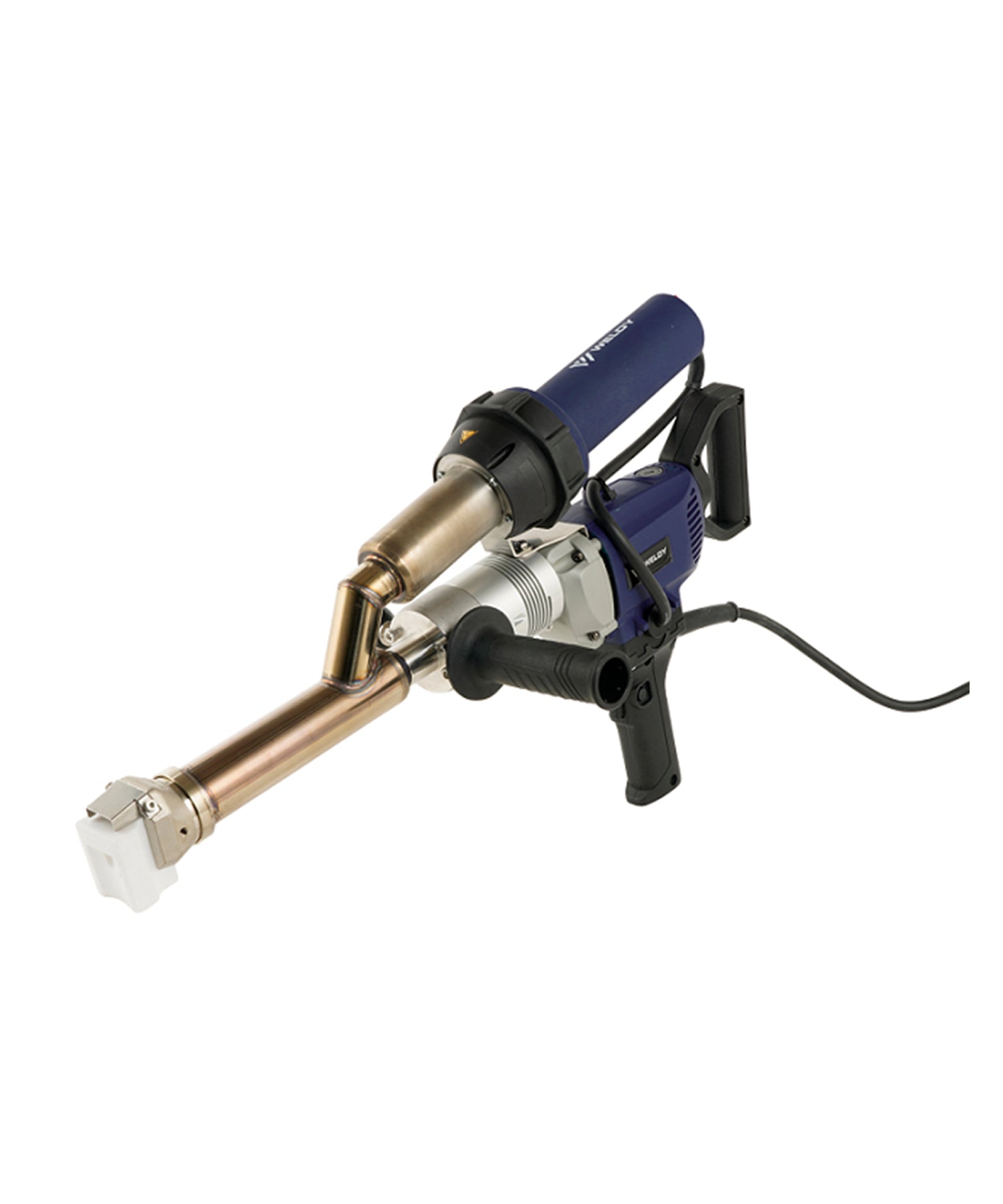
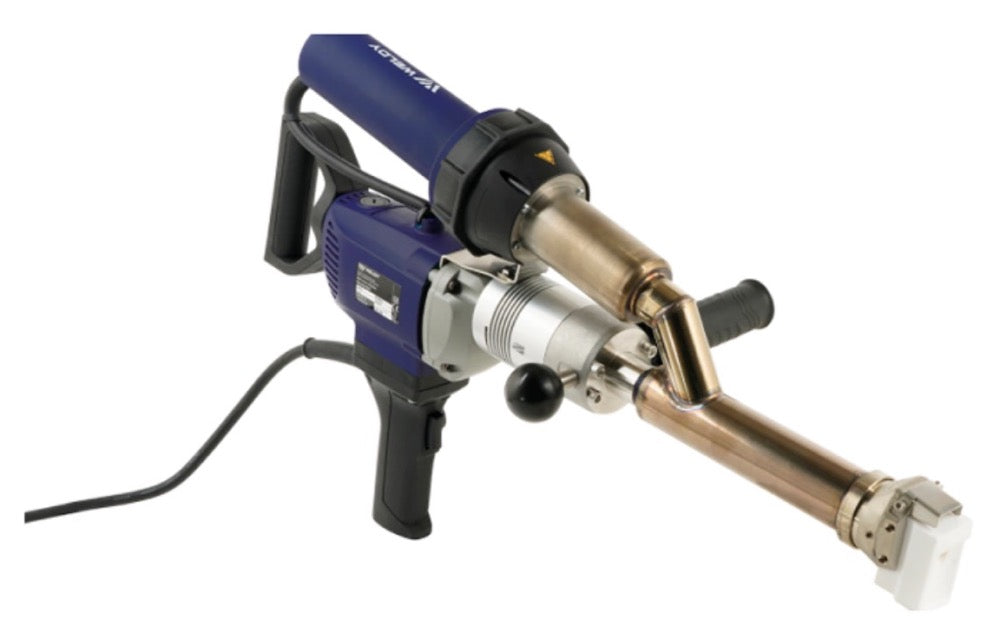
The heating element turns electrical energy into heat, and the blower pushes air across it and out through the nozzle. On the Weldy energy HT1600 the housing carries a ceramic element, and like every part in the hot air path it has a service life. A failed element is the classic reason a gun blows cold air while the blower sounds normal.
The motor and its carbon brushes
The blower is driven by an electric motor. The brush motors used in this class of tool feed current into the rotating part through carbon brushes, and those brushes are a wear item: they shorten with use, contact weakens, and the motor loses speed or becomes intermittent. A gun with a sound element and a tired blower still feels cold at the nozzle, because there is not enough air moving across the element to carry the heat to the workpiece.
The electrical path
Everything between the outlet and the tool belongs to this group: the plug, the cable, any extension lead, the supply voltage itself, and the switch and internal wiring inside the tool. Faults here tend to take out the whole tool rather than one system, which makes them easy to separate from a worn element or blower.
Heating Element Faults: What You Notice
A failed heating element is the classic cold-air fault, and the symptoms repeat from tool to tool:
- Cold air with normal airflow. The blower sounds right, the airflow is unchanged, and the outlet temperature never rises.
- No rise at any setting. With the temperature control swept through its range the air stays at ambient, because a failed element can leave an open circuit, so heat output drops or stops.
- Reduced heat or slow recovery. A partially damaged element can still give some heat, but the gun struggles to hold the set temperature under load.
- Failure after restricted airflow. An element run with a blocked inlet or a contaminated filter can fail early, because heat is not being carried away from it.
A visual check may show a broken or discoloured element, but the decisive point is the article number: the elements for the ENERGY HT1600, the ENERGY HT1600D with digital control and the ENERGY HT3400 are listed as separate parts and are not listed as interchangeable between models.

Hot Air Gun Has Weak Airflow: Motor, Carbon Brushes or Blocked Filter?
If the gun produces heat but not enough air, the element is unlikely to be the problem. Look at the blower instead.
Carbon brushes are a wear item in a brush motor and a common point of failure. The signs that a set is near the end of its life are consistent:
- Airflow that drops off during a shift, or that comes and goes.
- A motor running at a lower speed than before, or stopping once the tool is warm and starting again after it has cooled.
- Visible sparking around the motor vents, a rougher note, or a burning smell that is not coming from the workpiece.
- The gun running hot because the blower is no longer moving enough air across the element.
Carbon brushes are a low-cost consumable and are supplied in pairs for the blower motor of the ENERGY guns. Replacing them is a service task: disconnect the tool first, and if you are not confident about opening the housing, have the tool serviced rather than forcing it. Opening a tool can also affect a warranty claim, so contact us before you dismantle anything still under warranty.
Airflow problems are not always electrical: a blocked air inlet, a clogged dust filter or a damaged blower produce similar symptoms, so clear the air path before ordering parts — the routine is in our hot air gun maintenance and storage guide. Nozzle and accessory selection for these guns is covered separately in our plastic welding nozzle guide.
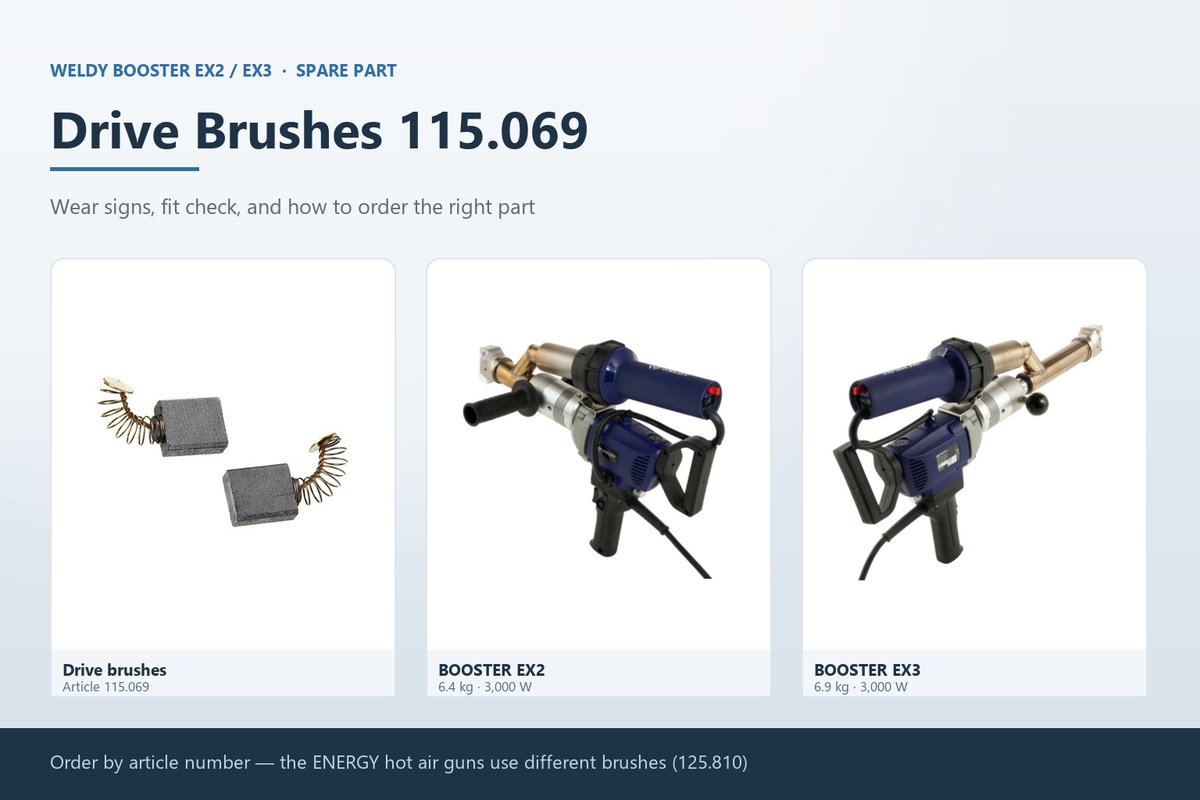
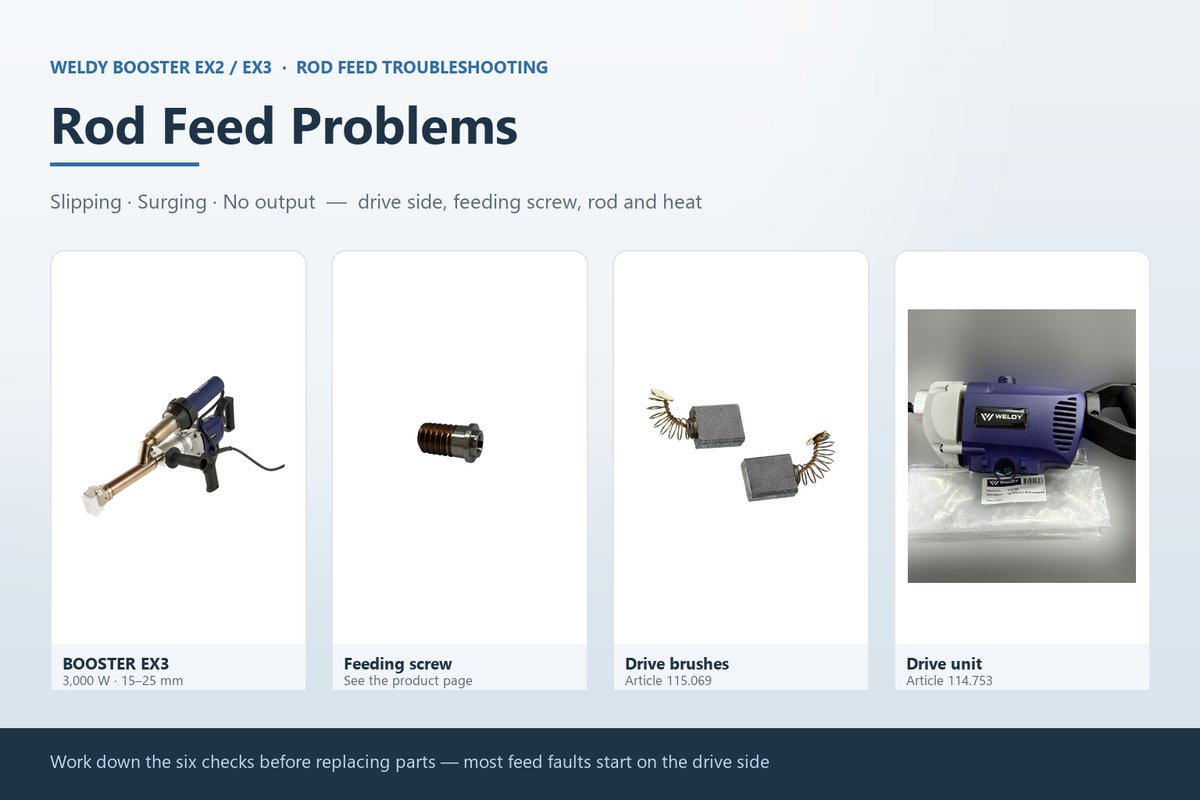
One part that does not belong in this list: the drive brushes used on the BOOSTER EX2 and EX3 extrusion welders are a different item for a different tool, and they are not listed for use in the hot air guns.

Hot Air Gun Has No Power: Supply, Cable or Internal Electrical Fault?
When nothing runs at all, work backwards from the outlet.
- Confirm the supply voltage version of the tool. For the versions compared in this guide, Weldy offers separate 120 V and 230 V variants of the energy hot air guns. They are not switchable dual-voltage tools, and a 230 V unit is not rated for direct operation from a 120 V supply and may not operate correctly. Do not use it this way. Our 120 V vs 230 V guide explains how to identify the version you have. Where a crew works across markets, choose the voltage version that matches the intended site supply rather than relying on a plug adapter or improvised voltage conversion.
- Check the plug, cable and strain relief. Cuts, crushed sections, heat damage near the handle, or a loose or discoloured plug are all reasons to have the cable replaced by a qualified technician.
- Check the extension lead. Long, thin leads increase voltage drop, and the heating side of a gun suffers first. Excessive voltage drop reduces the heating power available to the tool and can slow temperature recovery or prevent it from maintaining the required working temperature under load. If you suspect the lead, shorten the run or move to a nearer outlet and see whether the fault persists.
- Check the outlet itself. Confirm the supply is live and is not shared with a load that trips or sags. In North America, 208 V and 240 V supplies are also encountered. Do not assume the two are interchangeable: the nominal voltages differ, and the wiring arrangement and plug differ as well. If you intend to run a tool from one of these supplies, confirm the compatibility with us before ordering.
- Then look inside. If the supply, cable and lead all check out and the tool still does nothing, the fault is inside the tool. Have it inspected by a qualified technician rather than working on it live.
Do not modify a plug, bypass a switch, or test a tool with the housing open and the supply connected. Electrical checks belong with a qualified electrician, and the rating plate on the tool is the reference for which version you actually have.
HT1600 vs HT1600D vs HT3400: Check Your Model Before Ordering
The spare parts in this guide fit the energy hot air gun range, so knowing which model you have is the first step — the heating elements differ between them.
| Model | Power | Temperature | Airflow | Temperature setting | Nozzle connection | Weight |
|---|---|---|---|---|---|---|
| Weldy energy HT1600 | 1,600 W | 40–700 °C | 240 l/min | Stepless | Ø 31.5 mm | 0.99 kg |
| Weldy energy HT1600D | 1,600 W | 40–620 °C | 120–240 l/min | Stepless, digital | Ø 31.5 mm | 1.2 kg |
| Weldy energy HT3400 | 3,400 W | 40–650 °C | 320 l/min | Stepless | Ø 50 mm | 1.28 kg |
The HT1600D shows a numeric temperature setting on the LCD and allows the airflow to be adjusted as well as the temperature, while the HT1600 and HT3400 use a stepless temperature dial. It is also the model listed with integrated overheating protection and a cool-down function. The Ø 31.5 mm and Ø 50 mm nozzle connections are not interchangeable, so order nozzles to suit the gun you are running. If you are choosing between the models rather than fixing one, our energy kit selection guide compares the kits they ship in.
Before You Order a Spare Part
Match the symptom to the fault area above, then order by article number rather than by appearance — element assemblies for different models can look similar and are not interchangeable.
| Part | Fits | Article number |
|---|---|---|
| Heating element, 230 V | Weldy energy HT1600 | 123.805 |
| Heating element, 230 V, digital control | Weldy energy HT1600D | 158.802 |
| Heating element, 230 V | Weldy energy HT3400 | 124.322 |
| Carbon brushes for the blower motor | Weldy energy hot air guns | 125.810 |
The heating elements we list for these guns are 230 V articles. If your gun is a 120 V version, send us the model and the details from the rating plate, and we will confirm the correct spare part for your tool before you order. Our heating element comparison sets out all five Weldy element SKUs side by side if you want the wider picture.
Repair or Replace?
A heating element or a set of carbon brushes is a part swap, and both are inexpensive relative to the tool, so repair is usually the practical first option.
| Fault | Usually repair? | Typical action |
|---|---|---|
| Heating element | Yes | Replace with the element listed for your model |
| Carbon brushes | Yes | Replace both brushes as a pair |
| Power cable | Usually | Replace by a qualified technician |
| Switch or internal wiring | Depends | Inspect before ordering parts |
| Blower motor | Depends | Compare the repair cost with the age of the tool |
| Digital control fault | Depends | Professional diagnosis |
The decision is less clear when the symptom points inside the tool rather than at a wear part. Then the answer depends on the age of the tool, how hard it works and whether the same fault has come back. Send us the model, the rating plate details and the symptom.
7 Checks Before Replacing the Heating Element
Work through these before ordering anything. They separate a failed element from a supply problem, a blocked air path or a worn blower.
- Confirm the voltage version of the tool against the supply you will work from — the rating plate settles it.
- Check the supply, plug and cable, and confirm the outlet is live and not shared with a heavy load.
- Check the extension lead — on a long run, excessive voltage drop reduces the heating power available to the tool.
- Turn the temperature control up and confirm the setpoint is above ambient.
- Confirm the blower runs and the airflow feels normal at the nozzle.
- Disconnect the tool, let it cool, and clear the air inlet and the dust filter.
- If the airflow is healthy and the air is still cold, order the element by article number for your model and voltage version.
Hot Air Guns, Heating Elements and Brushes at Weissenberg Store
The guns and spares used in this guide are in our hot air gun collection, including the Weldy energy HT1600 and the HT1600D with digital control. As a Weldy distributor we supply genuine Weldy spare parts and can match a part to a fault before you order — contact our technical team and we will confirm the correct part for your tool.
If you are not sure which part has failed, send us the model, the voltage version from the rating plate and what the gun is doing — identifying the right part before the order is placed is quicker than after it arrives. These guides are written by the Weissenberg technical team.
Shop hot air guns and spare parts at Weissenberg Store








Leave a comment
This site is protected by hCaptcha and the hCaptcha Privacy Policy and Terms of Service apply.