
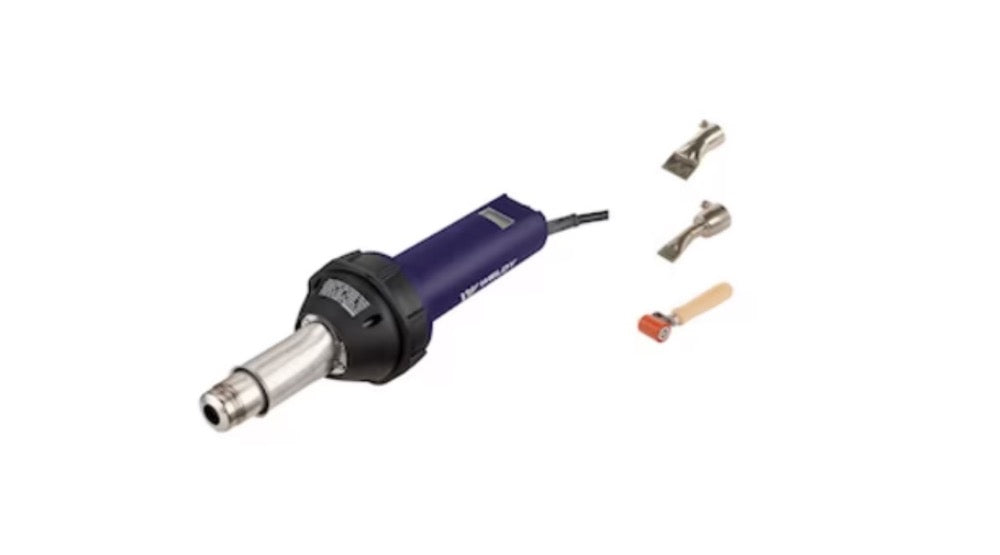
As an efficient and multifunctional tool, the hot air gun is widely used in fields such as electronic maintenance, plastic welding, paint peeling, and heat shrink tubing processing. However, many users often neglect maintenance and storage during use, resulting in shortened equipment lifespan or decreased performance. Proper daily maintenance and storage can not only extend the service life of the hot air gun, but also ensure its stability and safety during operation. This article will provide a detailed introduction to the maintenance methods and storage techniques of the hot air gun, helping you maximize the value of the equipment.
Correct operation in daily use
The correct operation method is the key to extending the life of the hot air gun, improper use may cause damage to internal components or reduce equipment efficiency. Here are several important usage points:
1. Avoid prolonged high load operation
Continuous operation of the hot air gun in high temperature mode can cause overheating of the heating element, accelerating aging. It is recommended to use intermittently, especially in high temperature settings (such as above 500 ℃), and pause for 2-3 minutes every 10-15 minutes to allow the equipment to cool naturally. Although some high-end models have temperature control protection functions, they still need to avoid long-term high load operation to extend their service life.
2. Choose the appropriate temperature and air volume
Different tasks require different temperature and air volume settings, and excessively high temperatures may damage plastic parts or electronic components. For example:
Welding electronic components: 200-350 ℃
Shrinkage of heat shrink tubing: 150-250 ℃
Paint peeling: 400-600 ℃
Before use, please refer to the instruction manual to ensure that the parameters meet the requirements and avoid affecting work efficiency and equipment lifespan due to high or low temperatures.
3. Keep the air inlet and outlet unobstructed
Blocking the air inlet can cause the motor to overheat, while blocking the air outlet may cause a sudden increase in internal temperature, affecting performance. Regularly check if the air duct is unobstructed and avoid using it in environments with high levels of dust. In addition, do not place the hot air gun flat or upside down during use to prevent foreign objects from entering the interior and causing damage.
Following the above operating procedures can not only improve work efficiency, but also effectively extend the service life of the hot air gun, ensuring its long-term stable operation
Daily Cleaning and Maintenance Guide
Regular cleaning and maintenance of the hot air gun are key to ensuring long-term stable operation of the equipment. Standardized maintenance not only extends the service life, but also ensures safe use. The following are detailed maintenance methods:
Key points for external cleaning
(1) Body cleaning: After the device has completely cooled down, use a wrung out microfiber cloth to wipe the outer shell. Pay special attention to the cleanliness of the handle and switch parts to avoid sweat stains and corrosion.
(2) Nozzle maintenance: Check the condition of the nozzle weekly and use the accompanying needle to clean any residue. Stubborn stains can be treated with a neutral cleaner combined with a soft bristled brush.
(3) Cleaning taboos: It is strictly prohibited to use organic solvents such as alcohol and acetone, as they can accelerate the aging of plastic parts. It is recommended to use a professional electronic equipment cleaner with a pH value of 6-8.
Internal maintenance standards
(1) Heating element inspection: Remove the protective cover every month to check the status of the heating wire. If oxidation or deformation is found, it should be replaced immediately. Suggest keeping a set of original heating wires as backup.
(2) Cooling system maintenance: Clean the fan blades with compressed air (pressure ≤ 0.3MPa) every quarter, and add high-temperature resistant lubricating grease to the bearings.
(3) Circuit safety inspection: Before each use, check whether the insulation layer of the power cord is intact and whether the plug contact is good. If the cable is found to be hardened or damaged, it should be stopped immediately.
Suggest establishing a maintenance ledger to record the time, content, and issues discovered during each maintenance. Professional users can conduct a comprehensive inspection every six months, including measuring insulation resistance and other parameters. Through systematic maintenance, the hot air gun can be kept in optimal working condition.
Scientific Storage Guidelines
The correct storage method is the key to ensuring the long-term performance of the hot air gun. The following are professional level storage recommendations:
Key points of environmental control
(1) Temperature and humidity management: Choose a storage environment with a relative humidity of 40-60% and a temperature of 10-30 ℃, equipped with a temperature and humidity meter for real-time monitoring
(2) Avoid light and dust: Store in anti-static storage cabinets to prevent plastic brittleness caused by ultraviolet radiation
(3) Safety distance: Maintain a distance of at least 10cm from other tools to prevent compression and collision
Professional storage solution
(1) Original packaging system: use the customized foam in the packaging box to fix the body, with 2-3 bags of silica gel desiccant inside
(2) Suspended storage: using dedicated hooks with rubber coating to ensure ventilation and prevent damage to the casing
(3) Accessory Management System: Use PP material storage boxes with partitions to store nozzles and other accessories, and label specifications and parameters
Special precautions for long-term storage
(1) Monthly power on inspection: Conduct 5-minute no-load operation on hot air guns that have been idle for more than one month
(2) Seasonal maintenance: Strengthen moisture-proof measures before the rainy season and thoroughly clean before storing in winter
(3) Safety warning: Set up a "precision instrument" label in the storage area to avoid accidental operation by others
Suggest establishing equipment storage archives to record storage time, environmental parameters, and maintenance records. Professional users may consider equipping a dedicated storage room with constant temperature and humidity to ensure that the equipment is in optimal standby mode.
Fault diagnosis and emergency response plan
Abnormal heating function (code E1)
Fault manifestation: No hot air output but the fan is running normally
Troubleshooting steps:
(1) Prioritize checking the power system: Use a multimeter to measure the socket voltage (220V ± 10%)
(2) Dismantling inspection: Use a resistance meter to test the resistance value of the heating wire (normal value 15-25 Ω)
(3) Replacement suggestion: Choose original heating elements with the same specifications, and conduct a 10 minute aging test after installation
Abnormal airflow (code E2)
Typical symptoms: Decrease in air output by more than 30% accompanied by abnormal noise
Processing procedure:
(1) After power outage, use compressed air (0.2MPa) to clean the air duct in reverse direction
(2) Disassemble the fan assembly and lubricate the bearings with Mobil XHP222
(3) Correct the dynamic balance of the fan blades (error ≤ 0.5g)
Overheating protection triggered (code E3)
Emergency plan:
(1) Stop the homework immediately and let it cool naturally for 30 minutes
(2) Checklist:
Cleanliness of air inlet filter screen
Environmental temperature (ventilation needs to be improved if it exceeds 40 ℃)
Continuous working hours (recommended to be equipped with a timed reminder device)
Professional suggestion: Establish a fault code log to record the specific operating parameters of each exception. For repeated E3 alarms, it is recommended to install an auxiliary cooling system. Important equipment should undergo preventive maintenance and testing every quarter.
As a practitioner who has been using hot air guns for a long time, I would like to share some personally tested and effective equipment maintenance tips. After years of practice, I have summarized the following key experiences for extending the service life of hot air guns:
Firstly, I have developed the habit of using the "three-step cleaning method". After each use, I wait for the device to completely cool down. First, I clean the nozzle residue with a soft bristled brush, then wipe the body with a slightly damp non-woven fabric, and finally use an air blow to remove the dust from the heat dissipation holes. This simple 5-minute cleaning process has prevented my hot air gun from getting clogged in the past 3 years.
Secondly, I pay special attention to controlling the use of rhythm. When dealing with heavy workloads, I will set a phone timer and strictly follow the cycle of "working for 20 minutes and resting for 5 minutes". This habit not only protects the equipment, but also allows me to maintain a better working condition. I remember the experience of almost burning out the heating wire during continuous work, and I dare not let the equipment run at overload anymore.
In terms of storage, I have specially prepared a toolbox with a moisture-proof layer. A temperature and humidity meter and desiccant are placed inside the box to ensure that the storage environment is always maintained within a suitable range. All accessories are stored in separate compartments, which are neat and easy to access.
These seemingly simple habits have allowed me to use my hot air gun almost 2 years longer than my colleagues' similar devices. Now this device still maintains 90% of its new performance, which makes me deeply realize that good usage habits are the best maintenance.







Leave a comment
This site is protected by hCaptcha and the hCaptcha Privacy Policy and Terms of Service apply.