
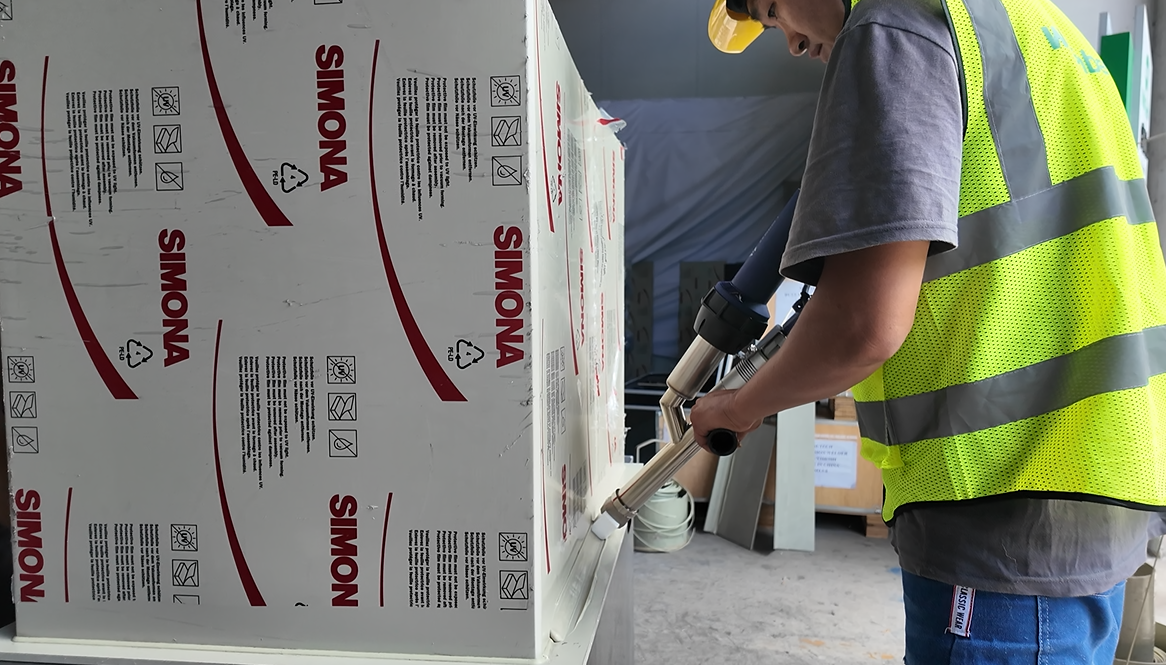
Introduction: Why Extrusion Welding Matters in Industrial Fabrication
When fabricating thick-section thermoplastic structures—chemical storage tanks, HDPE pipe systems, landfill liners, aquaculture enclosures—the welding method you choose directly determines structural integrity and service life. Extrusion welding deposits a continuous bead of molten homopolymer into a prepared joint in a single pass, achieving deposition rates 5–10× faster than conventional hot gas welding and producing welds with strength approaching 90–95% of parent material.
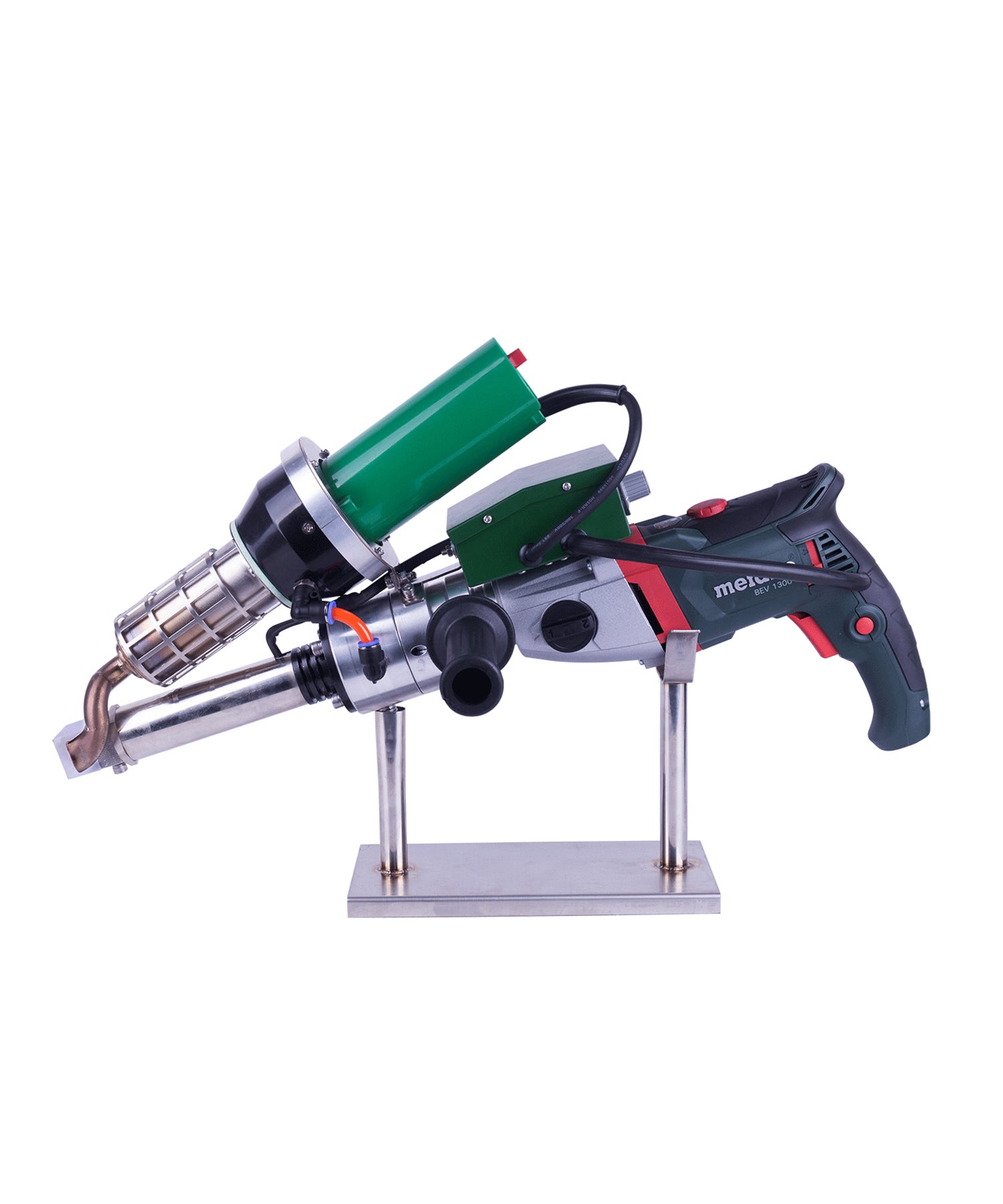
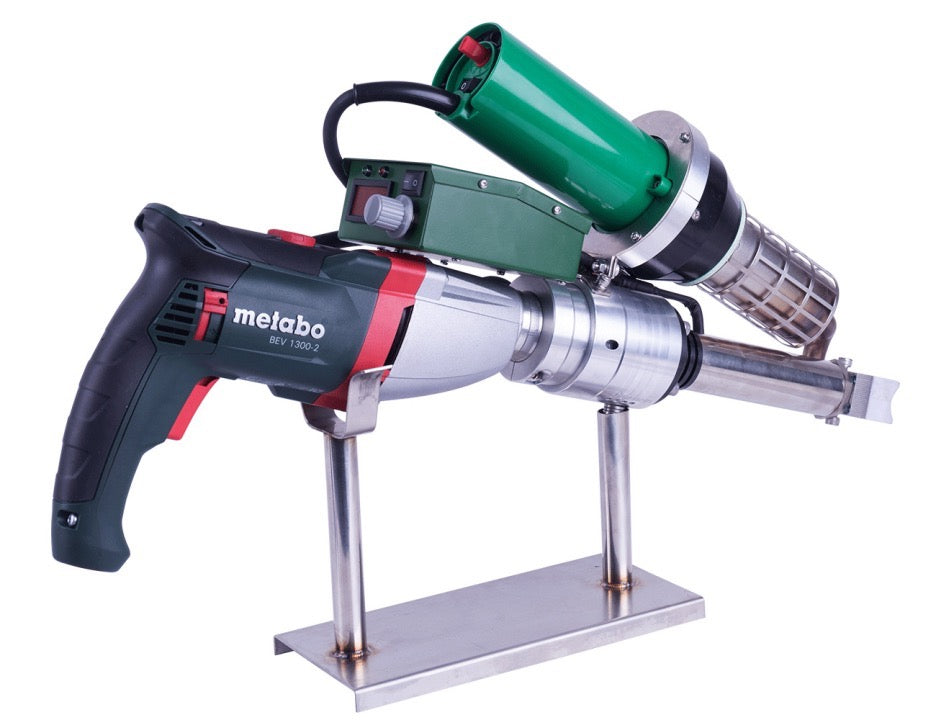
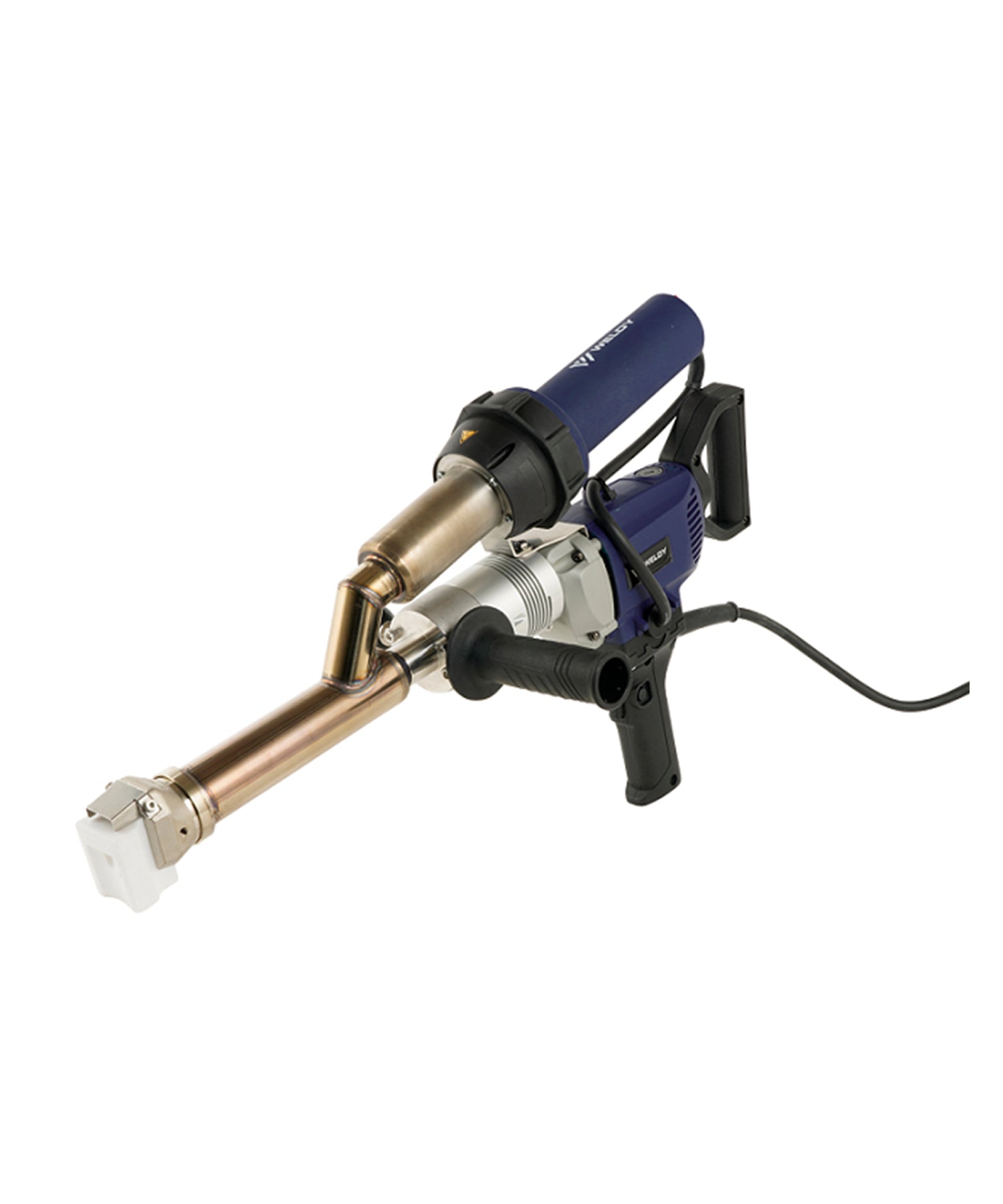
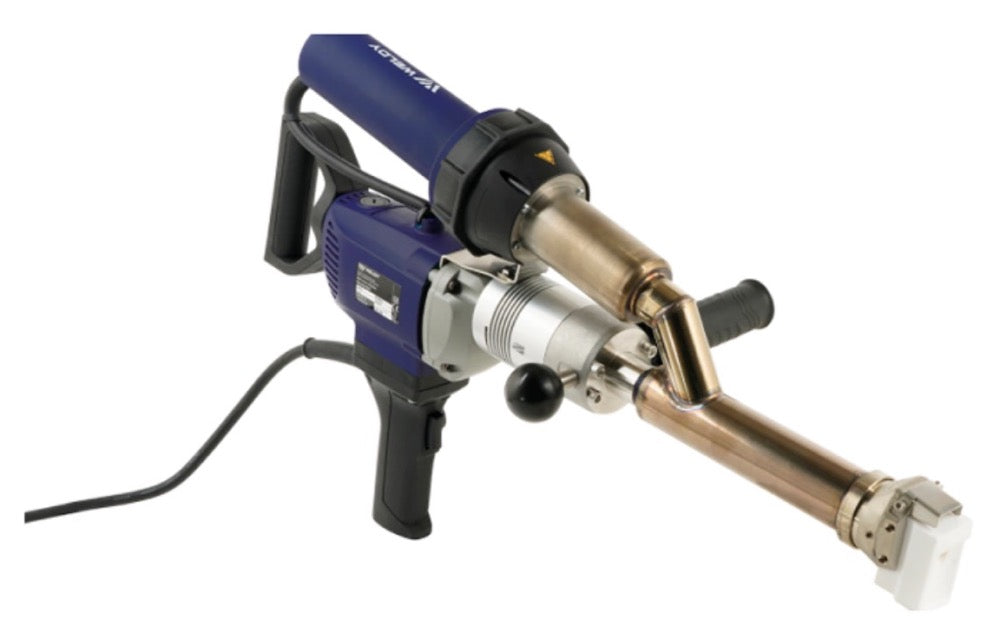
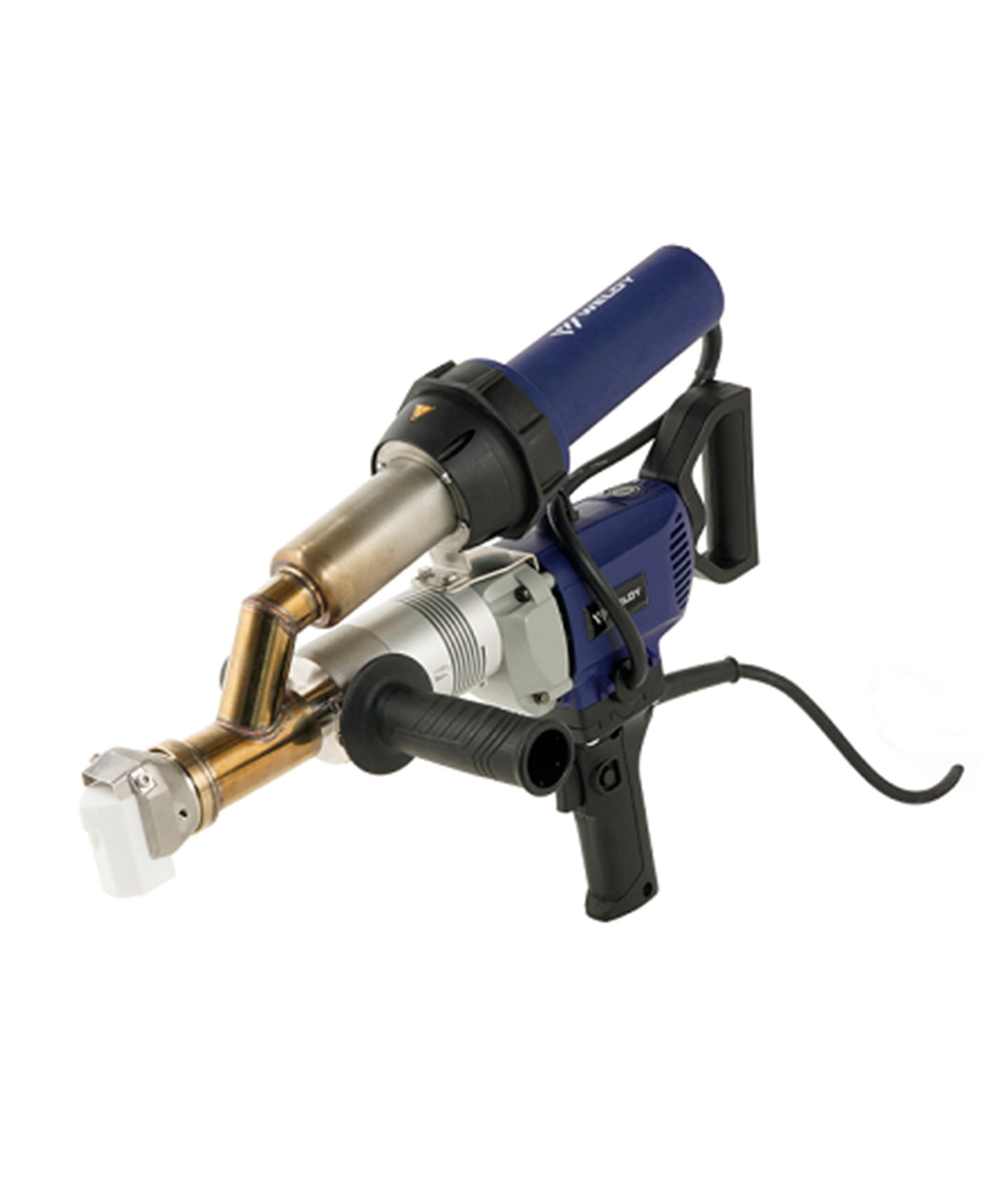
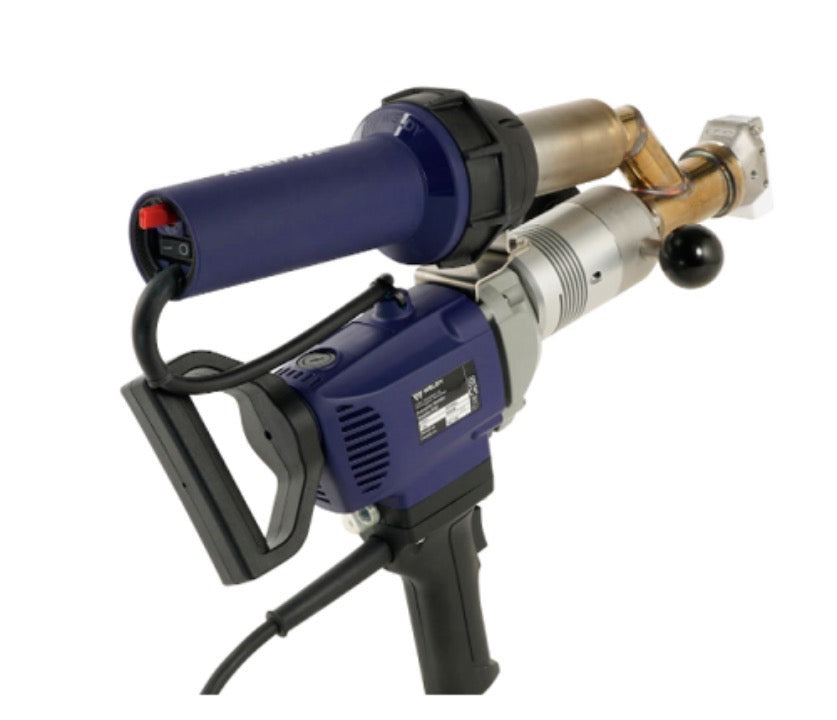
For engineers and fabricators working with polyolefins (HDPE, LDPE, LLDPE, PP), the Weldy Booster EX2 and Booster EX3 hand extruders—engineered under the Leister Group umbrella—represent two of the most widely deployed tools in the industry. This guide breaks down their technical specifications, process fundamentals, application scenarios, and selection criteria to help you specify the right equipment for your fabrication projects. For an overview of Weldy's complete product range, see our extrusion welder collection.

The Science of Extrusion Welding: Process Fundamentals
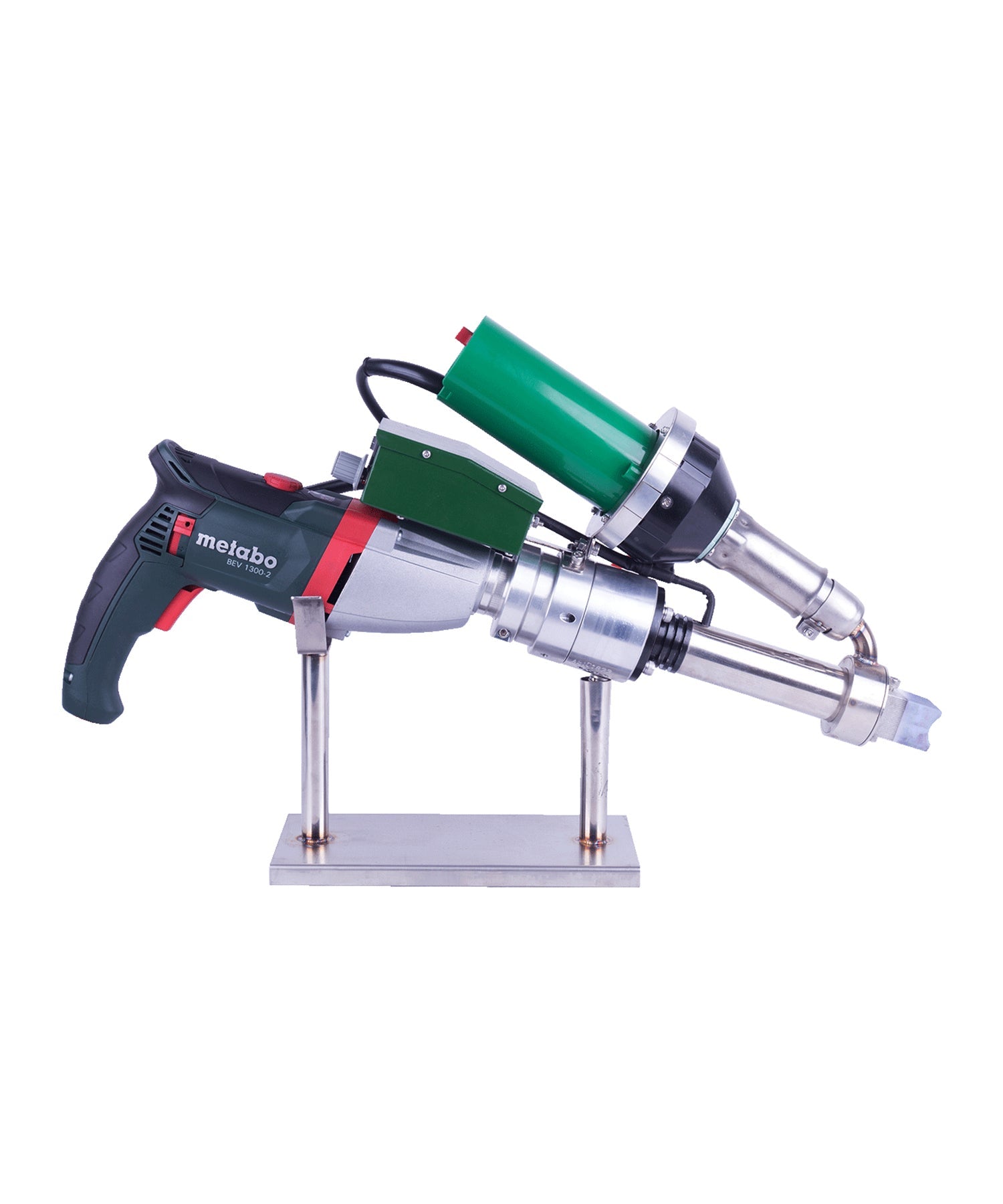
Extrusion welding is a single-pass joining process designed for thick-section thermoplastic fabrications (typically ≥10 mm). Unlike hot gas welding, which requires multiple overlapping passes to fill a V-groove, extrusion welding feeds a solid welding rod through a heated barrel where it is ground into granulate, melted, and extruded through a PTFE welding shoe directly into the joint.
Simultaneously, a hot-air nozzle preheats the substrate surfaces to fusion temperature, ensuring molecular-level bonding between the extrudate and the parent material. The result is a homogeneous, full-penetration weld produced in one continuous pass.

Critical Process Parameters
According to DVS (German Welding Society) guidelines, four parameters must be precisely controlled to achieve weld quality:
- Extrudate temperature — The melt temperature of the deposited material. For PE, this is typically 200–230°C; for PP, 230–260°C. Too cold produces a rough, matte surface with low strength; too hot causes thermal degradation (oxidation, chain scission) and a glossy but brittle weld.
- Mass flow rate — The quantity of extrudate deposited per unit time, typically 1.5–3.6 kg/h for hand-held units. This determines welding speed and bead cross-section.
- Hot gas preheat temperature — The temperature of the air stream directed at the substrate, typically 300–400°C for PE/PP, delivered at approximately 300 liters/minute per DVS guidelines.
- Hot gas quantity — Sufficient airflow must be maintained to ensure full surface fusion. Insufficient preheat results in incomplete fusion—a defect where the extrudate sits on top of the groove rather than fusing into it.

Weldy Booster EX2 vs. EX3: Technical Deep Dive
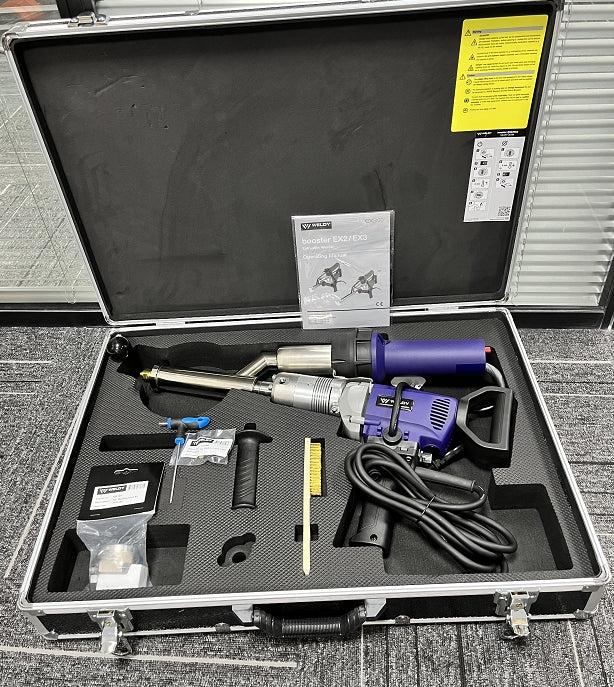
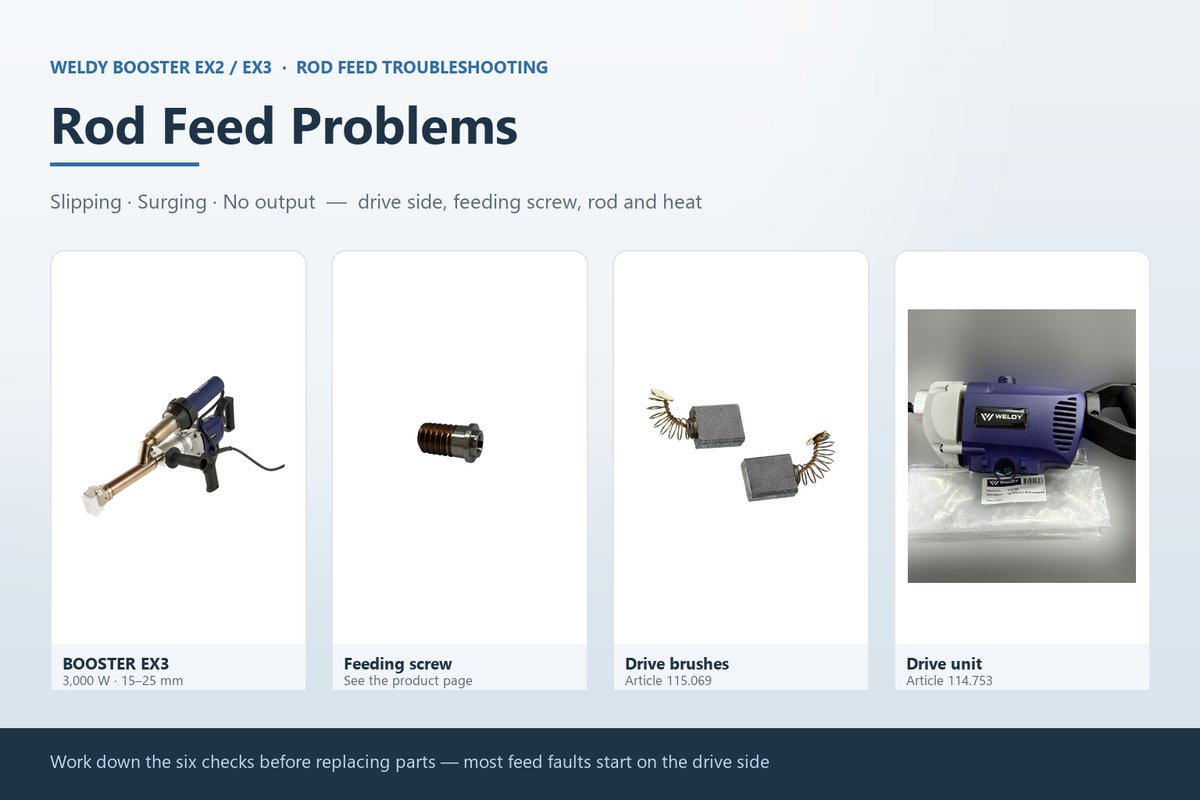
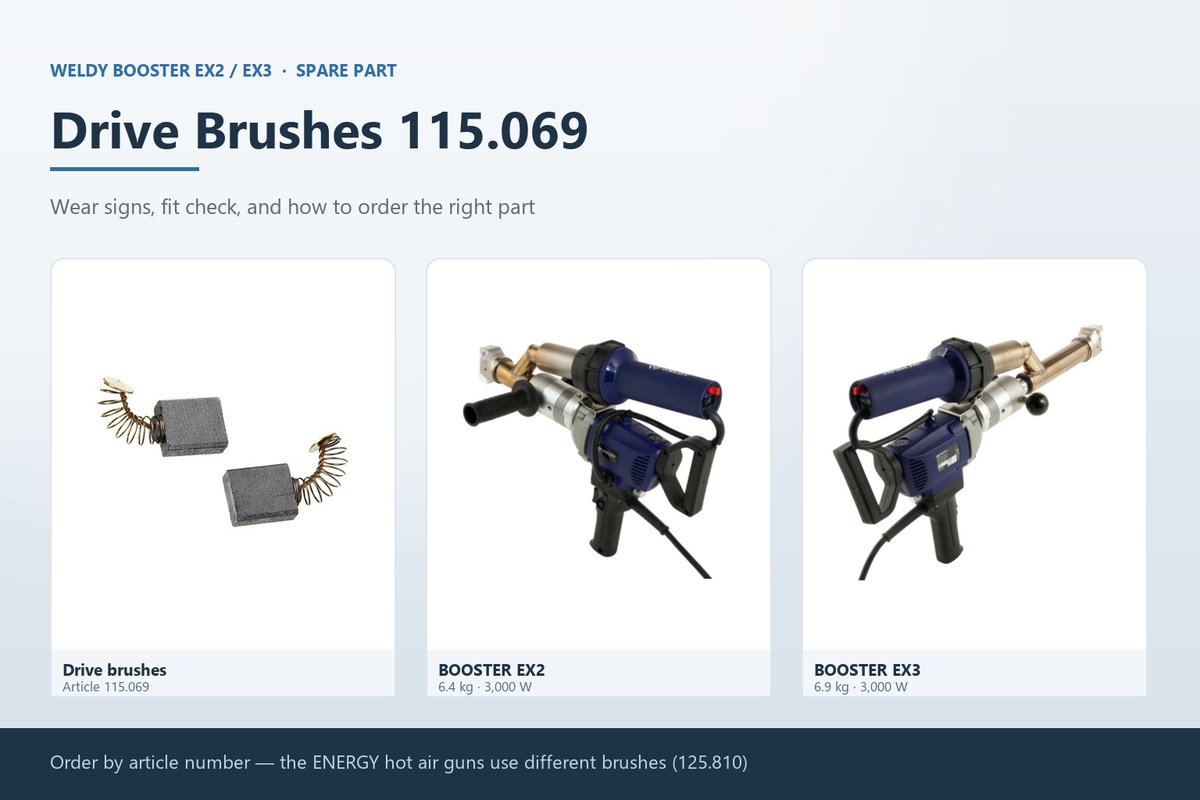
Both the Booster EX2 and EX3 share the same electrical platform (230V, 3000W, 50/60Hz) and process the same material family (HDPE, LDPE, LLDPE, PP). The critical differences lie in extrusion output, physical dimensions, ergonomic design, and recommended sheet thickness range.
| Parameter | Booster EX2 | Booster EX3 |
|---|---|---|
| Article Number | 146.738 | 146.917 |
| Power | 3000 W | 3000 W |
| Output (ø3 mm rod) | 1.5 kg/h | 2.5 kg/h |
| Output (ø4 mm rod) | 2.2 kg/h | 3.6 kg/h |
| Recommended Sheet Thickness | 10–15 mm | 15–25 mm |
| Dimensions (L×W×H) | 500 × 140 × 380 mm | 630 × 140 × 380 mm |
| Weight (without cable) | 6.4 kg | 6.9 kg |
| Welding Rod Diameter | 3–4 mm | 3–4 mm |
| Handles | 2 (ergonomic + side) | 3 (lockable + rotary push + side) |
| Included Welding Shoe | Fillet weld seam | Overlap seam (30/1.5) |
| Overload Protection | Optical indicator | Digital motor protection |
| Noise Level | 74 dB(A) | 74 dB(A) |
| Cable Length | 3 m | 3 m |
| Approvals | CE, Protection Class II | CE, Protection Class II |
Key Design Differences
The EX2 is compact and detail-oriented. At 500 mm long and 6.4 kg, it is designed for confined-space work inside tanks and containers. Its shorter barrel makes it easier to maneuver around corners and into tight joints. The included fillet weld shoe is optimized for corner and T-joint configurations common in tank fabrication. The optical overload indicator gives operators immediate feedback when the tool is pushed beyond its duty cycle.
The EX3 is built for standing work and higher throughput. At 630 mm—130 mm longer than the EX2—and 6.9 kg, its extended barrel accommodates a larger screw profile that delivers up to 64% more output (3.6 vs. 2.2 kg/h at ø4 mm). The three-handle system (lockable drive button, 360° rotary push handle, and repositionable side handle) allows operators to maintain ergonomic posture during prolonged upright welding—critical for civil engineering and geomembrane liner applications where seams can run for tens of meters.
Real-World Applications: Where Each Model Excels
Booster EX2 — Tank & Container Construction
The EX2's compact form factor and fillet-weld shoe make it the preferred tool for fabricating and repairing plastic tanks, chemical vessels, and aquaculture enclosures. In tank construction, the primary welds are at the base-to-wall junction and corner seams—geometries where a shorter tool body provides better access and operator control. The double-sided rod intake allows feeding from either side, adapting to the physical constraints of working inside or around a tank structure.

Booster EX3 — Civil Engineering & Large-Scale Containment
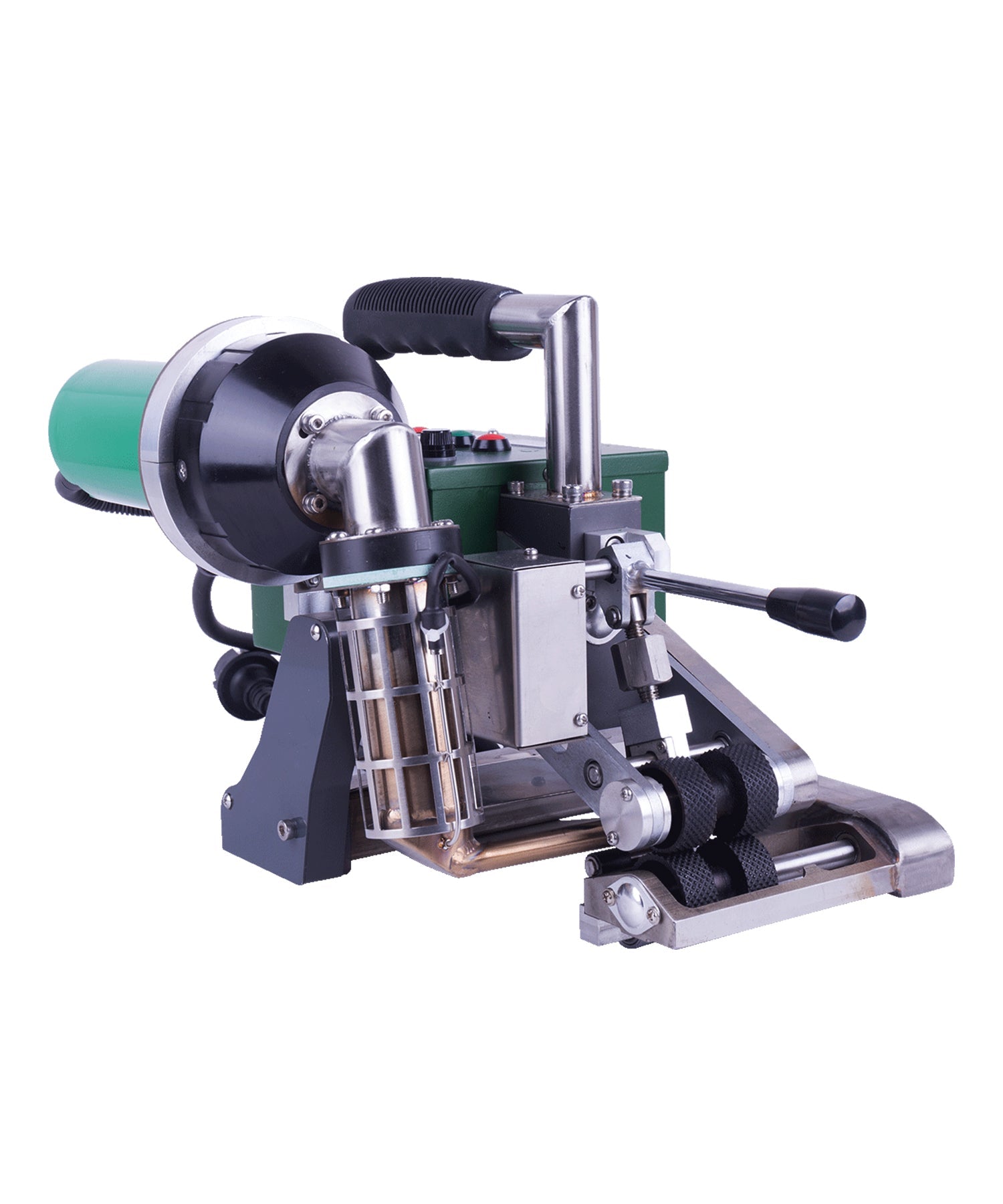
The EX3's higher output and ergonomic standing-work design make it ideal for civil engineering projects: landfill liner seaming, reservoir and canal waterproofing, mining membrane installation, and large-diameter pipe fabrication. On a landfill site, seams may run 50+ meters along a liner, and the ability to deposit 3.6 kg/h in a single pass—vs. the multiple passes required with hot gas welding—directly translates to project timeline reduction. The lockable drive button enables continuous extrusion with minimal operator fatigue over long seams.
Welding Standards & Quality Assurance
Both the EX2 and EX3 produce welds that comply with international thermoplastic welding standards. The key standards governing extrusion welding quality are:
| Standard | Scope | Application |
|---|---|---|
| DVS 2207 Part 4 | Extrusion welding of PE, PP, PVDF | Defines welding parameters, preparation, and acceptance criteria for extrusion welds |
| DVS 2202-1 | Visual inspection of welds | Mandatory bead geometry assessment on every weld |
| DVS 2203 | Destructive weld testing | Tensile and bend testing on coupon samples |
| ASTM D6392 | Geomembrane seam testing | Peel and shear strength for HDPE/LLDPE liner welds |
| EN 13067 | Welder qualification | Personnel certification; valid 2 years, material-group specific |
| ISO 9001 | Quality management | Manufacturing process certification |
For critical-service applications—chemical containment, hazardous material storage, or pressure-rated systems—a complete conformance package should include: the Welding Procedure Specification (WPS) referenced to DVS 2207-4, welder certification (EN 13067), machine calibration records, a weld log with joint timestamps and operator IDs, and material traceability documentation.
Joint Preparation: The Foundation of Weld Quality
Even the best extrusion welder cannot compensate for poor joint preparation. The following steps are essential:
- Material identification — Only like materials can be welded. Confirm base material (PE vs. PP) and select matching welding rod. Mixed-material welds will fail.
- Surface scraping — Remove the oxide layer and any contamination from both joint faces using a hand scraper (never sandpaper, which embeds abrasive particles). Clean with isopropyl alcohol; do not use acetone or MEK on PP.
- Bevel preparation — Cut a 60° V-groove (30° per side) to ensure full-depth extrudate fill. For thick sections (>15 mm), a U-groove may be specified per DVS 2207-4.
- Tack welding — Hot-gas tack weld at 300–500 mm intervals to maintain alignment during extrusion. Tacks must be ground flush before extrusion welding.
- Root pass — A 3 mm hot-gas root pass ensures full penetration at the groove base and prevents the parts from separating under extrusion pressure.
How to Choose: EX2 or EX3?
| Decision Factor | Choose EX2 | Choose EX3 |
|---|---|---|
| Primary application | Tank/container fabrication | Civil engineering, liners, large seams |
| Typical sheet thickness | 10–15 mm | 15–25 mm |
| Working position | Inside tanks, confined spaces | Standing, long horizontal seams |
| Required output | Up to 2.2 kg/h | Up to 3.6 kg/h |
| Seam length | Short to medium (corners, joints) | Long continuous runs |
| Maneuverability need | High (compact body) | Moderate (longer body) |
Many professional fabrication shops maintain both models—using the EX2 for detail work, corners, and confined-space welds, and the EX3 for long production seams and heavy-section joints. This dual-tool approach maximizes both versatility and throughput.
Maintenance & Best Practices
Daily
- Purge the barrel with PE or PP rod at the end of each work session to clear residual material and prevent carbonization
- Inspect the PTFE welding shoe for wear; replace if the bead profile becomes irregular
- Clean the air filter to maintain proper preheat airflow (critical for weld quality)
- Check carbon brushes on the blower motor; replace at approximately 800-hour intervals (do not wait until fully worn)
Weekly
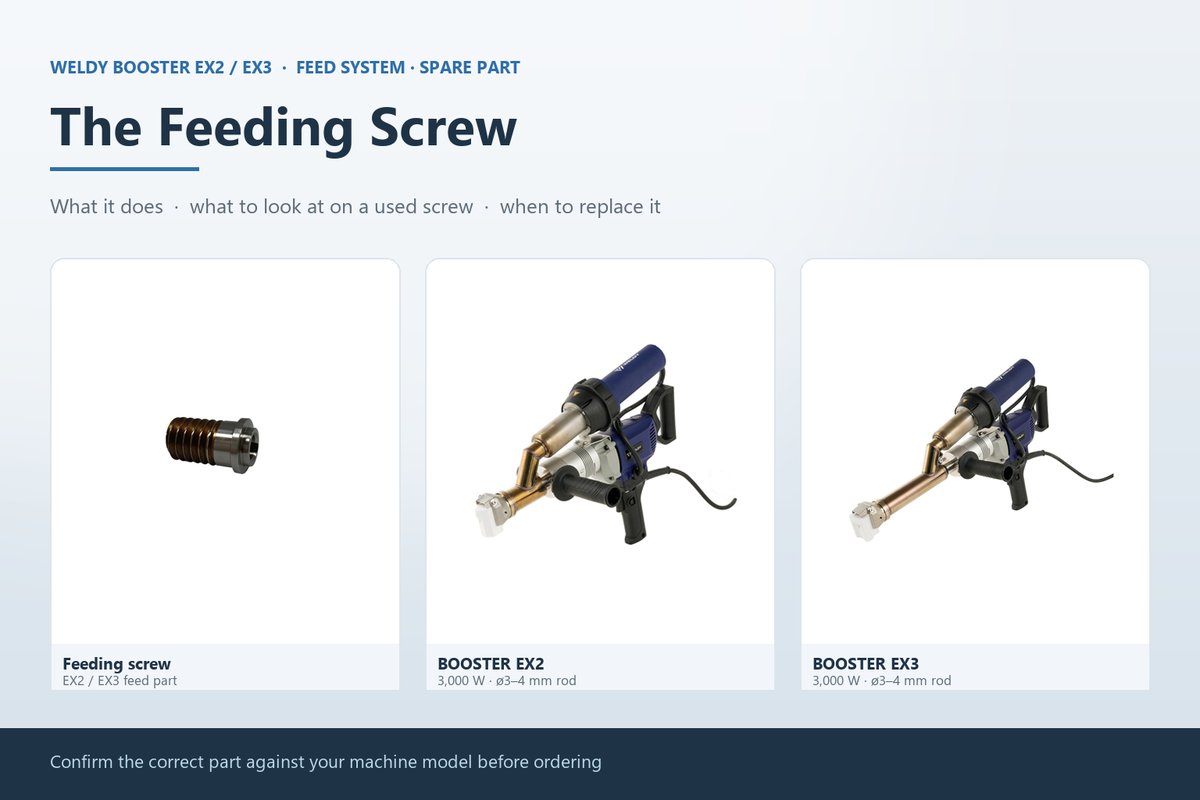
- Inspect the screw and barrel for wear; excessive wear reduces output consistency
- Verify temperature accuracy using a contact pyrometer on the extrudate
- Check power cable insulation for damage, especially at strain reliefs
Monthly / 6-Month
- Full screw removal and deep cleaning of the barrel interior
- Lubricate drive mechanism per manufacturer specification
- Calibrate air temperature against a reference thermometer
- Document maintenance in a service log for quality audit purposes
Common Weld Defects & Remedies
| Defect | Appearance | Likely Cause | Remedy |
|---|---|---|---|
| Porosity | Small bubbles in bead | Moisture in rod or on surface | Dry rod at 60°C/2h; dry surfaces |
| Cold joint | Matte, rough surface; rod sits on top | Extrudate temperature too low | Increase barrel temperature; reduce travel speed |
| Centerline crack | Crack along weld center | Rapid cooling (draft, cold ambient) | Shield weld from drafts during cooling |
| Incomplete fusion | Extrudate separates from parent at edges | Insufficient substrate preheat | Increase hot air temperature; slow travel speed |
| Overheated weld | Glossy, discolored (brown) surface | Temperature too high; thermal degradation | Reduce temperature; increase travel speed |
Any weld exhibiting porosity, cracks, or incomplete fusion must be ground out completely and re-welded. A porous weld that passes visual inspection will fail in service when stored chemicals penetrate the voids and attack the weld from within.
Why Source from an Official Weldy Distributor
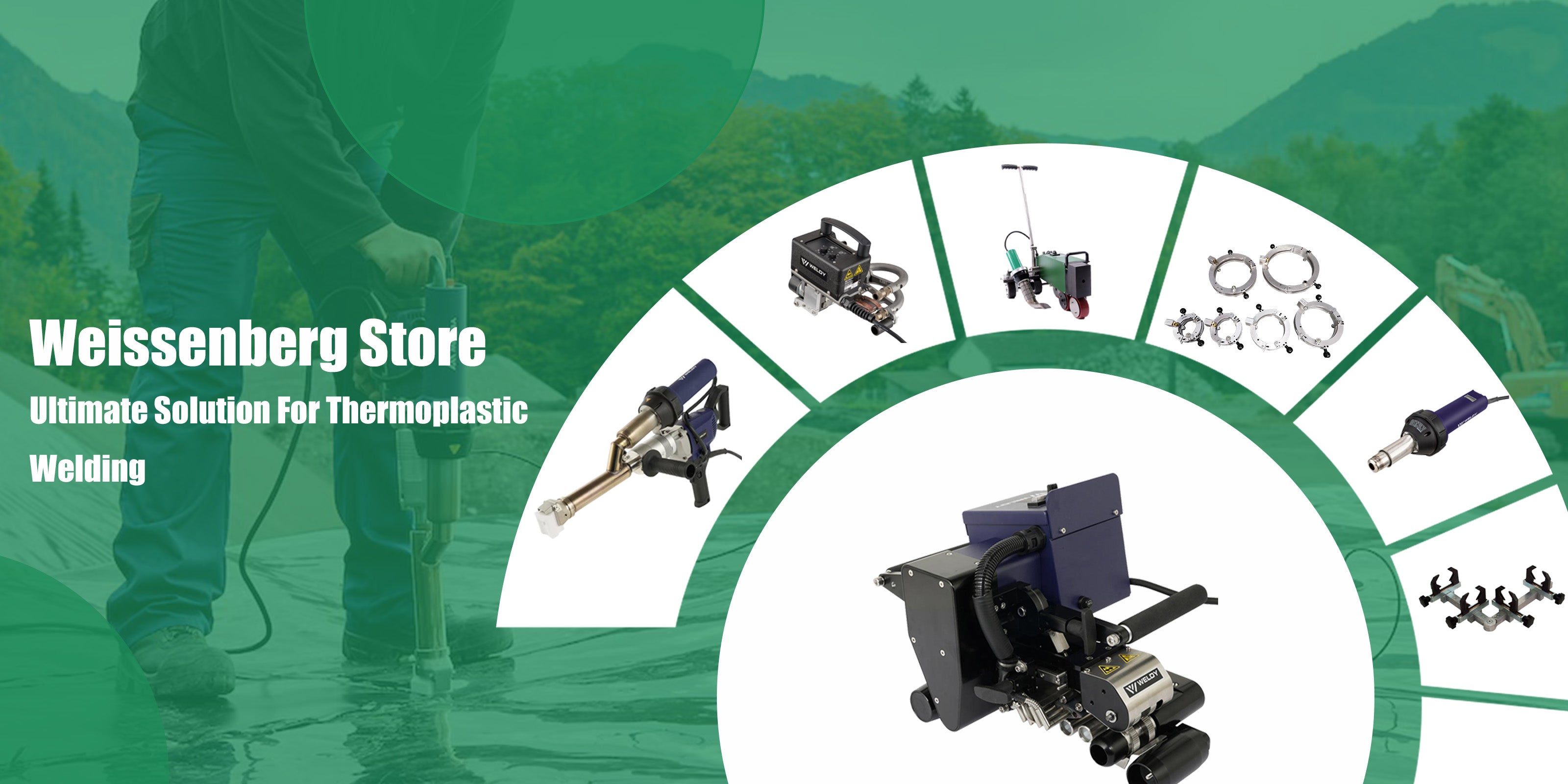
As an authorized official distributor of Weldy products, Weissenberg provides direct access to the full extrusion welder catalog with genuine manufacturer warranties. Every unit is CE-certified, manufactured under ISO 9001 quality management, and backed by 20+ years of thermoplastic welding industry experience.
When sourcing welding equipment for critical fabrication projects, the difference between an authorized distributor and a grey-market reseller goes beyond price:
| Factor | Official Distributor (Weissenberg) | Grey-Market / Unofficial |
|---|---|---|
| Warranty | Genuine manufacturer warranty | None or self-insured |
| CE Certification | Verified, traceable | Questionable |
| Spare parts | OEM parts, full catalog | Generic substitutes |
| Technical support | Multilingual, 20+ years expertise | Limited or none |
| Product training | Application guidance & selection support | Self-service only |
Conclusion
The Weldy Booster EX2 and EX3 are not competing models—they are complementary tools designed for different fabrication scenarios. The EX2's compact body and fillet-weld configuration excel in tank and container construction where access and maneuverability are paramount. The EX3's extended barrel, higher output, and three-handle ergonomics deliver the throughput and operator comfort needed for long-seam civil engineering work.
For shops that handle both types of projects, maintaining both units is the most efficient strategy—detail work with the EX2, production seams with the EX3. Combined with proper joint preparation, adherence to DVS 2207 parameters, and disciplined maintenance, these tools will produce welds that meet the most demanding quality and safety standards for decades of service.
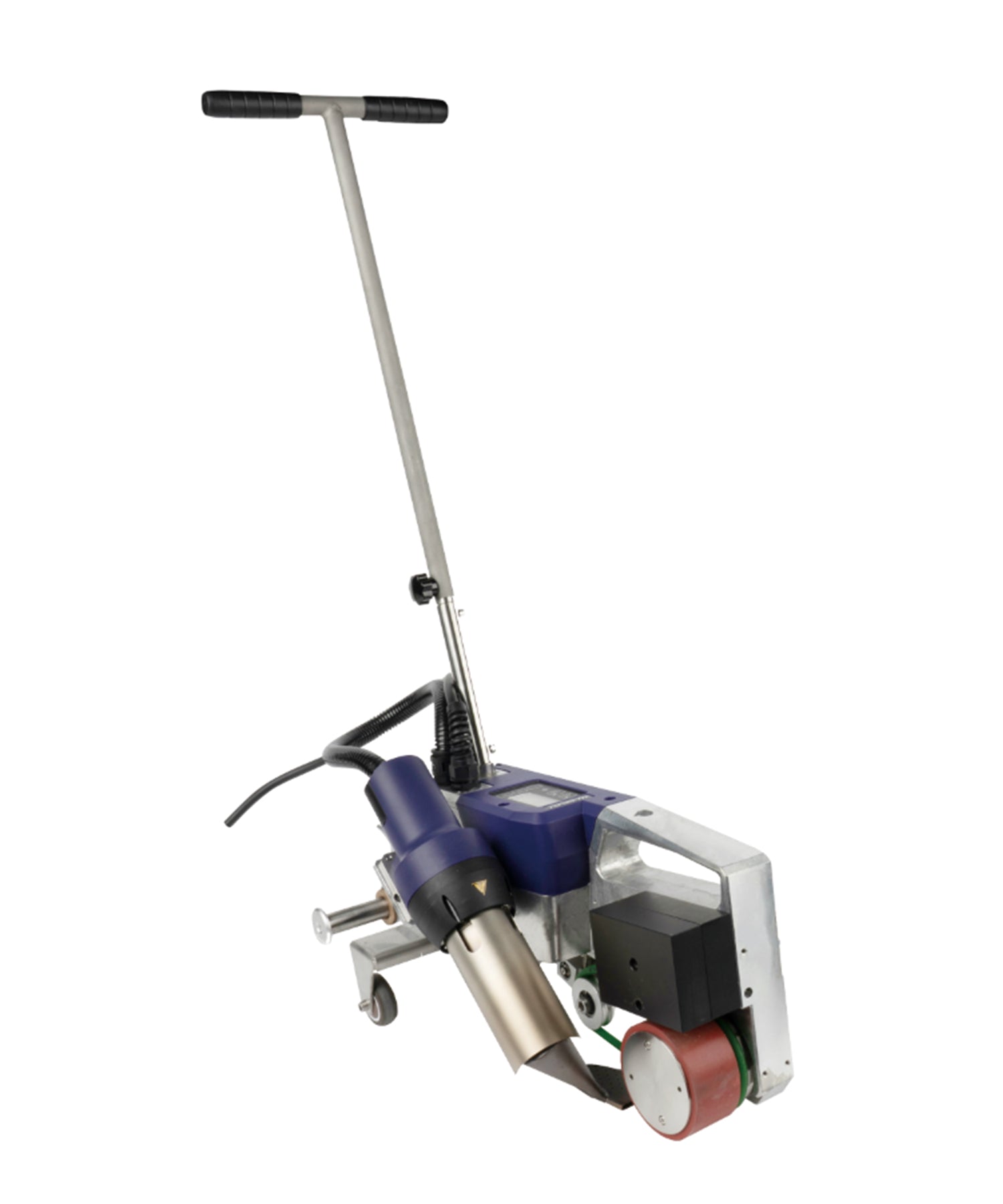
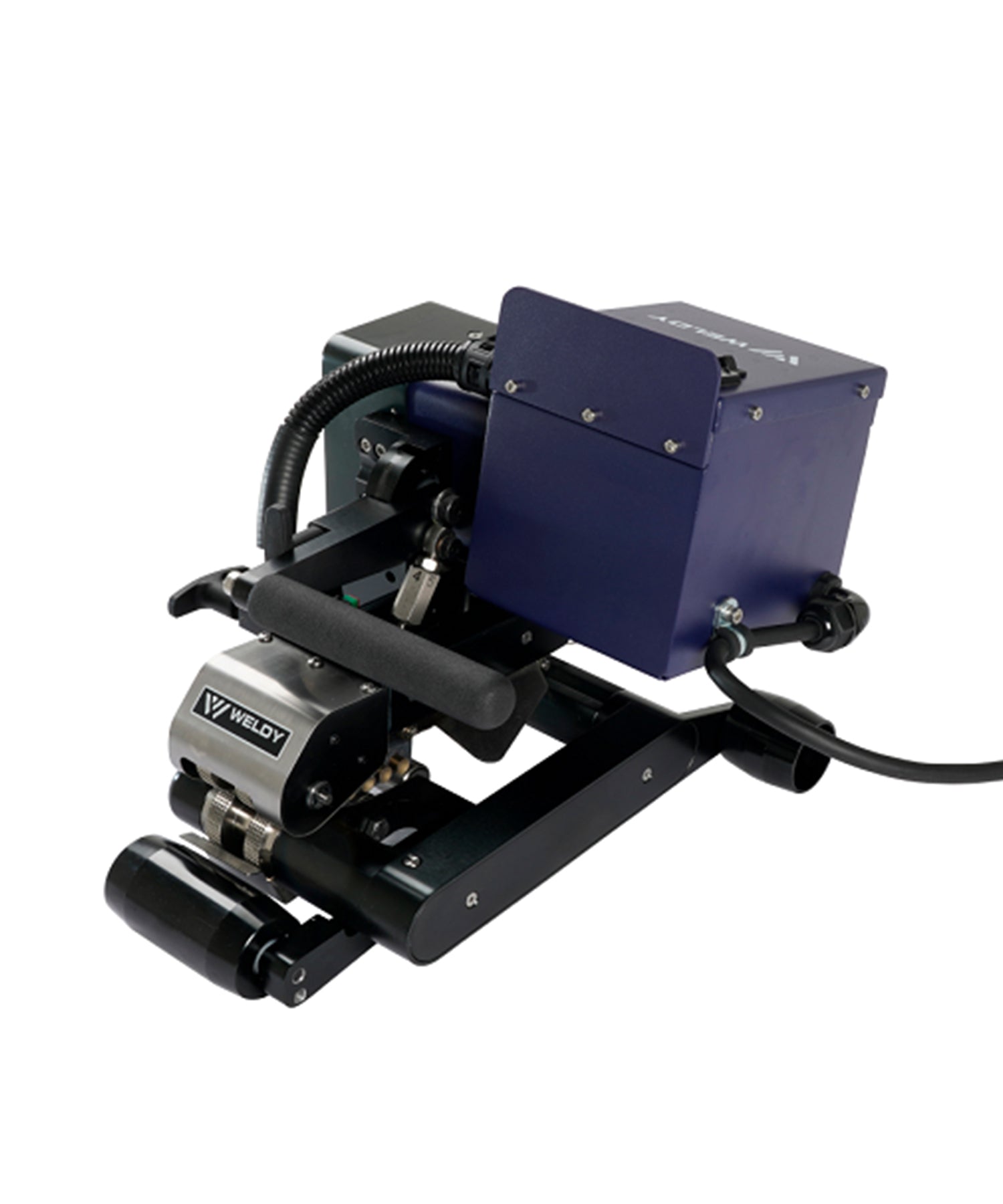
Looking for a broader equipment comparison across Weldy's entire product line? Read our complete Weldy equipment selection guide covering hot air guns, roofing welders, and geomembrane welders.
Author: Weissenberg Technical Team — 20+ years of thermoplastic welding industry experience. As an official Weldy distributor, Weissenberg provides equipment, technical consultation, and after-sales support for plastic welding applications worldwide.





Leave a comment
This site is protected by hCaptcha and the hCaptcha Privacy Policy and Terms of Service apply.