
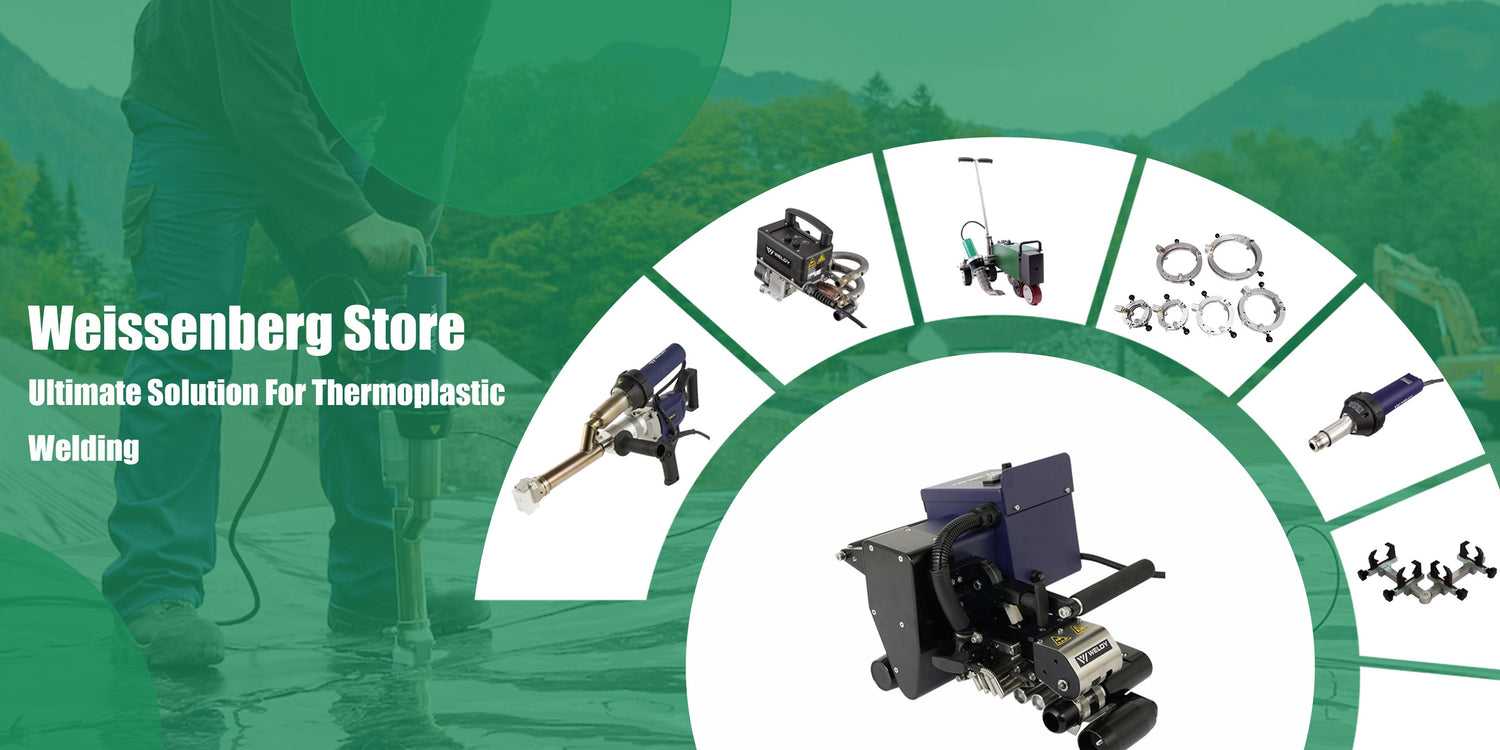

By Weissenberg Technical Team — 20+ Years of Industry Experience in Thermoplastic Welding
What Is Plastic Welding?
Plastic welding is the process of joining thermoplastic materials by heating them to their melting point and applying pressure to create a molecular bond. Unlike adhesive bonding, which degrades over time, plastic welding produces permanent seams that often exceed the strength of the base material. The technique is used across civil engineering, roofing, environmental containment, plastic fabrication, and automotive repair. Welding quality depends on three variables: temperature, pressure, and welding speed — all of which are determined by the equipment you choose. Industry standards such as DVS 2207 (thermoplastic welding) and ASTM D6392 (membrane seam testing) define acceptable parameters for each material and application.
Different Types of Plastic Welding Equipment
Weldy — a sub-brand of Switzerland's Leister Group with 75+ years of engineering heritage — manufactures three core categories of plastic welding equipment. Each is engineered for specific materials, thicknesses, and project scales. As an official Weldy distributor, Weissenberg supplies the full range with genuine manufacturer warranties, CE certification, and ISO 9001 compliance.
1. Hot Air Welders

Hot air welders use a heating element and blower to deliver controlled hot air (40–700°C) through a nozzle, softening the thermoplastic surface. The operator then presses the materials together with a roller to form a bond. Weldy's Energy HT1600 (1600W, 0.99 kg) and Energy HT3400 (3400W, 1.2 kg) are the industry standard for handheld overlap welding of PVC/TPO membranes, tarpaulins, technical textiles, and geomembrane patch repairs.

The HT1600 excels at precision work and overhead applications thanks to its sub-1kg weight. The HT3400 delivers higher airflow (500 l/min vs 240 l/min) for large-surface overlap welding. Both feature stepless temperature adjustment and ceramic heating elements.
2. Extrusion Welders

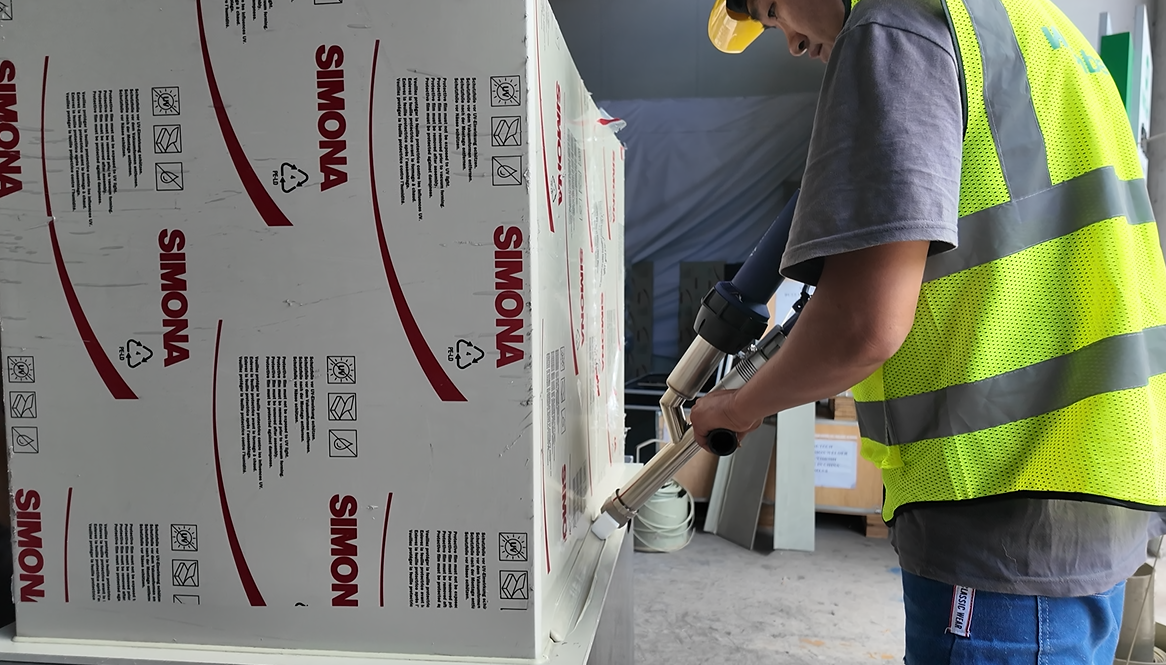
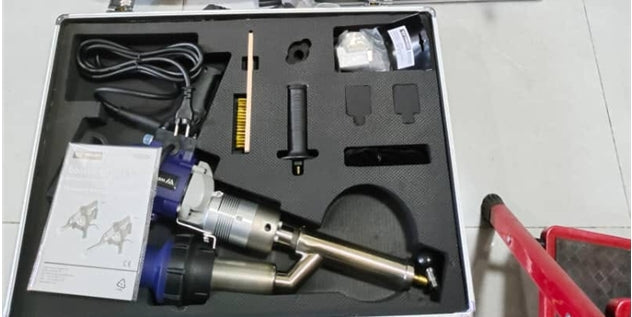
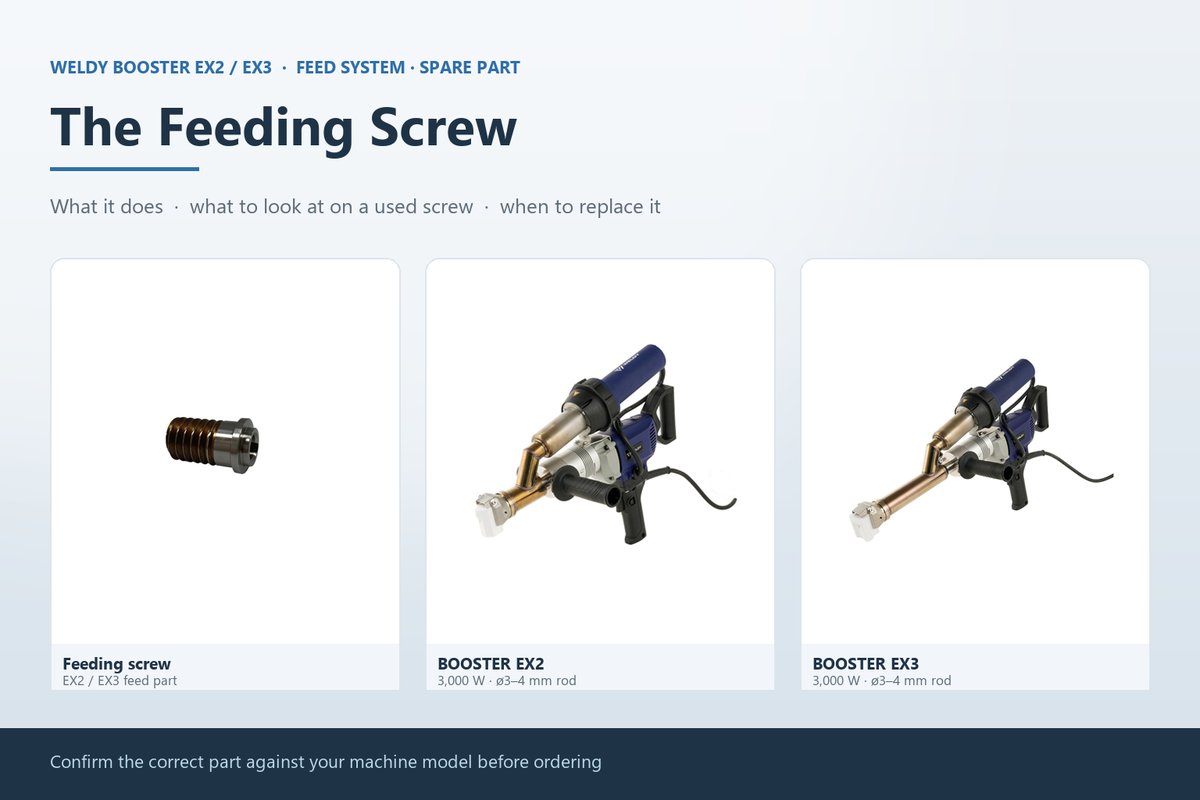
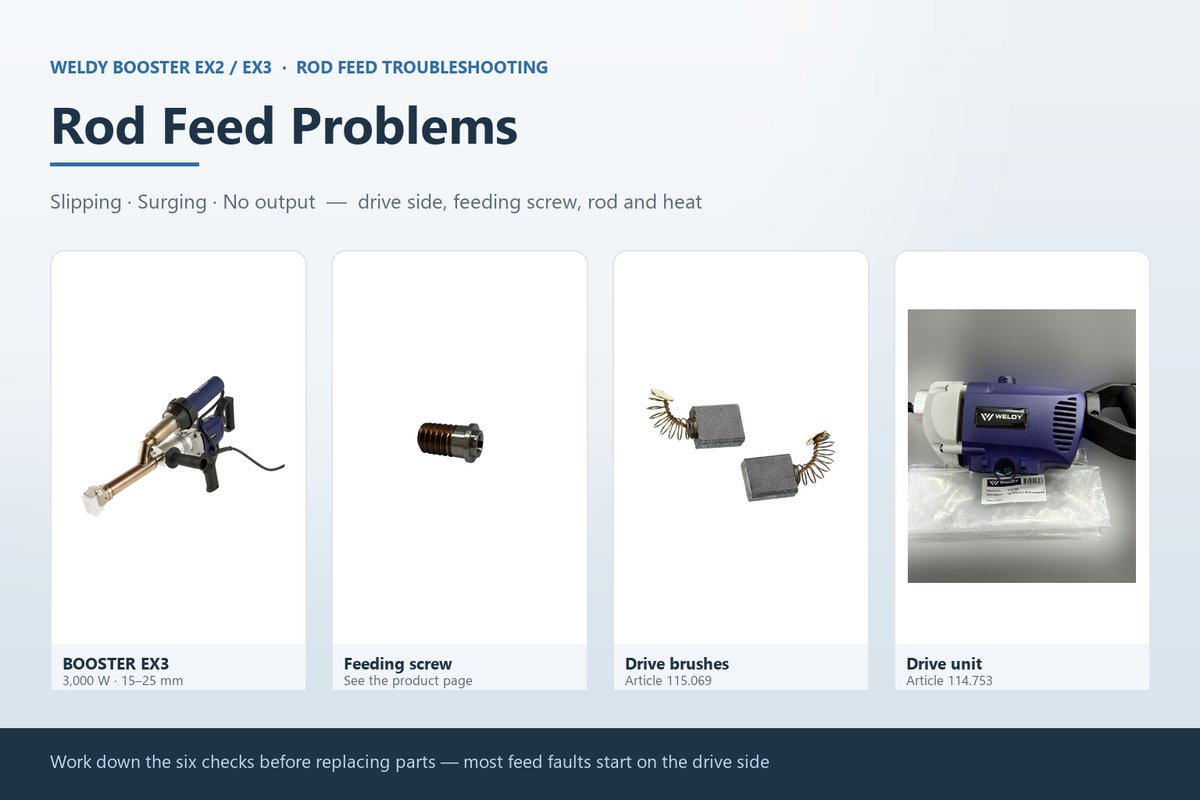
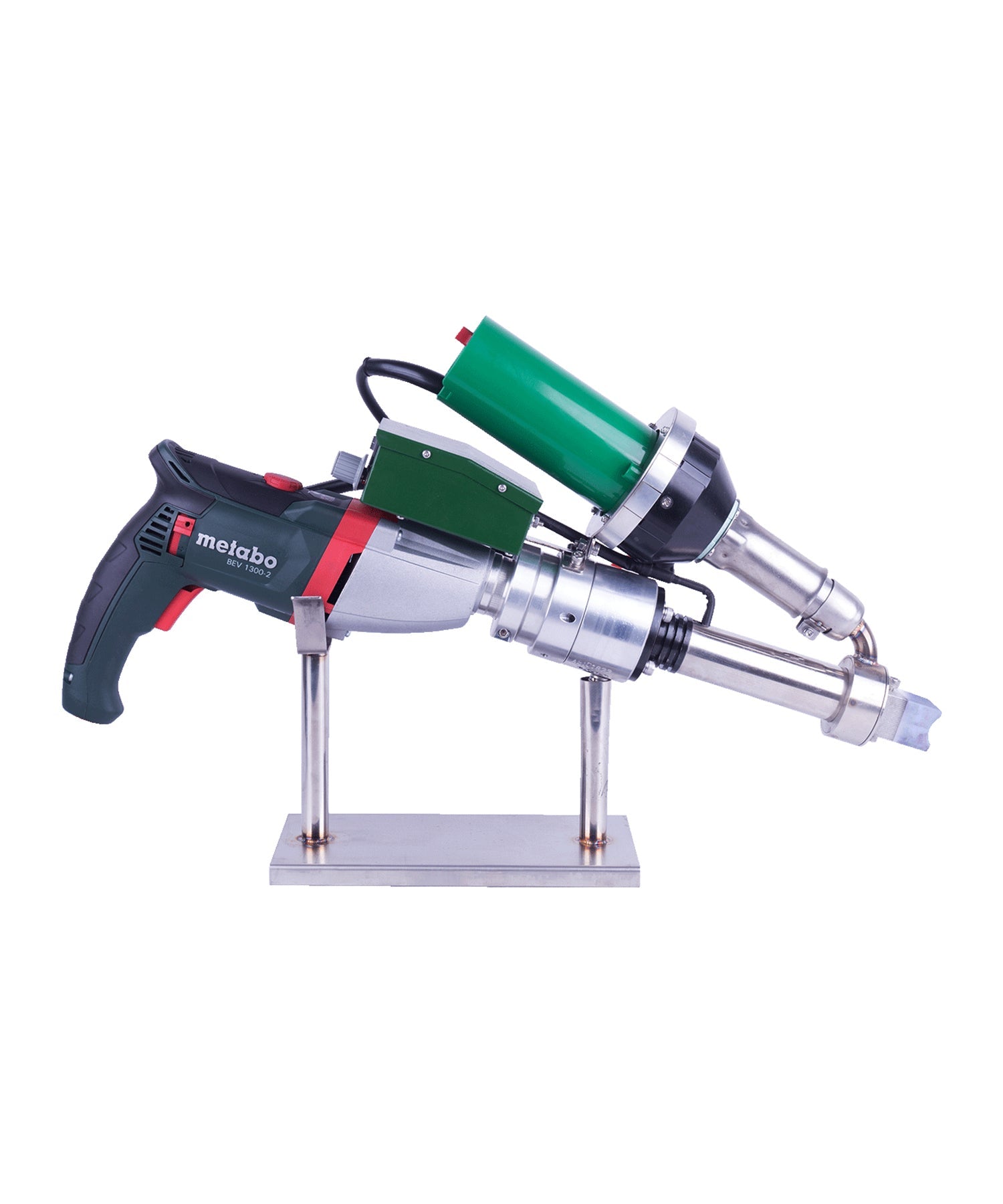
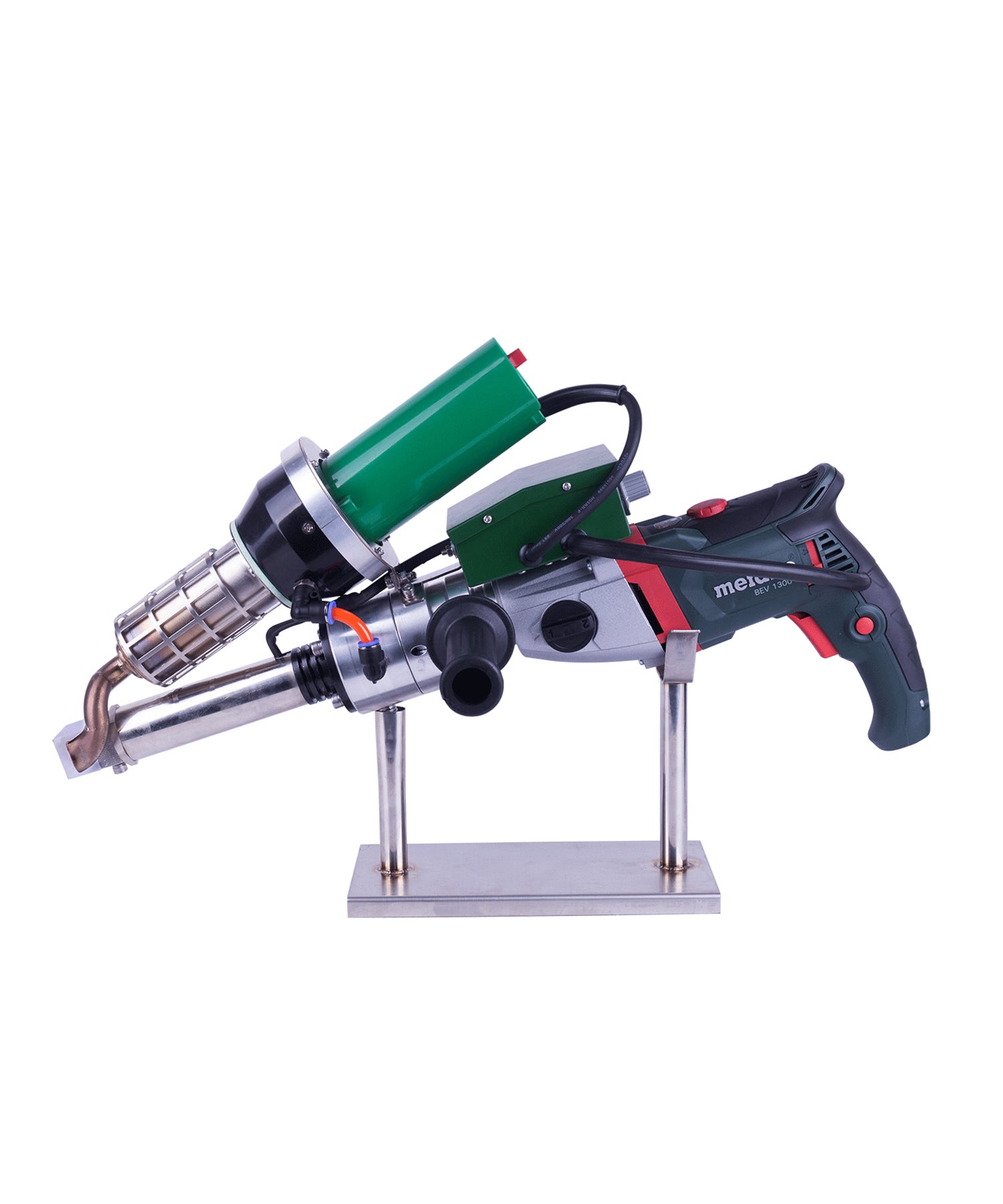
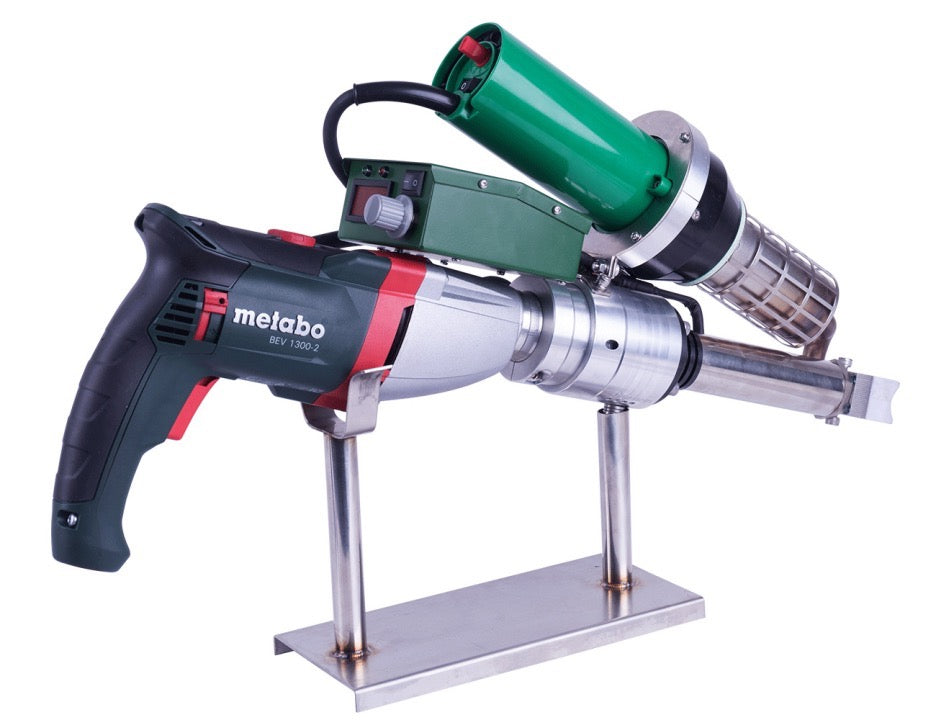
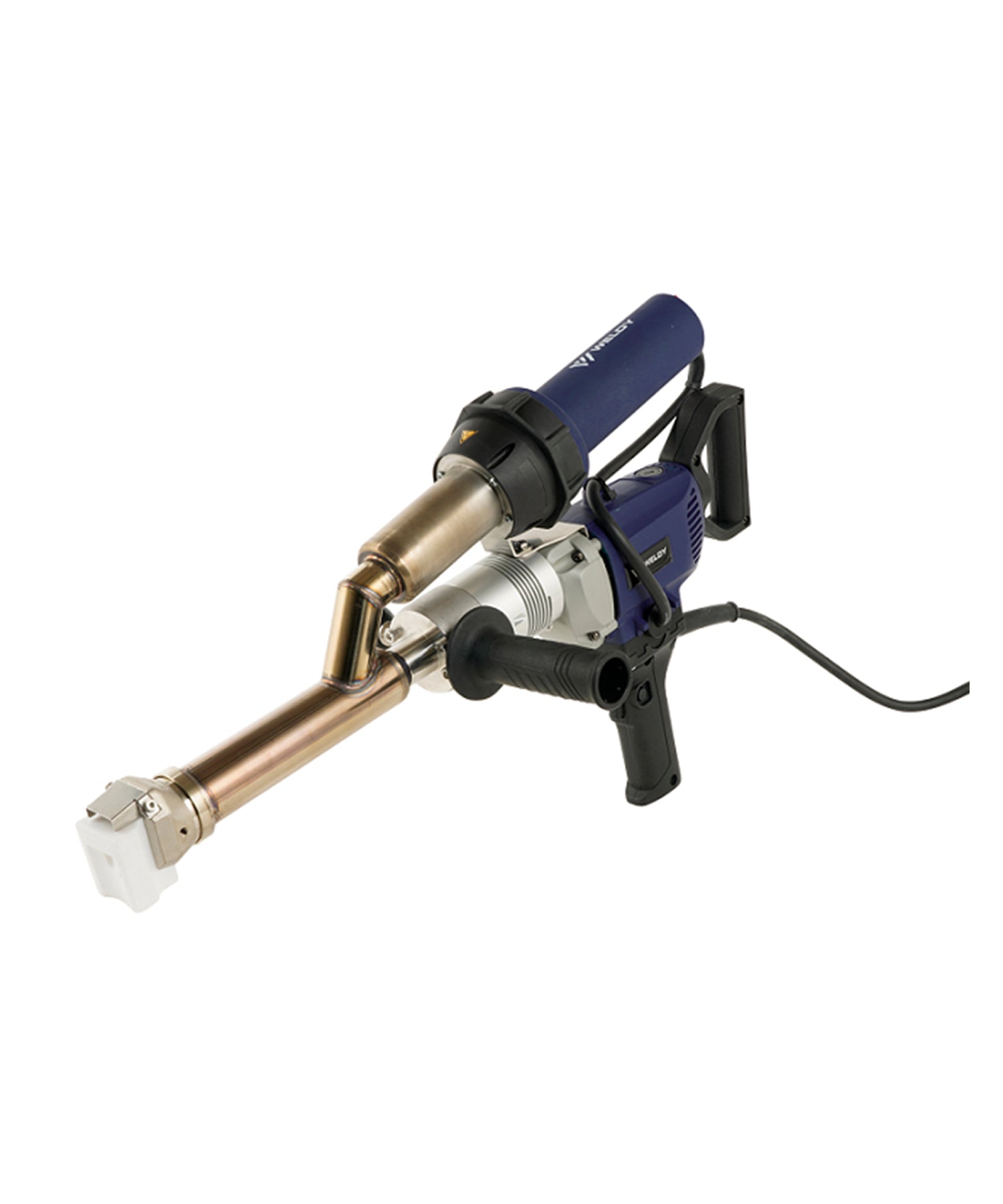
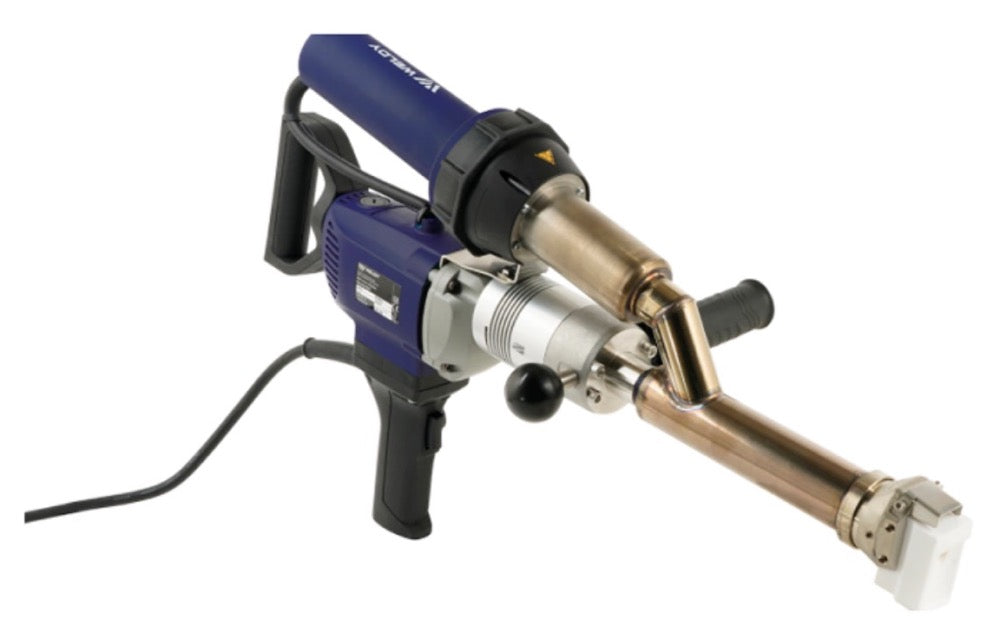
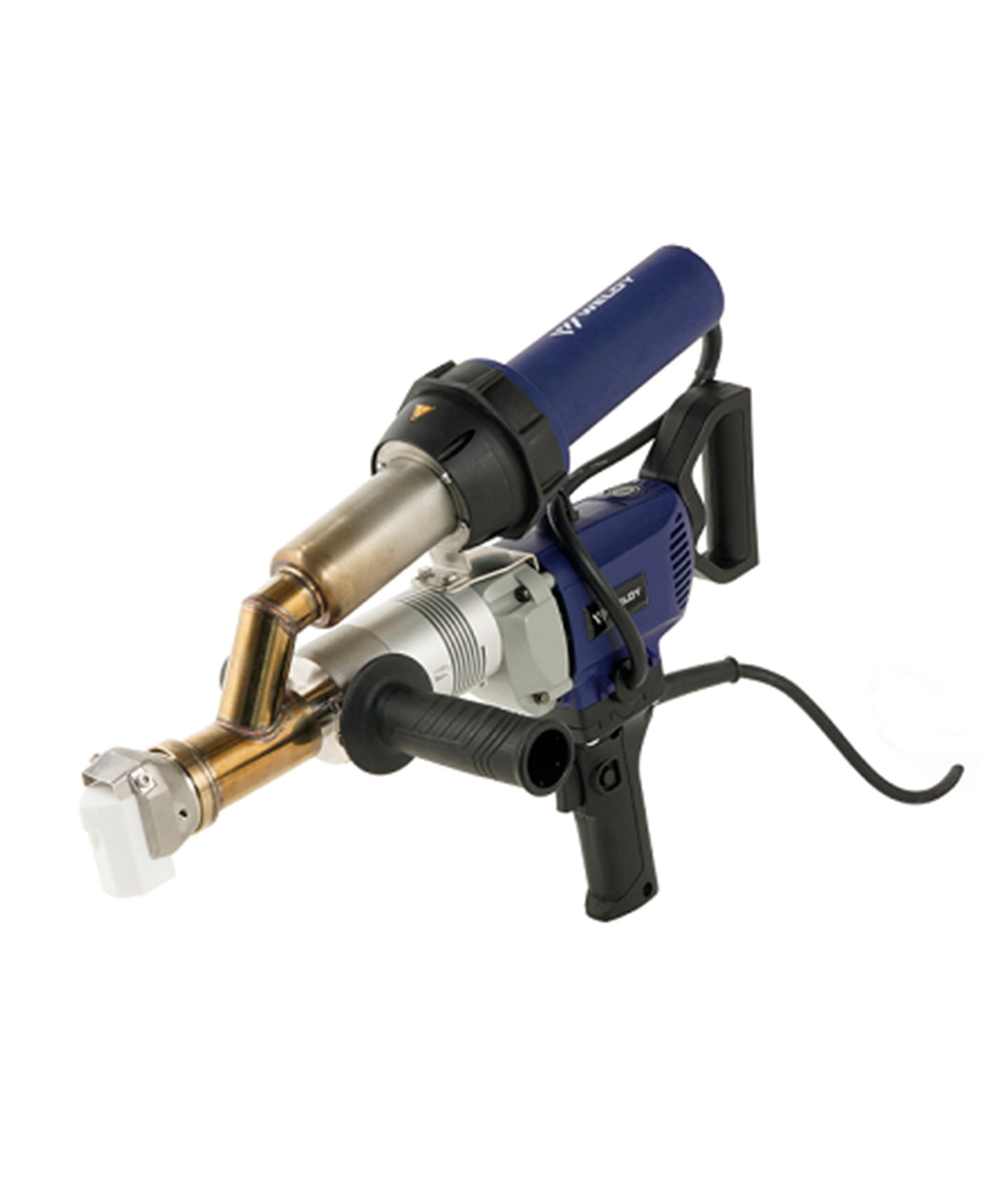
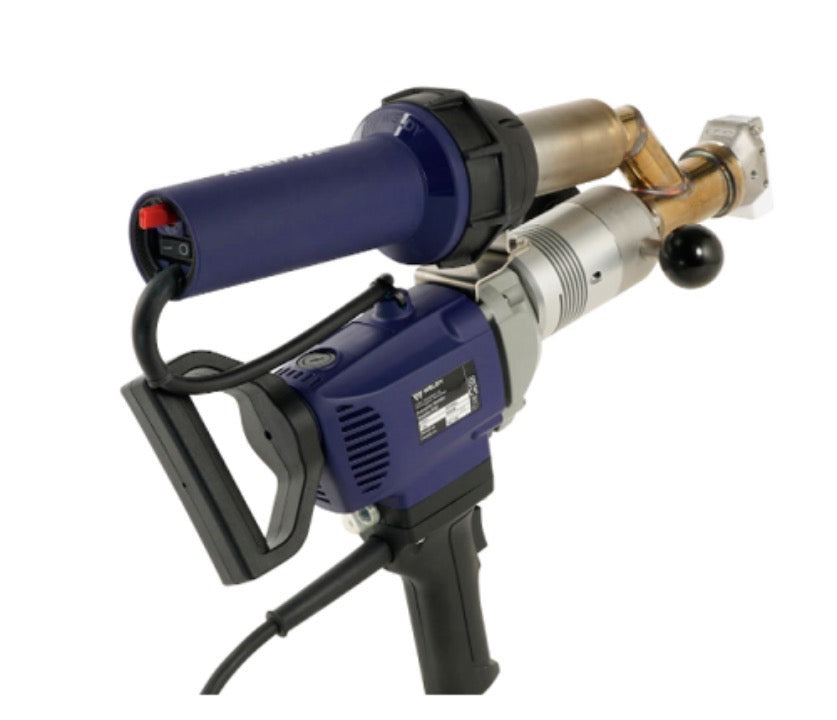
Extrusion welders melt a welding rod (PE, PP) inside a heated barrel and extrude it as molten filler material into the joint. This produces high-strength structural welds for thick materials (10–25mm) that hot air guns cannot handle. Weldy's Booster EX2 (2.2 kg/h output) and Booster EX3 (3.6 kg/h output) meet DVS 2207 standards for thermoplastic welding quality. Both feature dual-side rod feeding, ergonomic multi-position handles, and quick-change welding shoes.

3. Hot Wedge Welders

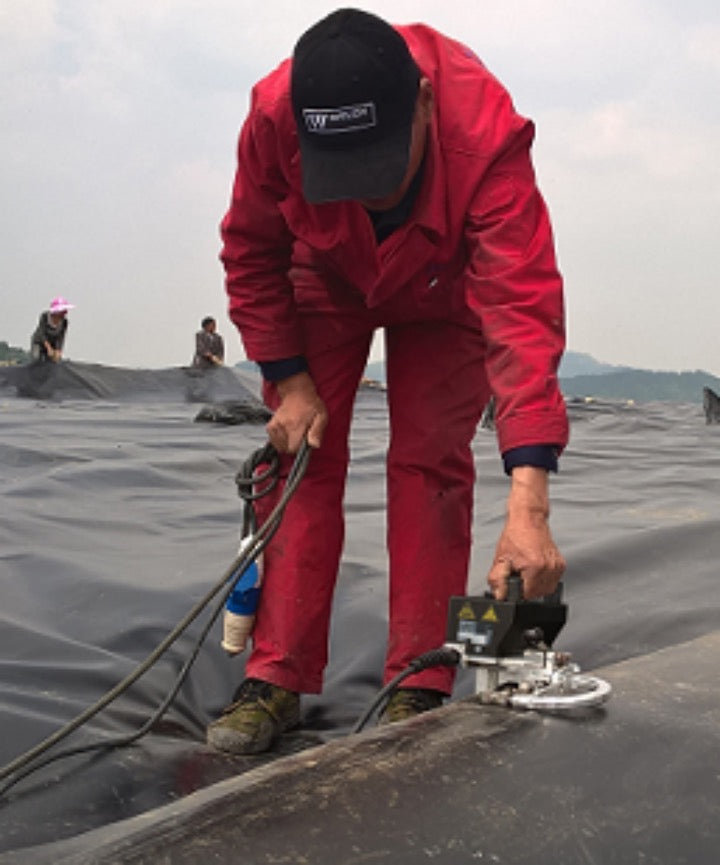
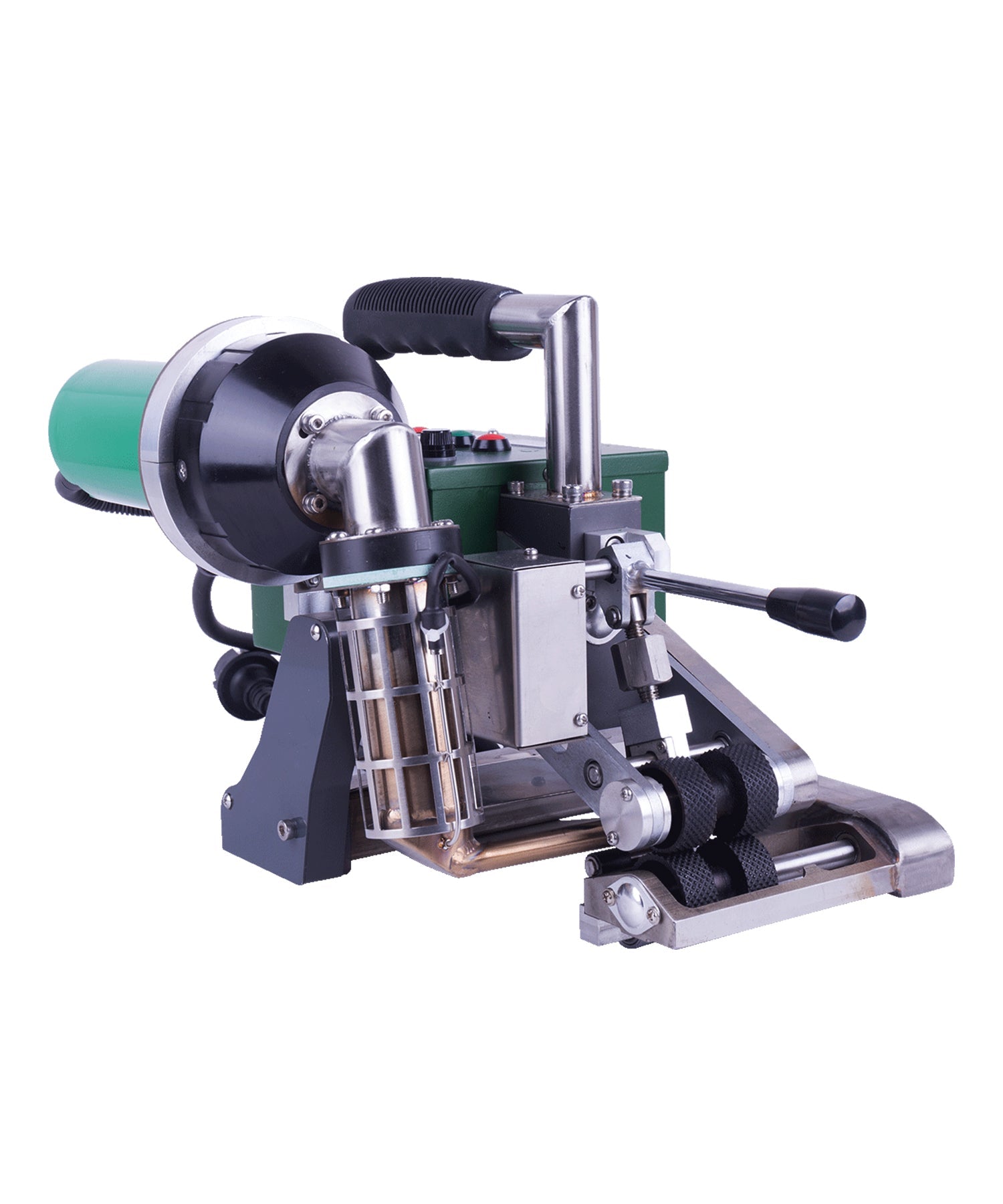
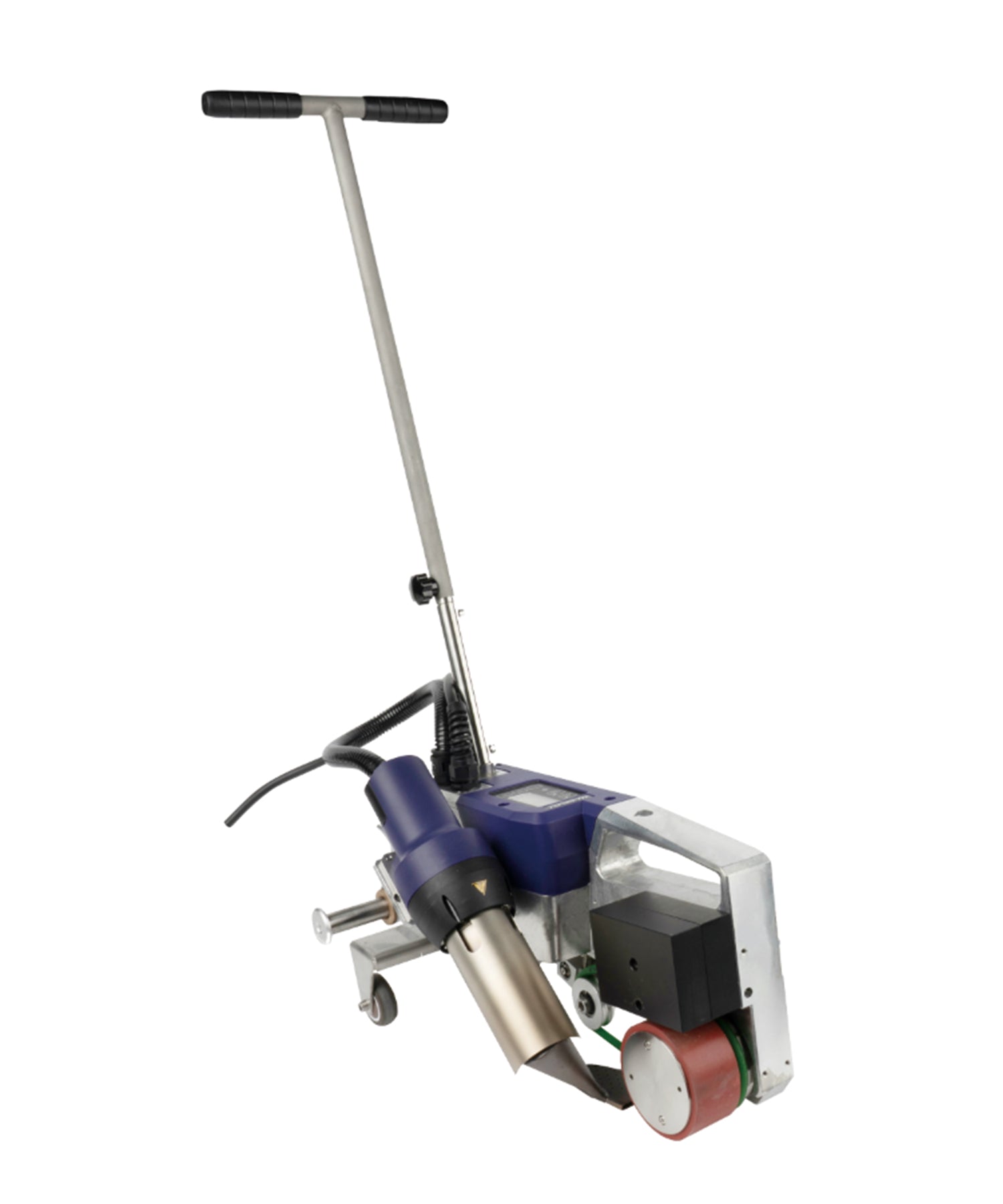
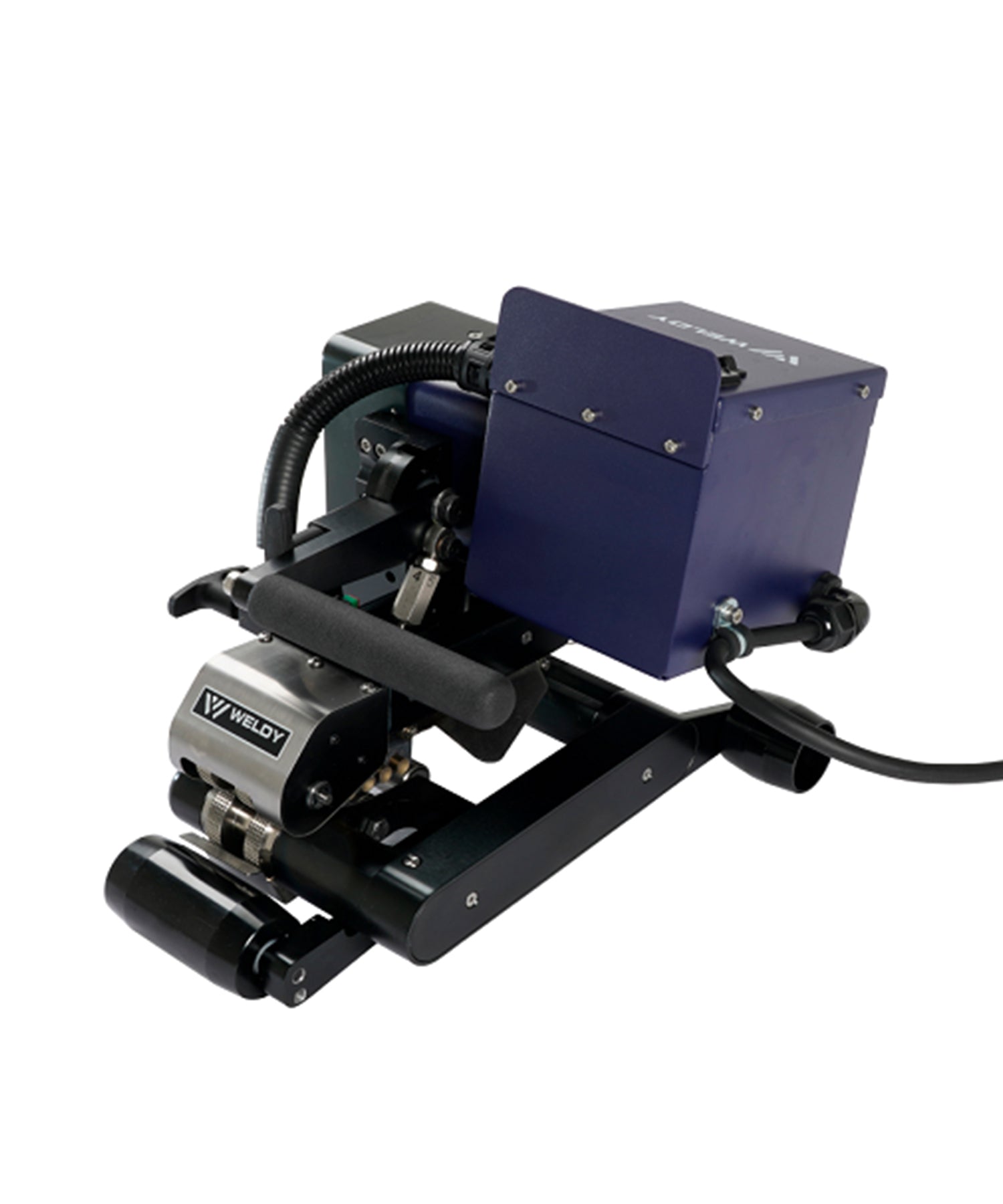
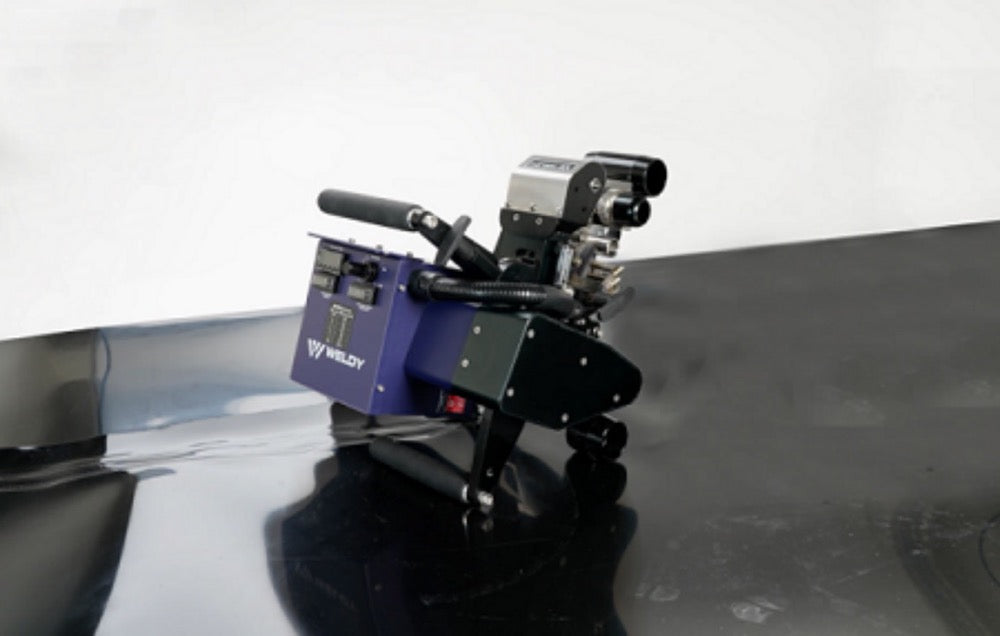
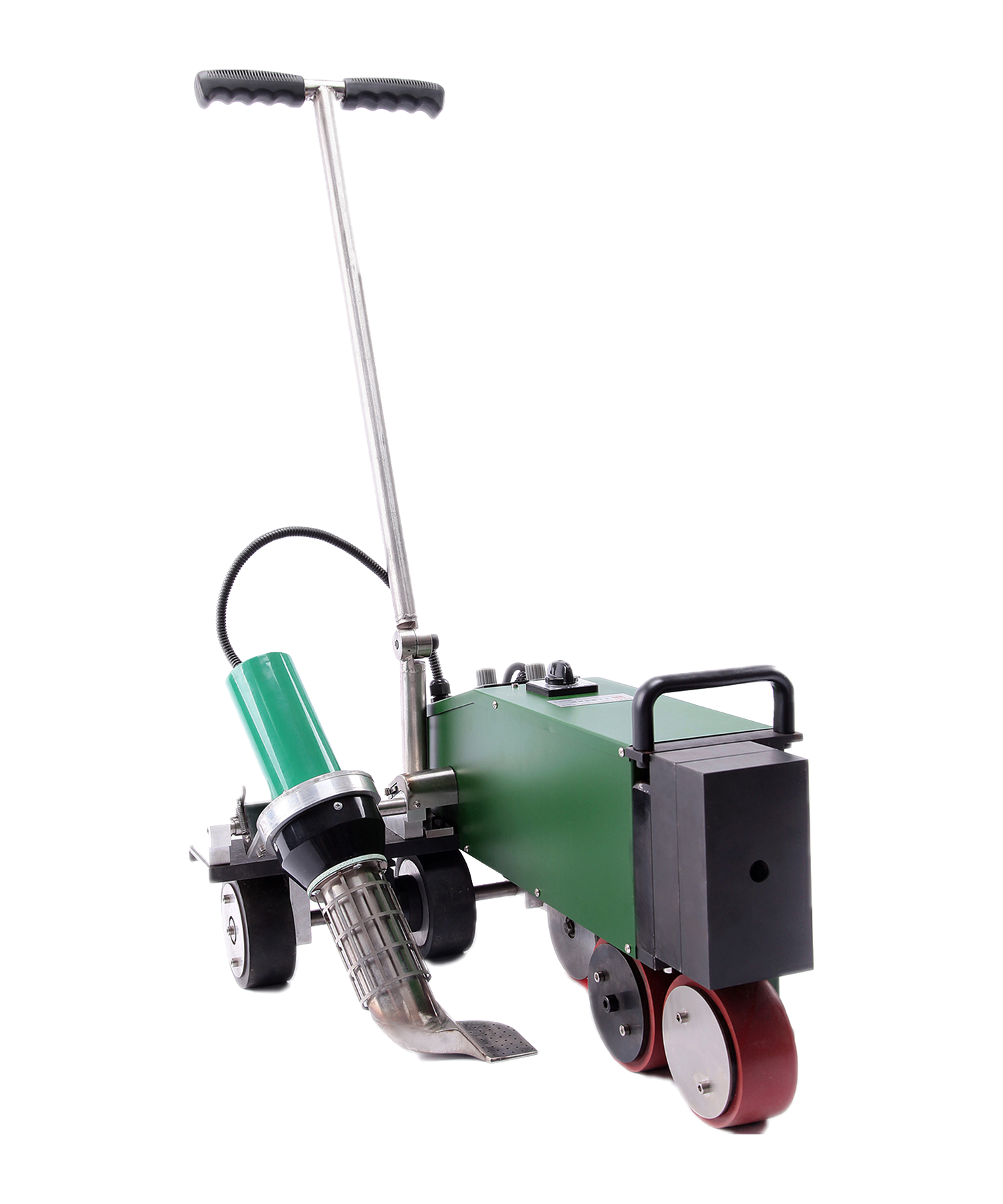
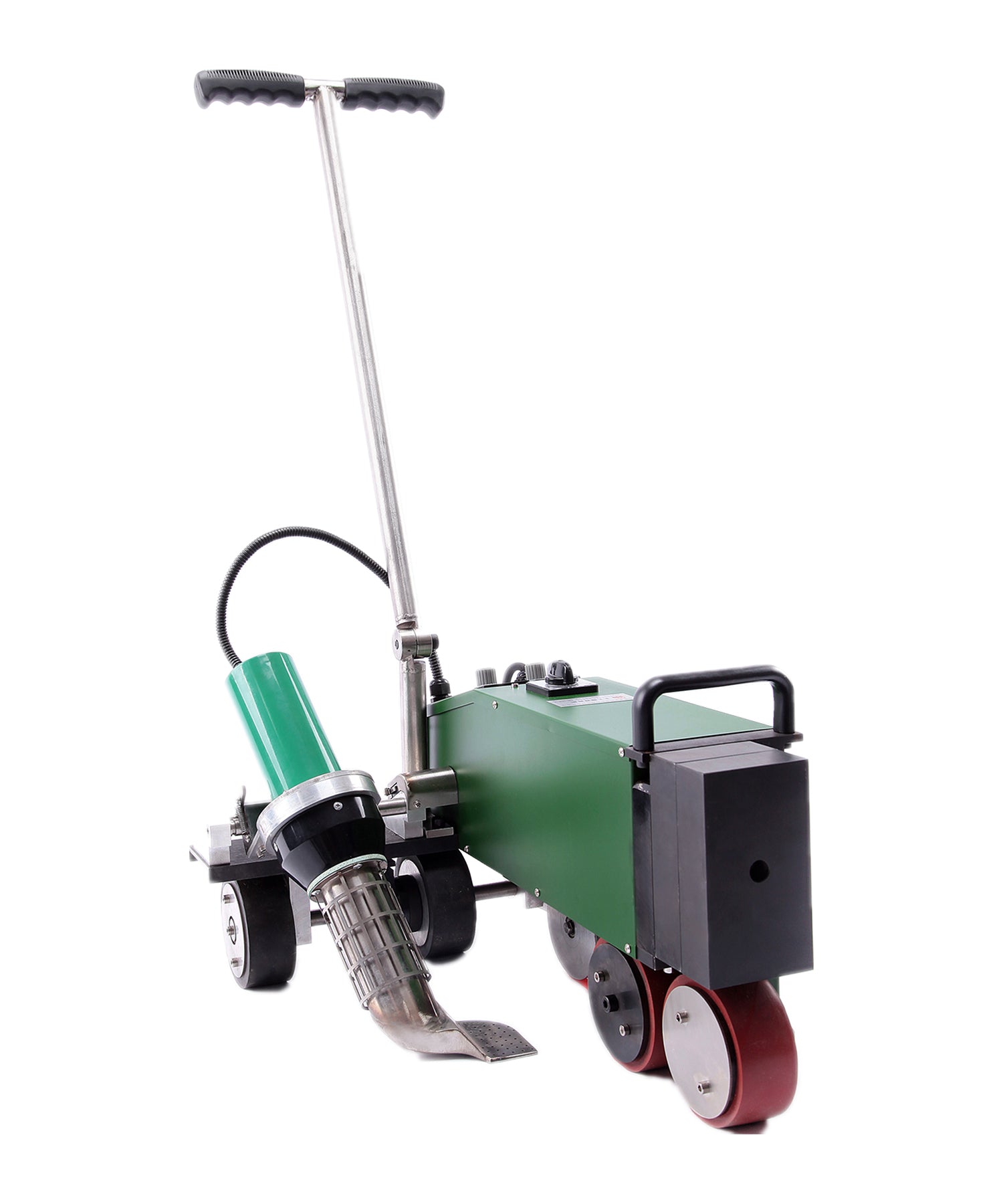
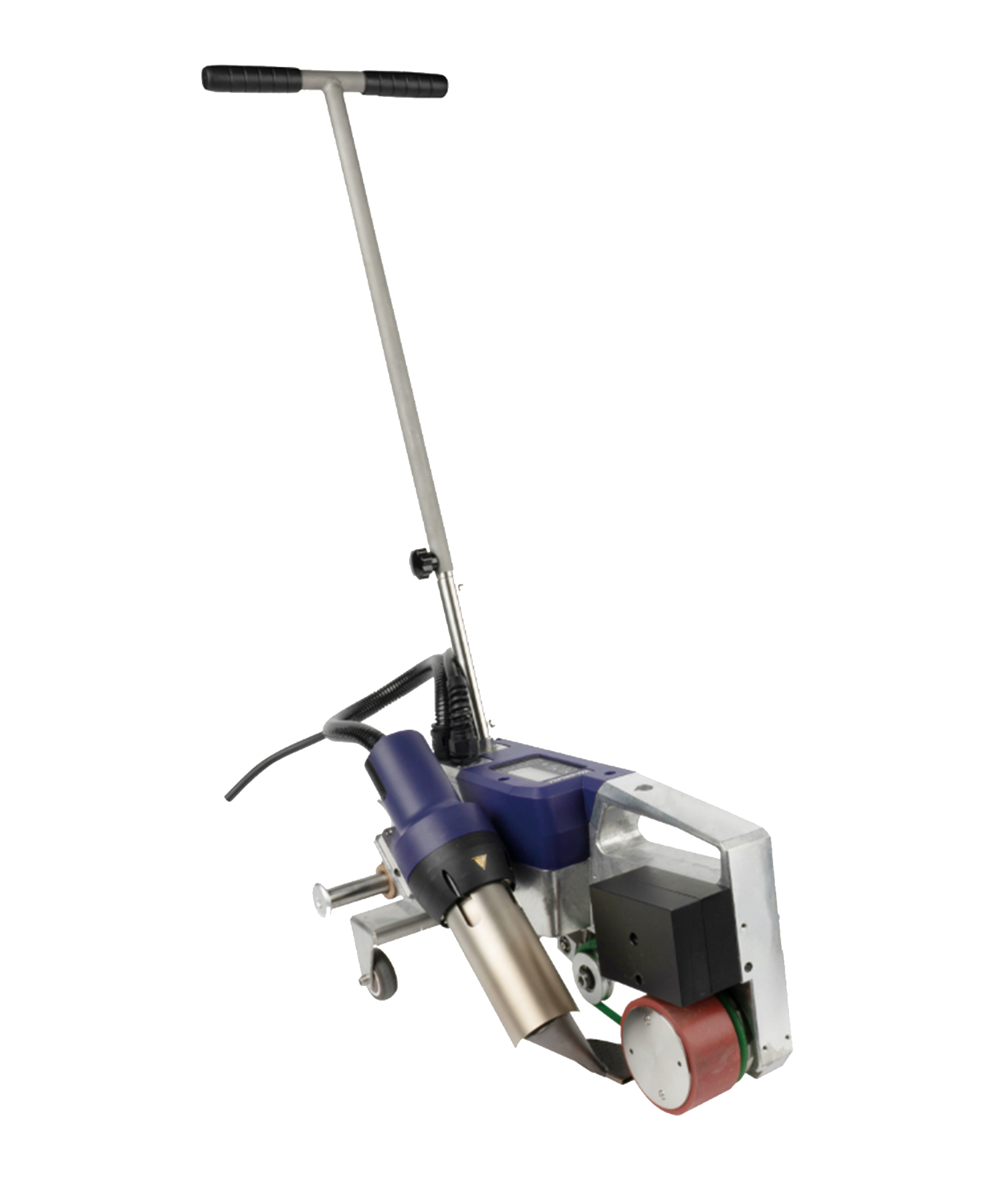
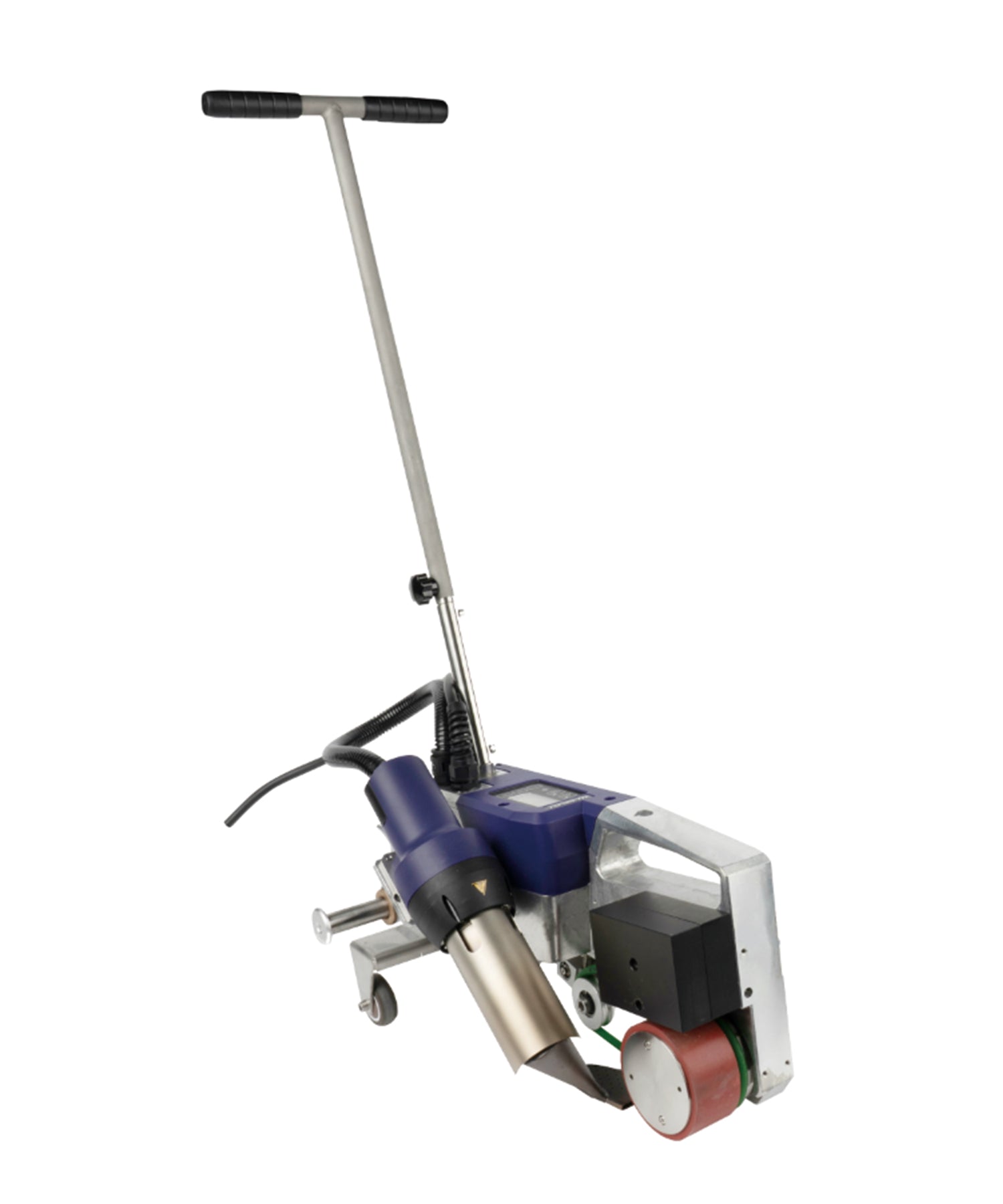
Hot wedge welders use a heated metal wedge that slides between two overlapping thermoplastic sheets, melting both surfaces simultaneously. Pressure rollers then compress the seam as the machine moves forward — producing consistent, leak-proof welds at high speed (1–10 m/min). This category includes:
- Roof40 — Automatic roofing welder for TPO/PVC membranes (3450W, 40mm seam, meets ASTM D6392)
- WGW300 — Heavy-duty wedge welder for geomembrane liners (1750W, 0.8–3.0mm material, up to 8.5 m/min)
- Miniwelder geo2 — Compact wedge welder for thin geomembranes (800W, 0.5–1.5mm material, 3.9kg portable)


How to Choose Based on Material
Material type is the primary selection factor. Different thermoplastics have different melting points and require specific welding methods:
| Material | Welding Method | Standard |
|---|---|---|
| PE / PP (HDPE, Polypropylene) | Extrusion or Hot Wedge | DVS 2207 |
| PVC / TPO Membranes | Hot Air or Hot Wedge | ASTM D6392 |
| Thin Films & Tarpaulins | Hot Air (Overlap) | — |
How to Choose Based on Thickness
Material thickness determines which tool category is appropriate:
- 0.5–3.0 mm (thin films, membranes): Hot air gun for manual work, or hot wedge welder (geo2 / Roof40) for automated seams
- 3–10 mm (medium sheets): Hot air gun with speed welding nozzle for detail work, or extrusion welder for structural joints
- 10–25 mm (thick sheets, tanks): Extrusion welder (Booster EX2 for 10–15mm, Booster EX3 for 15–25mm)
How to Choose Based on Application
- Roofing (TPO/PVC): Roof40 automatic welder for large areas, HT1600 for detail work and flashing
- Geomembrane / Landfill: WGW300 for thick HDPE liners, geo2 for thin pond liners
- Tank Fabrication: Booster EX2/EX3 for PE/PP structural joints
- Tarpaulin & Banner: HT1600 or HT3400 with wide slot nozzle
- Repair Work: HT1600 with speed welding nozzle — lightweight and versatile
Full Comparison Table

| Model | Type | Power | Material Range | Weight | Best For |
|---|---|---|---|---|---|
| Energy HT1600 | Hot Air | 1600W | Thin films & membranes | 0.99 kg | Precision work, repairs |
| Energy HT3400 | Hot Air | 3400W | Wide membranes | 1.2 kg | Large-surface overlap |
| Booster EX2 | Extrusion | 3000W | 10–15 mm PE/PP | 6.4 kg | Tank & pipe fabrication |
| Booster EX3 | Extrusion | 3000W | 15–25 mm PE/PP | 6.9 kg | Heavy civil engineering |
| Roof40 | Hot Wedge | 3450W | TPO/PVC roofing | 15.5 kg | Commercial roofing |
| WGW300 | Hot Wedge | 1750W | 0.8–3.0 mm HDPE | 15 kg | Landfill & mining |
| Miniwelder geo2 | Hot Wedge | 800W | 0.5–1.5 mm | 3.9 kg | Aquaculture & ponds |
Recommended Weissenberg Products
As an official Weldy distributor with 20+ years of experience, Weissenberg offers genuine products with full manufacturer warranty. Here are our top recommendations by use case:
- Best for general-purpose welding: Energy HT1600 — versatile, lightweight, affordable
- Best for heavy-duty overlap welding: Energy HT3400 — high airflow for large surfaces
- Best for tank fabrication: Booster EX2 — precision extrusion for 10–15mm materials
- Best for large-scale civil engineering: Booster EX3 — high output for thick materials
- Best for commercial roofing: Roof40 — automatic, consistent seams
- Best for landfill liners: WGW300 — heavy-duty geomembrane welding
- Best for pond liners: Miniwelder geo2 — portable, thin-film specialist
Frequently Asked Questions
Q: What temperature should I use for welding HDPE?
A: HDPE typically welds at 300–400°C for hot air welding and 380–420°C for extrusion welding. Always refer to DVS 2207 standards and test on scrap material first.
Q: Can I use one hot air gun for both PVC and PE?
A: Yes — the HT1600 and HT3400 support all thermoplastics. You just need to adjust the temperature and use the correct welding rod and nozzle for each material.
Q: What's the difference between extrusion welding and hot air welding?
A: Hot air welding softens the surfaces and uses a thin welding rod as filler. Extrusion welding melts a thick rod inside a barrel and extrudes a large volume of molten material — producing stronger structural joints for thick materials (10mm+).
Q: How do I maintain my Weldy equipment?
A: Clean the air filter and nozzle daily, inspect carbon brushes monthly on brushed-motor tools, run purge cycles on extrusion welders after each shift, and verify temperature calibration every 6 months per ISO 9001 requirements.
Q: Are Weldy products CE certified?
A: Yes. All Weldy equipment supplied by Weissenberg carries CE certification and meets ISO 9001 quality management standards. Full traceability and manufacturer warranty included.
Shop Now
Ready to equip your next project with genuine Weldy tools? Browse the complete product range at Weissenberg Store — your official Weldy distributor. Need help choosing? Contact our technical team for personalized equipment selection guidance backed by 20+ years of industry experience.
Author: Weissenberg Technical Team | 20+ Years in Plastic Welding Industry
Standards Referenced: ASTM D6392, DVS 2207, ISO 9001, CE
This article is for informational purposes. Product specifications may vary by model and region. Always refer to the official product manual for exact parameters.





Leave a comment
This site is protected by hCaptcha and the hCaptcha Privacy Policy and Terms of Service apply.