
What to Look for When Buying an Extrusion Welder: 7 Key Buying Tips for Industrial Fabricators
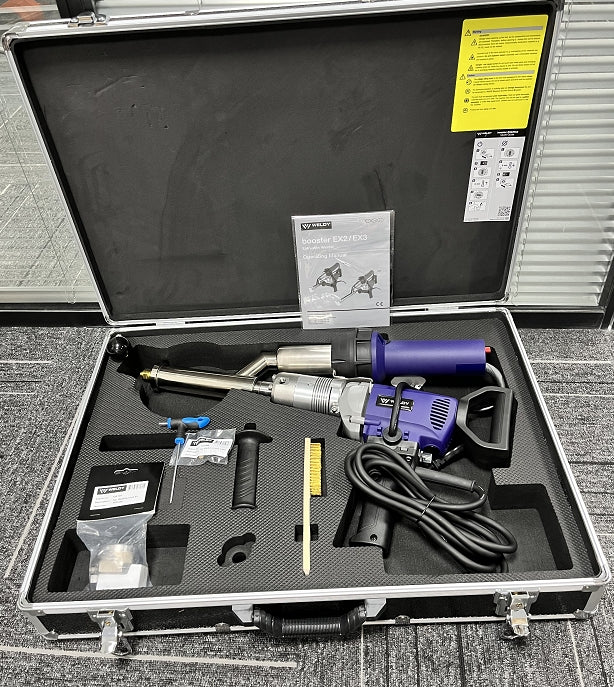
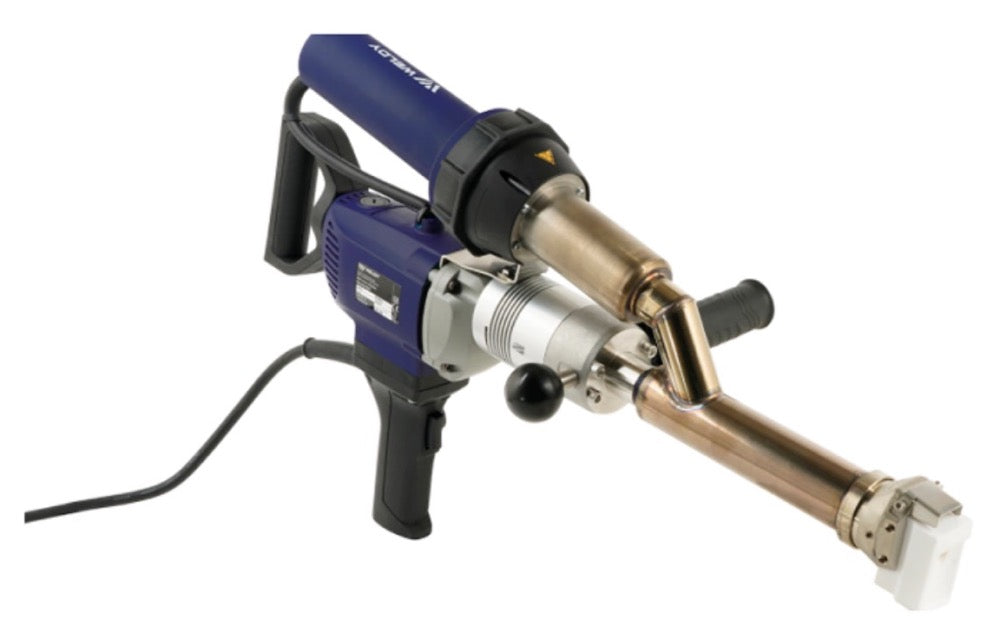
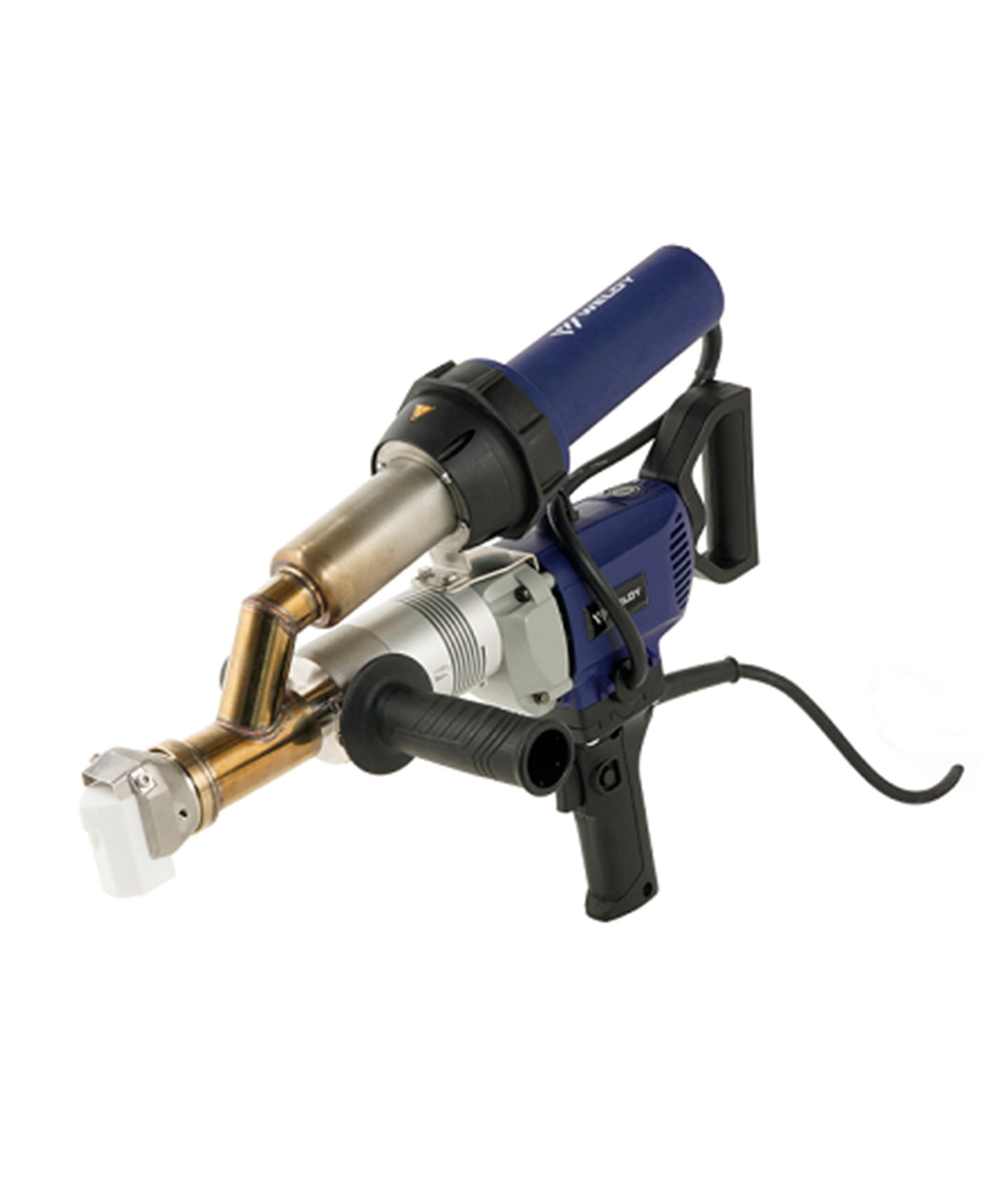
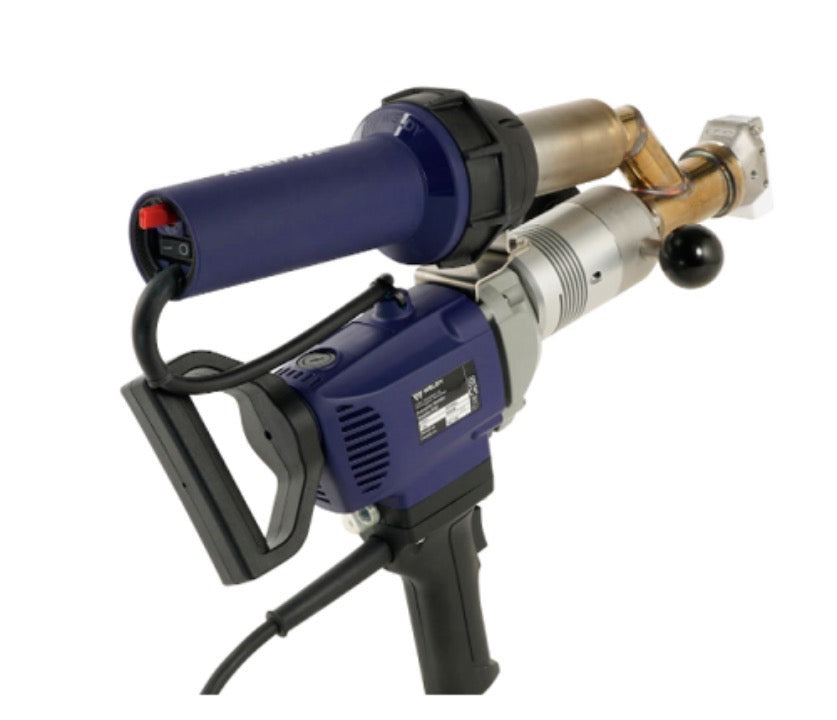
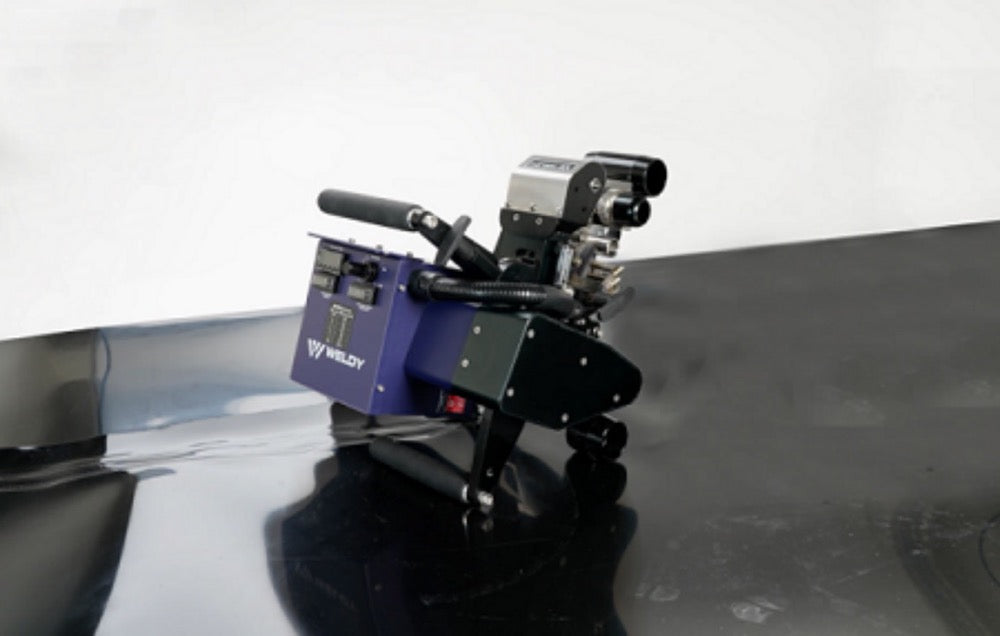
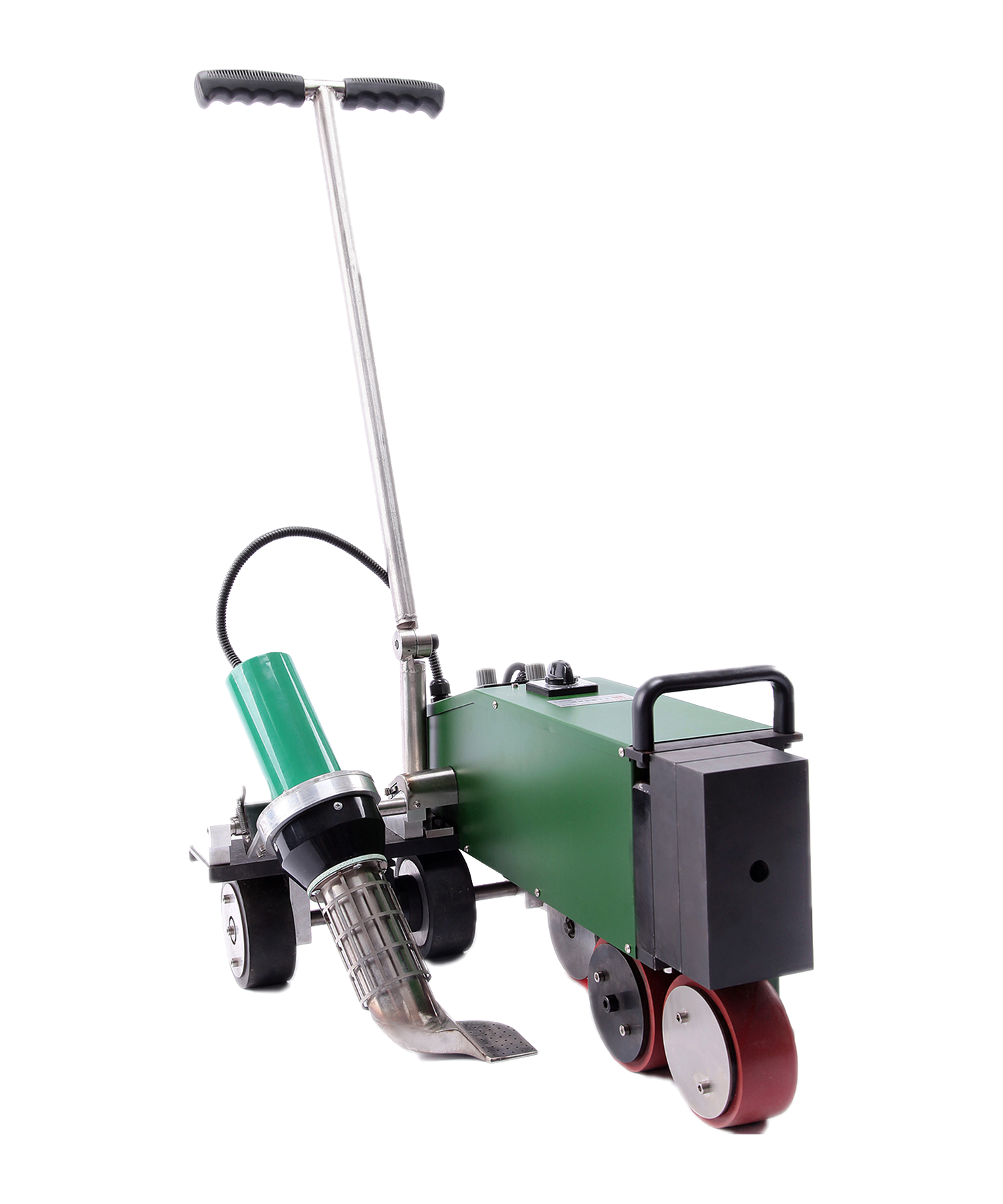
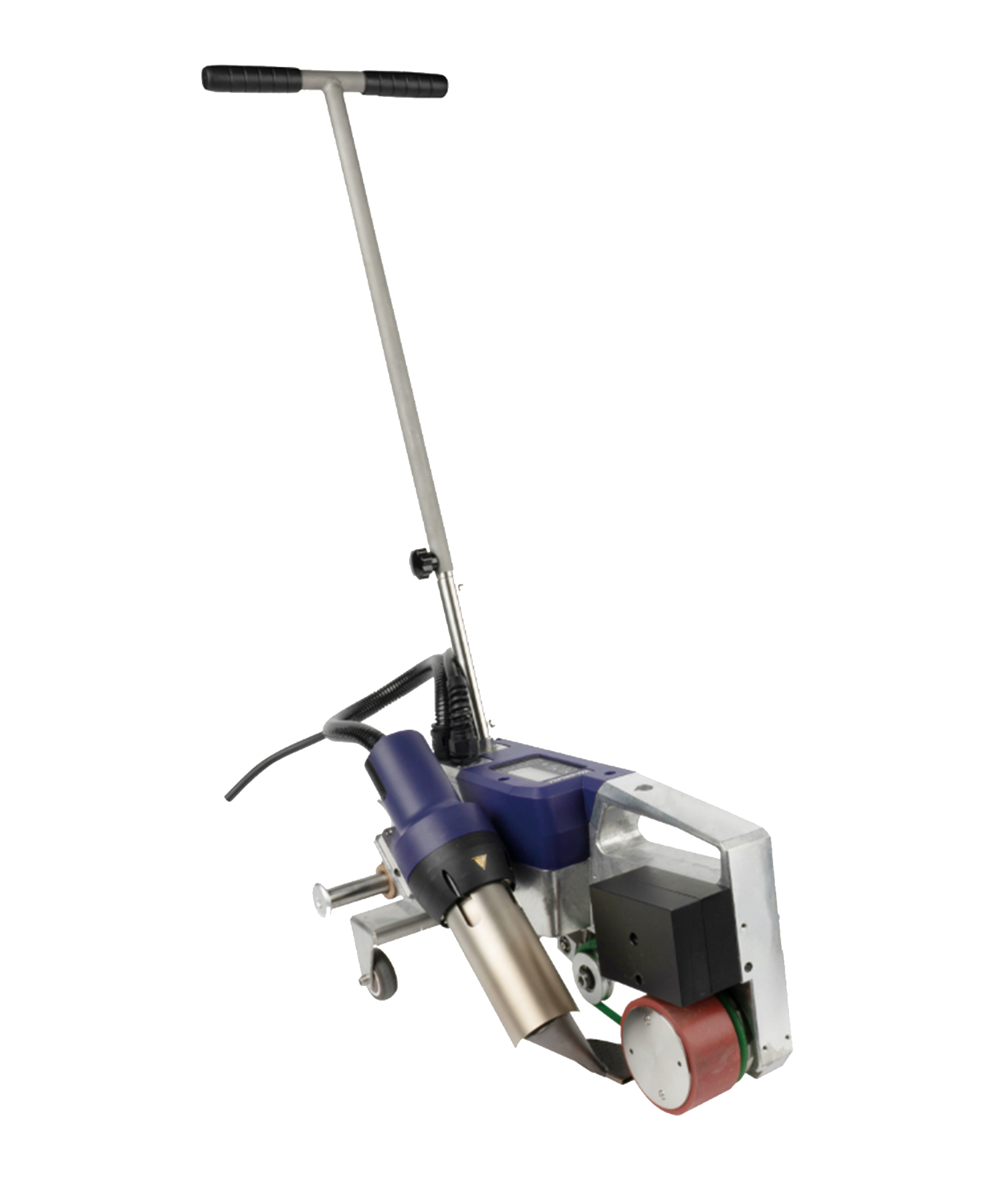
An extrusion welder is one of the most important investments in plastic fabrication. Whether you're building chemical tanks, lining water treatment basins, or fabricating PP scrubbers for semiconductor fabs, the right extrusion welder directly affects your weld quality, production speed, and operating costs. But with multiple models on the market—from the compact Weldy BOOSTER EX2 to the industrial-grade RYH3400C—how do you choose the right one? This buying guide walks through seven critical factors to consider before making your purchase.

1. Material Output Capacity (kg/h)
The most direct measure of an extrusion welder's performance is its material output — how many kilograms of welding rod it can extrude per hour. This determines how fast you can complete a weld seam.
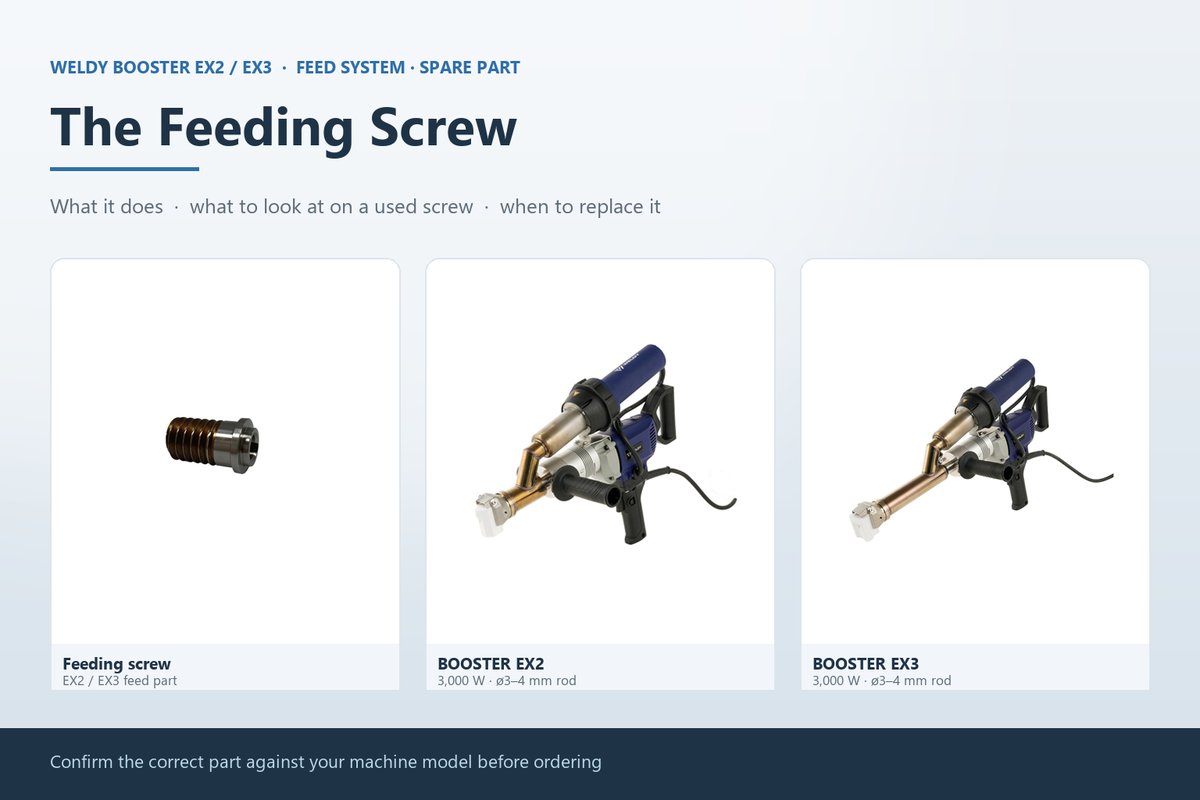
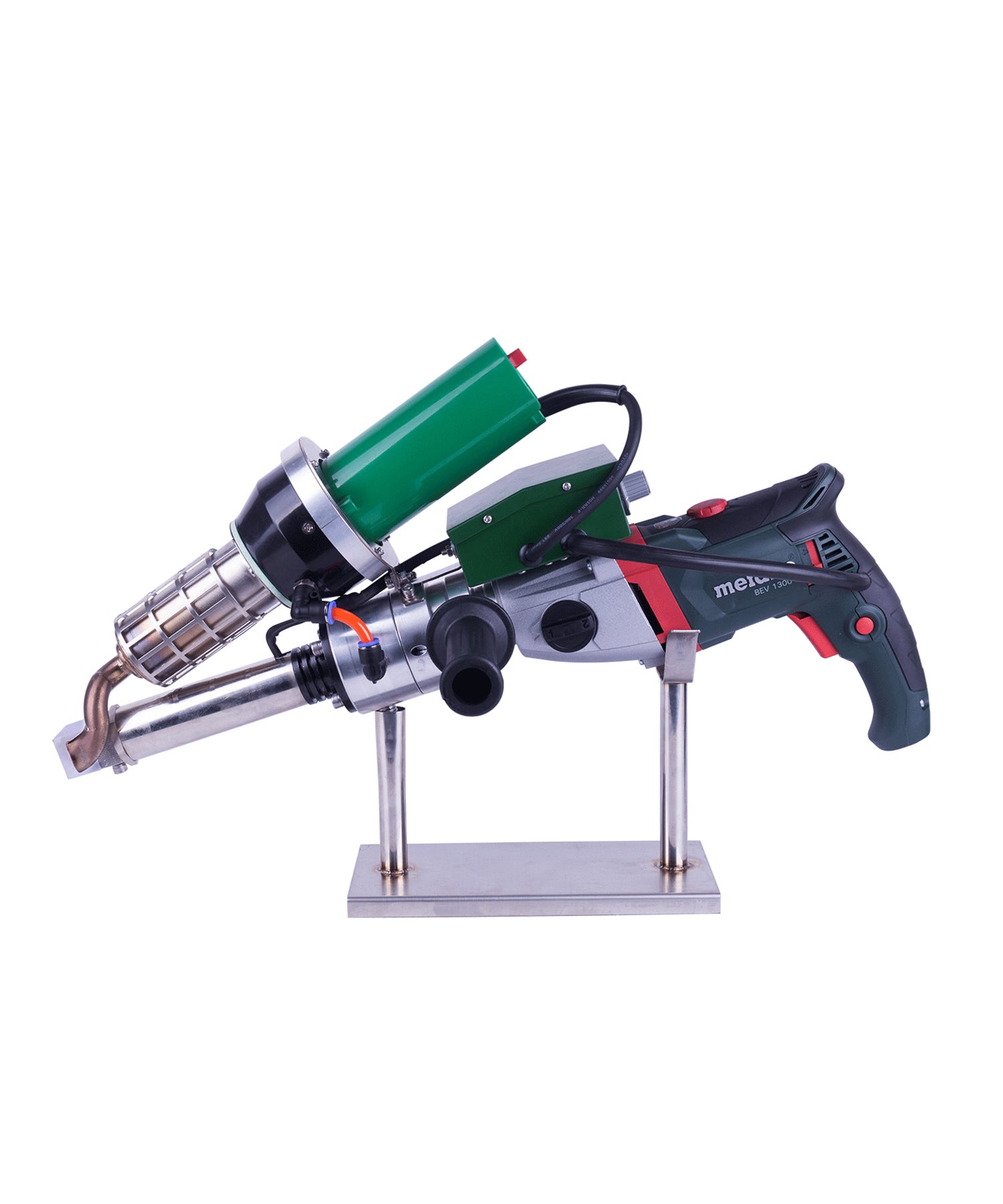
- Entry-level (1.5–2.2 kg/h): Suitable for occasional repairs, small tanks, and light fabrication. The Weldy BOOSTER EX2 delivers 1.5 kg/h (3mm rod) to 2.2 kg/h (4mm rod), making it an excellent choice for workshops with varied but moderate workloads.
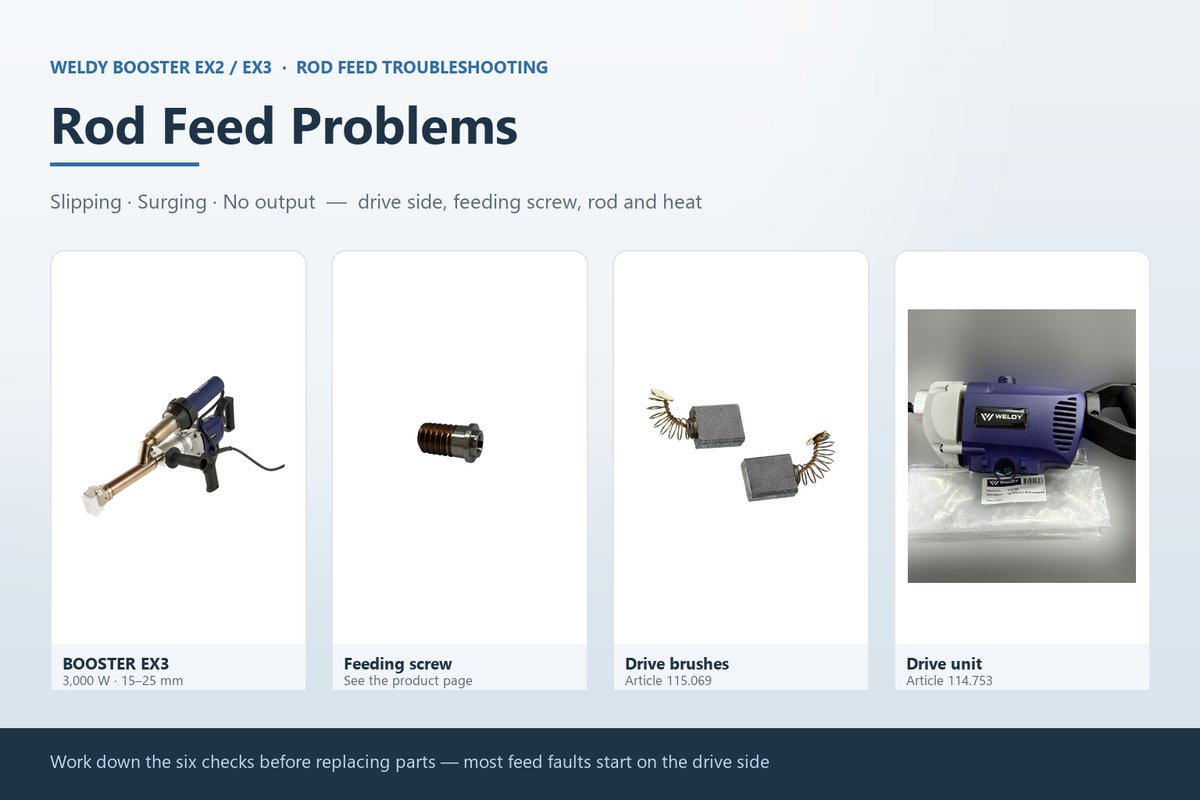
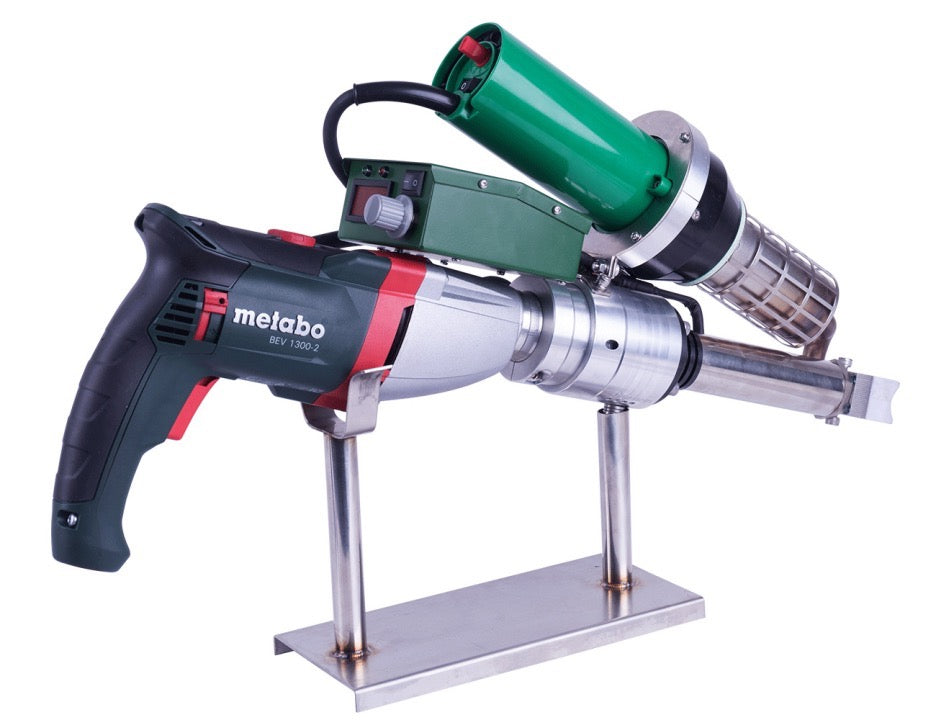
- Mid-range (2.0–2.5 kg/h): Adequate for regular production work. The BOOSTER EX3 outputs up to 2.5 kg/h (3mm) and 3.6 kg/h (4mm), ideal for fabricators handling multiple medium-to-large projects per week.
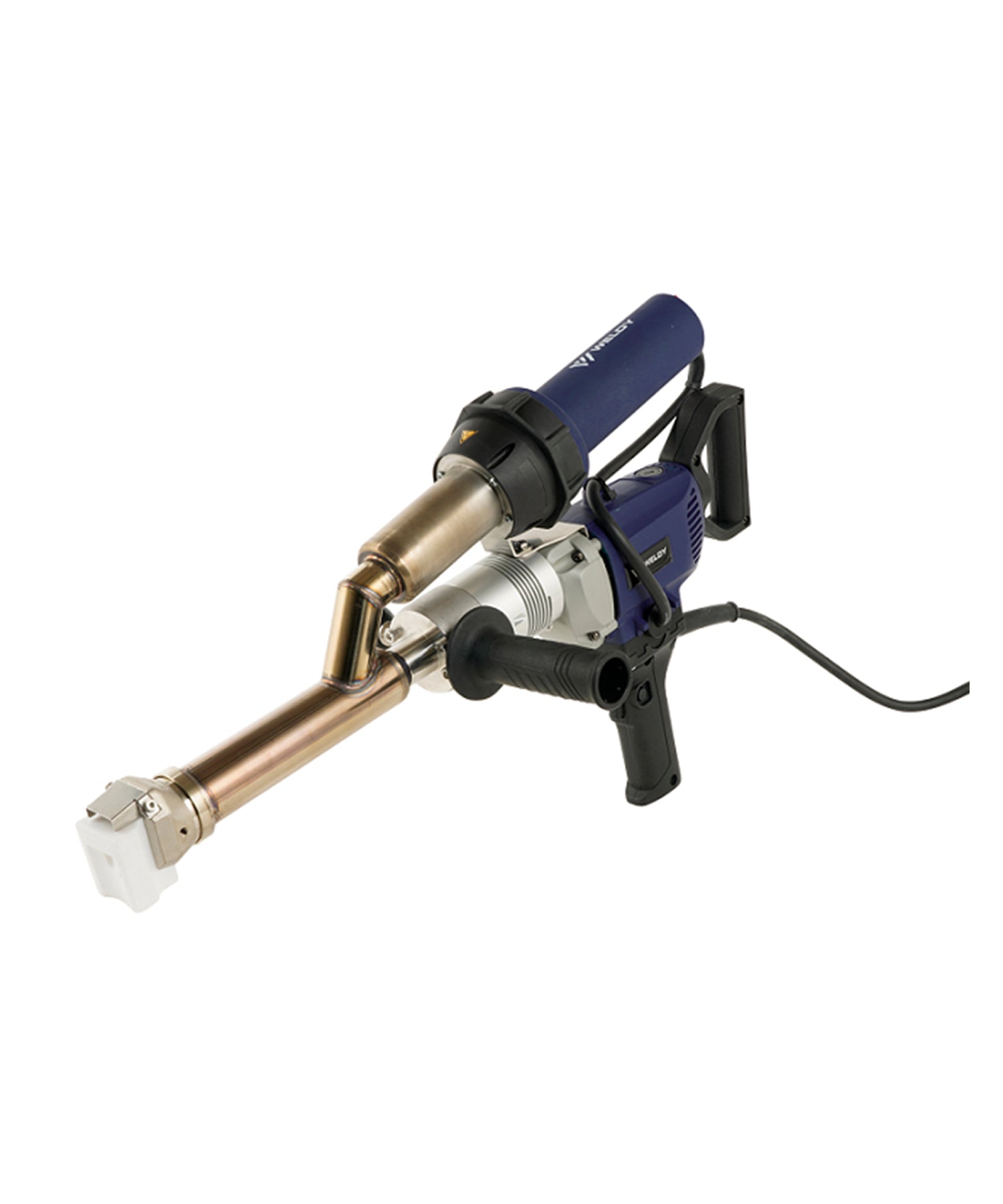
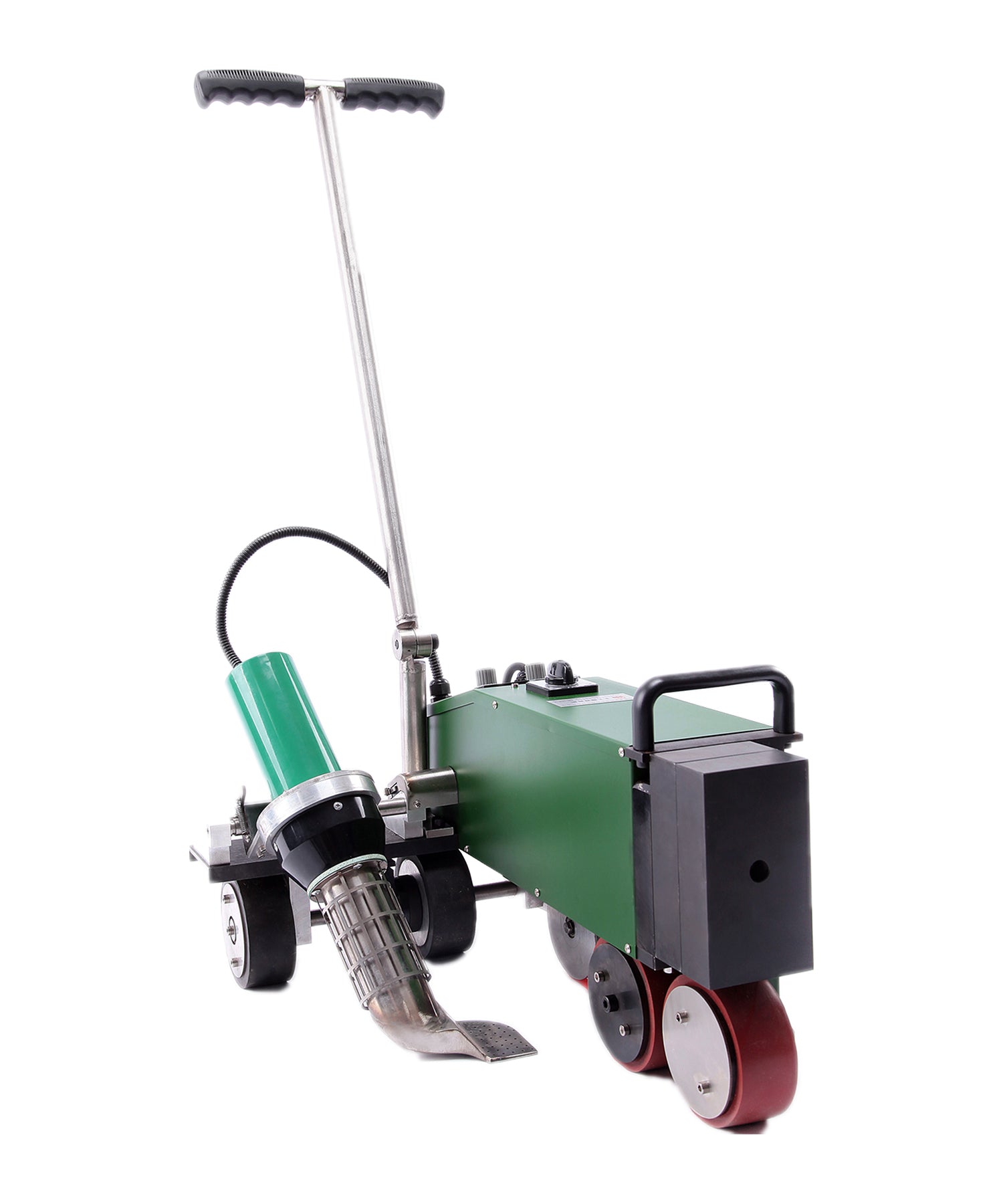
- High-output (2.0–3.0 kg/h): Designed for continuous industrial use. Both the RYH1600C and RYH3400C offer 2.0–3.0 kg/h extrusion volume, built for round-the-clock fabrication in tank manufacturing and lining applications.
Buying tip: Calculate your average daily weld meter requirement. If you need more than 20 meters of 8mm fillet weld per day, step up to a mid-range or high-output model.
2. Material Thickness Compatibility
Different extrusion welders are designed for different material thickness ranges. Selecting a machine that matches your typical workpiece thickness is essential for consistent weld penetration.
| Model | Thickness Range | Best For |
|---|---|---|
| BOOSTER EX2 | 10–15 mm | Chemical tank repair, medium HDPE fabrication |
| BOOSTER EX3 | 15–25 mm | Thick-walled tanks, heavy structural welding |
| RYH1600C | 8–25 mm | Versatile shop use, PP/HDPE fabrication |
| RYH3400C | 10–30 mm | Heavy industrial tanks, large structural fabrications |
Buying tip: If you work primarily with sheet material under 15mm, the BOOSTER EX2 offers excellent value. For fabricators handling both thin and thick materials, the RYH1600C provides the widest usable range.
3. Heating System and Temperature Control
The quality of your weld depends heavily on temperature consistency. Extrusion welders use two independent heating systems — one for the hot air (preheating the base material) and one for the screw/barrel (melting the welding rod).
- Open-loop control: Found on BOOSTER EX2 and EX3. Reliable and simple to use, with stable operation for standard applications. The air-heated screw system ensures uniform heat distribution.
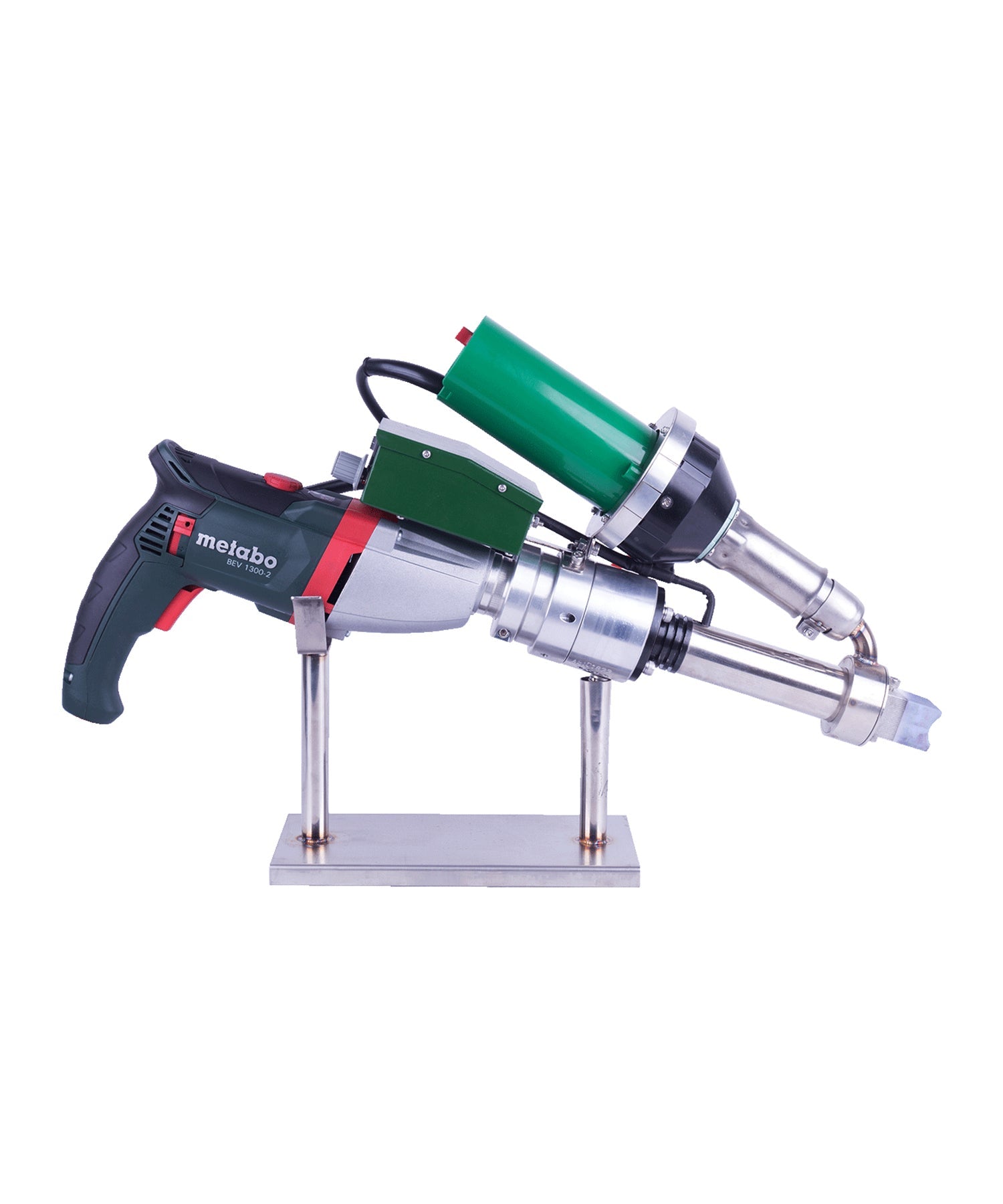
- Dual-zone control with higher hot air power: The RYH1600C offers 1600W hot air (20–620°C range) and 800W rod heating, while the RYH3400C boosts hot air to 3400W for faster preheating on thick materials. Both use METABO driving motors for smooth, consistent extrusion.
Buying tip: For applications requiring precise temperature profiling (e.g., PP welding where thermal degradation temperature is critical), the wider temperature range of the RYH series gives you more control. For standard HDPE welding, the BOOSTER series' open-loop control is sufficient and cost-effective.

4. Weight and Portability
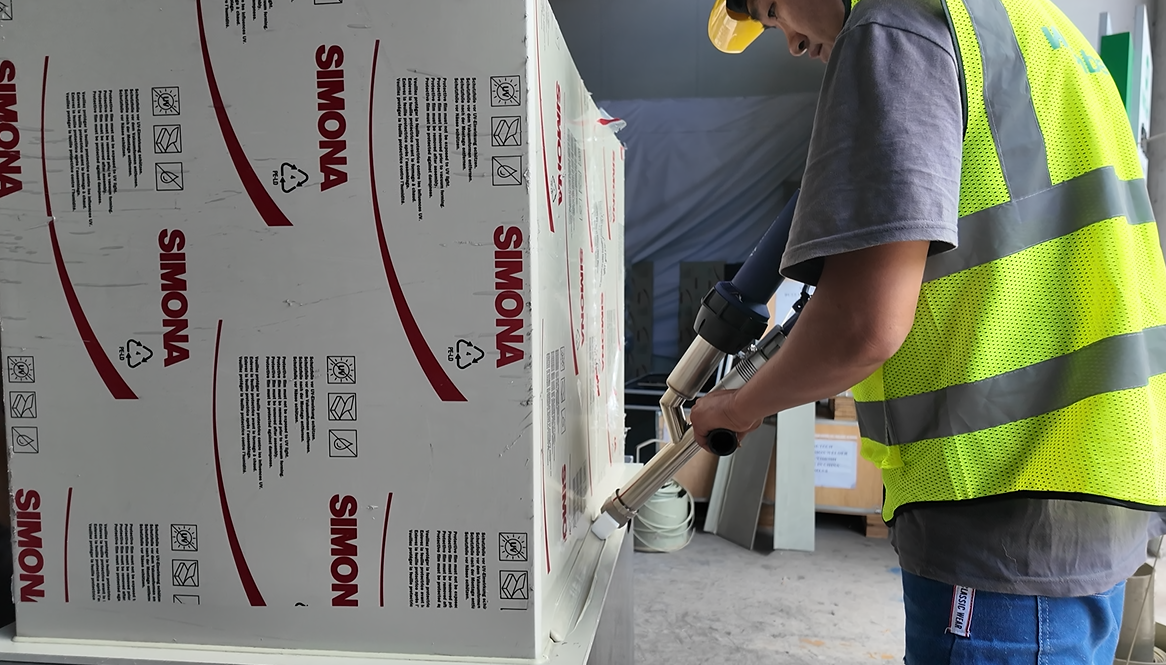
Extrusion welding often involves working at height (tank top seams), in confined spaces (scrubber interiors), or on large flat surfaces where you move along the seam continuously. Machine weight directly affects operator fatigue.
- BOOSTER EX2: 6.4 kg — Lightest option, ideal for one-handed operation and overhead work.
- BOOSTER EX3: 6.9 kg — Still very portable, with higher output than the EX2.
- RYH1600C / RYH3400C: 7.2 kg each — Slightly heavier but still manageable for single-operator use over full work shifts.
Buying tip: If your operators work 8+ hour shifts doing continuous extrusion, every kilogram matters. Consider the BOOSTER EX2 or EX3 for fatigue-sensitive environments.
5. Welding Rod Diameter Compatibility
All four models support 3.0mm to 4.0mm welding rods. The RYH1600C and RYH3400C additionally support 5.0mm rods, which can significantly increase deposition rate on thick-section welds.
Buying tip: If you frequently weld material over 20mm thick, the ability to use 5mm welding rods on the RYH series reduces the number of passes needed, saving both time and consumable costs.
6. Motor Quality and Reliability
The driving motor is the heart of an extrusion welder. A high-quality motor means consistent feed rate, less downtime, and longer service life. The RYH1600C and RYH3400C feature METABO driving motors, a German brand known for industrial-grade durability and smooth operation under continuous load.
The BOOSTER EX2 and EX3 use Weldy's own drive system, which is proven reliable for light to medium industrial use and backed by Weldy's global service network.
Buying tip: For 24/7 production environments, invest in the METABO-equipped RYH series. For job-shop or maintenance applications, the BOOSTER series offers excellent reliability at a lower entry price.
7. Total Cost of Ownership
When comparing extrusion welders, look beyond the purchase price:
- Consumable costs: Welding shoes, heating elements, and drive rollers wear over time. All Weissenberg models stock compatible spares.
- Warranty and support: Weissenberg provides technical support and after-sales service for all models. Weldy BOOSTER series additionally benefits from Leister's global service infrastructure.
- Energy efficiency: Higher hot air wattage (like the RYH3400C's 3400W) means faster preheating and shorter weld cycles, reducing total energy consumption per weld.
Buying tip: Calculate your cost per meter of weld over a 12-month period, factoring in consumables, energy, and labor. A higher-priced machine with faster throughput often delivers lower total cost.

Quick Selection Guide
| Your Application | Recommended Model | Why |
|---|---|---|
| Occasional repair & light fabrication | BOOSTER EX2 | Lightest weight, lowest cost, sufficient for intermittent use |
| Mid-volume tank & structural welding | BOOSTER EX3 | Higher output, handles up to 25mm material |
| Versatile shop / multiple materials | RYH1600C | METABO motor, 3-5mm rod support, widest thickness range |
| Heavy industrial / high-volume production | RYH3400C | 3400W hot air, maximum throughput, industrial-grade reliability |
Frequently Asked Questions
Q: Can I use an extrusion welder for both HDPE and PP?
A: Yes. All models listed support both HDPE and PP, as well as LDPE and LLDPE. The key is to adjust temperature settings according to the material's melting point — HDPE typically welds at 200–260°C, while PP requires 220–280°C.
Q: What's the difference between an extrusion welder and a hot air gun?
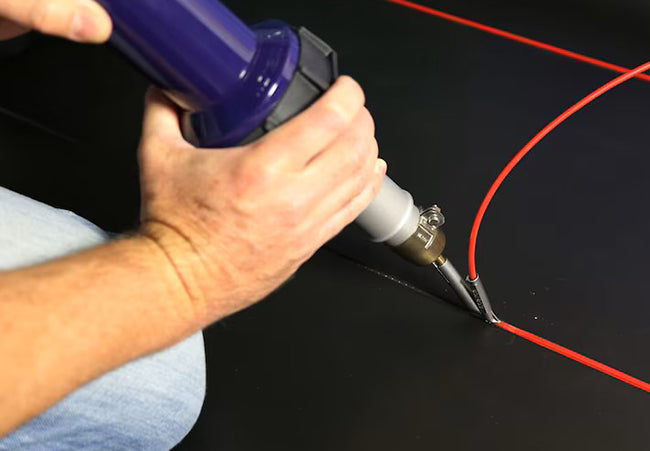
A: A hot air gun only preheats the base material and requires a separate welding rod feeder. An extrusion welder combines material preheating, rod melting, and pressure application in one tool, delivering stronger, faster, and more consistent welds — essential for structural applications like chemical tank fabrication.
Q: How often should I replace the welding shoe?
A: Welding shoe life depends on usage frequency and material. With regular HDPE/PP welding, expect 3–6 months of daily use. Inspect the shoe weekly — if you see visible wear on the contact surface or inconsistent weld bead formation, it's time to replace. We stock compatible shoes for all models in our extrusion welder collection.
Q: Do I need a preheater for thick material?
A: For material over 15mm, preheating the joint area with a hot air gun (e.g., the Weldy hot air gun series) before extrusion welding reduces thermal stress and improves penetration. The RYH3400C's 3400W hot air system can serve as both preheater and welding heat source.
Q: Which extrusion welder is best for chemical tank fabrication?
A: For chemical tanks in water treatment or electroplating facilities, we recommend the RYH1600C or RYH3400C for their METABO motor reliability and wide temperature control range. The BOOSTER EX3 is also suitable for medium-sized tanks up to 20m³.
Q: Can beginners use extrusion welders?
A: Yes. The BOOSTER EX2 is particularly beginner-friendly due to its lighter weight and simpler open-loop temperature control. We recommend starting with scrap material to practice feed speed and angle before moving to production work. All models come with user manuals and Weissenberg provides technical support.
Ready to Choose Your Extrusion Welder?
Every fabrication shop has different requirements — material type, throughput needs, budget, and operator experience all play a role in the right choice. Browse our full extrusion welder collection to compare specifications, or contact our team for personalized recommendations based on your specific application.





Leave a comment
This site is protected by hCaptcha and the hCaptcha Privacy Policy and Terms of Service apply.