
Choosing the Right Equipment Starts With Your Work
Contractors repairing PVC tarpaulins on a job site, workshops fabricating HDPE containers, roofing crews installing TPO membranes — all need plastic welding equipment. But the tool that works for one rarely works for the other. Choosing the right equipment depends on four practical factors:
- Material type — PVC, PP, PE, and other thermoplastics each require specific temperature ranges and welding methods
- Welding thickness — thin membranes (1–3 mm) and structural sheets (10 mm+) demand different tools
- Application — repair, light fabrication, or daily production work
- Working frequency — occasional use, daily work, or continuous operation
Weissenberg Store supplies professional handheld plastic welding tools and accessories — including the full Weldy product line from the Leister Group. This guide walks you through each equipment type so you can match the right tool to your work, not the other way around.
Browse all plastic welding tools →
Types of Plastic Welding Equipment at a Glance
Handheld plastic welding equipment falls into three main categories. The table below gives you a quick overview before we examine each in detail:
| Tool Type | Best For | Materials | Typical Applications |
|---|---|---|---|
| Hot Air Welder | Plastic repair, thin sheets, light fabrication | PVC, PP, PE | Tarpaulin repair, roofing details, bumper restoration, floor welding, membrane work |
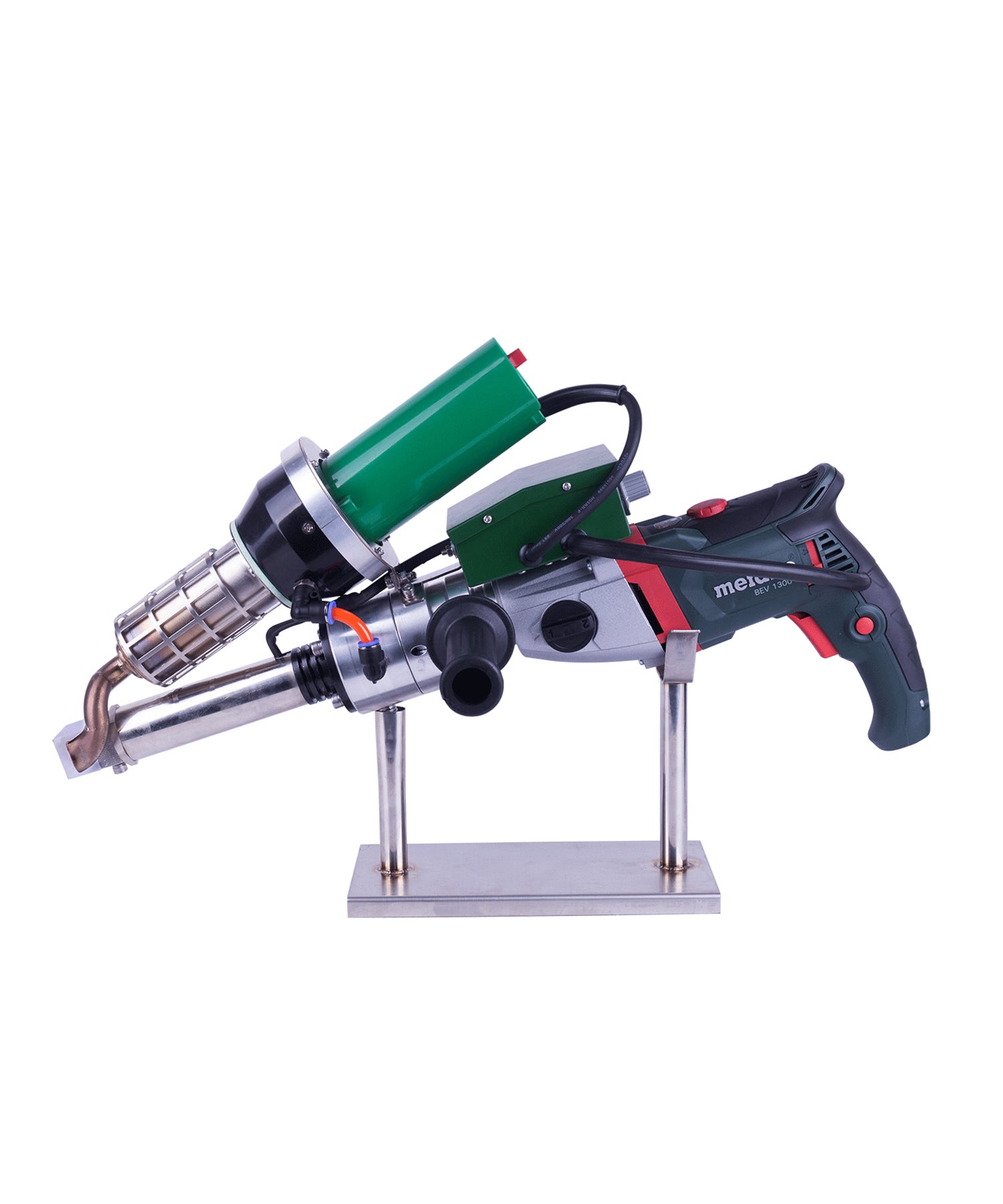
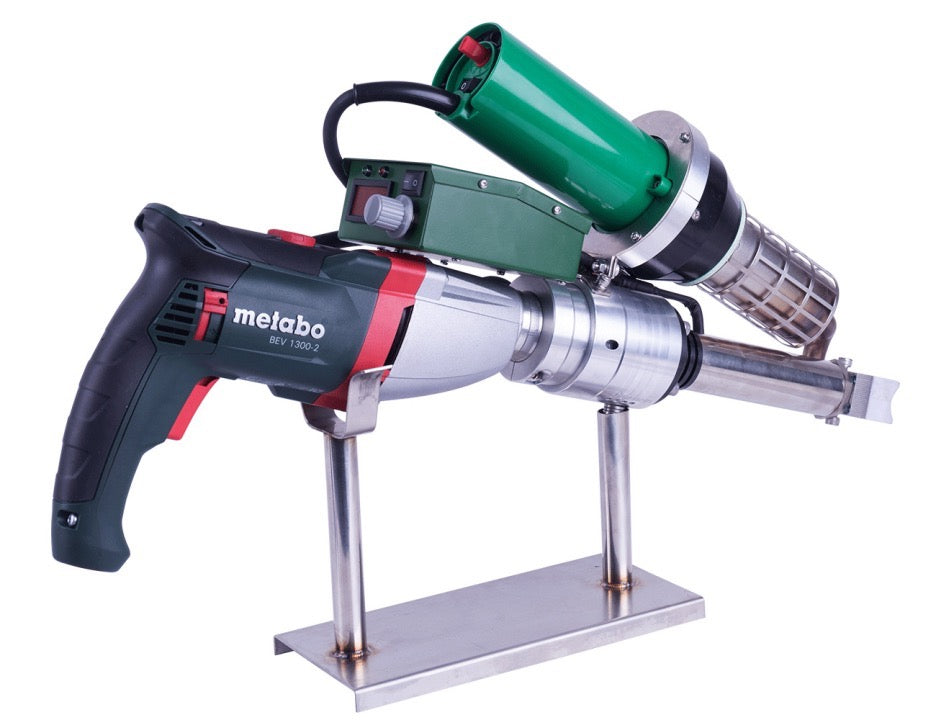
| Extrusion Welder | Thick-sheet fabrication, structural joints | HDPE, PP | Tank and container fabrication, pipe joints, chemical equipment, industrial housings |
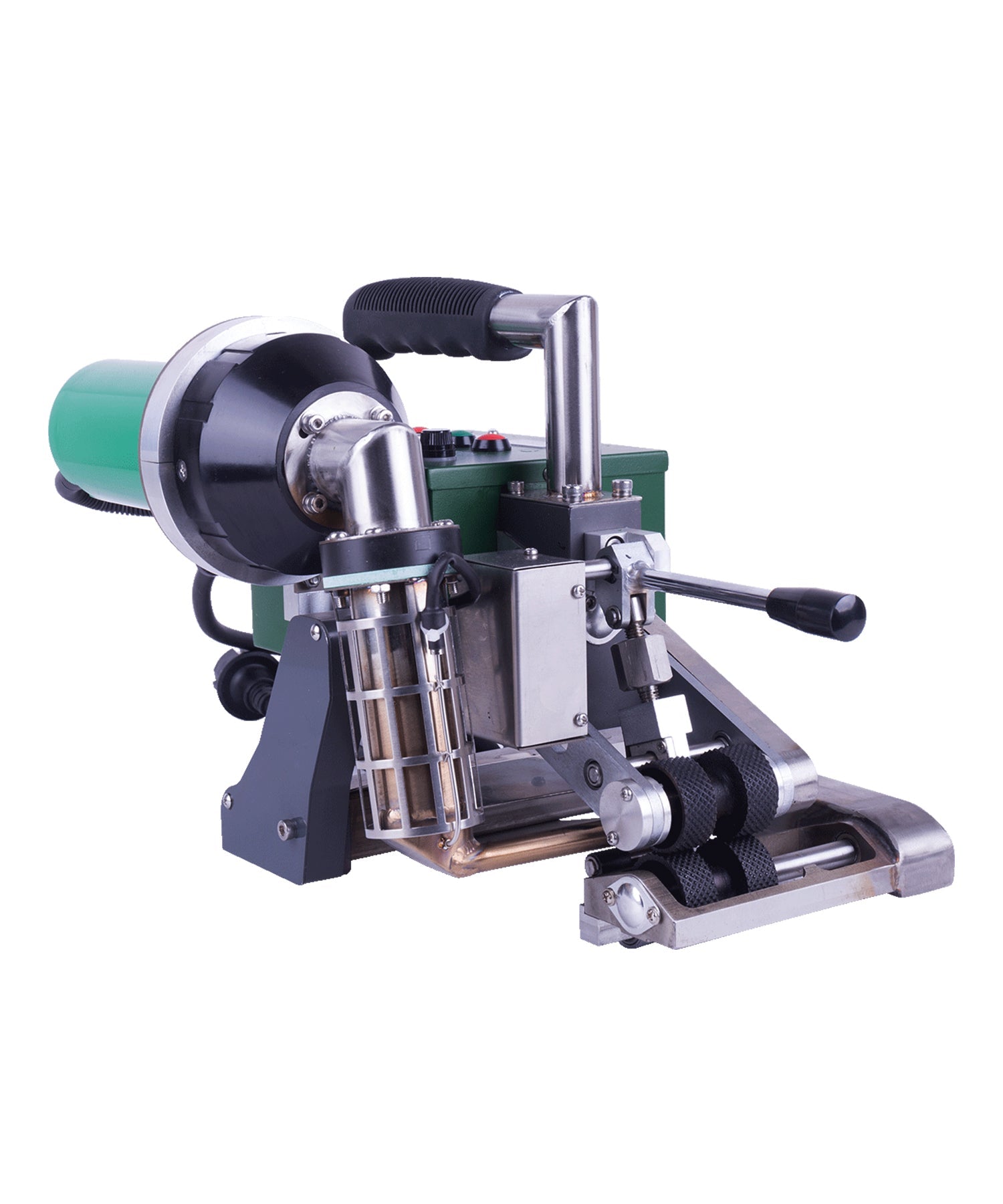
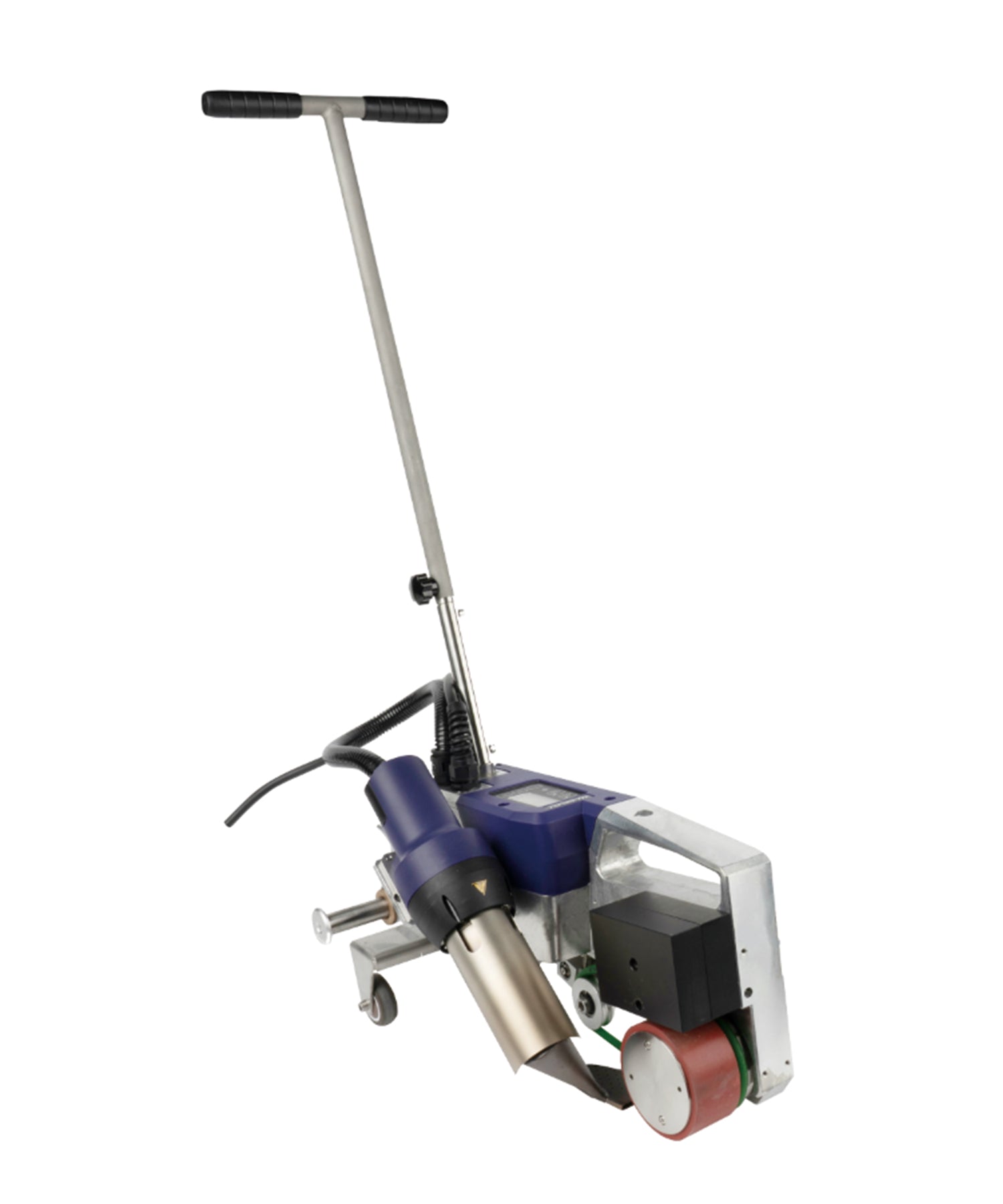
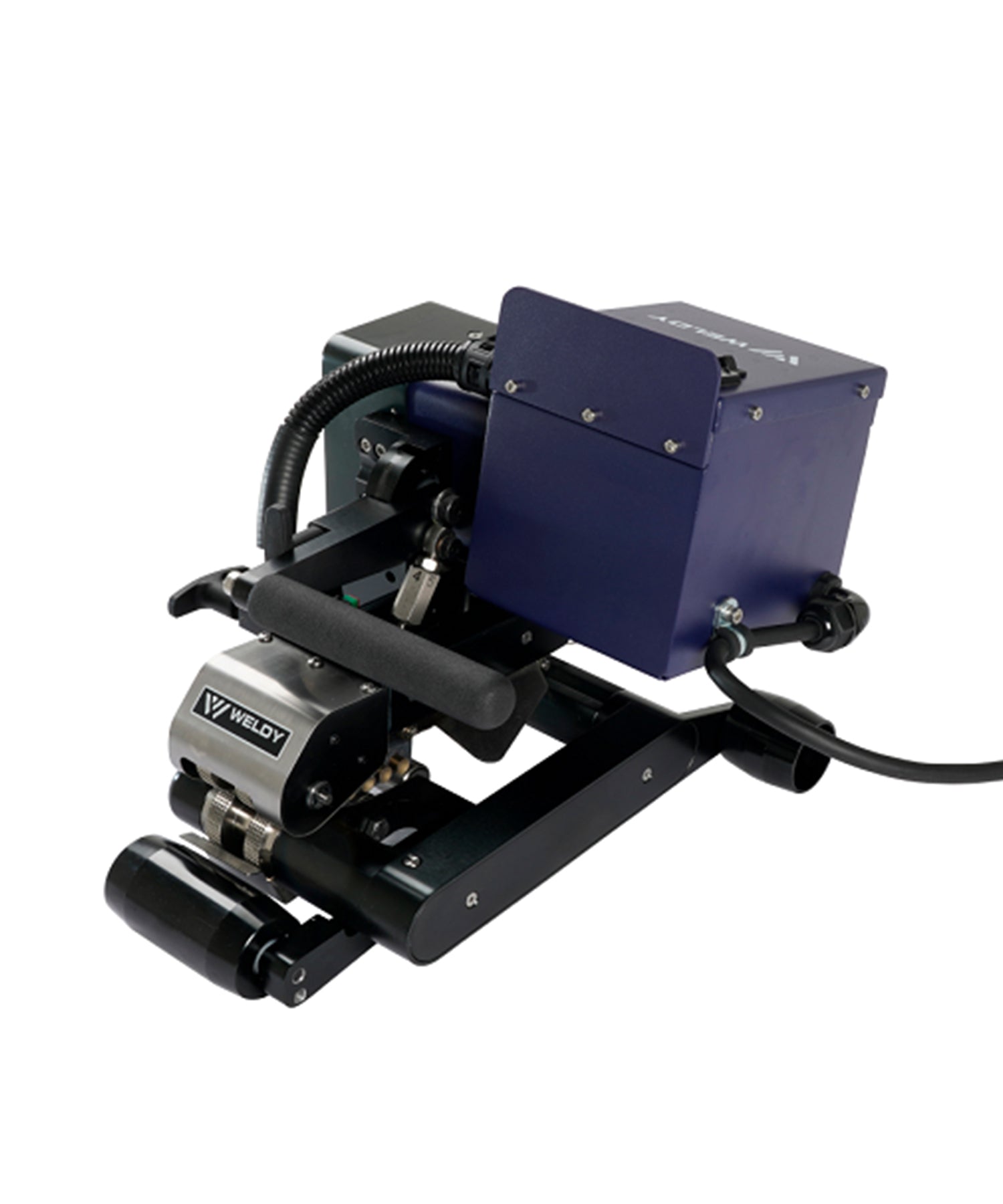
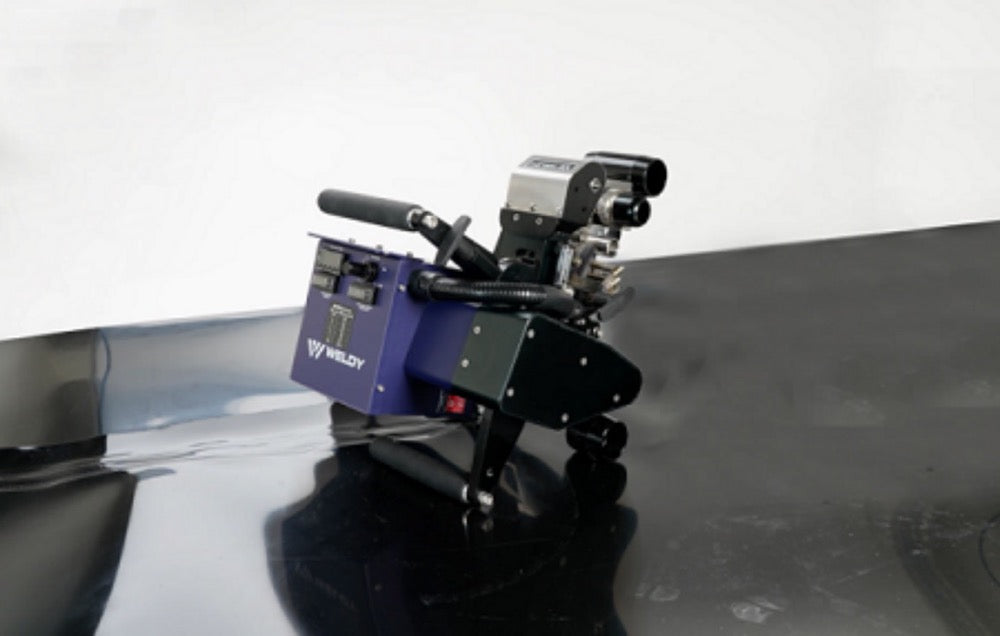
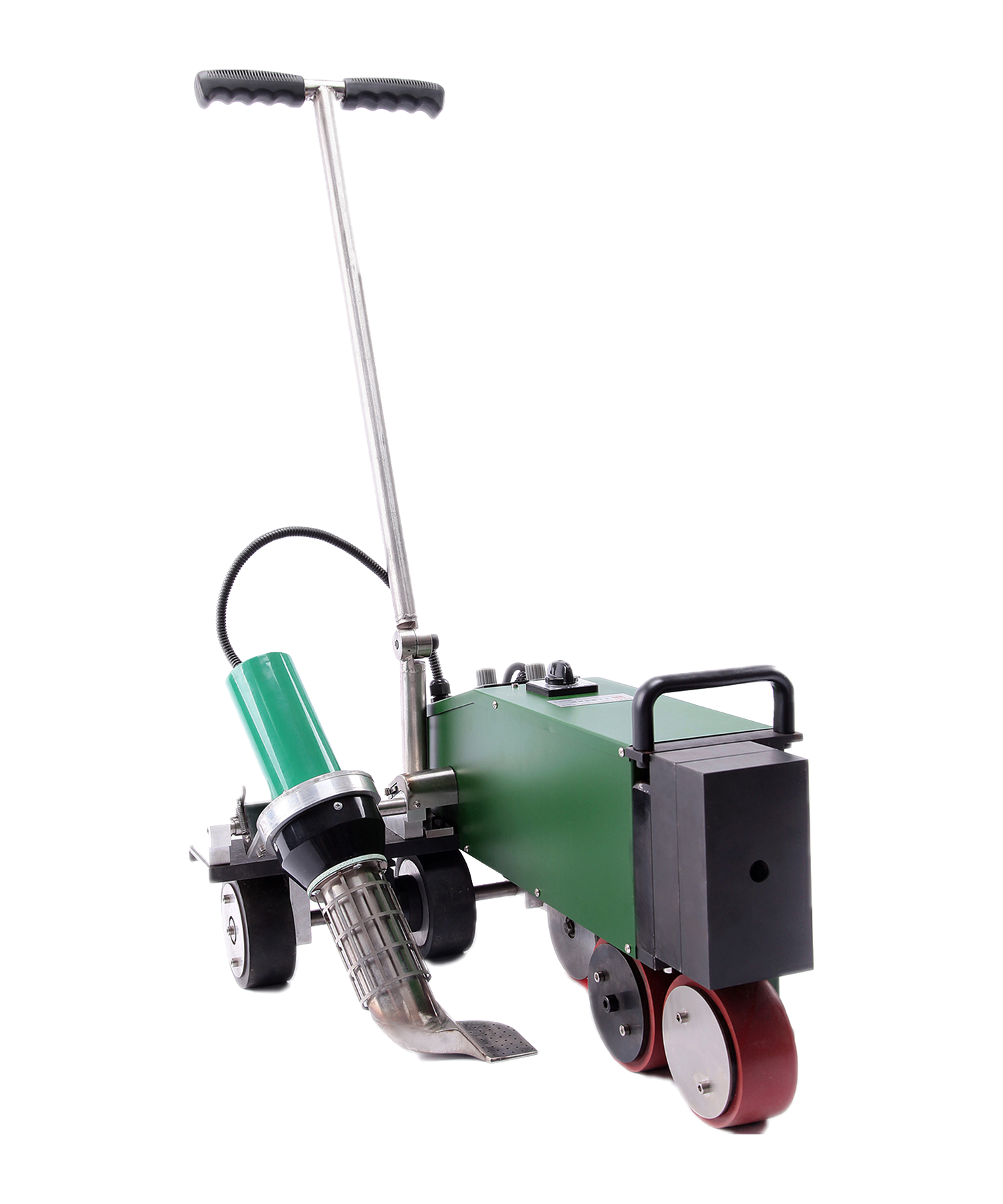
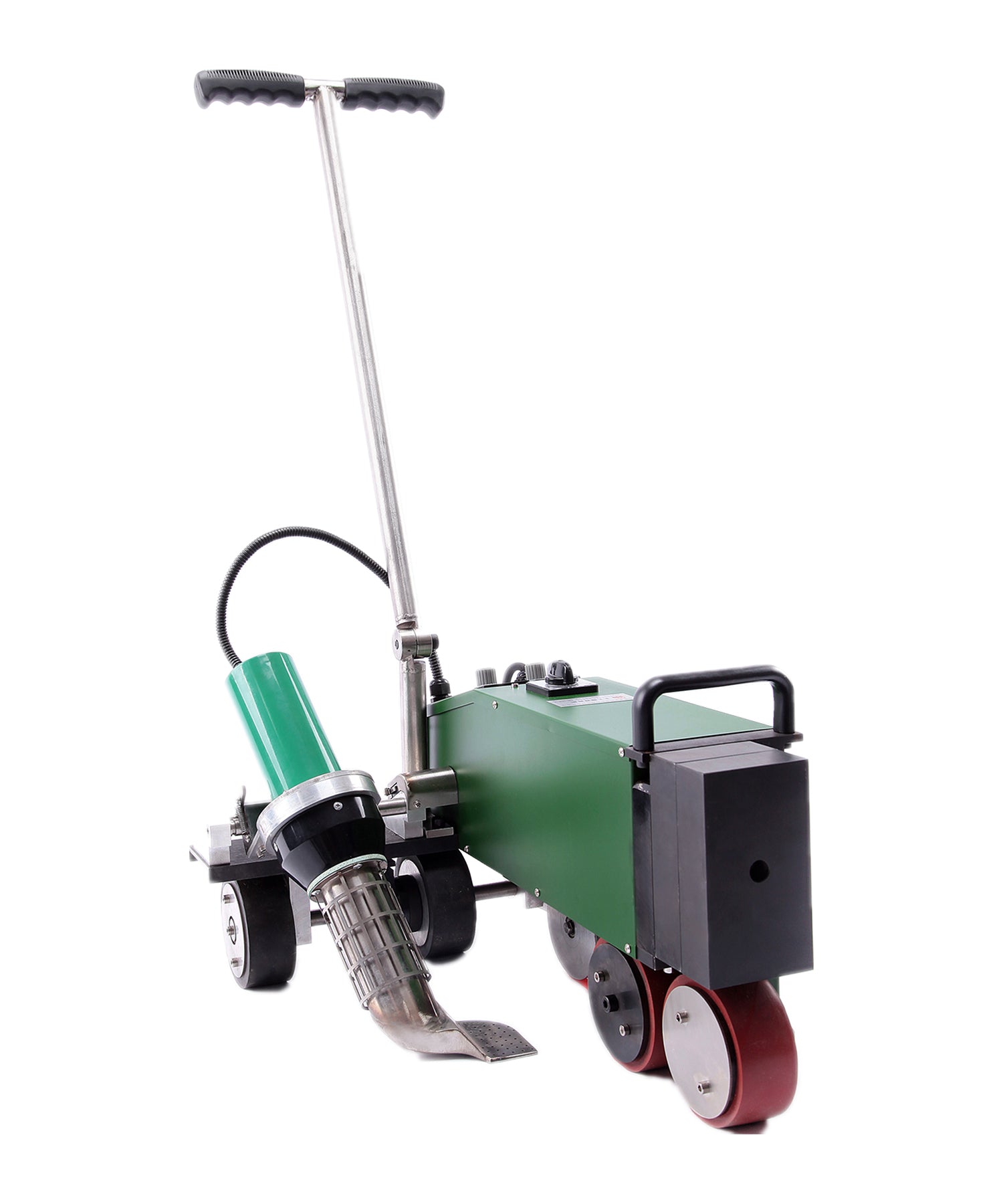
| Automatic Membrane Welder | Large-area membrane seams | PVC, TPO, HDPE | Roofing membrane installation, geomembrane liner welding, tunnel waterproofing |
For most repair professionals and light fabricators, a hot air welder covers the majority of daily work. Extrusion welders add structural capability for thicker materials. Automatic membrane welders handle the specialized demands of roofing and civil engineering projects.
Hot Air Welders: The Foundation of Plastic Welding Work
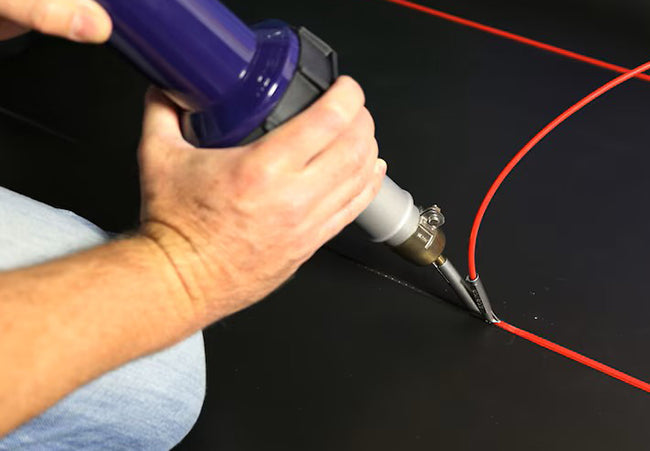
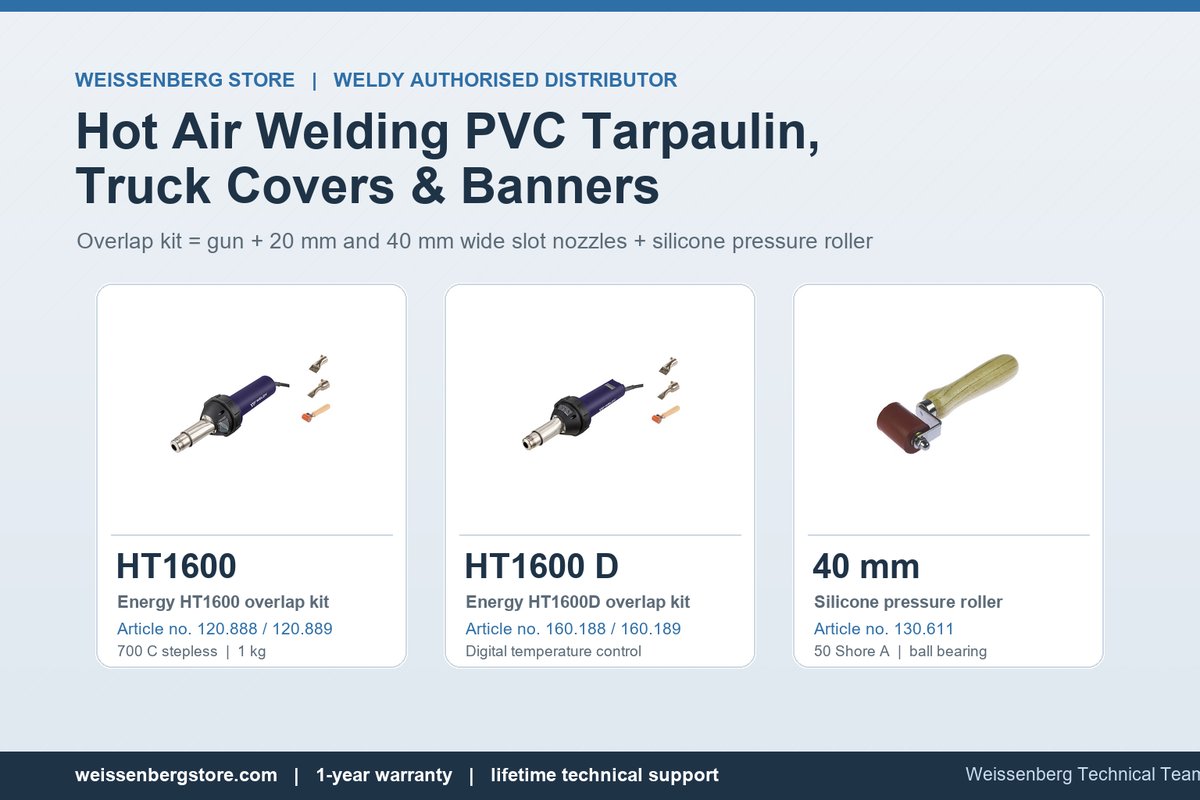
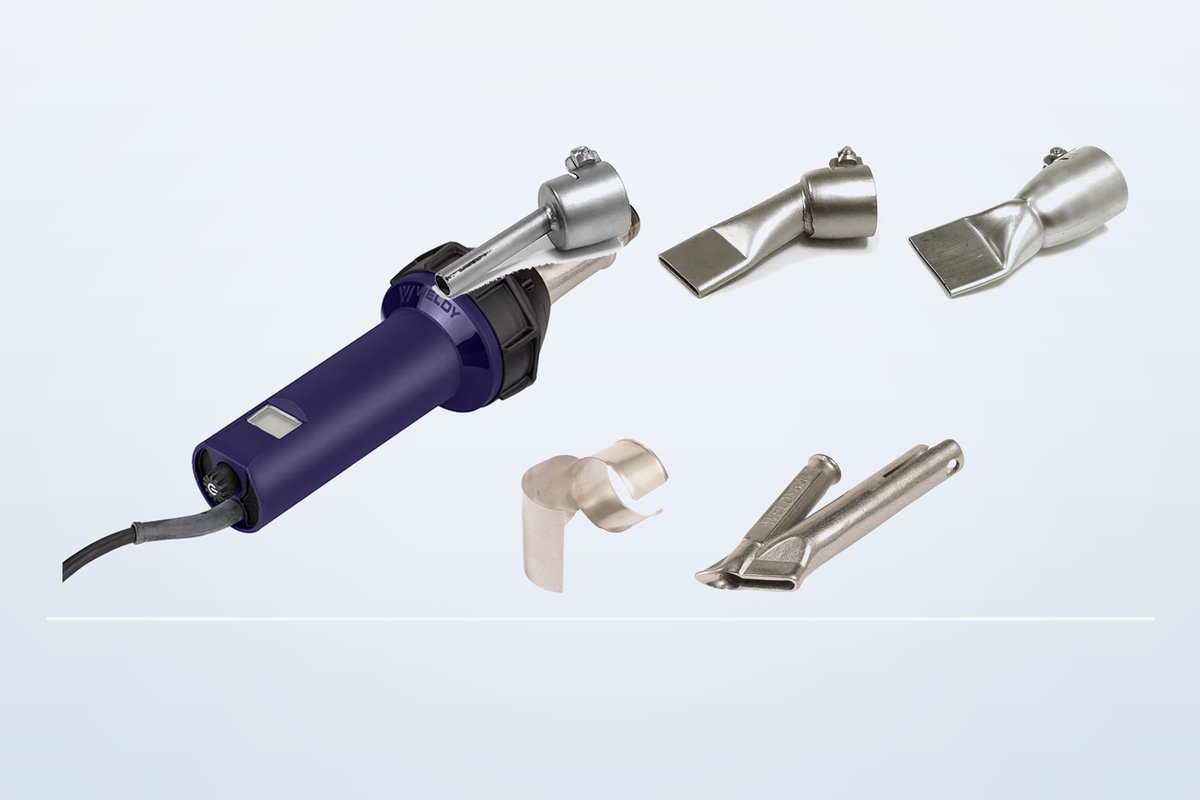
Hot air welding is the most widely used method in professional plastic repair and light fabrication. A hot air welder heats the base material and welding rod simultaneously with a controlled stream of hot air, fusing them into a homogeneous joint.
Weldy’s Energy series — backed by the Leister Group’s 75+ years in hot-air technology — offers two models designed for different workloads:
| Model | Power | Temperature Range | Weight | Best For |
|---|---|---|---|---|
| Energy HT1600 | 1,600 W | 40–700°C | 1.0 kg | PVC repair, roofing details, occasional to moderate use — Browse → |
| Energy HT3400 | 3,400 W | 40–700°C | 1.2 kg | Daily fabrication, large surfaces, continuous operation — Browse → |
Who should choose the HT1600: Contractors who do plastic repair as part of a broader trade — roofing details, tarpaulin patching, automotive plastic restoration. The 1,600 W output handles PVC membranes, thin PP sheets, and general repair work efficiently without unnecessary bulk.
Who should choose the HT3400: Workshops and fabricators who weld daily on larger surfaces. The 3,400 W output maintains stable temperature across long continuous runs — important when welding floor coverings, large tarpaulins, or doing production-line fabrication.
Material temperature reference: PVC typically welds at 420–460°C, PP at 480–520°C, HDPE at 500–550°C. Both Energy models feature closed-loop digital temperature control, which maintains the set temperature consistently — particularly valuable when switching between materials throughout a workday.
Know the limits: A hot air welder is suitable for many repair and light fabrication applications. For materials above 10 mm thickness, hot air welding becomes progressively slower and less consistent. When your work involves structural HDPE or PP fabrication on a regular basis, an extrusion welder is the logical next step.
Extrusion Welders: Structural Capability for Thicker Materials
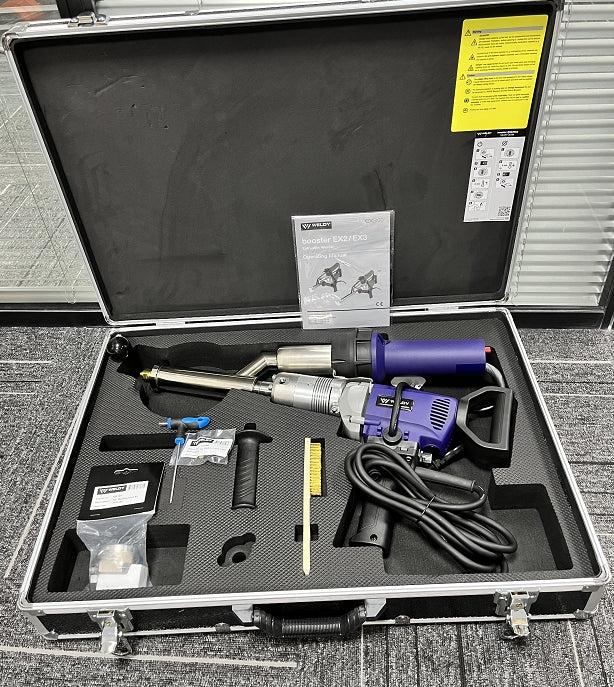
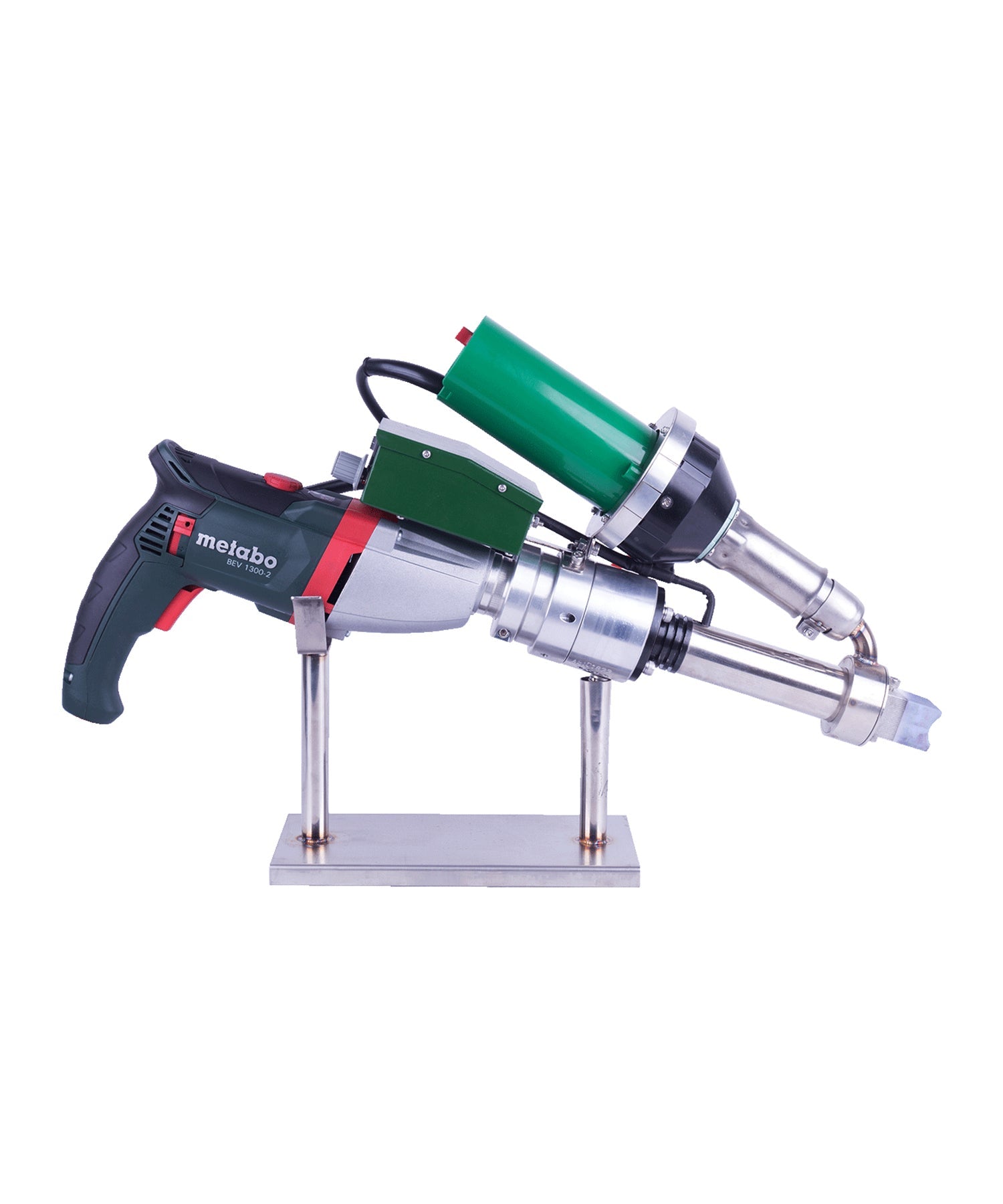
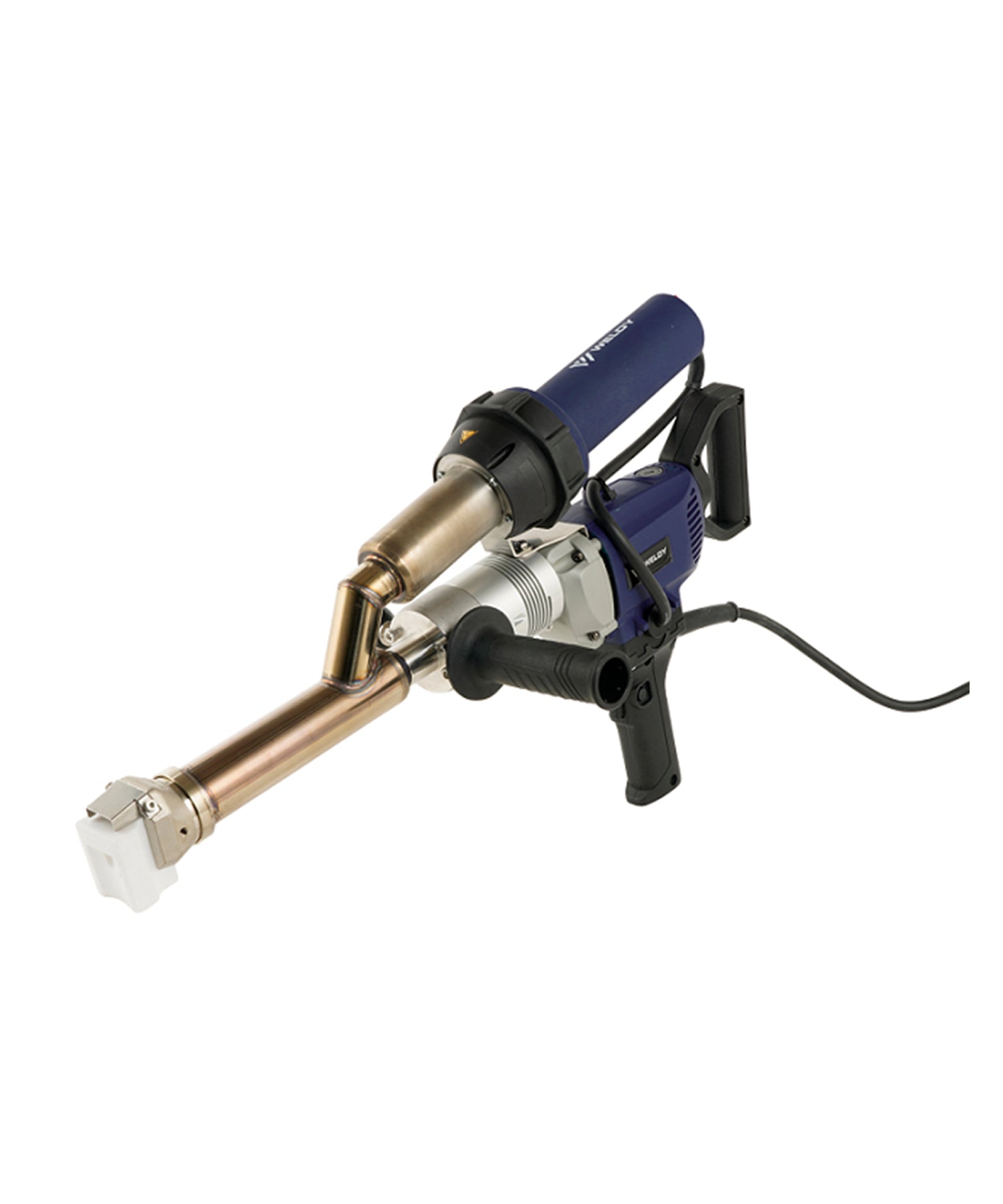
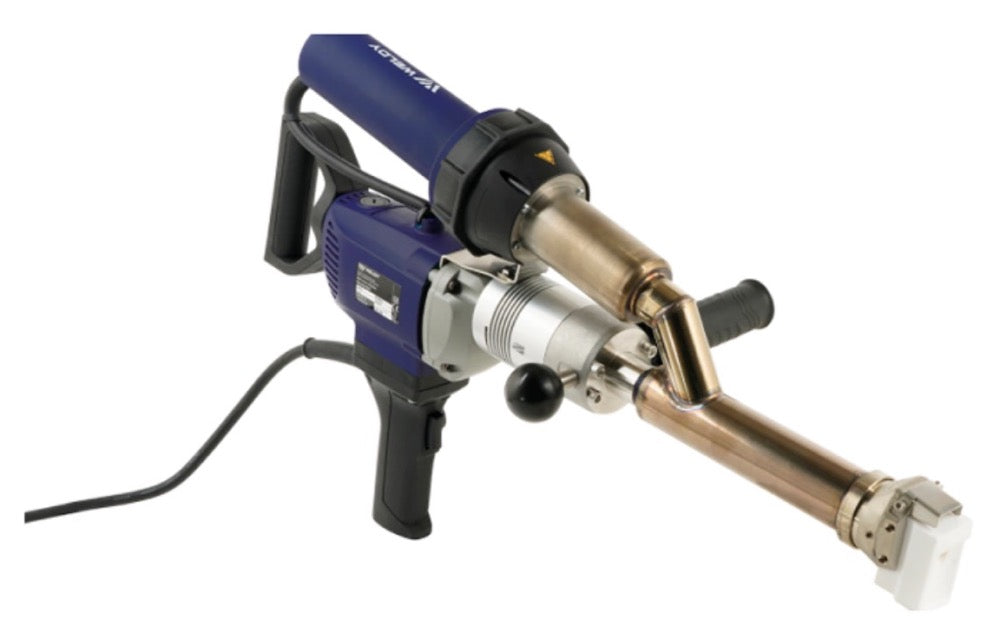
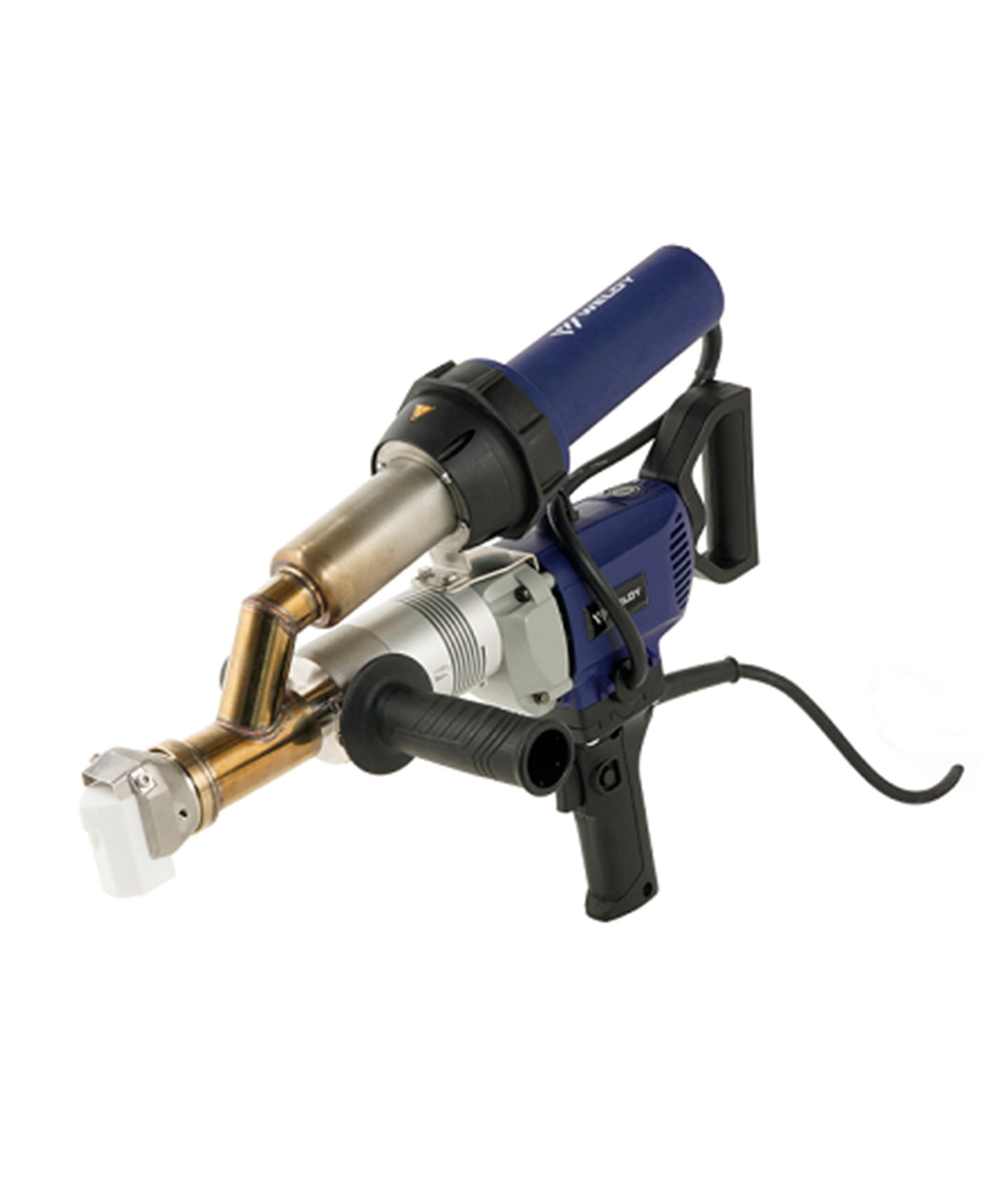
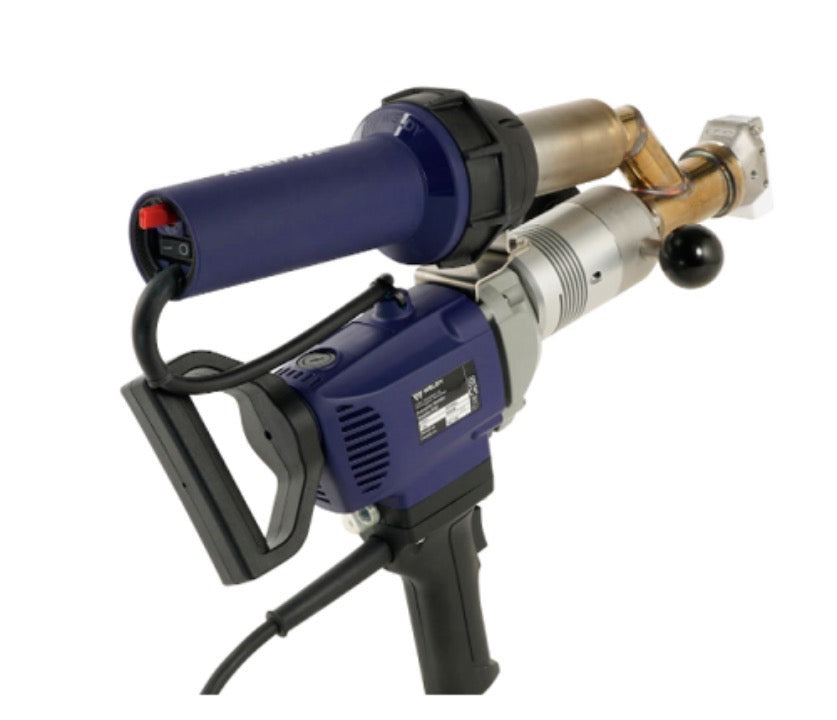
Unlike hot air welding — which fuses existing surfaces — extrusion welding feeds additional molten plastic into the joint. The extruder melts welding rod and deposits it directly into a prepared weld groove, creating a strong permanent joint suitable for professional plastic fabrication.
This is the standard method for HDPE tank fabrication, PP chemical equipment manufacturing, and structural joints in thicker materials. Weldy’s extrusion welder lineup provides three levels of capability:
| Model | Output (HDPE) | Wall Thickness | Weight | Best For |
|---|---|---|---|---|
| WELDPLAST S1 | 0.8–1.5 kg/h | 4–10 mm | 4.7 kg | Light fabrication, entry-level tank work, occasional structural welding — Browse → |
| Booster EX2 | 2.0–2.5 kg/h | 4–20 mm | 5.9 kg | Daily tank and pipe fabrication, regular HDPE/PP welding work — Browse → |
| Booster EX3 | 3.0–3.4 kg/h | 4–20 mm | 5.9 kg | High-volume production, thick-sheet HDPE, industrial workshops — Browse → |
Who should choose the WELDPLAST S1: Workshops that occasionally need structural welding — perhaps a few tank repairs per month or light fabrication of plastic containers up to 10 mm wall thickness. At 4.7 kg, it is the lightest extrusion welder in the Weldy line and the easiest to handle for operators new to extrusion welding.
Who should choose the Booster EX2: Fabricators who weld HDPE or PP daily — tank manufacturers, pipe fabricators, chemical equipment builders. The dual-side rod feed and 2.0–2.5 kg/h output handle standard production volumes efficiently.
Who should choose the Booster EX3: High-volume workshops where throughput matters. The brushless blower motor and digital controls maintain consistent output across long shifts. For workshops producing HDPE tanks or PP chemical equipment in series, the EX3’s 3.0–3.4 kg/h output shortens weld times measurably.
Pro tip: Most operators reach productive speed with an extrusion welder within a day of practice. Run test welds on scrap material during your first hour to dial in temperature and speed for your specific material and thickness. This pays off in seam quality throughout the project.
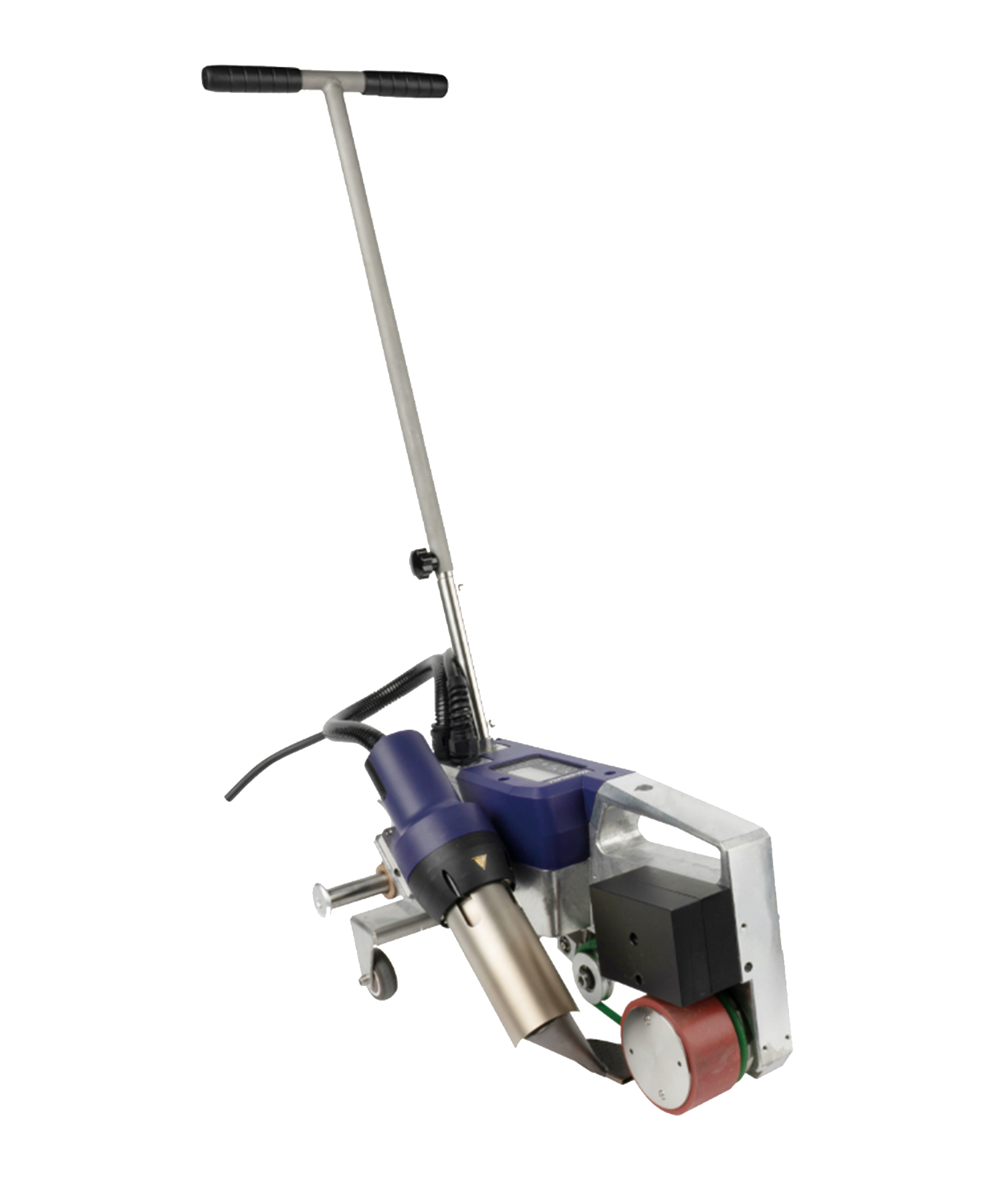
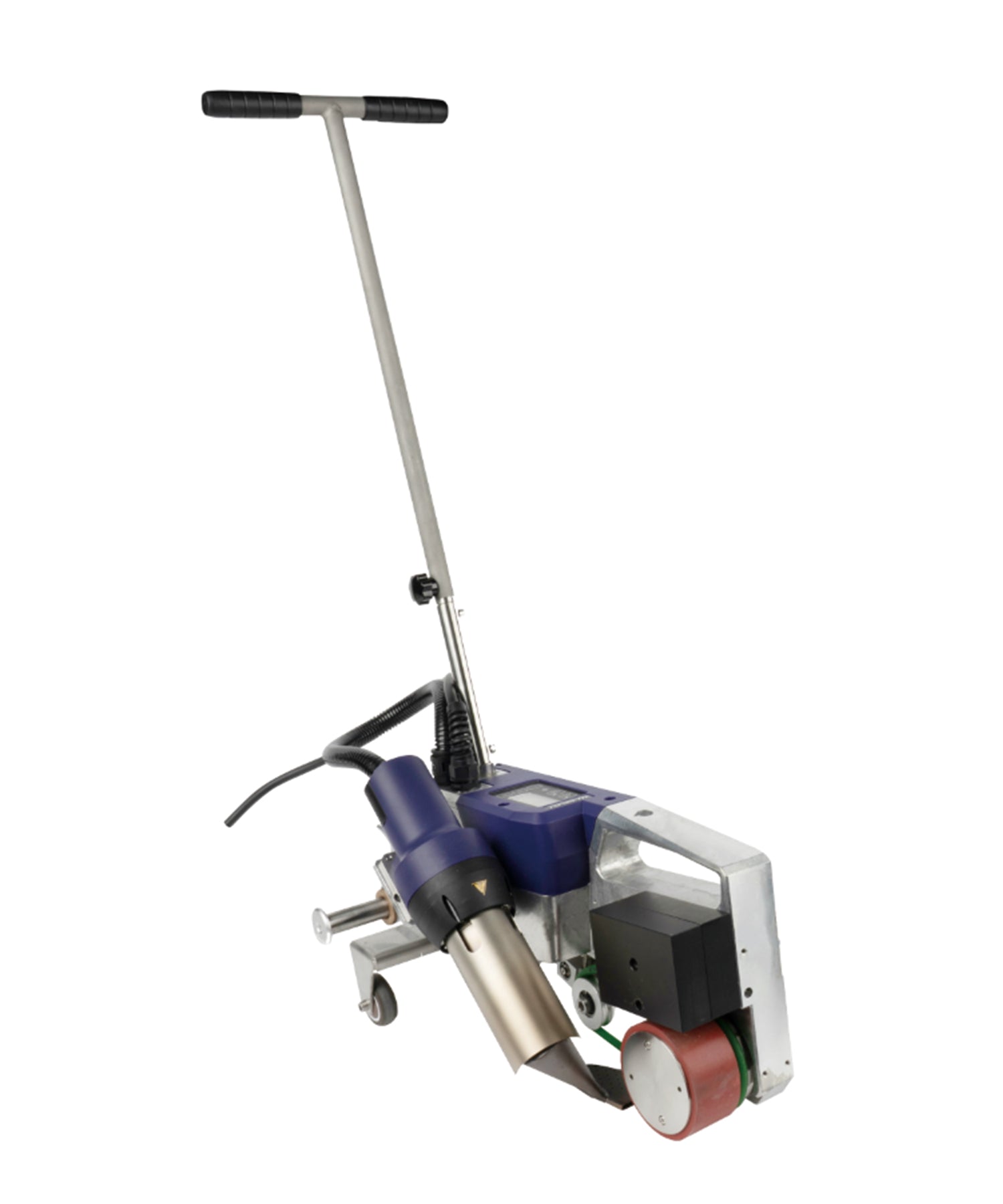
Automatic Membrane Welders: Speed for Roofing and Geomembrane Projects
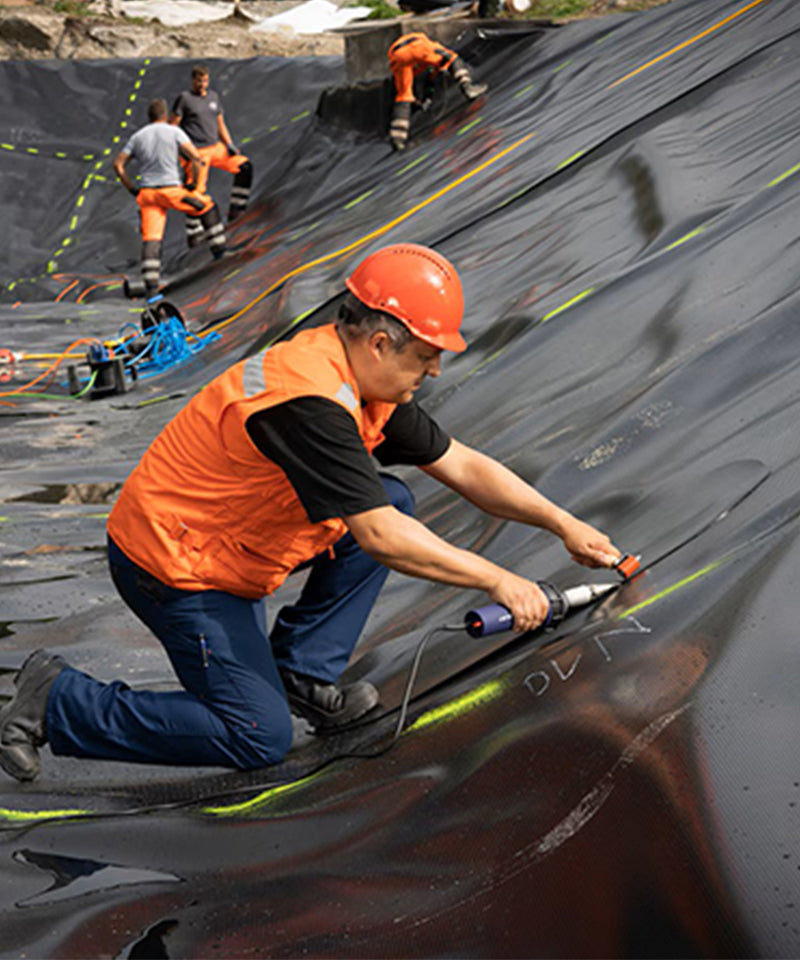
PVC and TPO roofing membranes, HDPE geomembrane liners for landfills and ponds — these large-area applications need uniform, consistent seams produced at walking speed. Automatic hot-wedge welders are purpose-built for this: they heat the overlapping membrane edges with a precisely controlled wedge, then press them together under calibrated roller pressure, producing a dual-track weld seam that can be pressure-tested for quality assurance.
For detail work that automatic welders cannot reach — corners, drain penetrations, edge terminations, T-joints — a handheld hot air welder with a 20 mm or 40 mm flat-slot nozzle completes the job. Most roofing and geomembrane crews run both: one operator on the automatic welder handling the long straight runs, another with a handheld unit handling all detail areas.
Need automatic welding equipment? Contact our team for configuration recommendations based on your membrane type and project scale. We supply Weldy automatic welders alongside the full handheld tool range.
Welding Accessories: Nozzles, Rollers, and Welding Rods
The right accessories keep your equipment working efficiently. Three categories cover most needs:
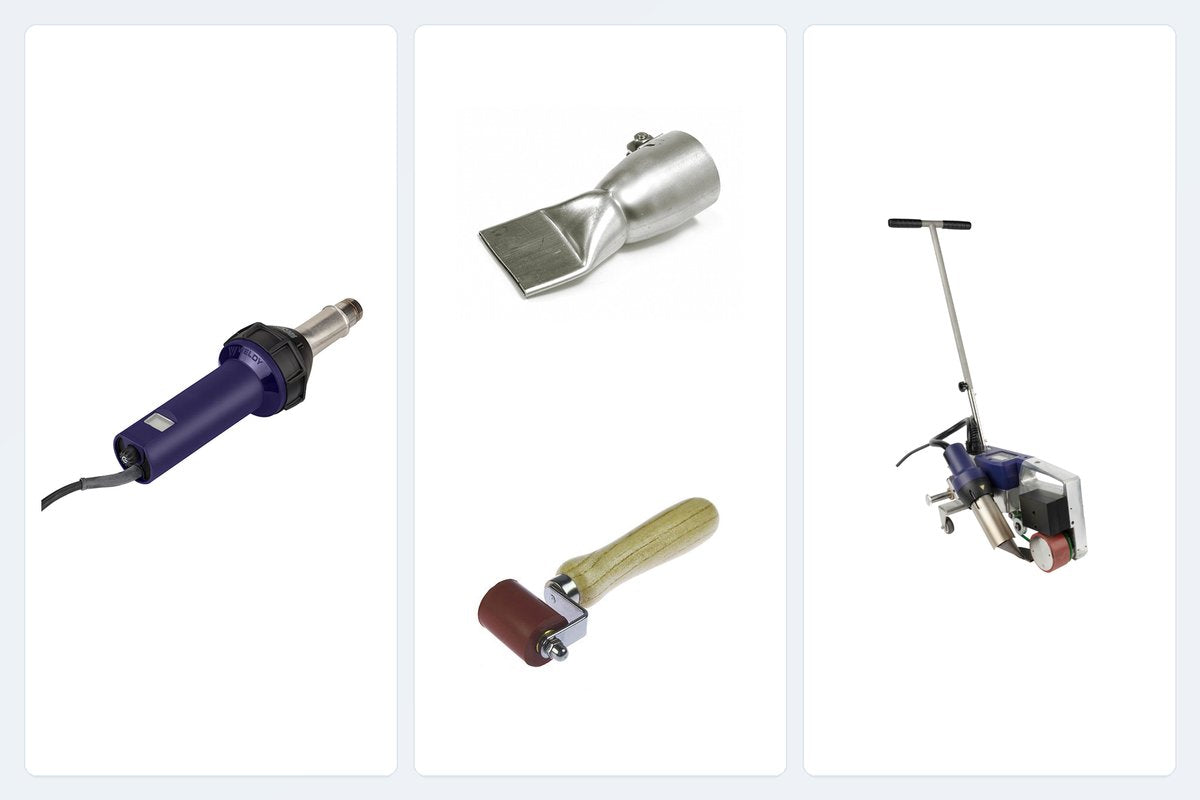
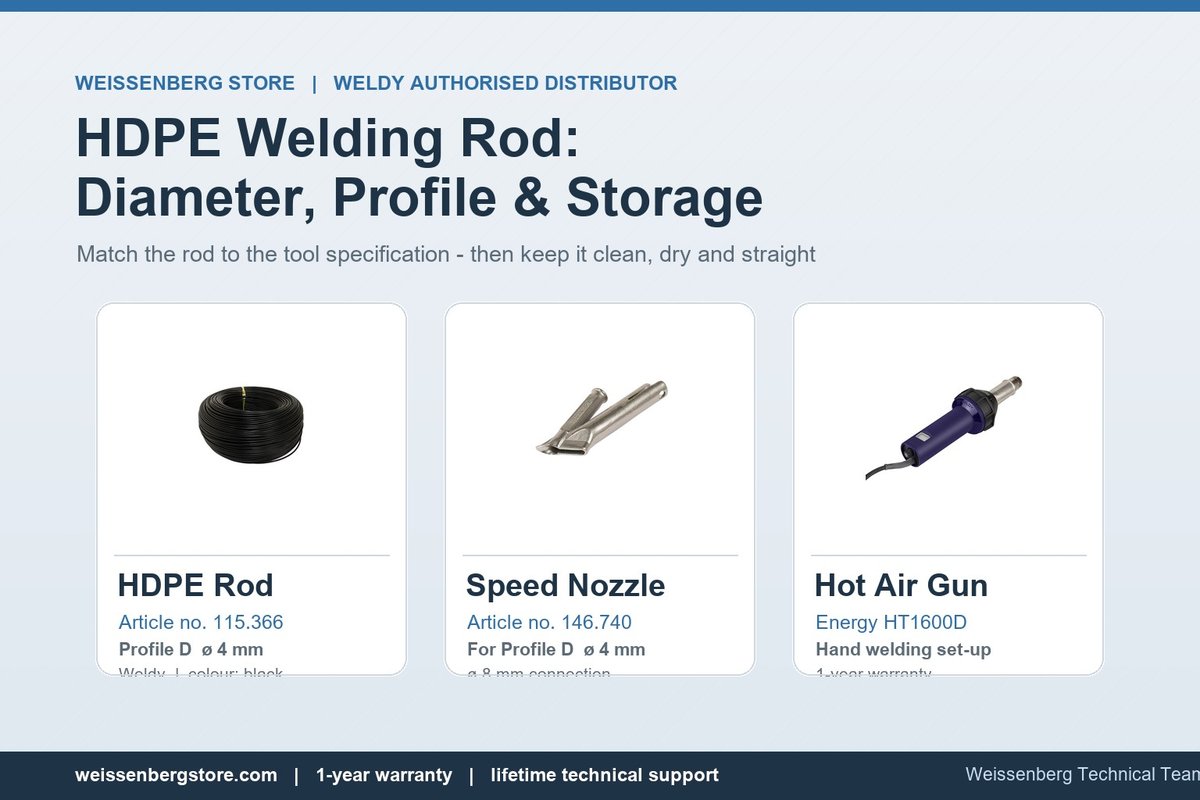
Nozzles — Speed-welding nozzles feed rod in a single motion for faster seams. Wide-slot nozzles (20–40 mm) handle membrane overlap work. Match nozzle diameter to your rod size: 3 mm for fine work, 4 mm for general fabrication, 5 mm for heavy structural joints.
Pressure rollers — A 40 mm silicone roller is the standard for hand welding. For wider membrane seams, an 80 mm roller covers more area per pass. A seam probe is non-negotiable for quality inspection — it mechanically checks completed welds for voids and unbonded sections.
Welding rods — Rod material must match the workpiece. PP rod for polypropylene, PE rod for HDPE, PVC rod for PVC. Using the wrong rod produces a joint that looks correct but has no reliable structural strength. Round rod (3–5 mm) covers most handheld welding, triangular rod fills V-grooves faster, and tape rod suits flooring applications.
Find the right nozzle, roller and welding accessories →
How to Choose: Matching Equipment to Your Application
Use these four questions to narrow your equipment decision:
- What material are you welding? PVC tarpaulin or membrane → Hot air welder. HDPE or PP sheets (structural) → Extrusion welder. Roofing membranes at scale → Automatic welder + hot air welder for details.
- What thickness are you working with? 1–6 mm → Hot air welder handles efficiently. 6–10 mm → Hot air welder (HT3400 recommended for sustained output). Above 10 mm regularly → Extrusion welder.
- How often will you use it? Occasional repairs → Hot air welder (HT1600). Daily fabrication → Hot air welder (HT3400) or extrusion welder depending on material thickness. Continuous production → Extrusion welder (Booster EX2 / EX3).
- Are you repairing or fabricating? Most repair work → Hot air welder is sufficient. Structural fabrication of tanks, containers, and equipment → Extrusion welder. Membrane installation → Automatic welder + handheld unit.
Quick Reference by Application
| Application | Recommended Equipment |
|---|---|
| Plastic repair (tarpaulins, bumpers, small parts) | Hot air welder — Weldy Energy HT1600 |
| Daily fabrication and repairs | Hot air welder — Weldy Energy HT3400 |
| PVC / TPO roofing membrane installation | Automatic membrane welder + hot air welder for details |
| HDPE geomembrane liner welding | Automatic hot-wedge welder |
| HDPE / PP tank and container fabrication | Extrusion welder — Booster EX2 or EX3 |
| Light structural plastic welding | Extrusion welder — WELDPLAST S1 |
Frequently Asked Questions
“Can I use one hot air welder for everything?”
A hot air welder is suitable for many repair and light fabrication applications — PVC tarpaulins, roofing details, automotive plastic work, thin-sheet welding. The practical limitation is material thickness: above 10 mm, hot air welding becomes slow. For daily structural fabrication of HDPE or PP in thicker sections, adding an extrusion welder to your toolkit is the recommended approach.
“What thickness of plastic can I weld with a hot air welder?”
Up to approximately 10 mm for most materials. For occasional use on 8–10 mm stock, the HT3400’s higher output handles it better than the HT1600. When your work regularly involves materials thicker than 10 mm — such as HDPE tank walls or PP chemical equipment panels — extrusion welding provides faster, more consistent results. The WELDPLAST S1 is a natural step up for workshops transitioning from hot air to structural welding.
“What’s the difference between Weldy and Leister?”
Weldy is Leister’s value-focused sub-brand. Same Swiss engineering group with over 75 years in hot-air technology, same factory production standards, positioned at a more accessible price point. For most contractors, repair shops, and fabrication workshops, Weldy delivers the professional-grade performance needed at a practical investment level.
“Do I need training to use an extrusion welder?”
The WELDPLAST S1 is designed to be accessible for operators new to extrusion welding. The Booster EX2 and EX3 are professional tools — most experienced hot-air welders transition to productive extrusion welding within a day. We recommend running test welds on scrap material during your first hour with any new extrusion welder to dial in temperature, speed, and feed rate for your material.
“Do you ship internationally? What about warranty?”
Yes. Domestic orders typically ship within 48 hours; international orders within 72 hours. Every Weldy product comes with full manufacturer warranty coverage. Popular models — Energy hot air welders, Booster extrusion welders, and common accessories — are kept in stock year-round for fast dispatch.
Why Buy From Weissenberg Store?
Weissenberg Store is an authorized Weldy distributor, providing genuine factory-warranted plastic welding equipment to contractors, repair professionals, and fabrication workshops worldwide:
- Full Weldy product line — hot air welders, extrusion welders, automatic membrane welders, and accessories
- Genuine equipment — every Weldy tool is factory-original with official warranty
- Technical support — multilingual team (English, Spanish, Chinese) with hands-on plastic welding experience
- Stock availability — popular models and accessories in stock for 48-hour domestic / 72-hour international shipping
- 20+ years in plastic welding — technical advice grounded in industry experience
Browse Weldy Plastic Welding Tools →
Need help choosing the right plastic welder? Contact our team for a recommendation in under 10 minutes.




Leave a comment
This site is protected by hCaptcha and the hCaptcha Privacy Policy and Terms of Service apply.