
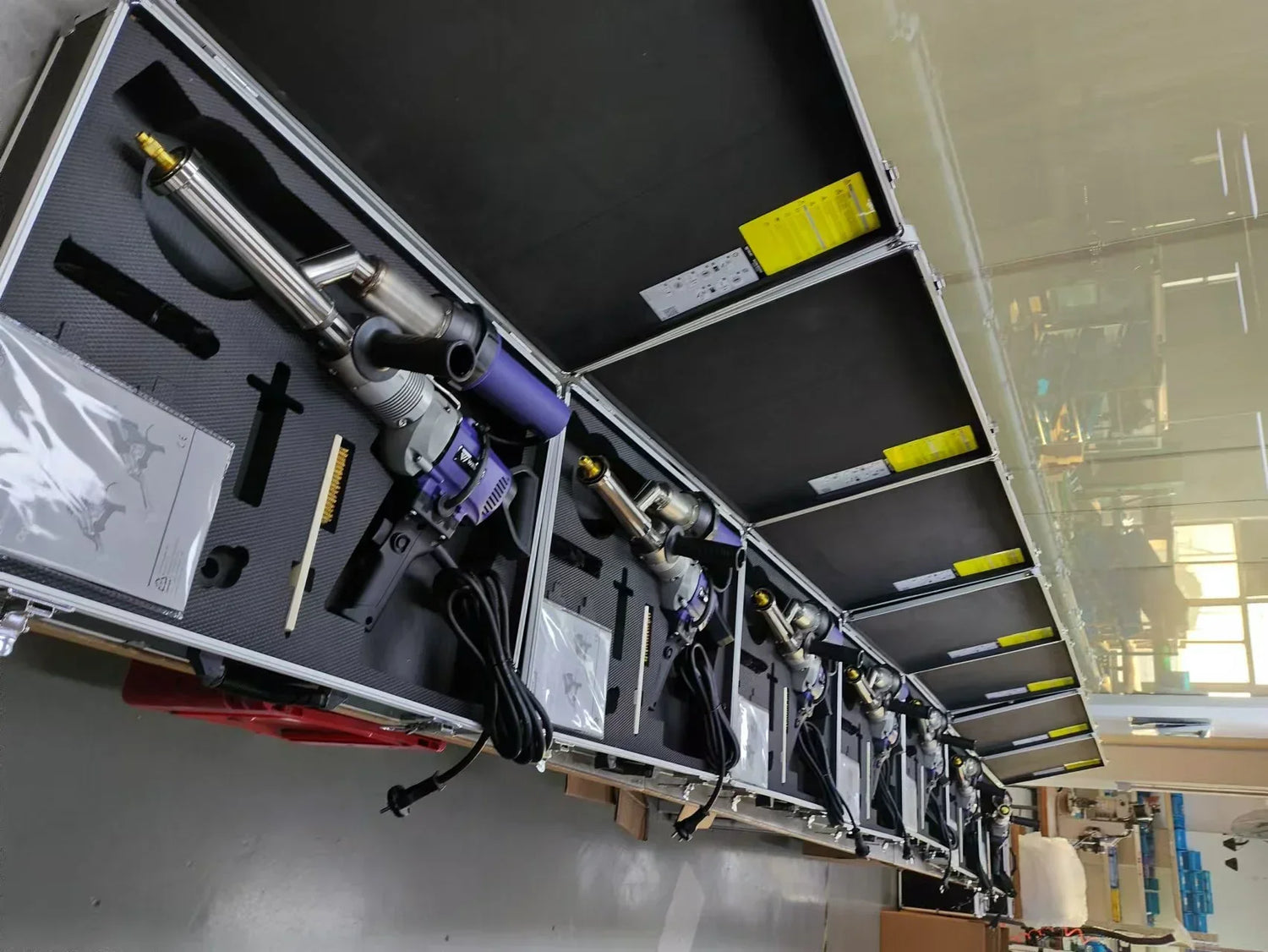
Weldy Plastic Welding Equipment: A Complete Technical Comparison Guide
By Weissenberg Technical Team — 20+ Years of Industry Experience
1. Introduction: Why Weldy?
In the world of thermoplastic welding, equipment reliability directly determines project quality. Weldy — a sub-brand of the Leister Group (Switzerland) — has built a reputation for delivering Swiss-engineered plastic welding tools that balance professional-grade performance with cost-effectiveness. From hot air guns for detail work to heavy-duty extrusion welders for civil engineering, Weldy's product range covers virtually every thermoplastic welding application.
With over 75 years of Leister Group heritage, Weldy equipment is trusted by contractors, fabricators, and environmental engineers across 80+ countries. This guide provides a technical comparison of Weldy's core product lines — helping you select the right tool for your specific application.
2. Weissenberg: Your Official Weldy Distributor
As an authorized official distributor of Weldy products, Weissenberg Store provides direct access to the full Weldy product catalog with genuine manufacturer warranties. Our 20+ years in the thermoplastic welding industry mean we offer more than just产品销售 — we deliver technical consultation, application support, and after-sales service.
All Weldy equipment supplied by Weissenberg is CE certified and meets ISO 9001 quality management standards. Our team provides multilingual support and can assist with equipment selection from manual hot air tools to fully automatic welding systems.
3. Hot Air Guns: Versatile Handheld Solutions
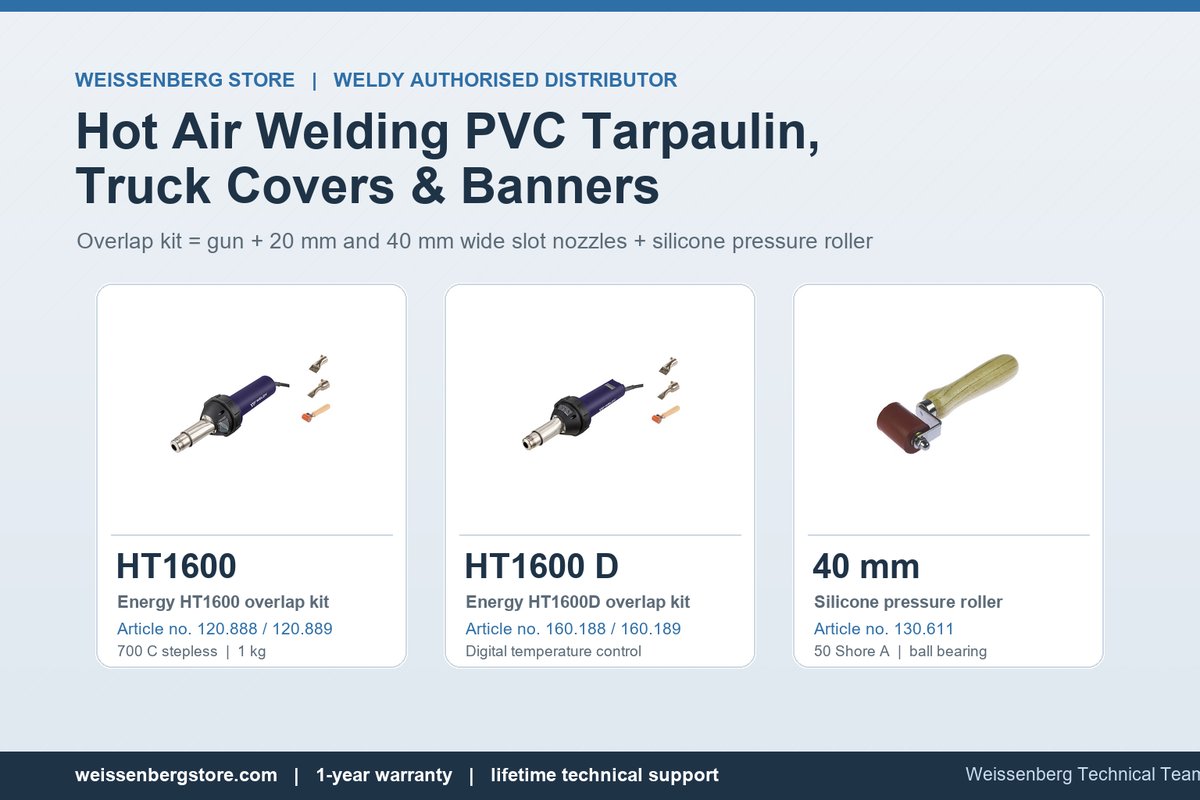
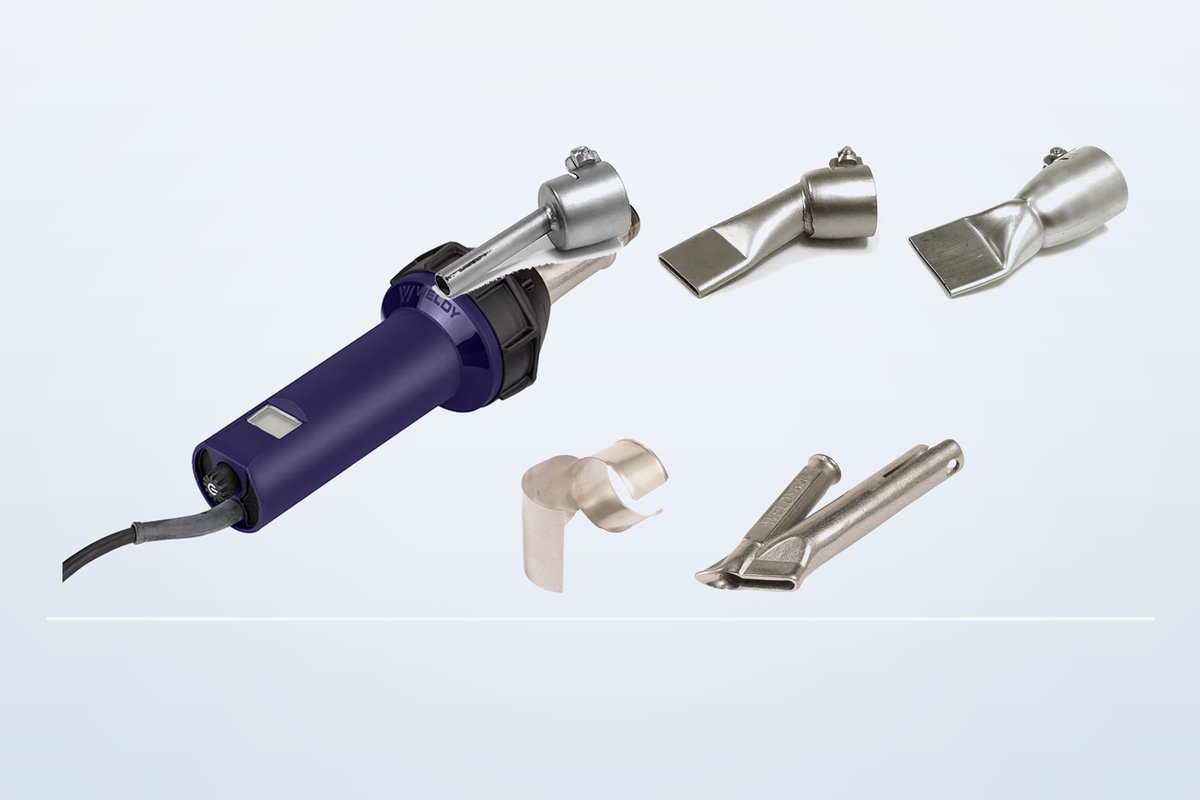
Weldy's Energy HT1600 and Energy HT3400 hot air guns form the backbone of portable plastic welding. These tools are designed for overlap welding of thermoplastic membranes, technical textiles, tarpaulins, and PVC/TPO roofing materials.
| Parameter | Energy HT1600 | Energy HT3400 |
|---|---|---|
| Power | 1600 W | 3400 W |
| Temperature Range | 40–700°C | 40–700°C |
| Airflow (20°C) | 240 l/min | 500 l/min |
| Static Pressure | 2600 Pa | 3500 Pa |
| Weight | 0.99 kg | 1.2 kg |
| Noise Level | 67 dB(A) | 68 dB(A) |
The HT1600 is ideal for lightweight welding tasks and repair work, while the HT3400 handles heavy-duty overlapping of wide membranes. Both feature stepless temperature adjustment, ceramic heating elements, and easy-clean air filters — extending service life in demanding job site conditions.
Applications: Roofing membrane overlap welding, tarpaulin repair, banner fabrication, geomembrane patch repairs, and automotive plastic work.
4. Extrusion Welders: Heavy-Duty Performance for Structural Joints
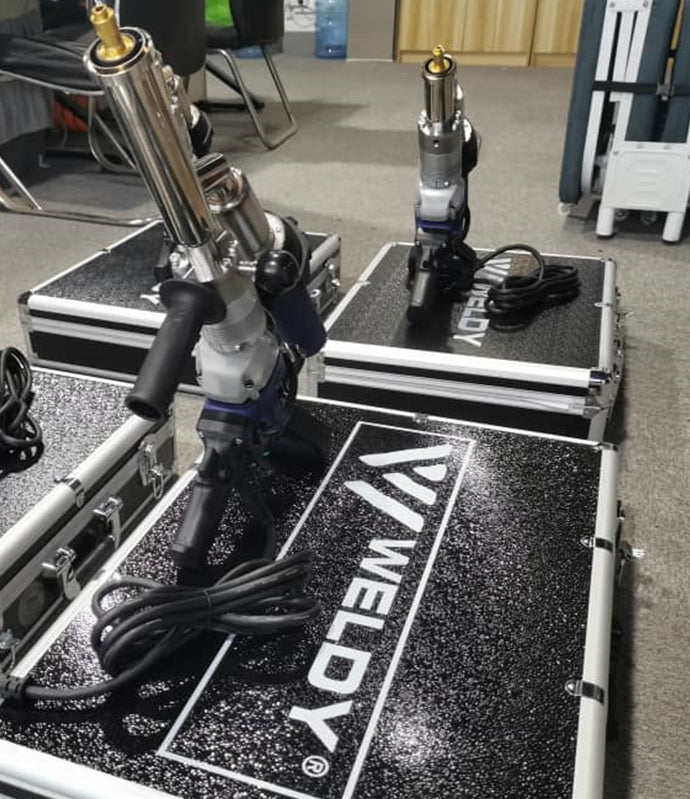
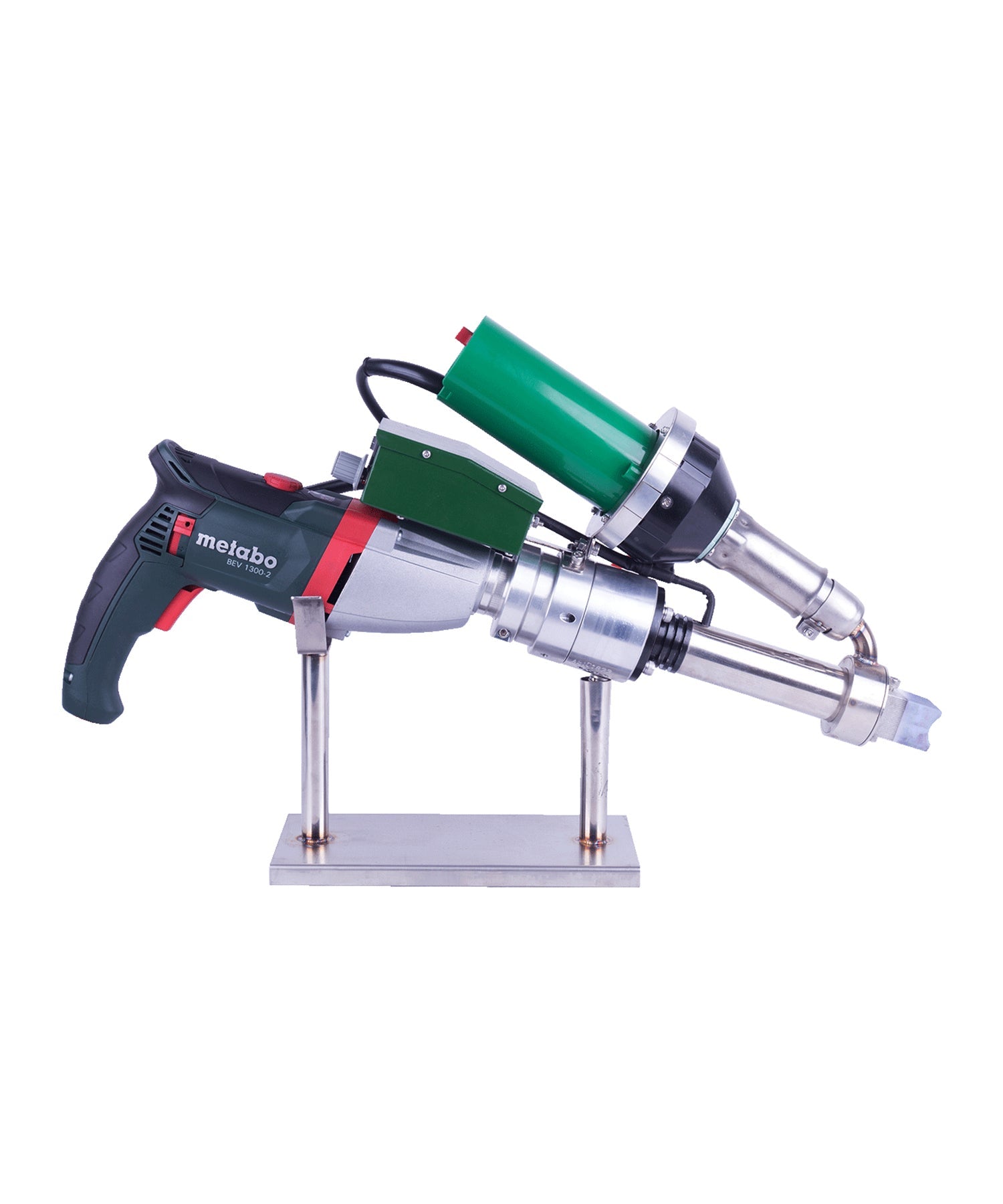
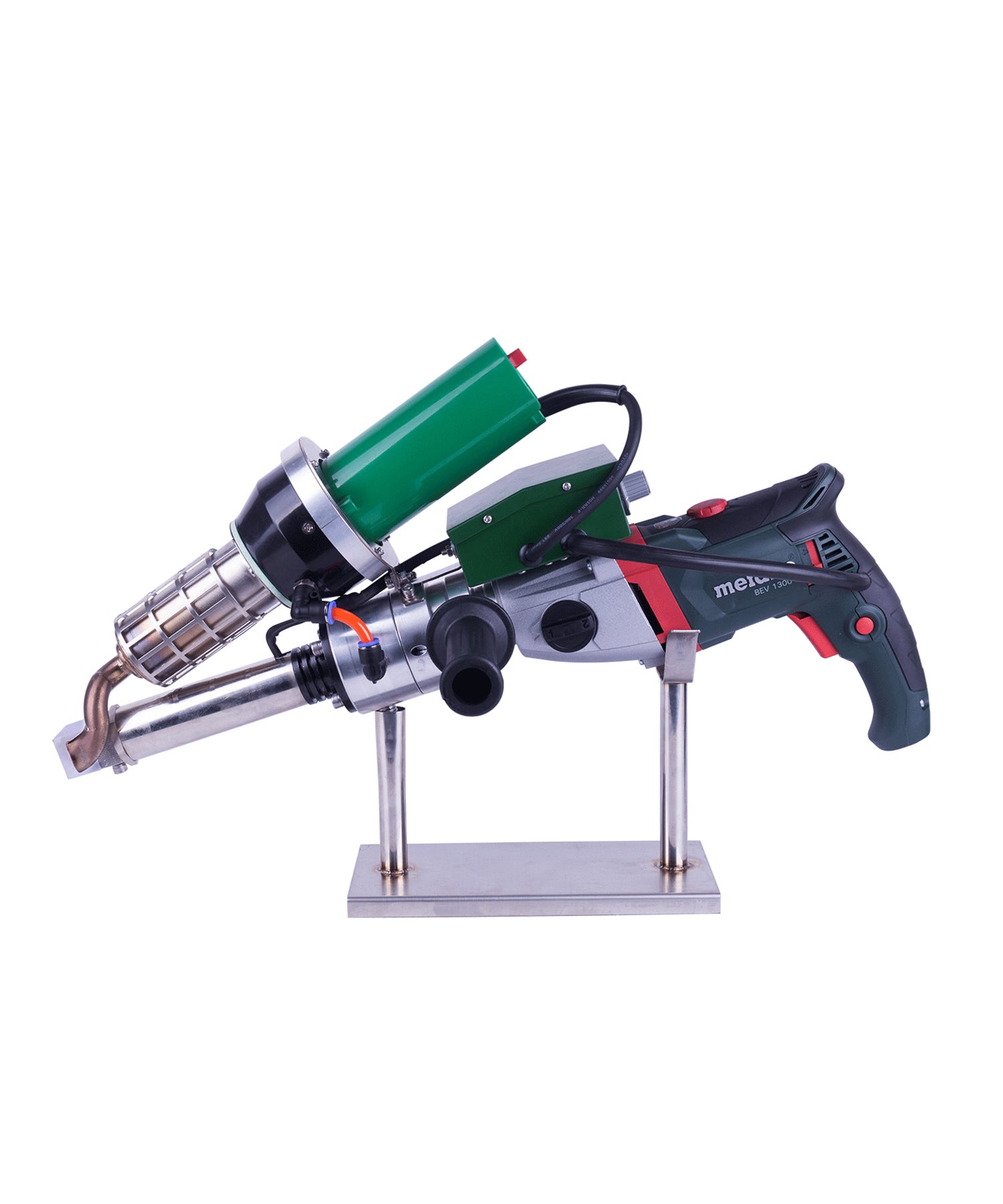
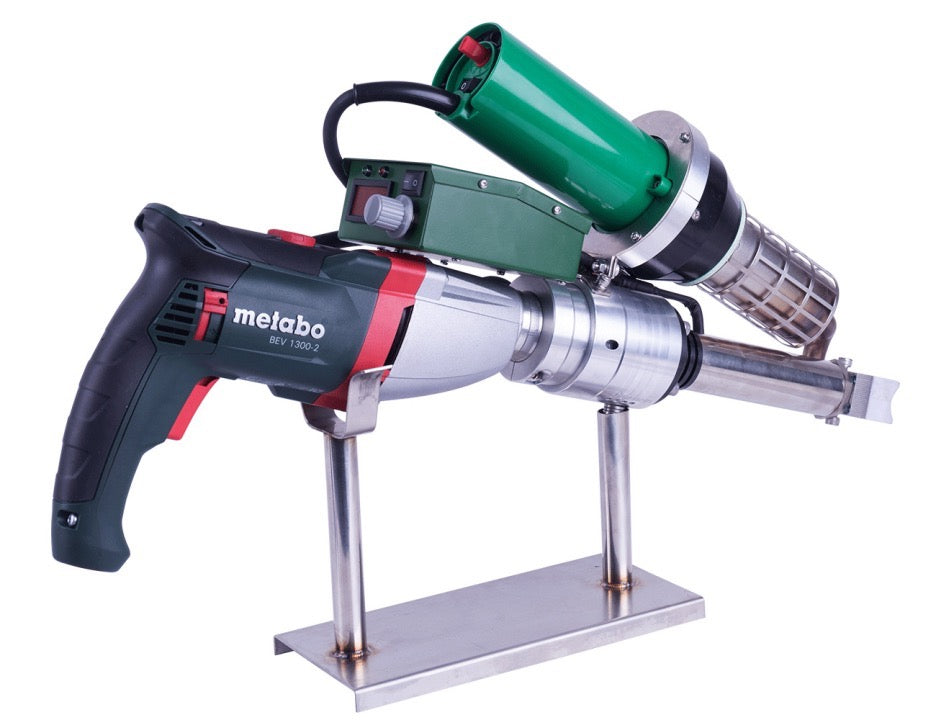
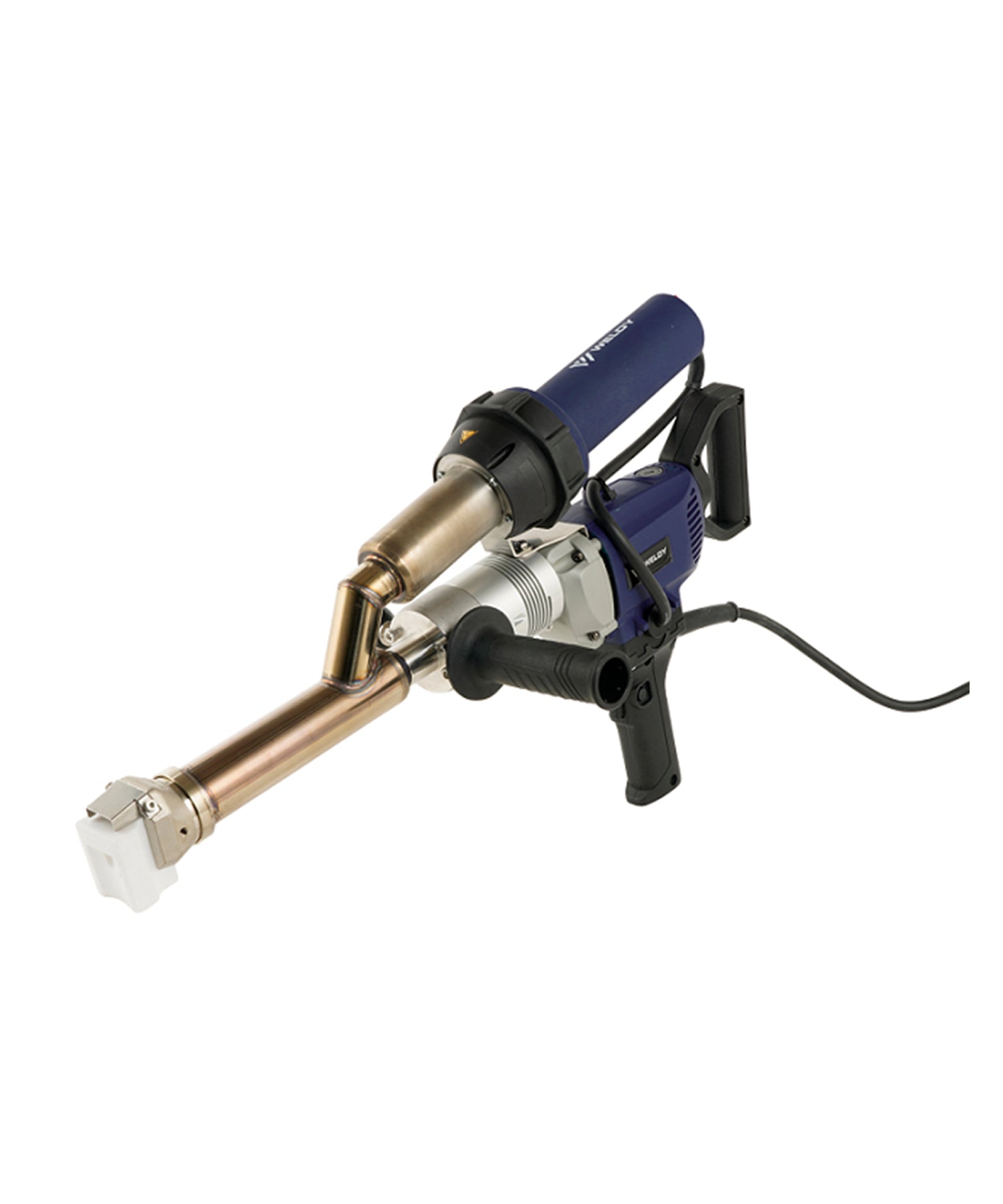
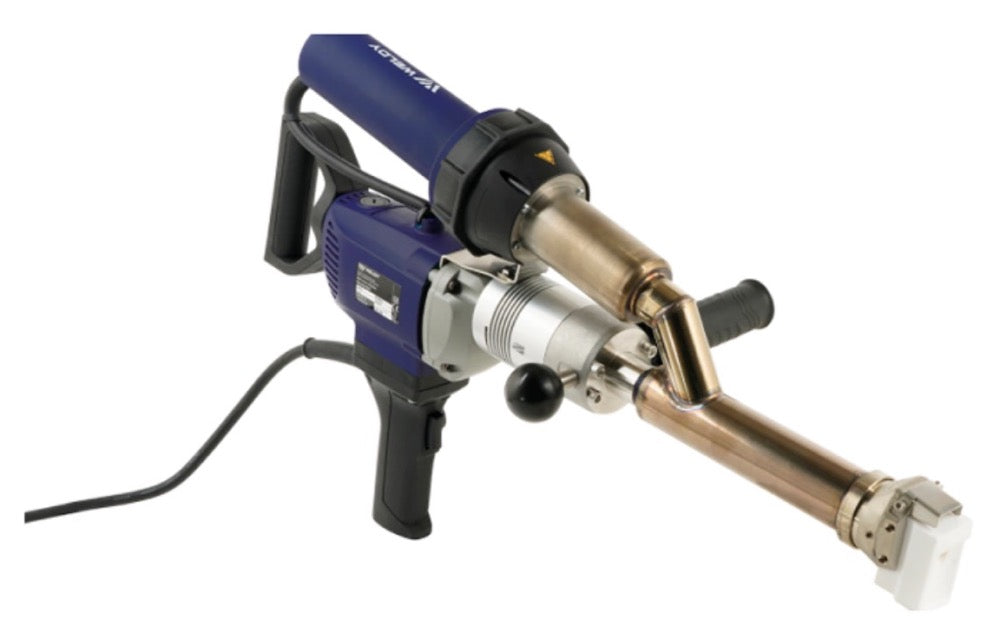
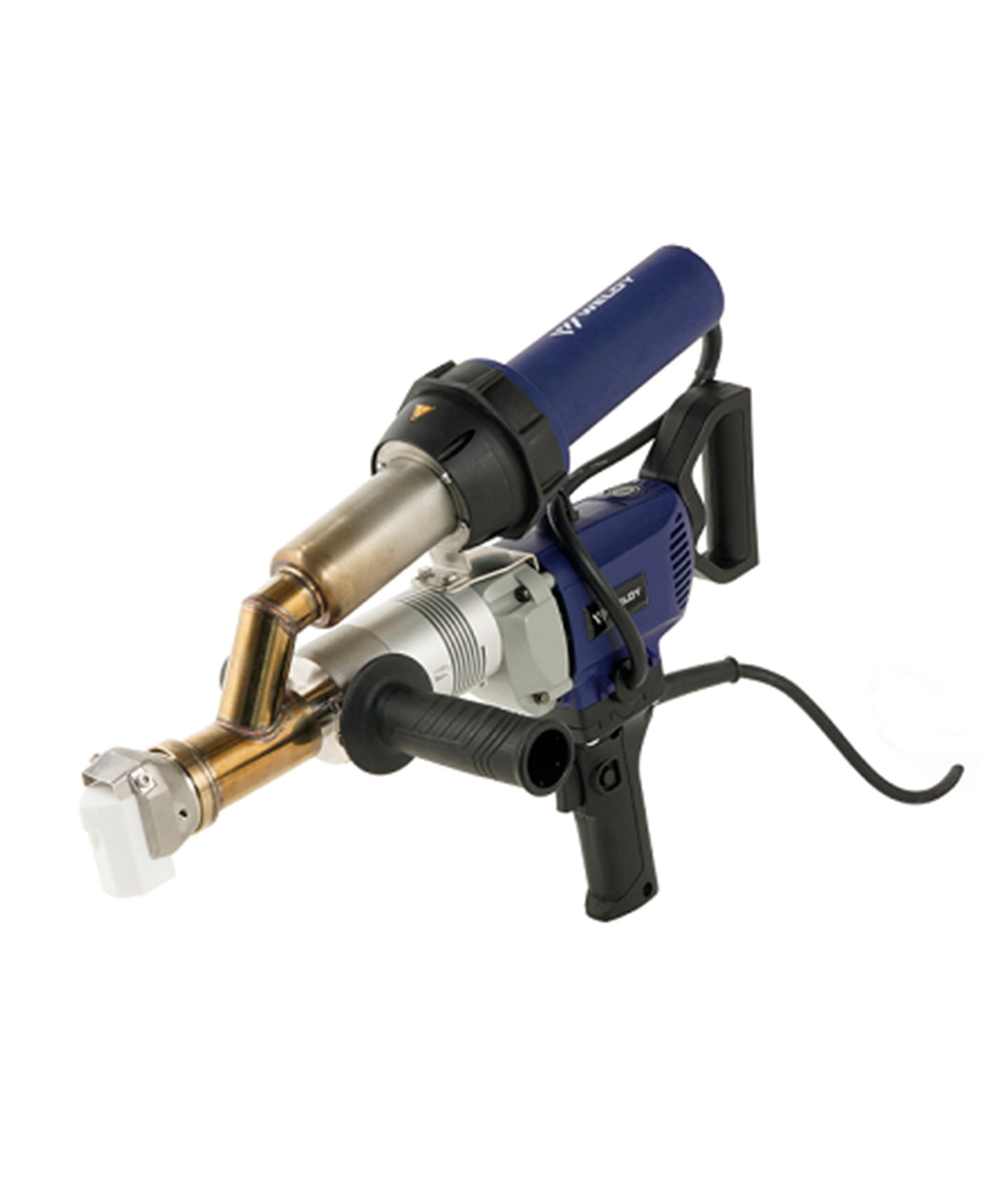
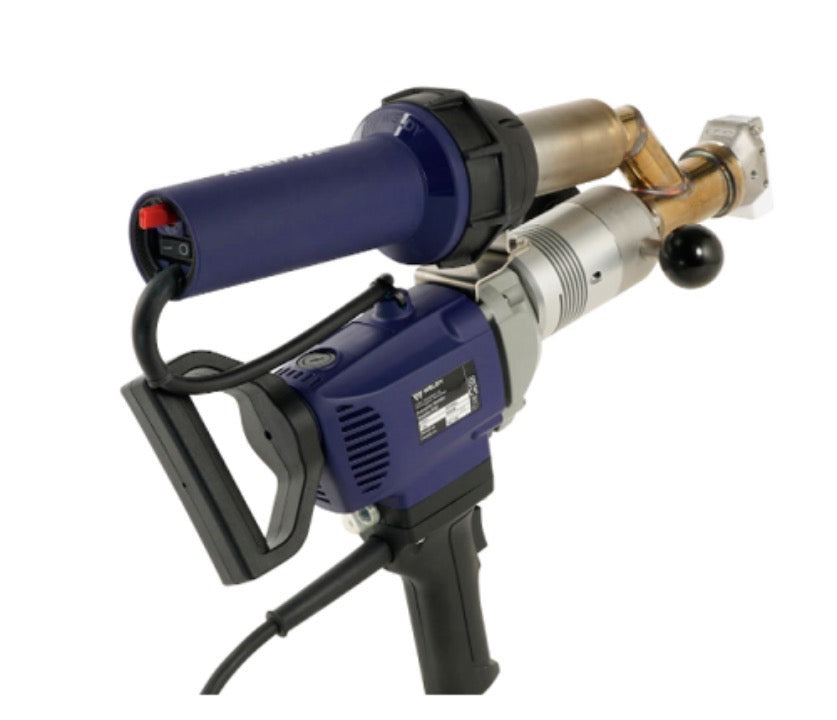
For applications requiring high-strength structural welds — such as tank fabrication, pipe welding, and geomembrane repair — Weldy's Booster EX2 and Booster EX3 extrusion welders set the benchmark. These tools process polyolefins and thermoplastics (PE, PP) with precise temperature control and consistent material output.
| Parameter | Booster EX2 | Booster EX3 |
|---|---|---|
| Power | 3000 W | 3000 W |
| Material Output (ø4mm rod) | 2.2 kg/h | 3.6 kg/h |
| Welding Rod Diameter | 3–4 mm | 3–4 mm |
| Membrane Thickness | 10–15 mm | 15–25 mm |
| Weight | 6.4 kg | 6.9 kg |
| Screw Heating | Air heated | Air heated |
The EX2's compact design excels in confined spaces and detail work, while the EX3 delivers higher extrusion rates for large-scale civil engineering projects. Both models feature dual-side rod feeding for flexibility, ergonomic multi-position handles, and quickly replaceable welding shoes. Welds produced meet DVS 2207 standards for thermoplastic welding quality.
Applications: HDPE tank fabrication, chemical container welding, pipe branch connections, landfill liner repair, and heavy sheet fabrication.
5. Roofing Welders: Automatic Membrane Installation Tools
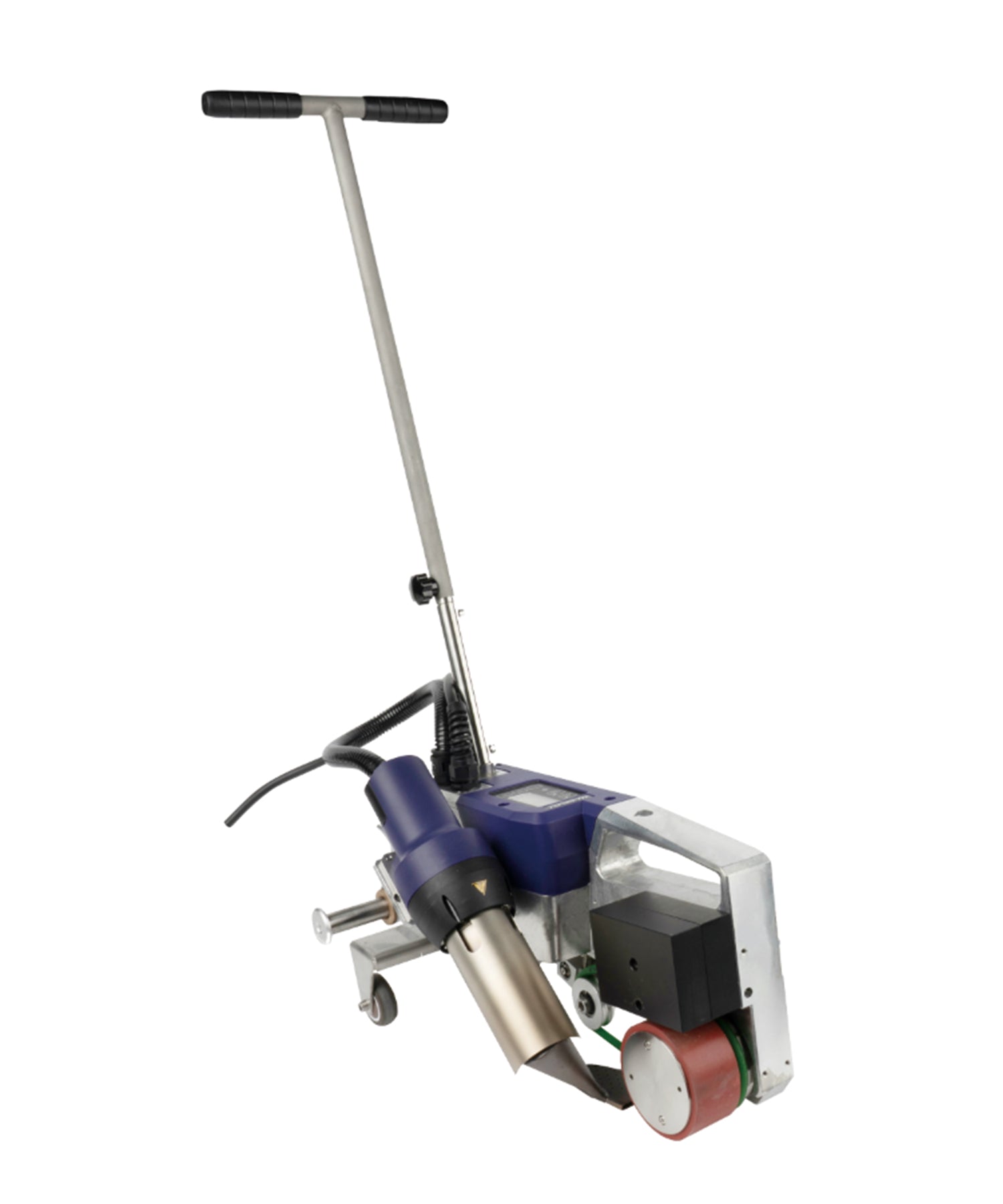
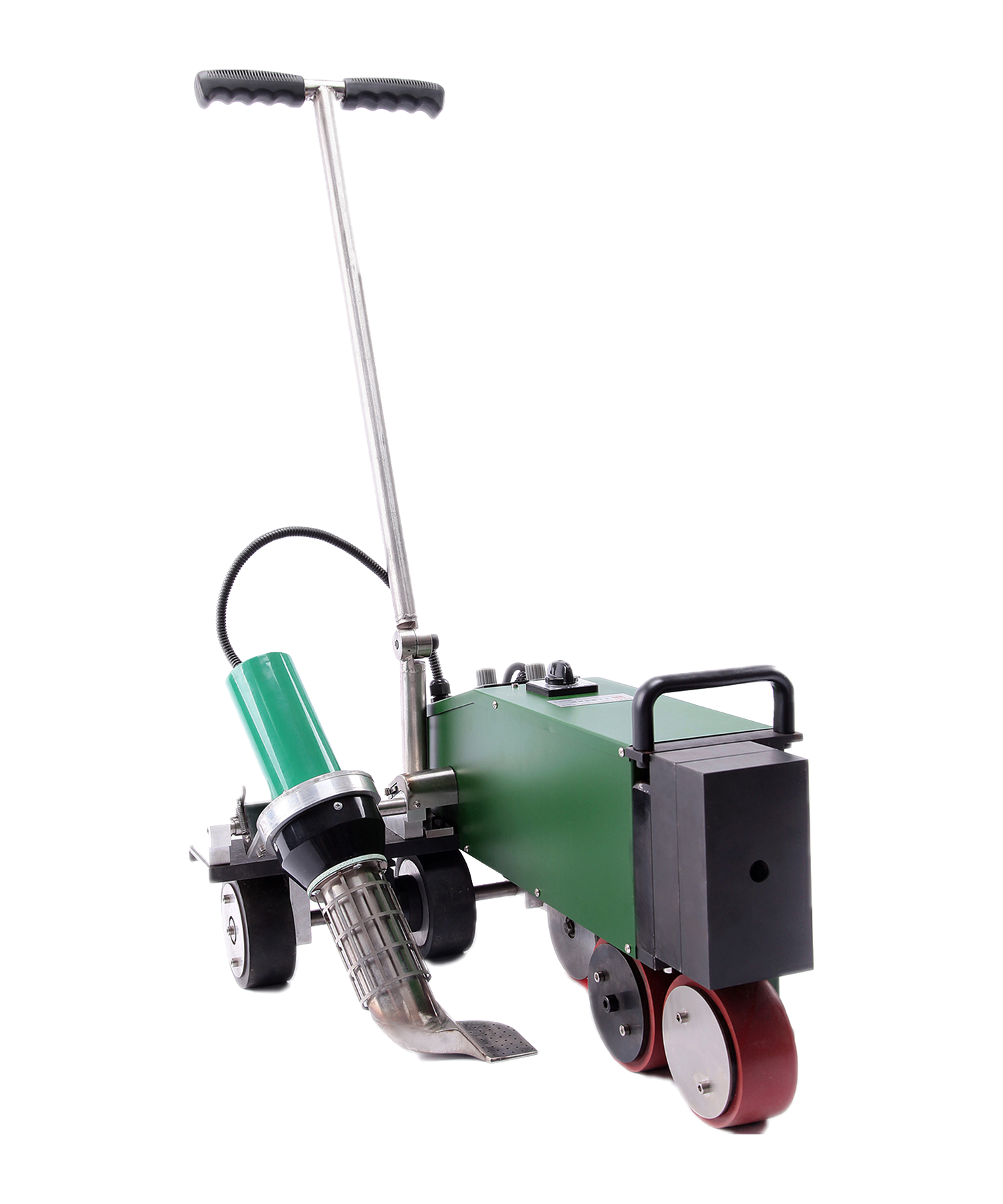
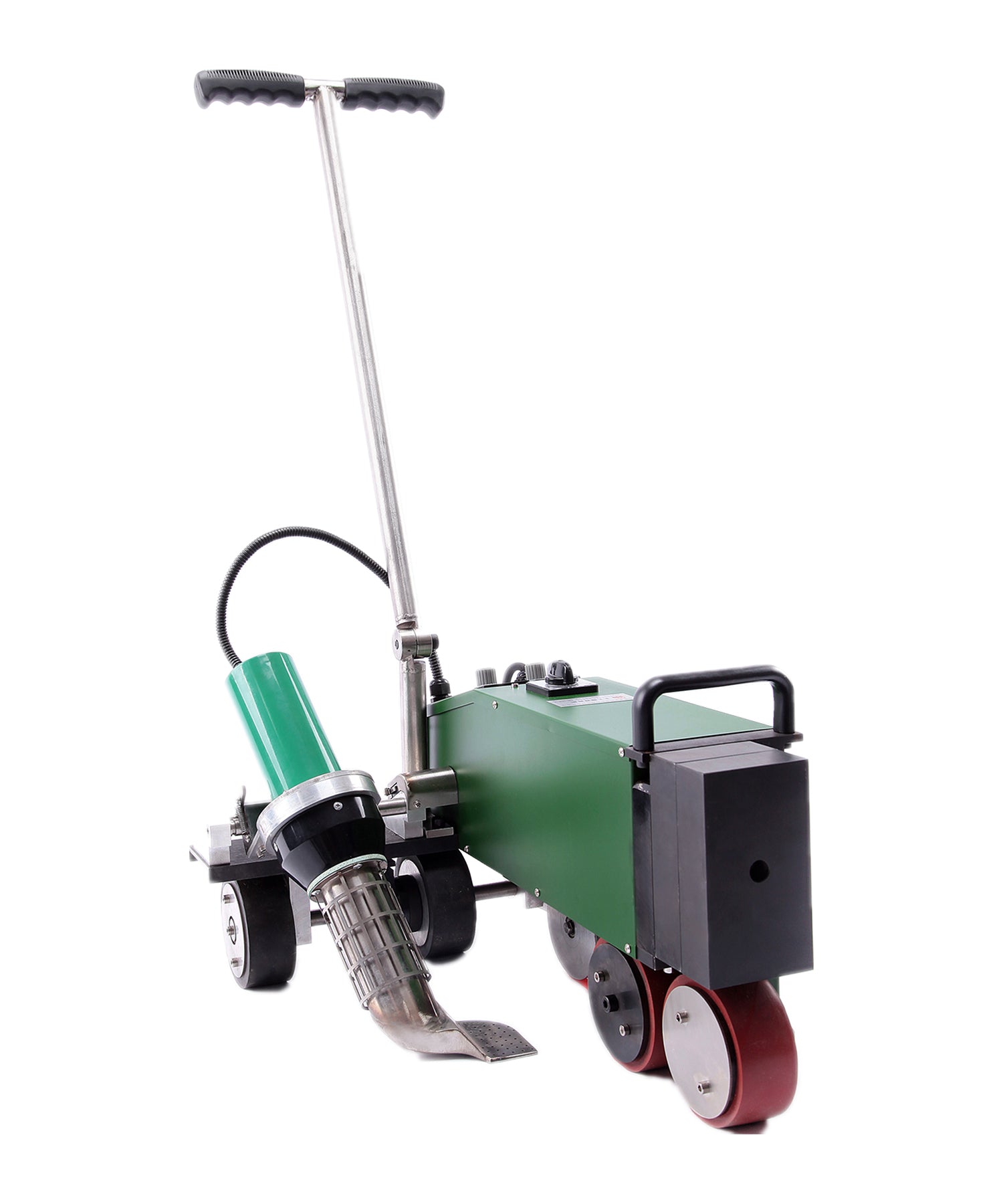
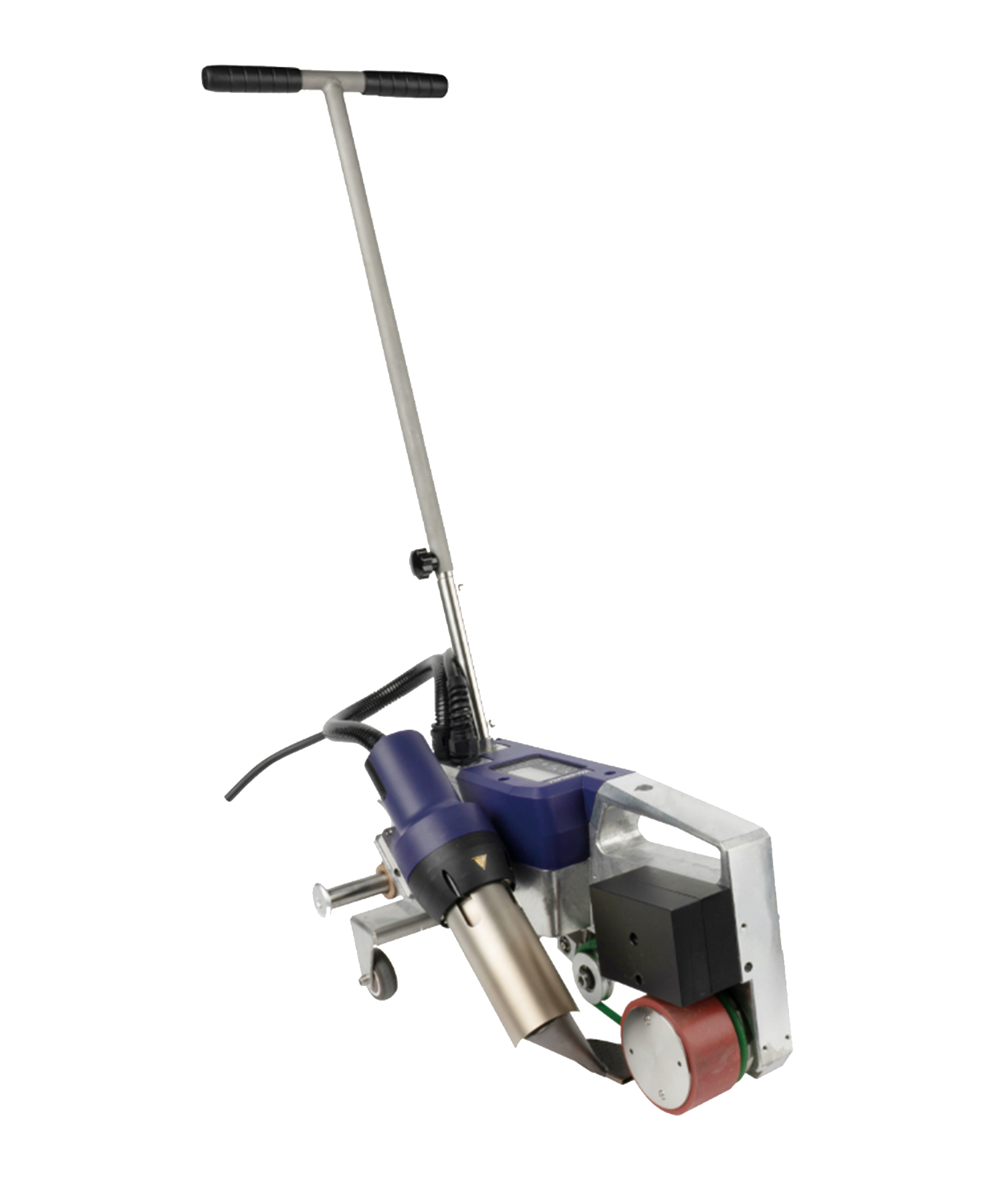
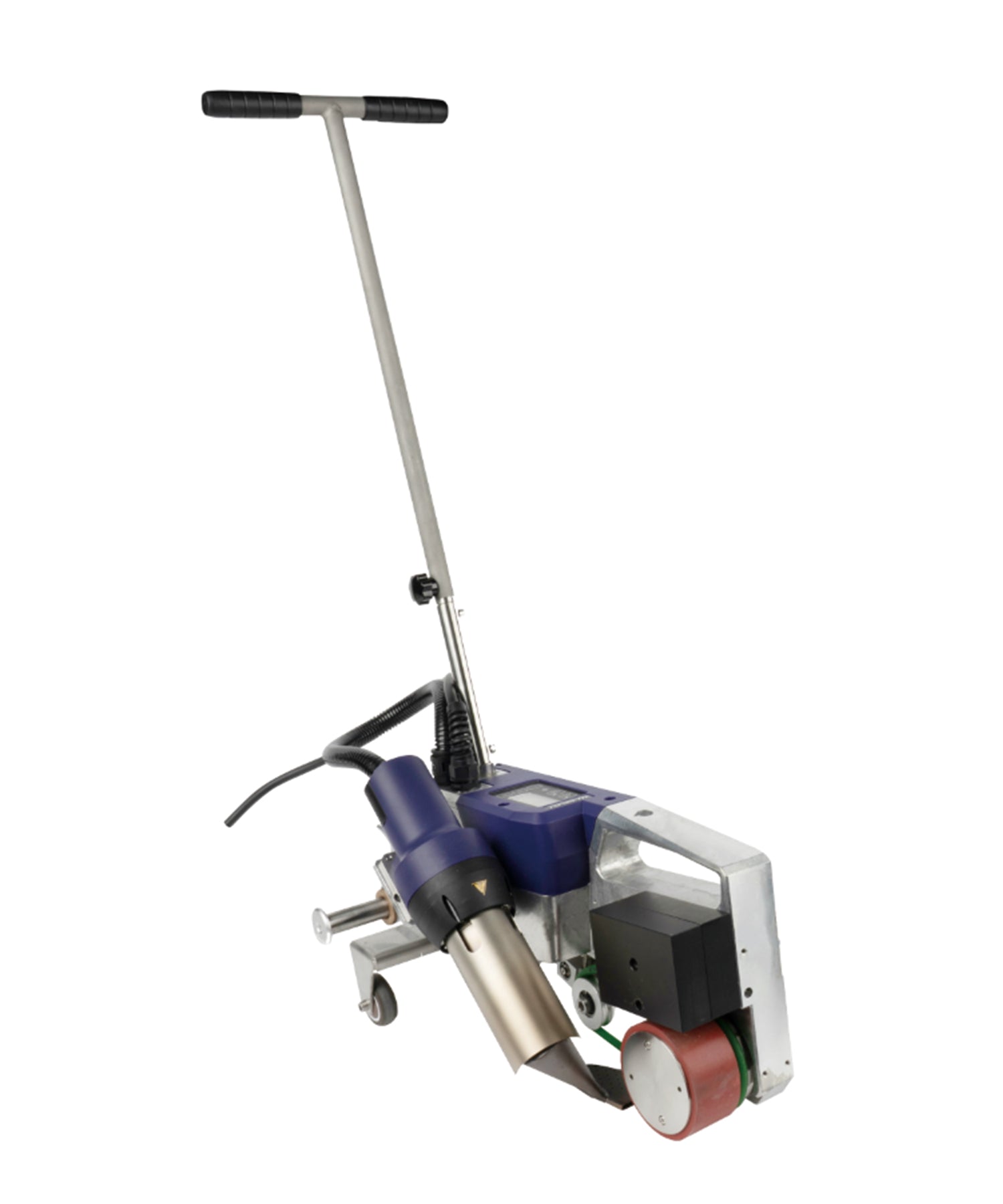
Commercial and industrial roofing projects demand speed, consistency, and seam integrity. Weldy's Roof40 automatic roofing welder is specifically engineered for TPO, PVC, and other single-ply membrane installation. Its brushless drive motor eliminates carbon brush maintenance while delivering reliable long-term performance.
| Parameter | Weldy Roof40 |
|---|---|
| Power | 3450 W |
| Welding Speed | 1–10 m/min |
| Temperature Range | 100–600°C |
| Seam Width | 40 mm |
| Air Volume | Adjustable |
| Edge Welding Distance | Up to 100 mm |
| Weight | 15.5 kg |
The Roof40 features digital parameter display for fast temperature and speed adjustment, and can handle close-to-edge welding — essential for flashing, parapet walls, and roof penetrations. Its 40mm seam width produces wrinkle-free, weather-resistant joints that meet ASTM D6392 standards for membrane seam strength.
Applications: Commercial flat roof TPO/PVC installation, industrial roofing, pool membrane welding, and large-area waterproofing.
6. Geomembrane Welders: Large-Scale Environmental Solutions
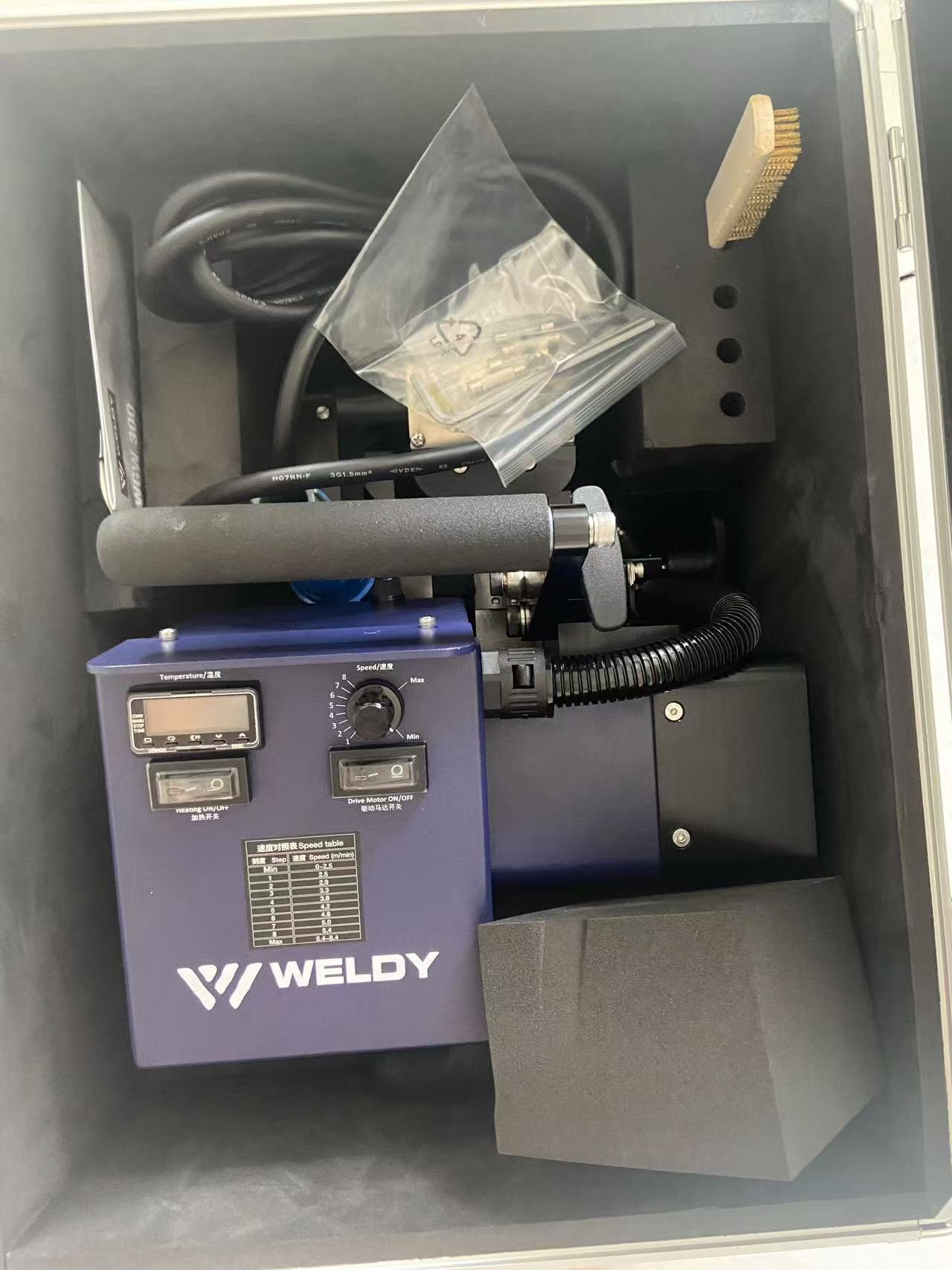
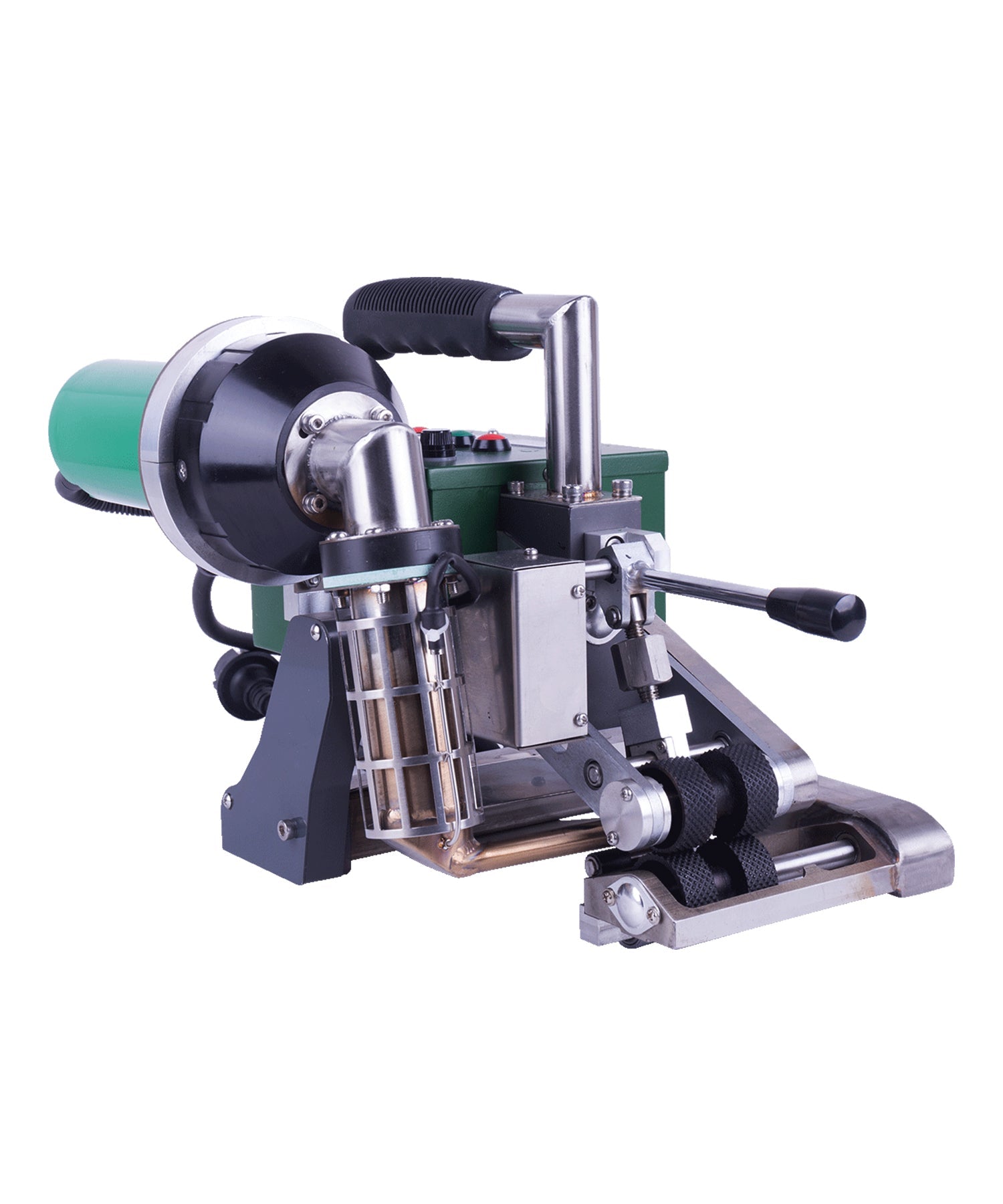
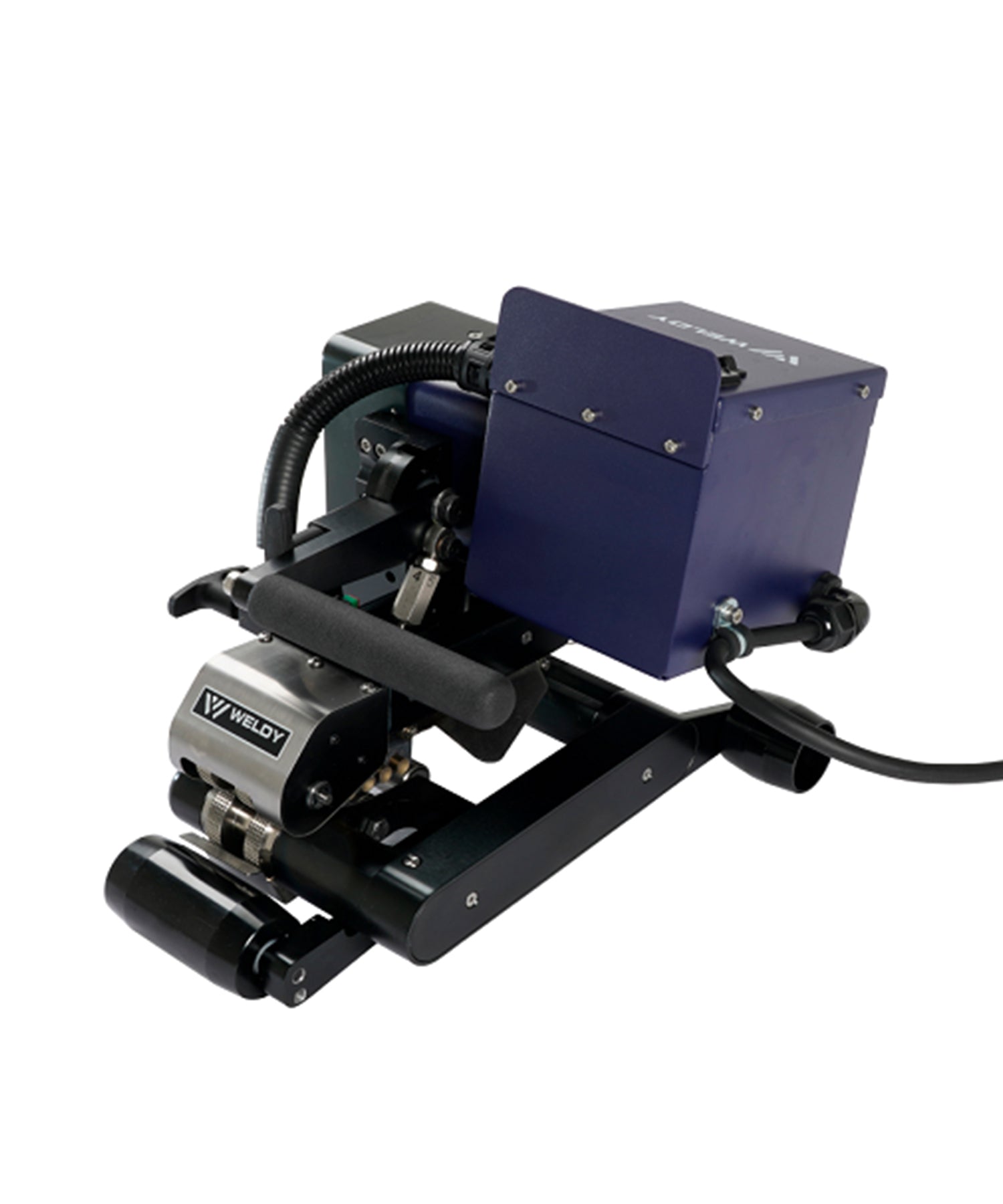
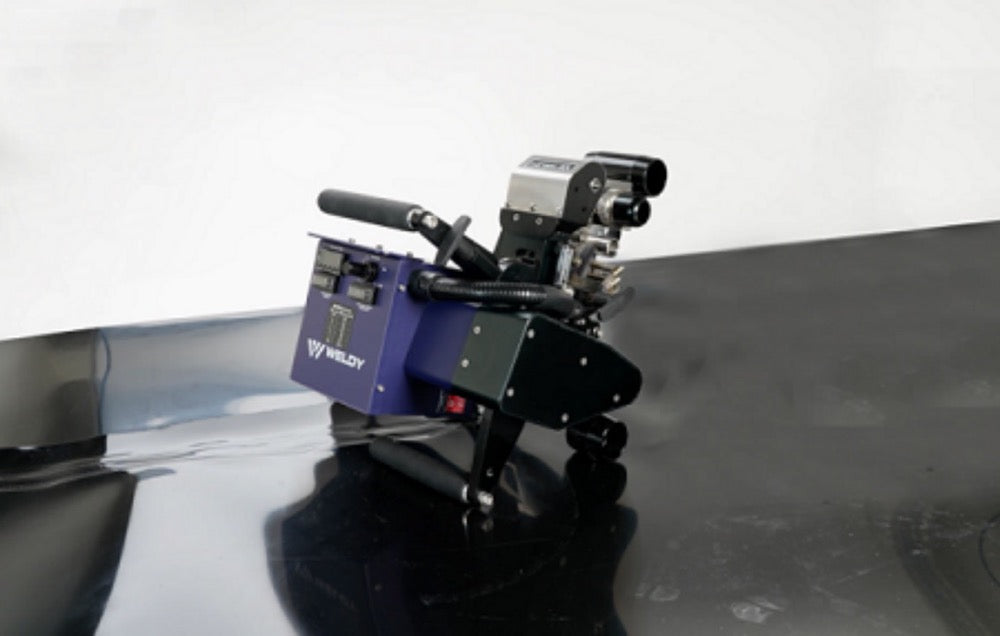
For environmental containment projects — landfills, mining operations, aquaculture ponds, and irrigation reservoirs — Weldy offers the WGW300 hot-wedge welding machine and the compact Minwelder geo2. These automatic wedge welders deliver consistent, leak-proof seams across large surface areas.
| Parameter | WGW300 | Minwelder geo2 |
|---|---|---|
| Power | 1750 W | 800 W |
| Temperature Range | 50–450°C | 60–480°C |
| Welding Speed | 0–8.5 m/min | 0.4–7.5 m/min |
| Material Thickness | 0.8–3.0 mm | 0.5–1.5 mm |
| Weld Strength | ≥90% base material | ≥85% base material |
| Weight | 15 kg | 3.9 kg |
The WGW300 is the workhorse for large landfill and mining projects, capable of welding on near-vertical inclines thanks to its high-torque drive system. The Miniwelder geo2 is ideal for thin geomembranes (0.5–1.5mm) in aquaculture and irrigation applications. Both machines use closed-loop temperature control to maintain consistent weld quality in varying site conditions.
Applications: Landfill liner installation, mining containment, fish pond lining, canal waterproofing, and tunnel waterproof membranes.
7. Welding Accessories: Nozzles, Rollers & Consumables
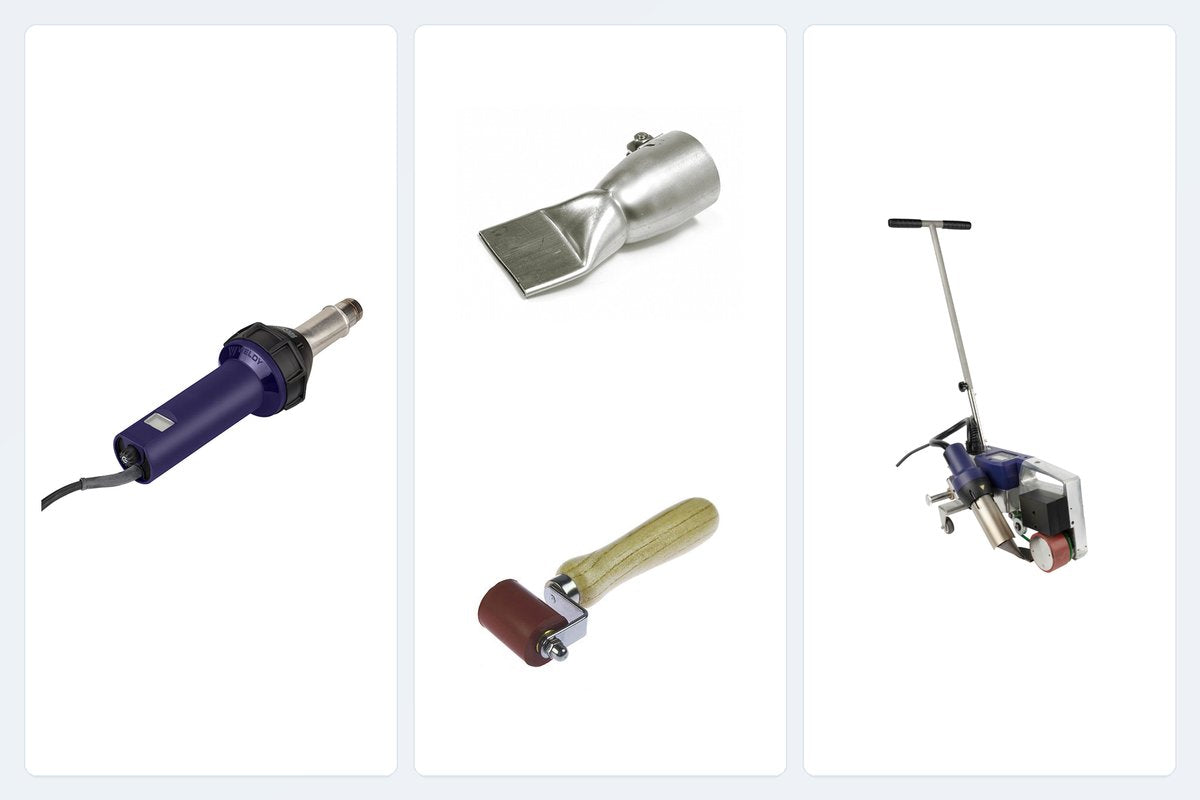
The quality of a plastic weld depends as much on accessories as on the machine itself. Weldy offers a comprehensive range of accessories designed to maximize welding efficiency and seam quality:
Welding Nozzles:
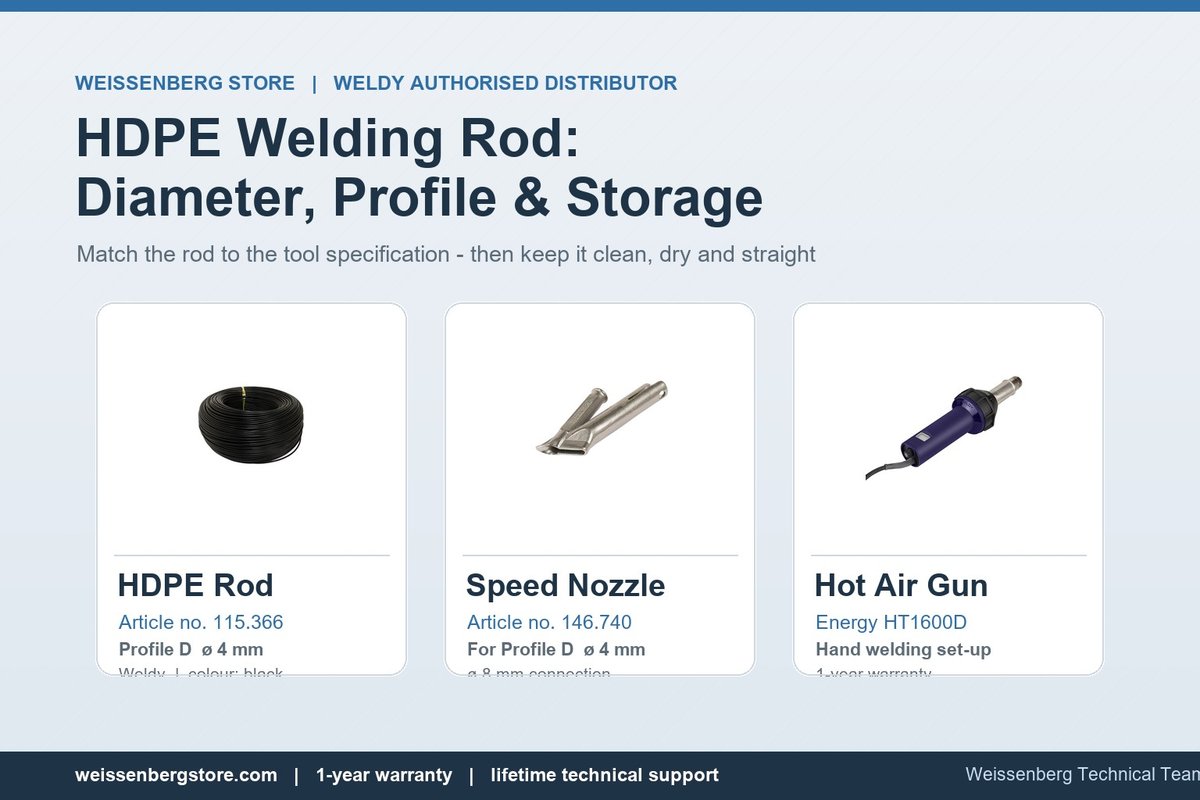
- Speed welding nozzles (3mm, 4mm, 5mm, 7mm) — for continuous rod-fed welding on PE, PP, and PVC
- Wide slot nozzles (20mm, 40mm) — for overlap welding of membranes and technical textiles
- Tubular nozzles (5mm) — for focused hot air in detail welding and pipe work
- Reflector and tacking nozzles — for preheating and initial joint tacking
Pressure Rollers:
- Silicone pressure rollers (30mm, 40mm, 80mm) — for applying consistent pressure during overlap welding
- PTFE rollers — for high-temperature applications
- Brass corner rollers — for detail work in tight spaces
Welding Rods / Consumables:
- HDPE and PP welding rods (3mm, 4mm round; triangular profiles)
- PVC and PVDF welding rods for specialized applications
- Heating elements and carbon brush replacement kits for all Weldy tools
8. How to Choose the Right Welding Equipment
Selecting the correct equipment depends on a systematic evaluation of your project requirements:
Step 1: Material Type
PE and PP materials typically require extrusion welding for structural joints, while PVC and TPO membranes are best welded with hot air tools or automatic wedge welders. Refer to DVS 2207 standards for material-specific welding parameters.
Step 2: Project Scale & Access
- Small repairs & detail work: Energy HT1600 hot air gun with speed welding nozzle
- Medium-scale fabrication: Booster EX2 extrusion welder
- Large civil engineering: Booster EX3 + WGW300 geomembrane welder
- Roofing installation: Roof40 automatic welder
Step 3: Certifications & Standards
Ensure selected equipment meets applicable standards: ISO 9001 for quality management, CE marking for European market compliance, and ASTM D6392 for membrane seam testing.
9. Best Practices & Maintenance
To maximize equipment lifespan and weld quality, follow these maintenance guidelines:
- Daily cleaning: Clean the air filter and nozzle after each use. A clogged filter reduces airflow and causes overheating.
- Carbon brush inspection: Check carbon brushes monthly on brushed motor tools (HT1600, HT3400). Replace when worn to ⅓ of original length.
- Wedge/Nozzle care: For hot wedge welders (WGW300), inspect the wedge surface for deposits. Clean with a brass brush when cooled.
- Screw maintenance: For extrusion welders, run a purge cycle with virgin PE material after each shift to prevent carbon buildup in the screw.
- Storage: Store equipment in the provided transport case in a dry environment. Protect from dust and moisture.
- Calibration: Verify temperature calibration every 6 months using an external thermocouple. Document results per ISO 9001 requirements.
10. Why Partner with an Official Weldy Distributor
Purchasing through an authorized distributor like Weissenberg provides tangible advantages beyond pricing:
- 100% genuine products with full manufacturer warranty and traceability
- Technical support from a team with 20+ years of plastic welding experience
- Spare parts availability — genuine Weldy replacement parts shipped globally
- Application guidance — from equipment selection to on-site troubleshooting
- Competitive pricing through long-term partnership with Weldy/Leister
Explore the complete Weldy product range at www.weissenbergstore.com — your trusted source for genuine Weldy plastic welding equipment.
Author: Weissenberg Technical Team | 20+ Years in Plastic Welding Industry
Standards Referenced: ASTM D6392, DVS 2207, ISO 9001, CE
Tags: plastic welding, Weldy, hot air gun, extrusion welder, roofing welder, geomembrane welder, welding accessories, Weissenberg
This article is for informational purposes. Product specifications may vary by model and region. Always refer to the official product manual for exact parameters.




Leave a comment
This site is protected by hCaptcha and the hCaptcha Privacy Policy and Terms of Service apply.