
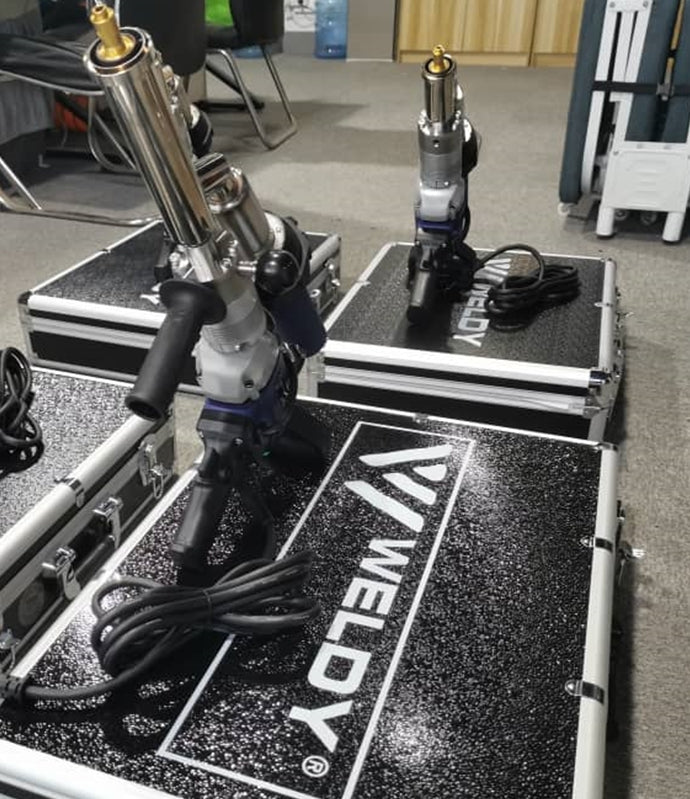
Choosing the wrong plastic welding machine can lead to project delays, poor seam quality, and costly rework. With three main welding technologies — extrusion welding, hot air welding, and hot wedge welding — understanding which one fits your specific application is the first step toward a successful investment. This guide compares each technology by application, material, and project scale so you can make an informed buying decision.
Extrusion Welder vs Hot Air Gun vs Hot Wedge: Quick Comparison
| Factor | Extrusion Welder | Hot Air Gun | Hot Wedge Welder |
|---|---|---|---|
| Best for | Thick sheets, structural joints, repair | Detail work, tacking, small repairs | Long straight seams, geomembrane lining |
| Material thickness | 10-25mm (heavy) | 0.5-3mm (thin) | 0.5-3.5mm (thin to medium) |
| Welding speed | 2-3.6 kg/h extrusion rate | Manual, low speed | Up to 8.5 m/min |
| Portability | 6-12 kg | 0.5-1 kg | 3.9-15 kg |
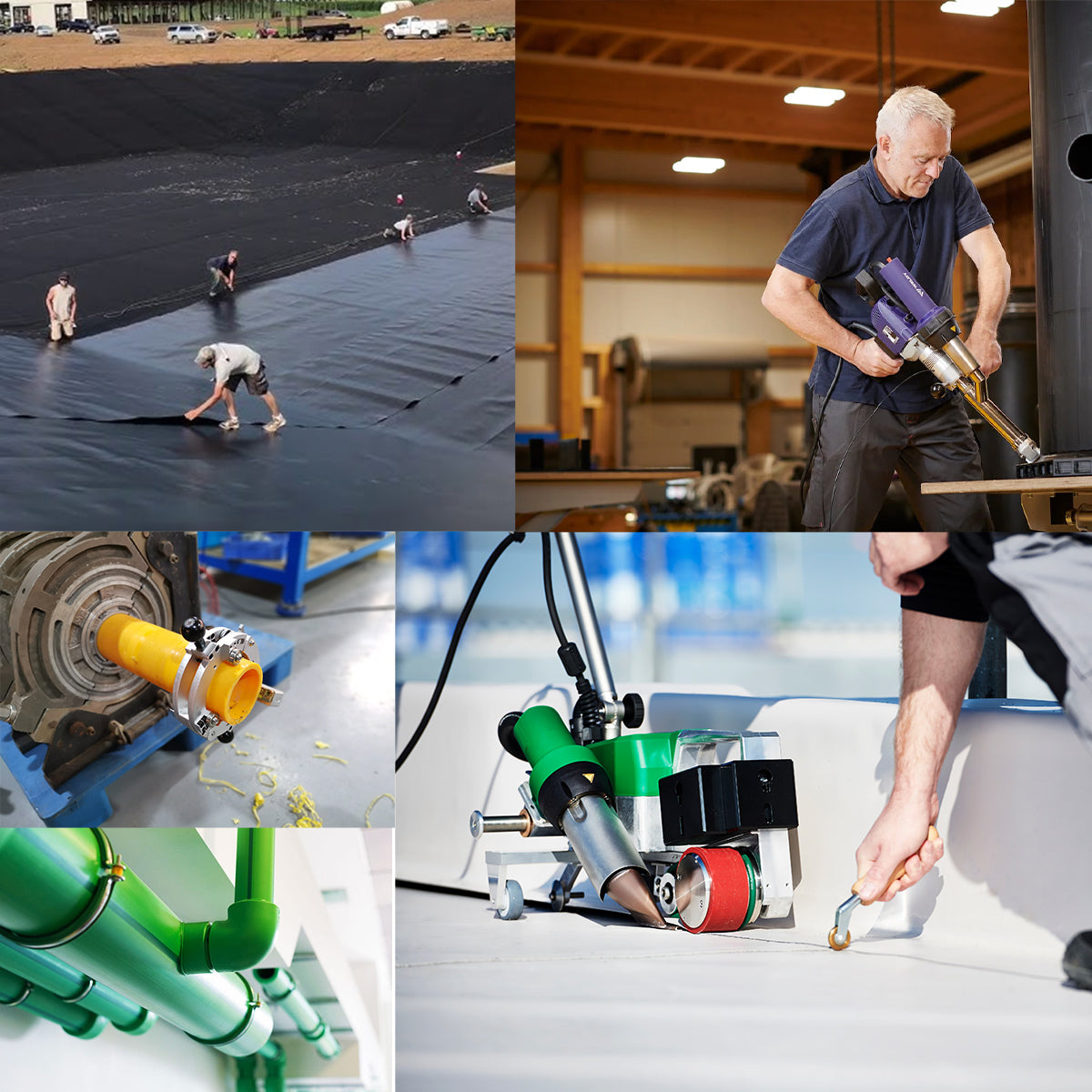
| Typical applications | Chemical tank, PP scrubber, electroplating | Roofing detail, HVAC, DIY | Landfill liner, pond liner, reservoir |
| Skill level | Moderate to high | Low to moderate | Low to moderate |
1. When to Choose an Extrusion Welder

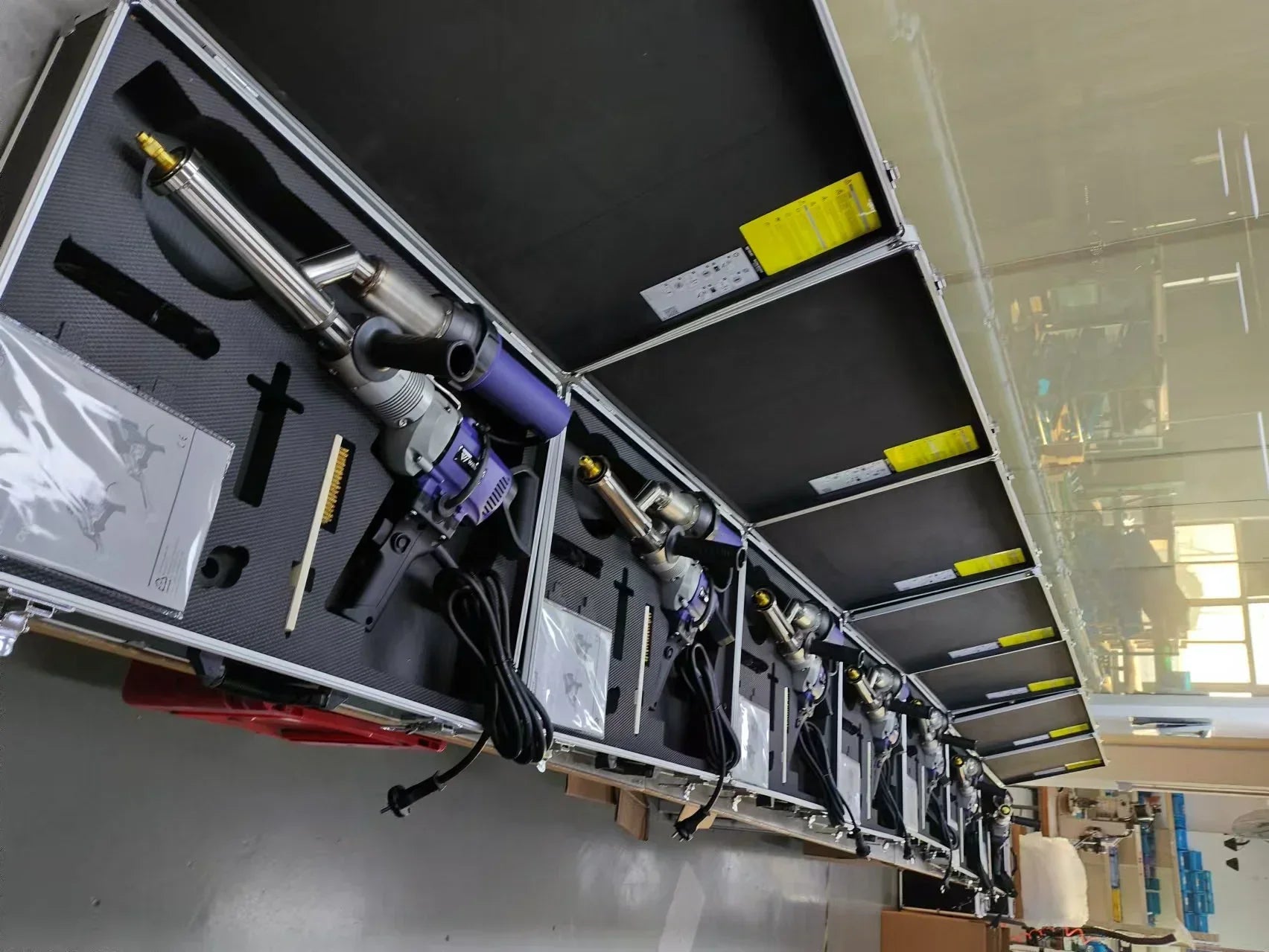
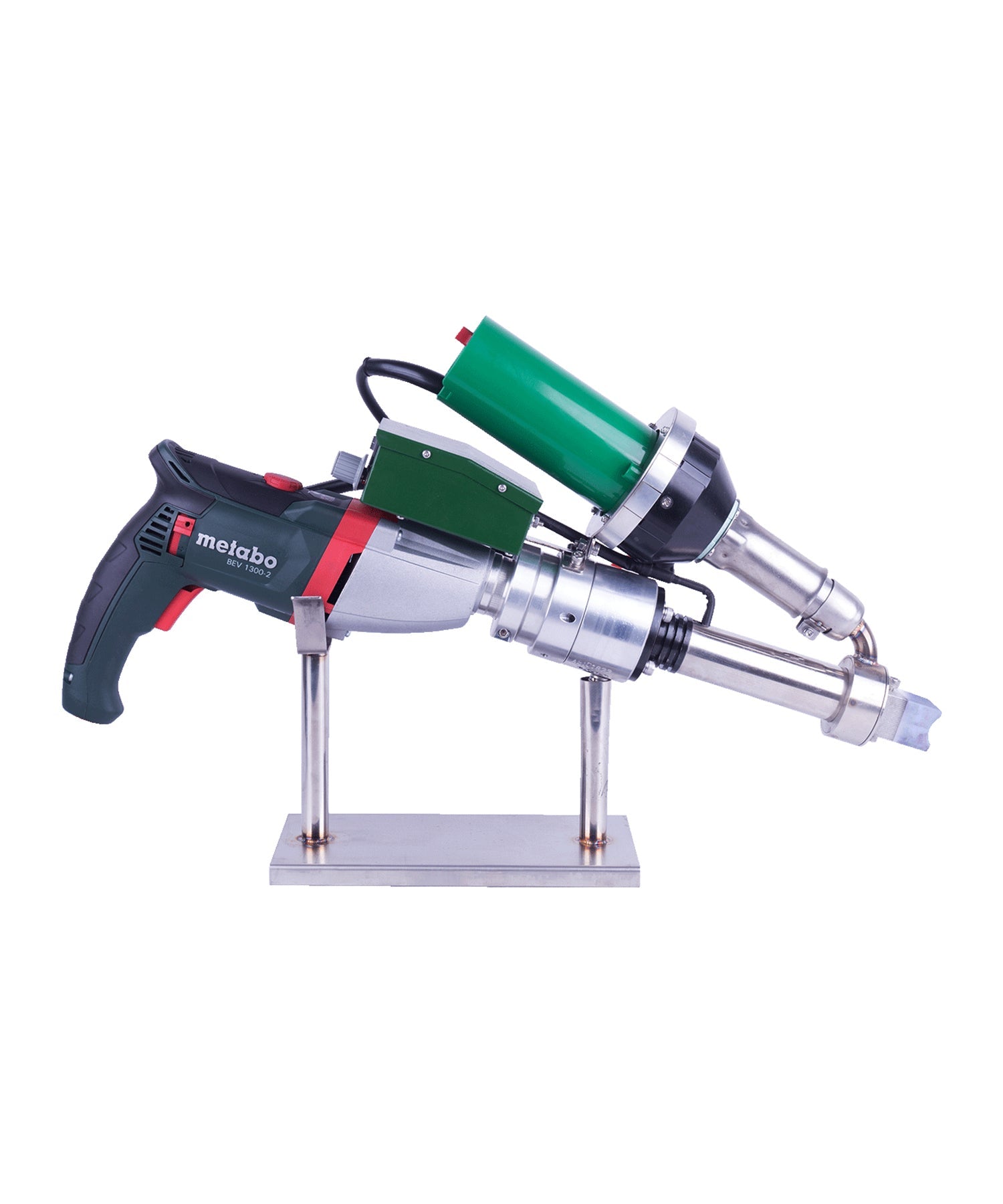
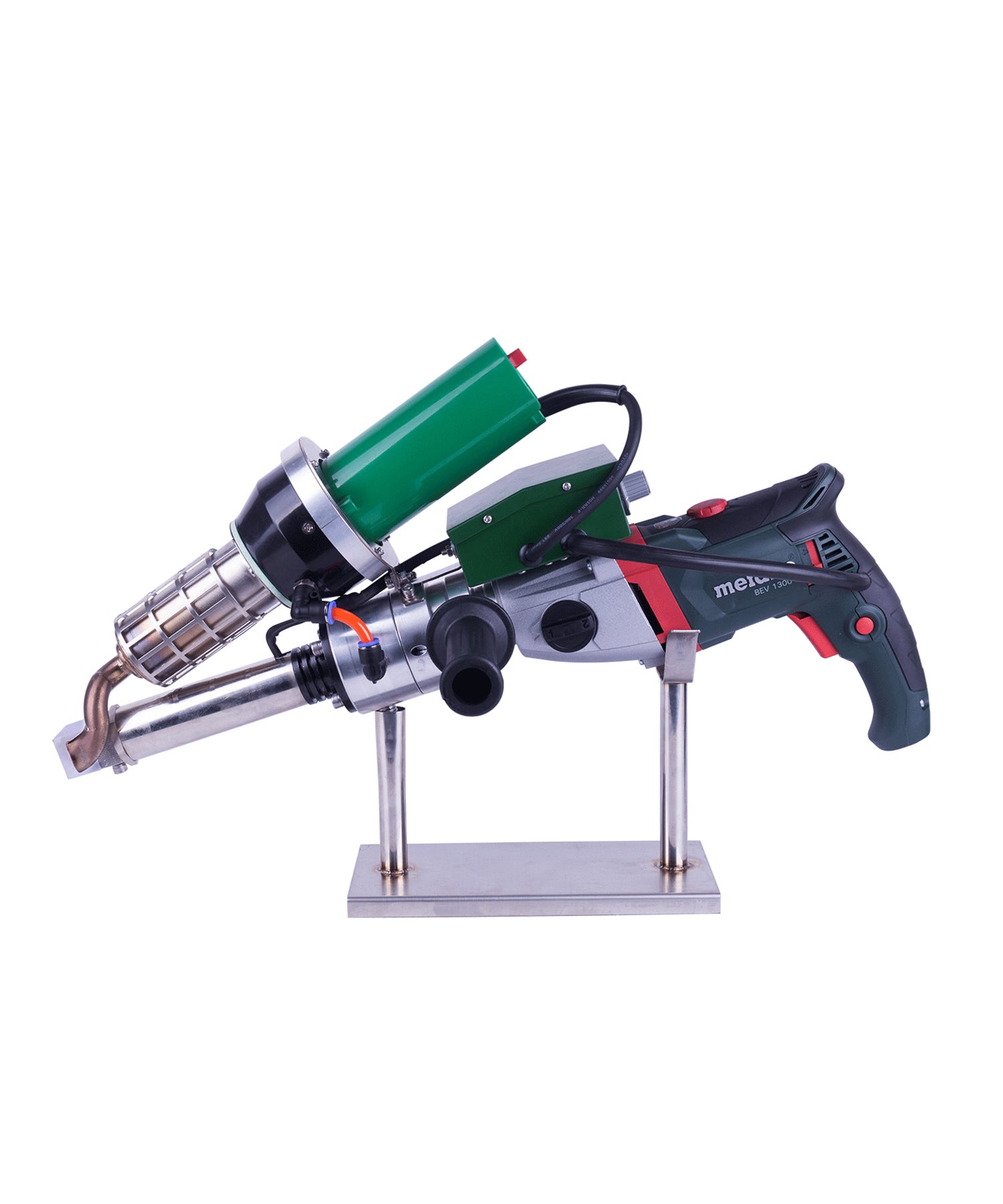
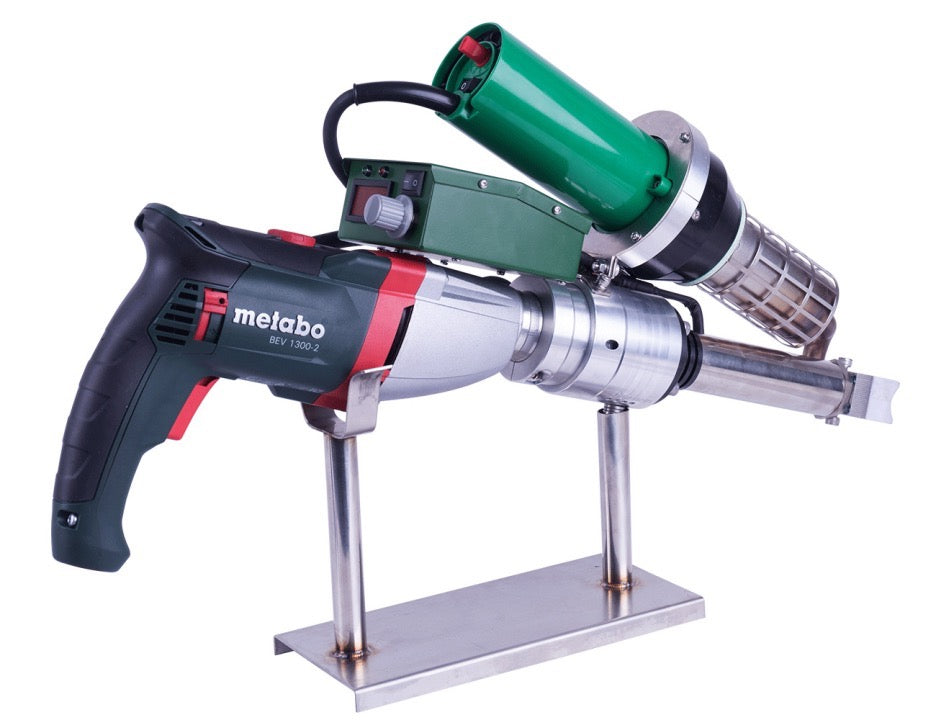
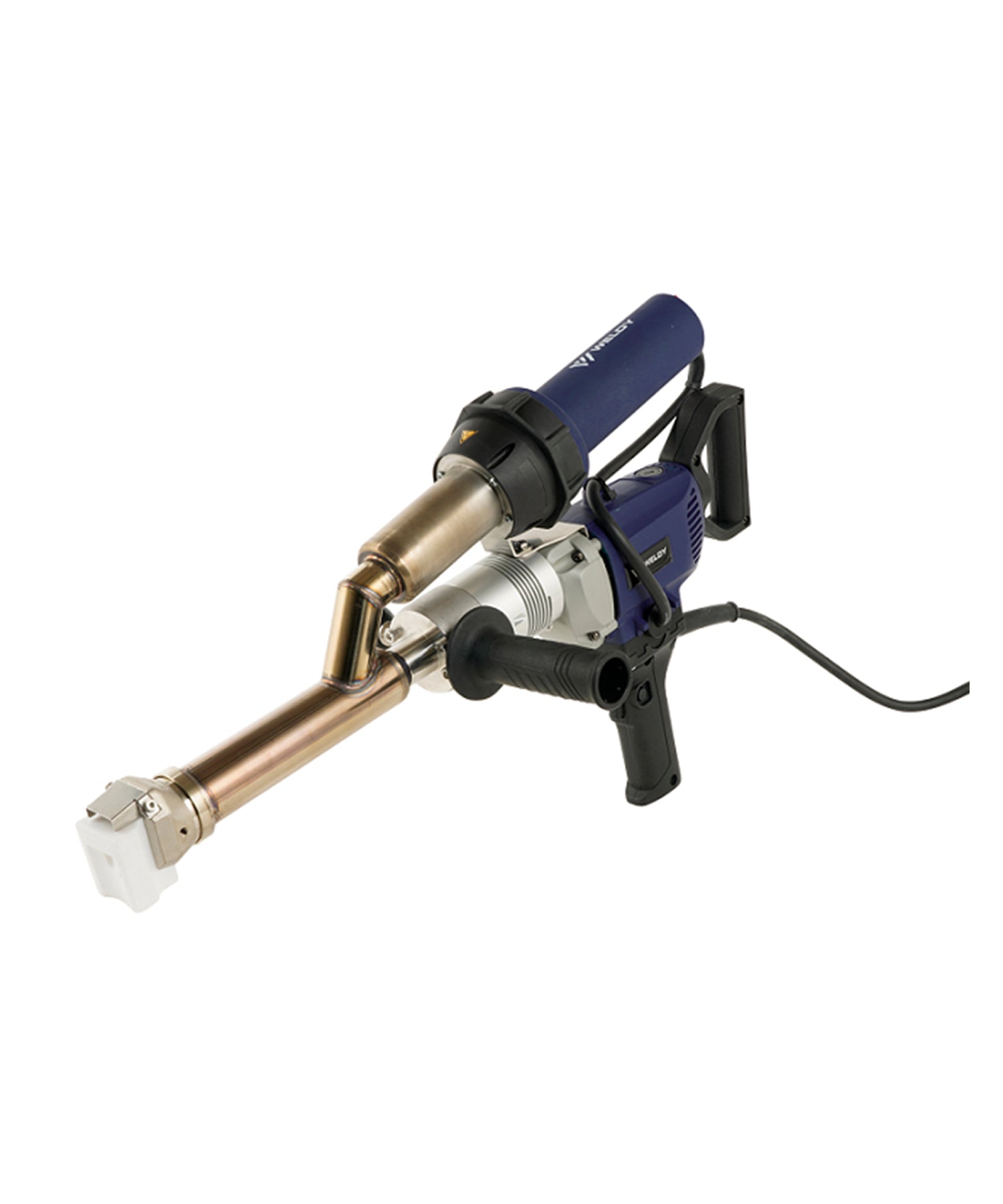
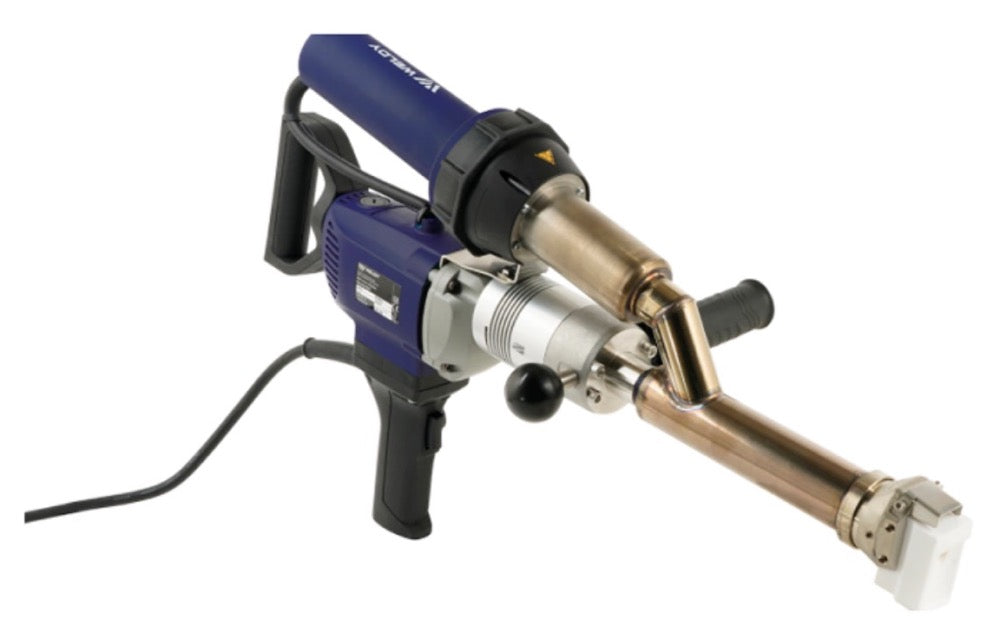
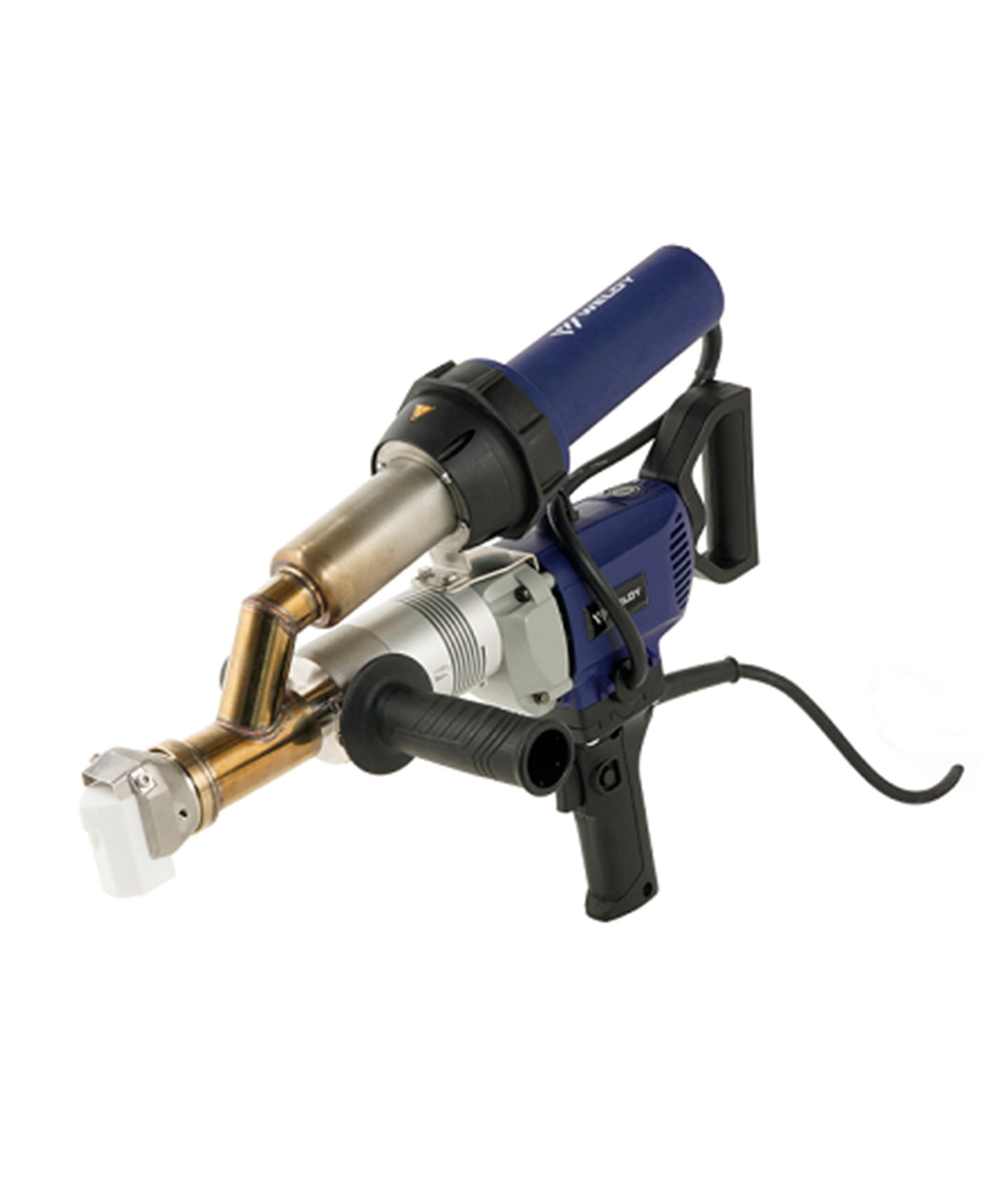
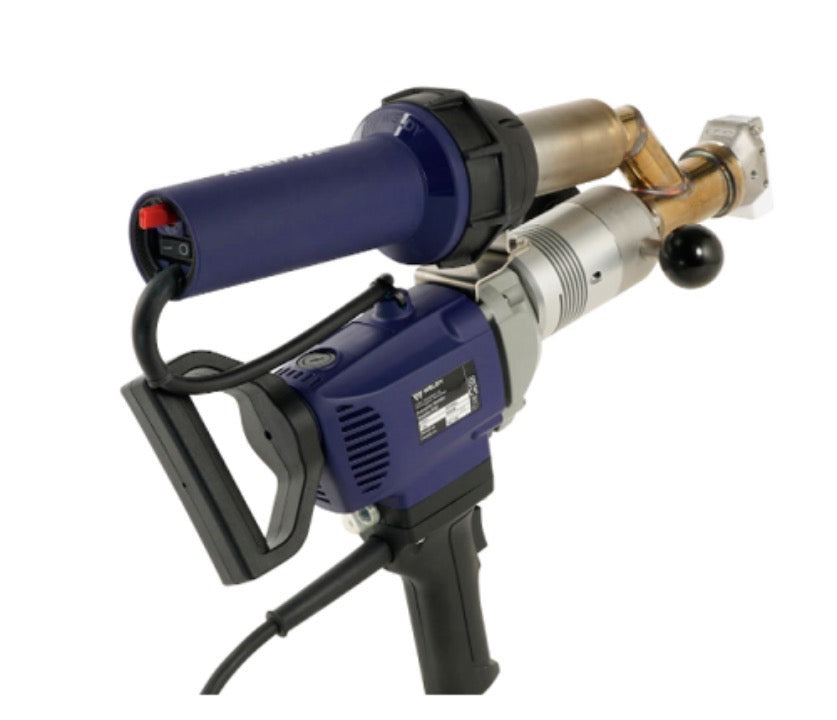
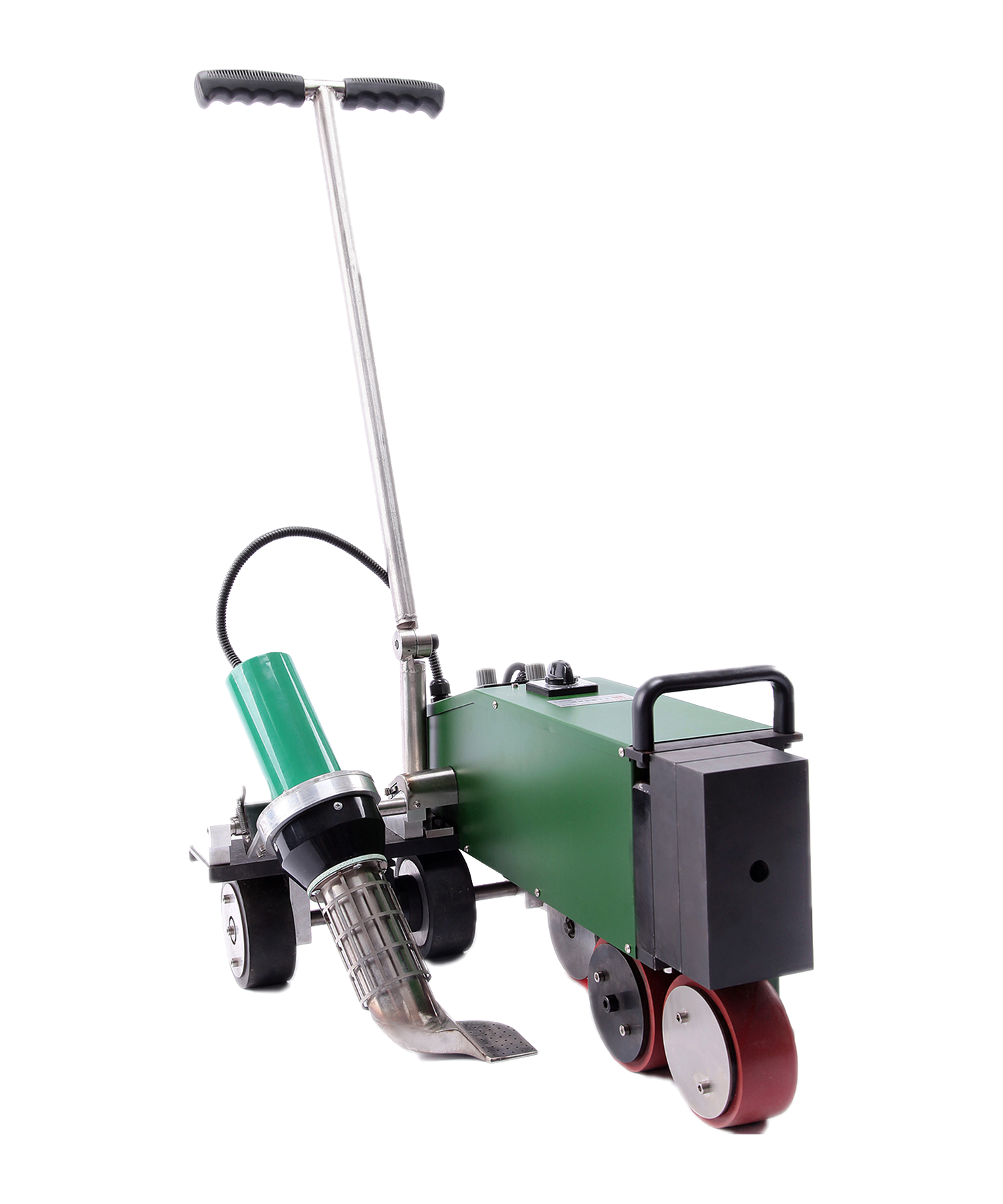
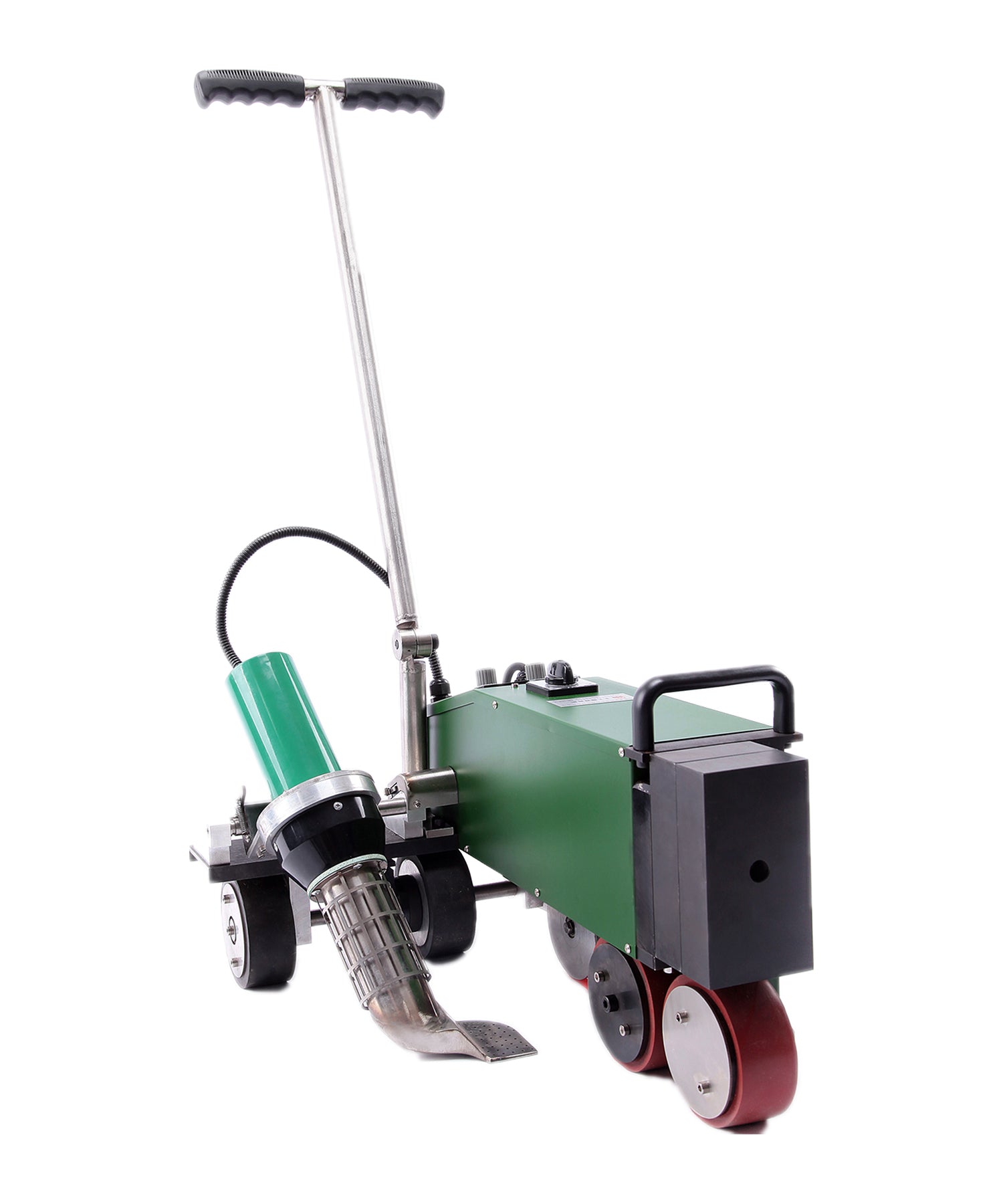
Extrusion welders are the go-to choice for thick-section plastic fabrication. They feed a welding rod through a heated barrel and extrude molten material into a joint — ideal for applications requiring high mechanical strength.
- Chemical tank fabrication: HDPE and PP chemical tanks with wall thicknesses of 10-25mm require extrusion welding for structural integrity. The Weldy BOOSTER EX3 handles these thicknesses at 3.6 kg/h extrusion rate.
- PP scrubber manufacturing: In semiconductor and electroplating industries, PP scrubbers are built from thick sheets welded with extrusion technology for corrosion resistance.
- Water treatment equipment: Large tanks and channels in water treatment facilities rely on extrusion welders for leak-proof joints.
Our recommendation: If your project involves sheets over 10mm thick or requires structural load-bearing welds, an extrusion welder like the BOOSTER EX3 (3000W, 3.6 kg/h) or the RYH1600C (1600W, 2.0-3.0 kg/h) is the right choice.
2. When to Choose a Hot Air Gun

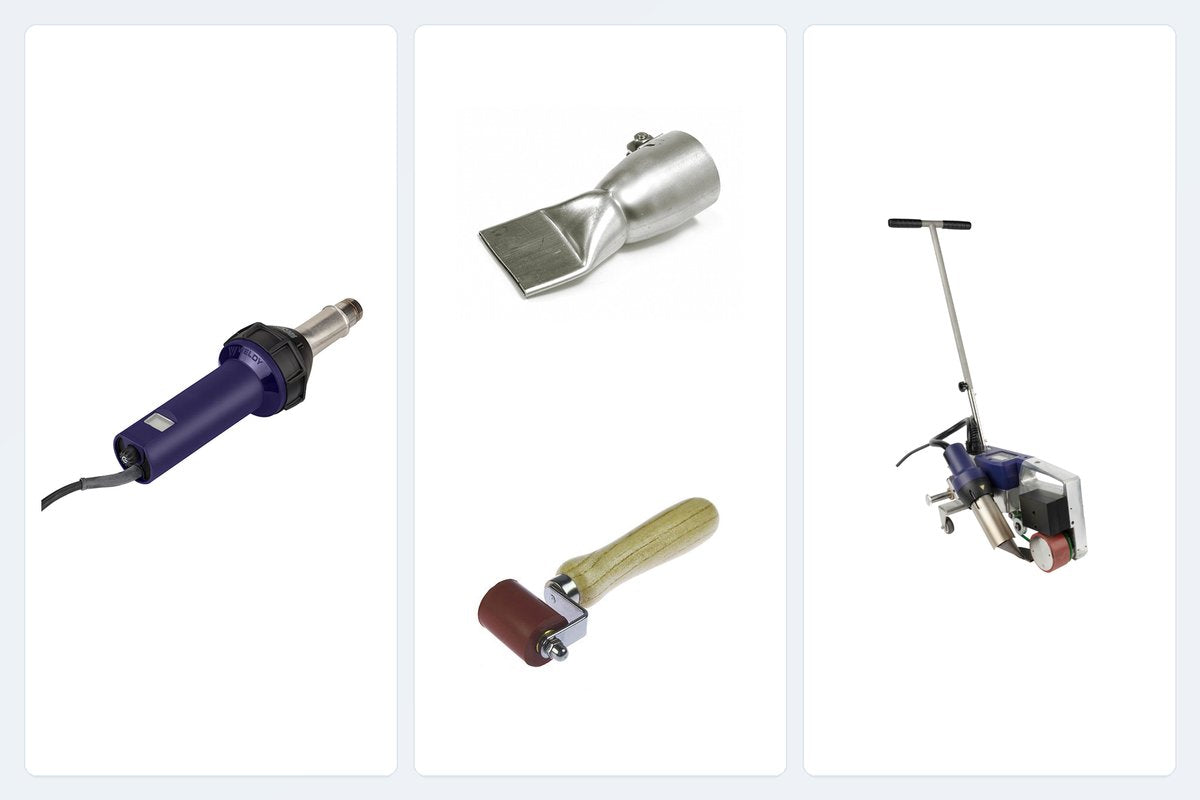
Hot air guns are the most versatile and portable plastic welding tools. They direct a stream of heated air between workpiece surfaces, making them ideal for detail work and small-scale applications.
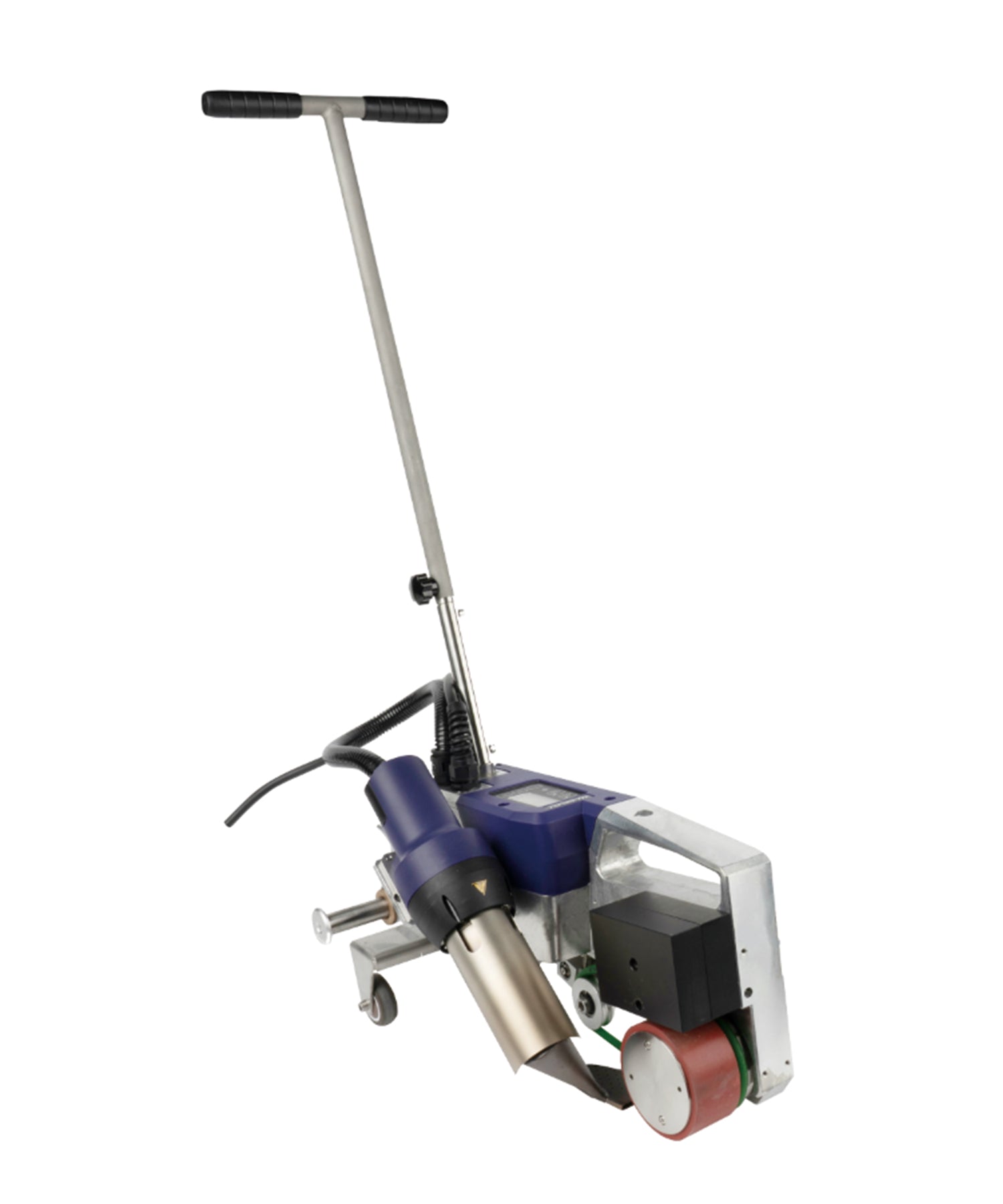
- Roofing detail work: T-joints, corner patches, and pipe penetrations in PVC/TPO roofing membranes — tasks where a wedge welder cannot reach.
- Small repairs and tacking: Quick fixes on liners, tarpaulins, and greenhouse films.
- HVAC ductwork: Welding plastic ventilation components and fittings.
- DIY and lightweight fabrication: Thin materials under 3mm where precision control matters.
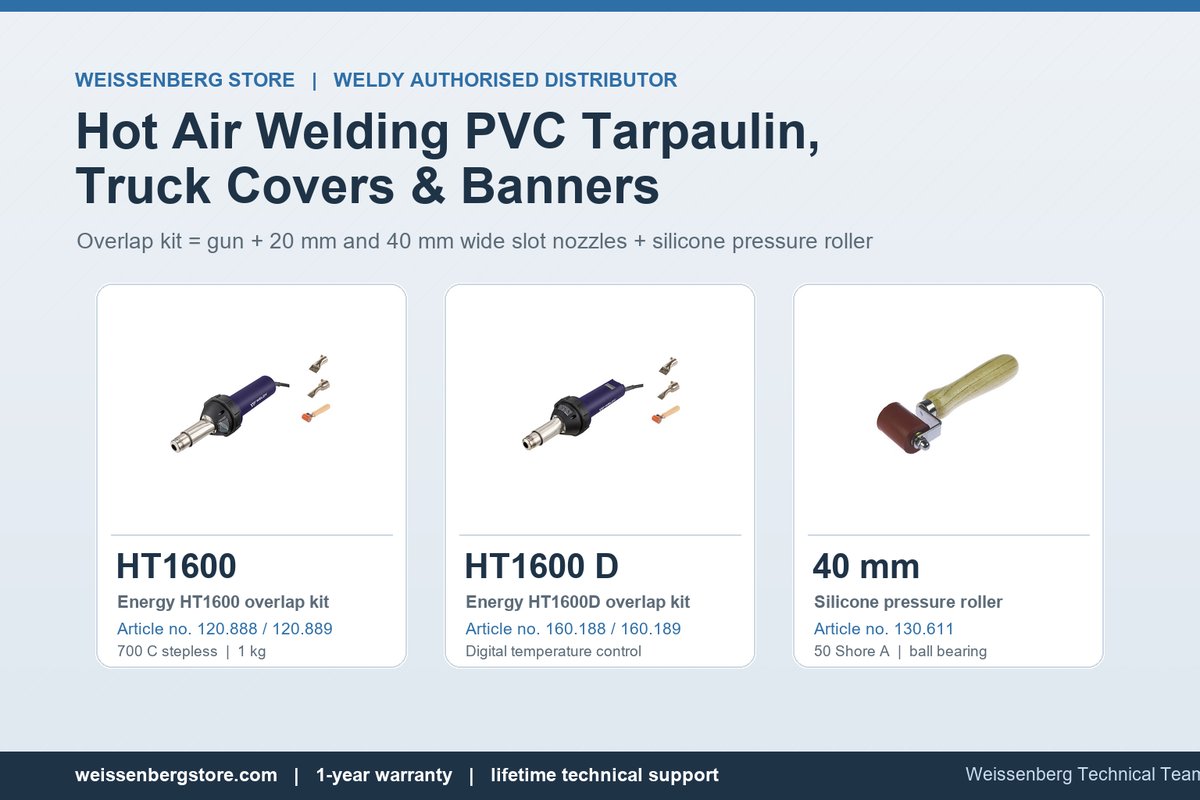
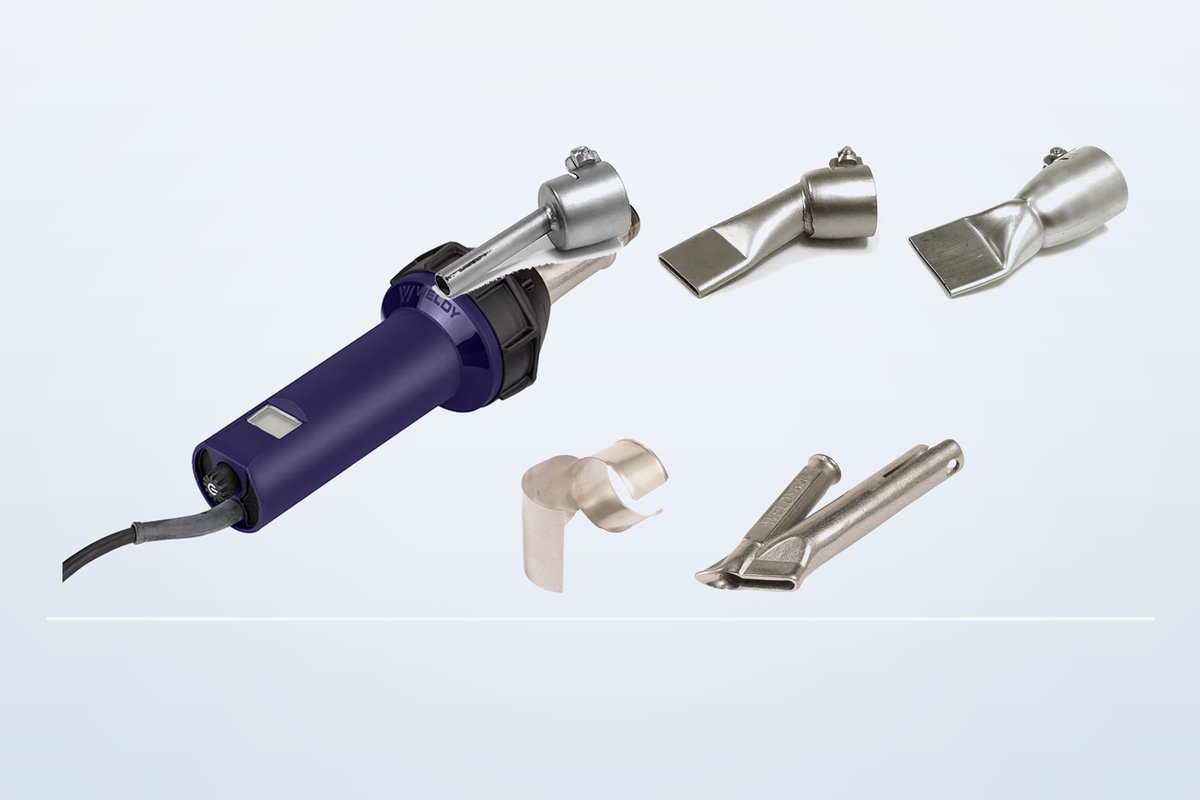
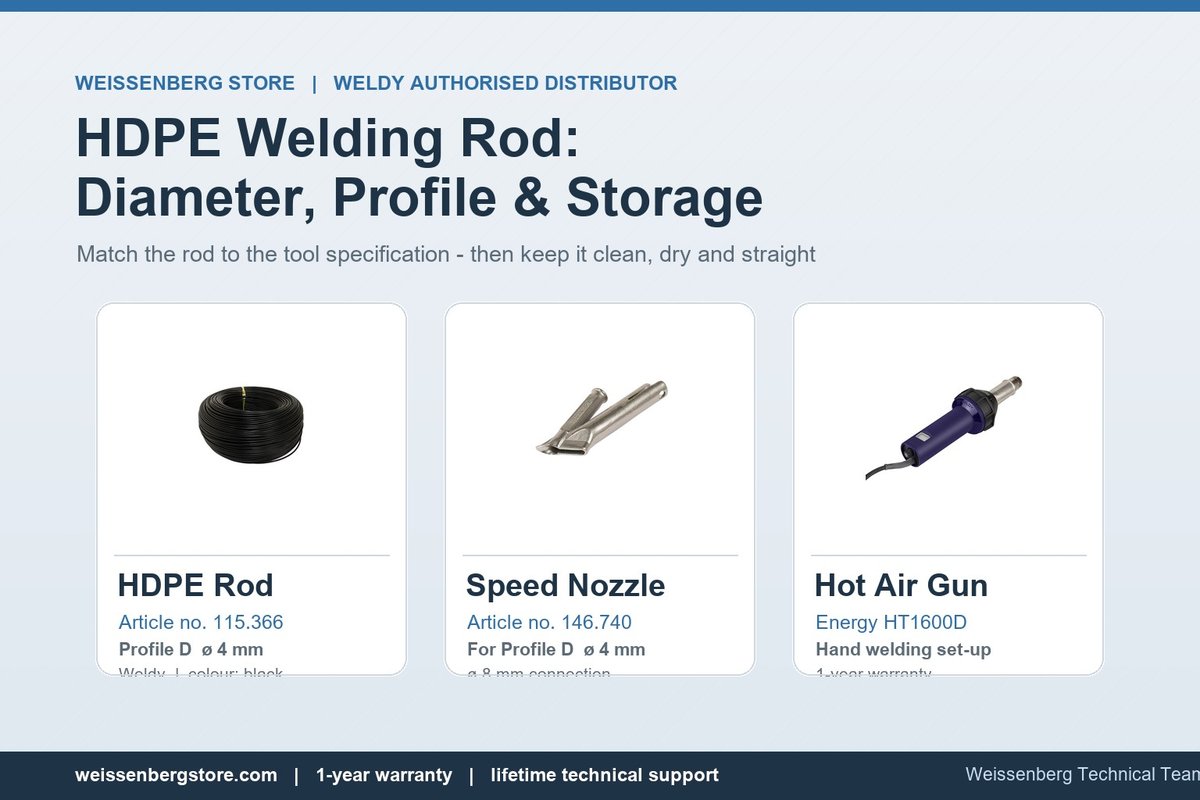
Our recommendation: For versatility and portability, the Weldy Energy HT1600 (1600W, 0.1-7.0 m/min, only 1kg) is ideal for professionals who need a reliable tool for multiple job types.
3. When to Choose a Hot Wedge Welder

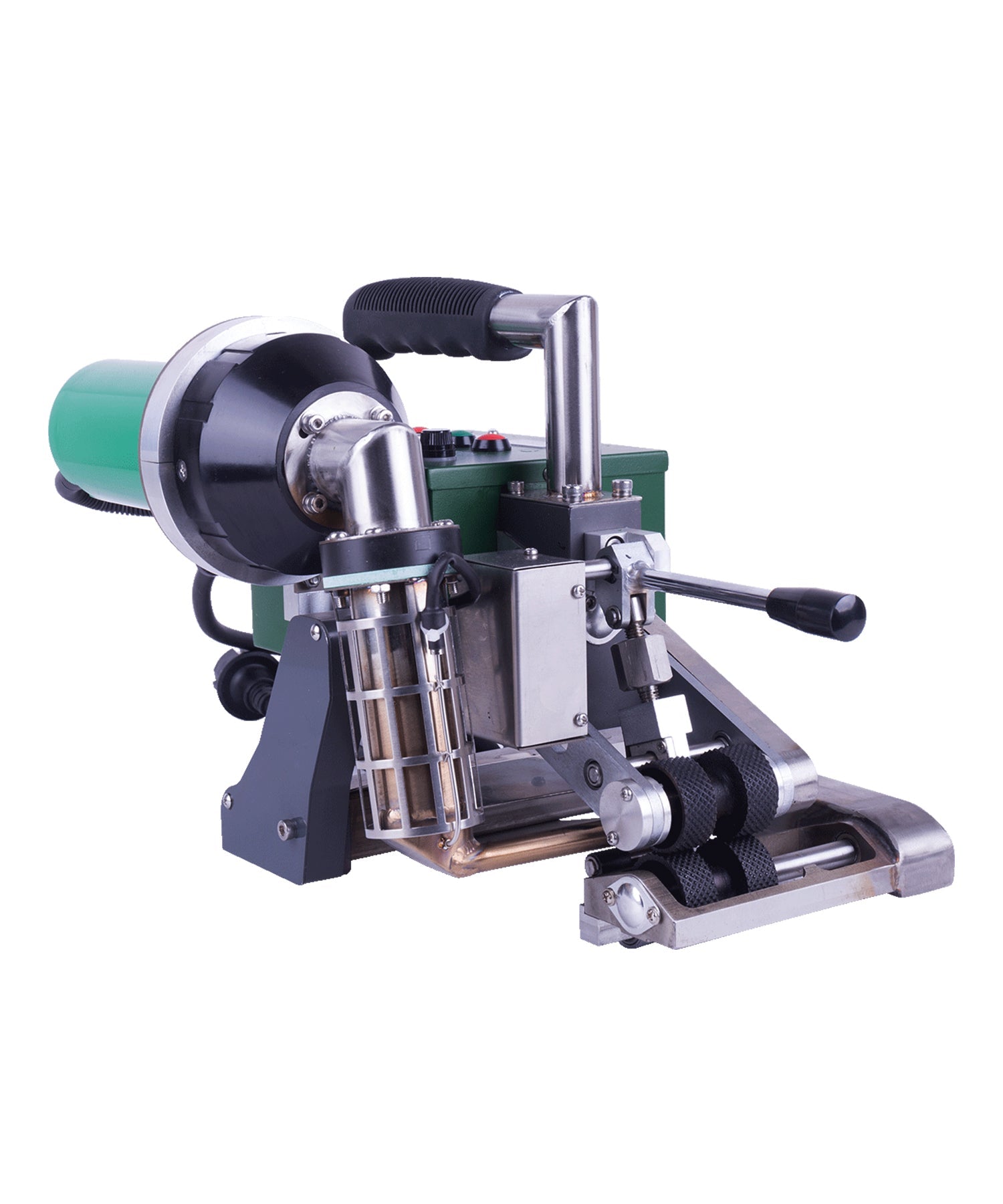
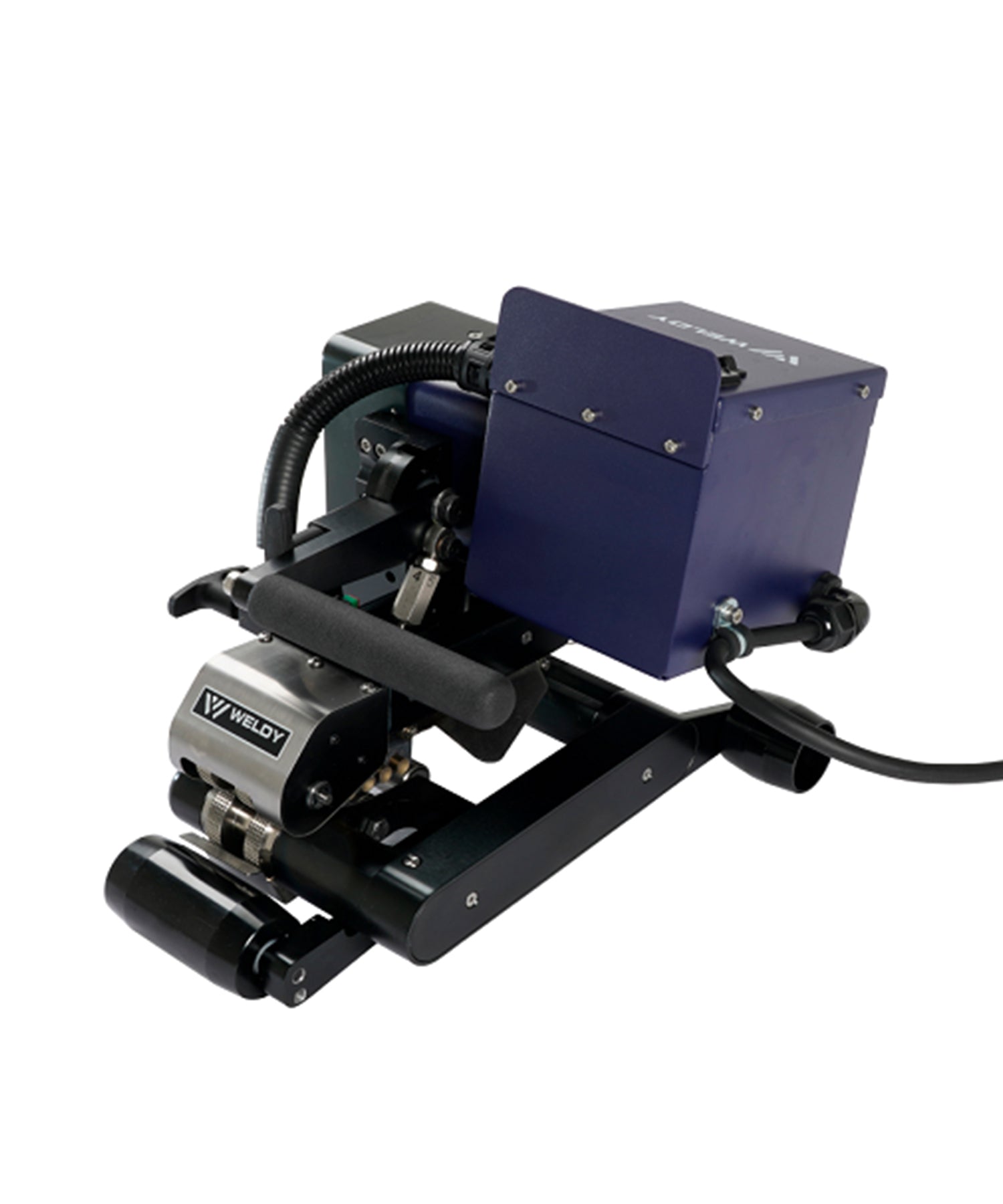
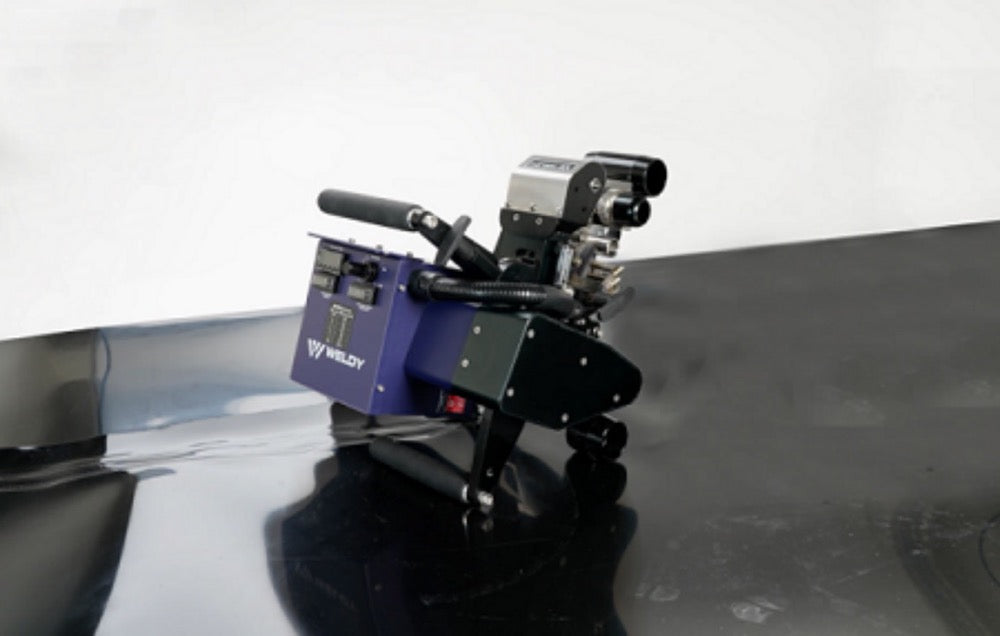
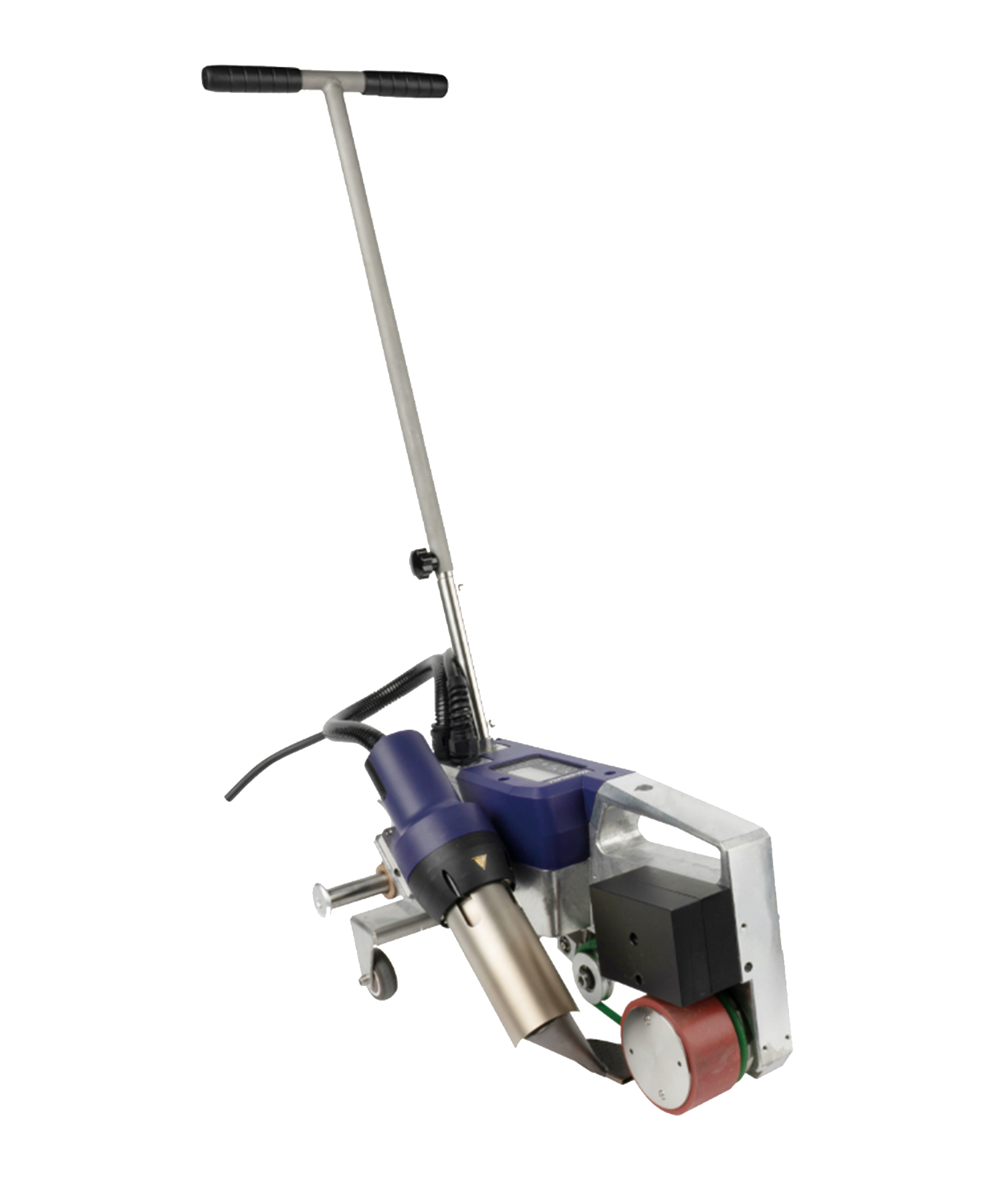
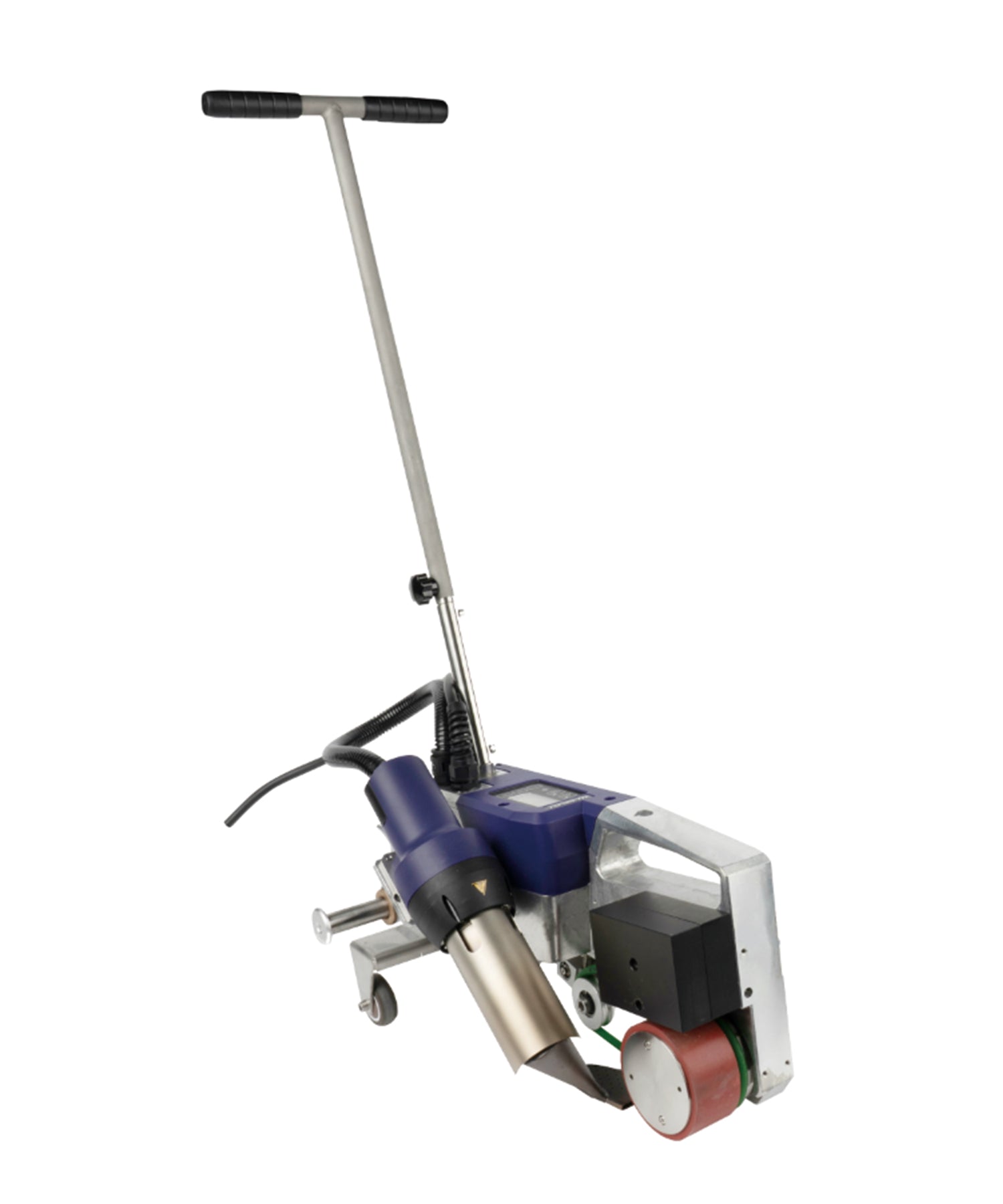
Hot wedge welders use a heated metal wedge that travels between overlapping membrane sheets, melting and pressing them together in one pass. They are purpose-built for long, continuous seams on thin-to-medium geomembranes.
- Landfill lining projects: HDPE geomembrane liner installation covering thousands of square meters — the WGW300 delivers up to 8.5 m/min welding speed.
- Water reservoir and pond liners: Consistent seam quality over long distances with minimal operator intervention.
- Mining containment ponds: Heavy-duty applications requiring up to 620°C welding temperature accessible with the RYG700.
- Aquaculture lining: Fish pond and shrimp pond liners where weld reliability directly affects containment.
Our recommendation: For geomembrane projects with long straight seams on materials 0.5-3.5mm thick, the WGW300 (1750W, 0-8.5 m/min) is a proven workhorse.
4. Buying Decision Guide by Application
Still unsure? Use this quick reference:
- Building a chemical storage tank (10-25mm PP/HDPE)? → Extrusion Welder (BOOSTER EX3)
- Installing a landfill liner (1-2mm HDPE)? → Hot Wedge Welder (WGW300)
- Repairing a pond liner or welding pipe penetrations? → Hot Air Gun (Energy HT1600)
- Fabricating a PP scrubber for a semiconductor plant? → Extrusion Welder (RYH3400C)
- Welding a PVC roofing membrane on site? → Roofing Welder (Roof40) for main seams + hot air gun for details
- Multiple applications in a fabrication shop? → Consider investing in both an extrusion welder and a hot air gun for maximum flexibility
Frequently Asked Questions
Q: Can one machine handle all plastic welding tasks?
A: No single machine covers all applications. Extrusion welders handle thick sheets, hot wedge welders excel at long geomembrane seams, and hot air guns are best for detail work. Many professionals carry a combination — for example, a hot wedge welder for main seams and a hot air gun for repairs.
Q: What is the most cost-effective option for a small workshop?
A: For small workshops with varied work, start with a quality hot air gun like the Weldy Energy HT1600. It covers most light fabrication, repair, and detail welding at a lower investment. As your projects grow, add a hot wedge welder or extrusion welder specific to your most common application.
Q: How do I know which welding temperature I need?
A: The required temperature depends on the material. For HDPE: 300-400°C. For PP: 350-450°C. For PVC/TPO: 350-500°C. All WeissenbergStore machines offer adjustable temperature control — from 20°C up to 620°C — to cover common thermoplastics.
Q: Is certification important for plastic welding machines?
A: Yes. All WeissenbergStore machines comply with EU CE standards. For critical applications like potable water containment or chemical storage, machines with closed-loop temperature control (such as the RY-WP1) provide the precision and documentation needed for certified installations.
Q: What accessories should I buy with my first welder?
A: At minimum, get spare heating elements, a silicone pressure roller, and appropriate welding shoes for your joint geometry. We stock compatible accessories and spare parts for all Weldy machines.
Q: Do you provide technical support after purchase?
A: Yes. We offer lifetime free technical consultation via email or online chat, with responses within 24 hours on business days.
Need Help Choosing?
Not sure which welding technology fits your project? Contact our team with your material type, thickness, and application details — we will recommend the right machine for your specific needs and budget.




Leave a comment
This site is protected by hCaptcha and the hCaptcha Privacy Policy and Terms of Service apply.