
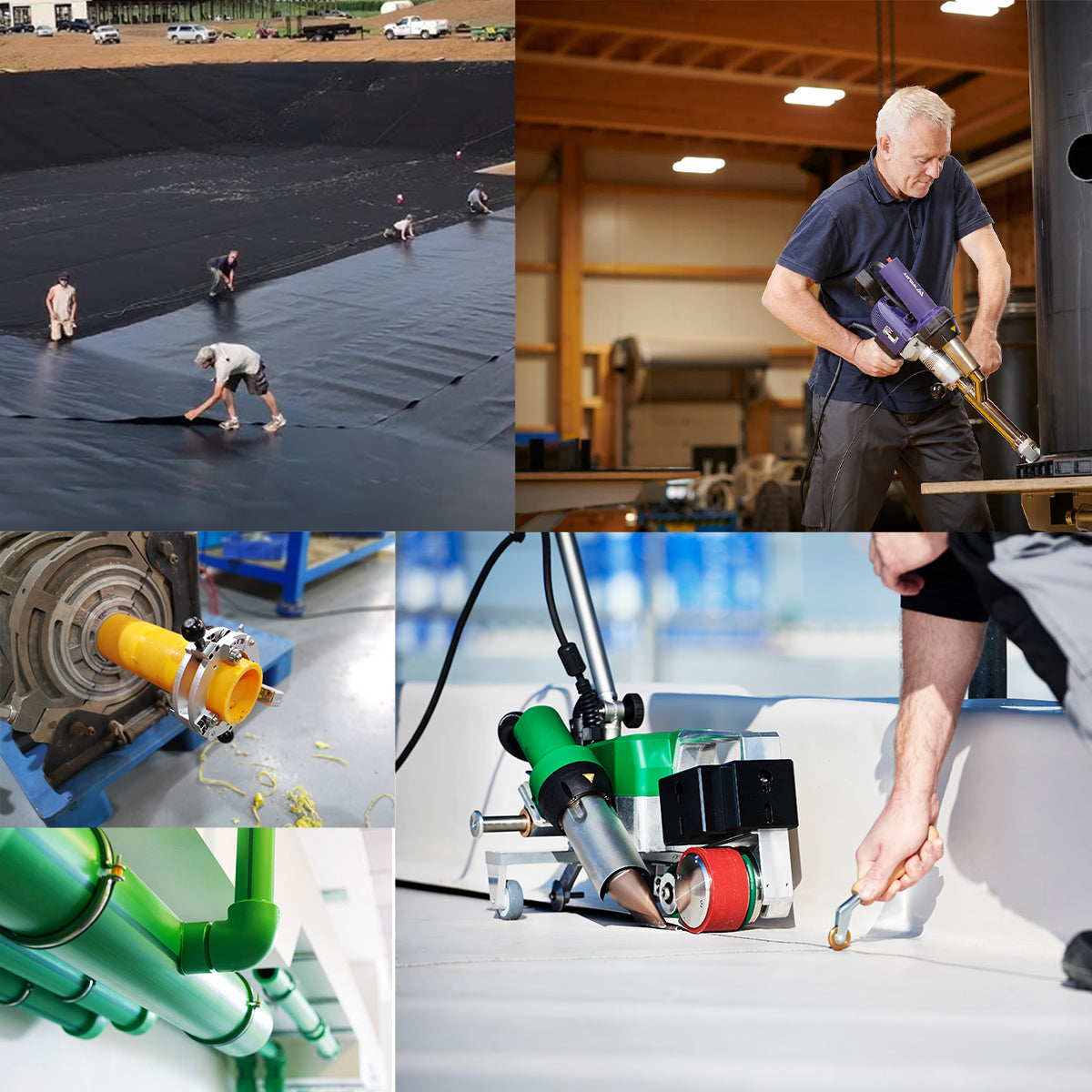
Weldy Plastic Welding Solutions: Real-World Applications in Construction, Environmental Engineering & Industrial Fabrication
By Weissenberg Technical Team — 20+ Years of Industry Experience
1. Introduction: Why Weldy Matters in Industrial Plastic Welding
Choosing the right plastic welding tool depends on your material, thickness and application. From HDPE geomembranes to PP tanks and PVC membranes, Weldy provides professional solutions for different thermoplastic welding needs.
In industries ranging from civil construction to environmental protection, the integrity of thermoplastic welds directly determines project lifespan and safety. Weldy — a sub-brand of Switzerland's Leister Group with over 75 years of engineering heritage — has earned its reputation by delivering Swiss-engineered plastic welding tools that combine professional-grade performance with cost-effectiveness.
Whether you are installing landfill liners, welding HDPE chemical tanks, or seaming TPO roofing membranes, the choice of welding equipment significantly impacts seam quality, productivity, and long-term reliability. This article explores how Weldy equipment performs across real-world applications — from the workshop floor to large-scale civil engineering sites.
As an official authorized distributor of Weldy products, Weissenberg provides direct access to the full Weldy catalog with genuine manufacturer warranties, CE certification, and ISO 9001 compliance. All equipment discussed below is available at www.weissenbergstore.com.
2. Weissenberg: Your Official Weldy Distributor
Weissenberg has served the global thermoplastic welding industry for over 19 years, supplying Weldy equipment to contractors, fabricators, and engineering firms across 80+ countries. As an authorized Weldy distributor, we offer:
- 100% Genuine Products — Every Weldy tool carries full manufacturer warranty and factory traceability
- Comprehensive Stock — Hot air guns, extrusion welders, roofing welders, geomembrane welders, and accessories held in stock year-round
- Technical Support — Multilingual application guidance from equipment selection to on-site troubleshooting
- Competitive Pricing — Long-term partnership with Weldy/Leister ensures attractive pricing without compromising quality
Whether you need a single hot air gun for repair work or a fleet of automatic welders for a large-scale landfill project, Weissenberg delivers complete solutions backed by decades of industry expertise.

3. Hot Air Guns: Versatile Handheld Tools for Overlap Welding
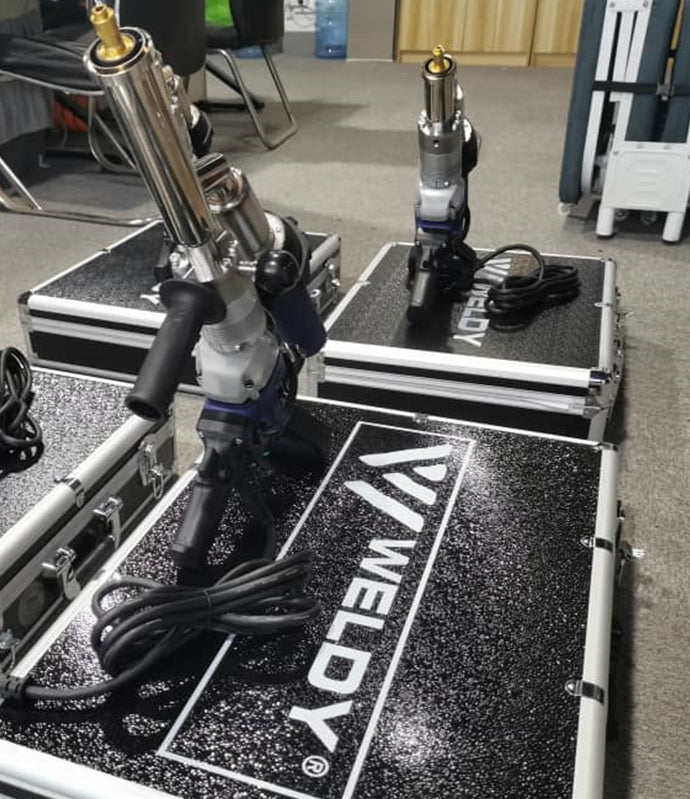
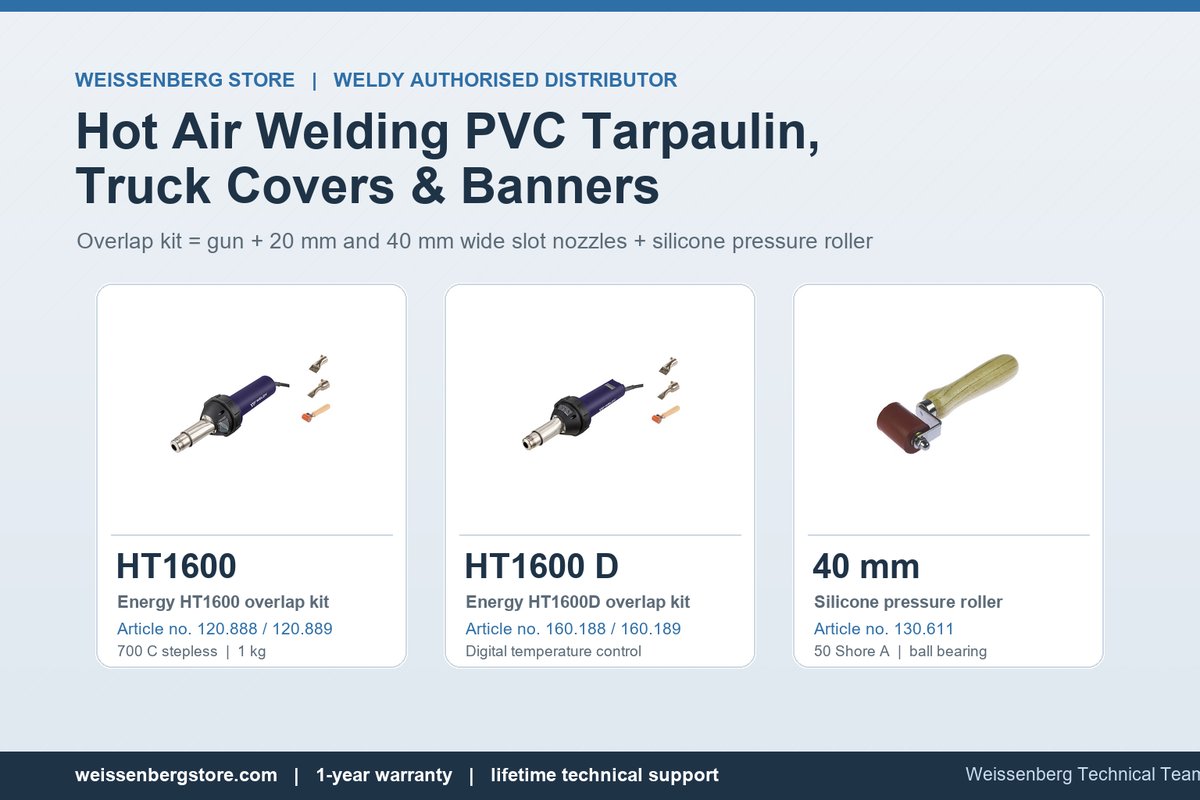
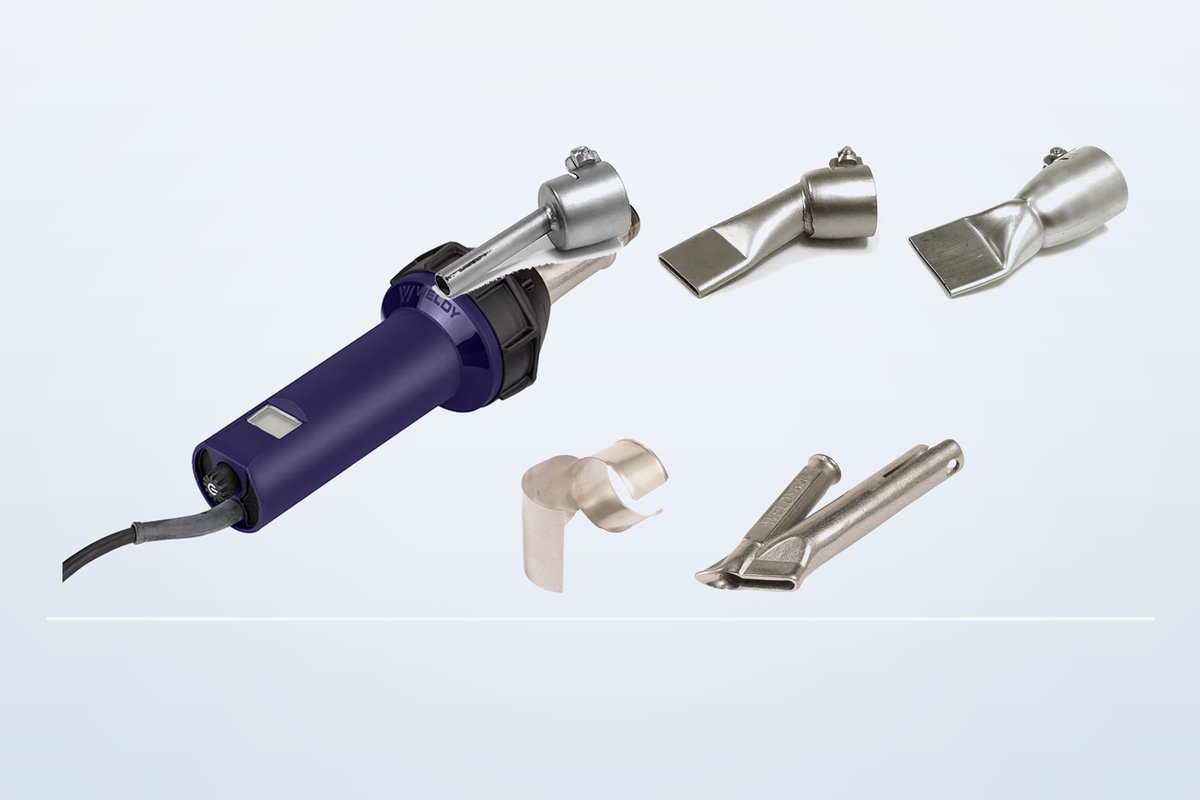
Weldy's Energy HT1600 and Energy HT3400 hot air guns are the workhorses of portable plastic welding. Designed for overlap welding of thermoplastic membranes, technical textiles, tarpaulins, and PVC/TPO roofing materials, these tools are trusted by professionals worldwide.
| Parameter | Energy HT1600 | Energy HT3400 |
|---|---|---|
| Power | 1600 W | 3400 W |
| Temperature Range | 40–700°C | 40–700°C |
| Airflow (20°C) | 240 l/min | 500 l/min |
| Static Pressure | 2600 Pa | 3500 Pa |
| Weight | 0.99 kg | 1.2 kg |
| Noise Level | 67 dB(A) | 68 dB(A) |
Real-World Applications:
- Roofing: Overlap welding of TPO and PVC single-ply membranes on commercial and residential roofs
- Tarpaulin & Banner: Seam welding and repair of large-format PVC tarpaulins, truck covers, and billboards
- Geomembrane Repair: Patch welding on HDPE and LLDPE pond liners and landfill caps
- Automotive: Plastic bumper repair, car wrap activation, and interior trim work
The HT1600, weighing under 1 kg, is ideal for precision work and overhead applications, while the HT3400 delivers higher airflow for large-surface overlap welding. Both feature stepless temperature adjustment and ceramic heating elements for consistent heat output.

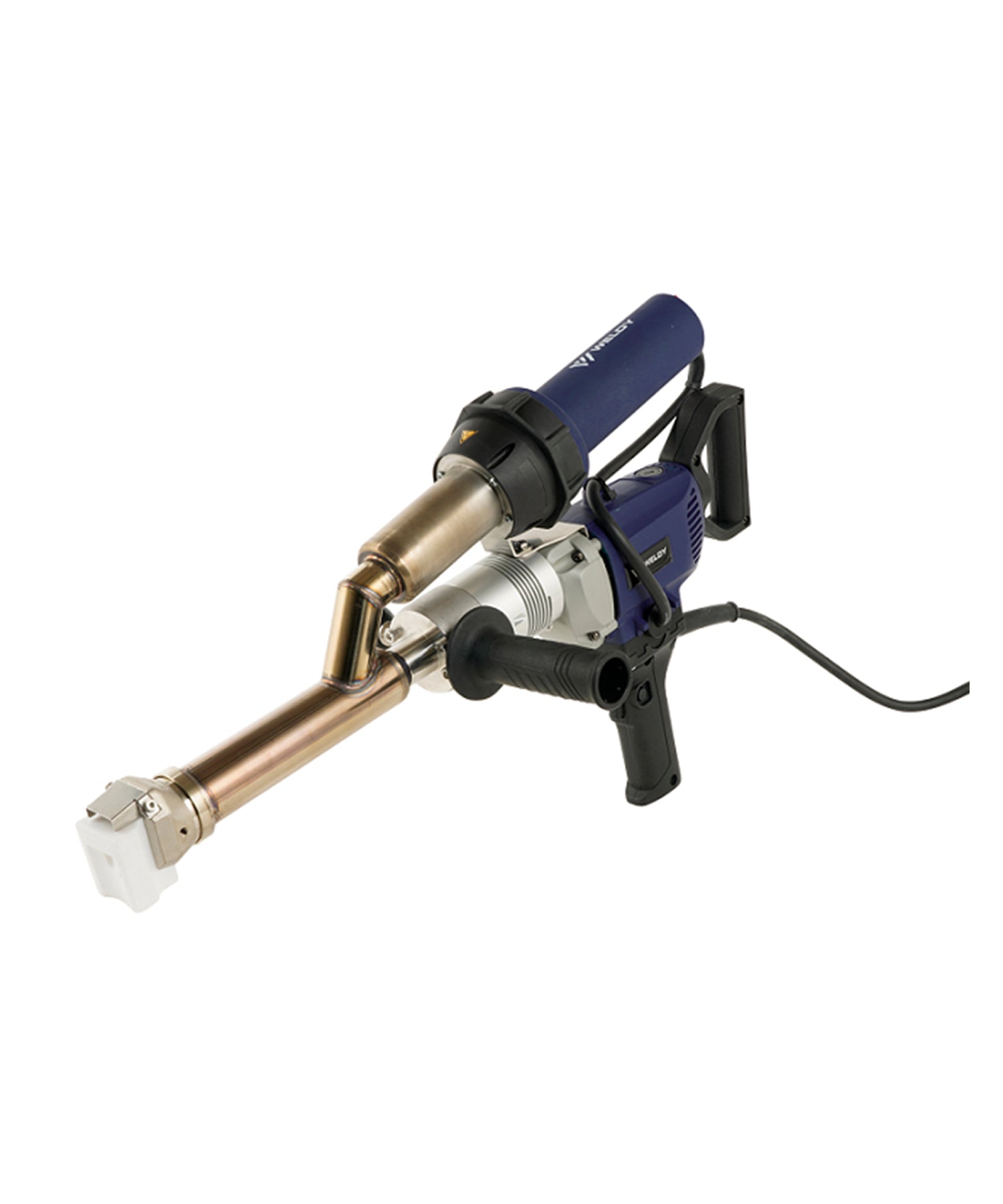
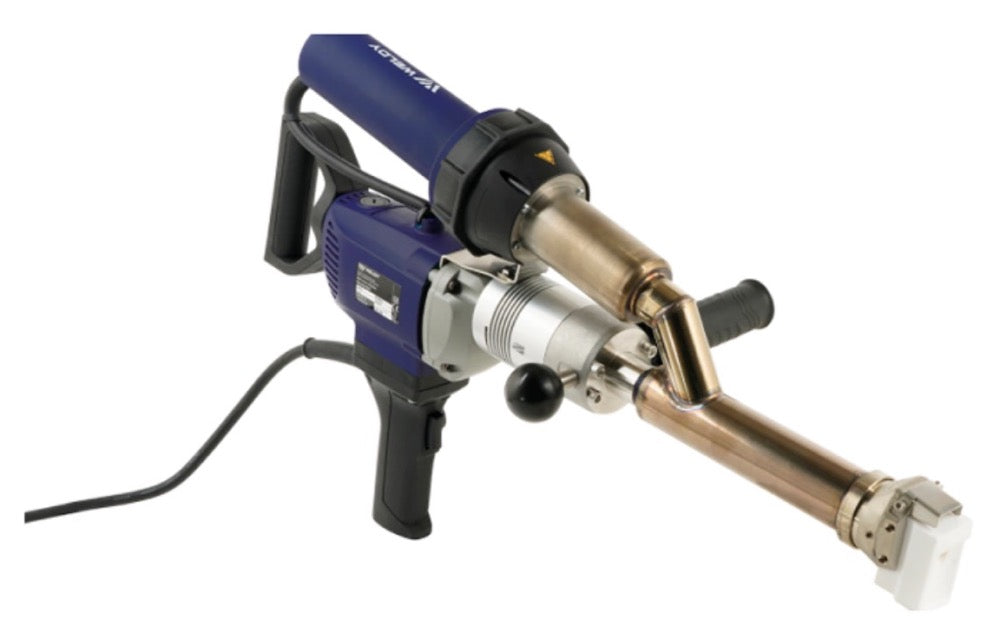
4. Extrusion Welders: Heavy-Duty Performance for Structural Joints
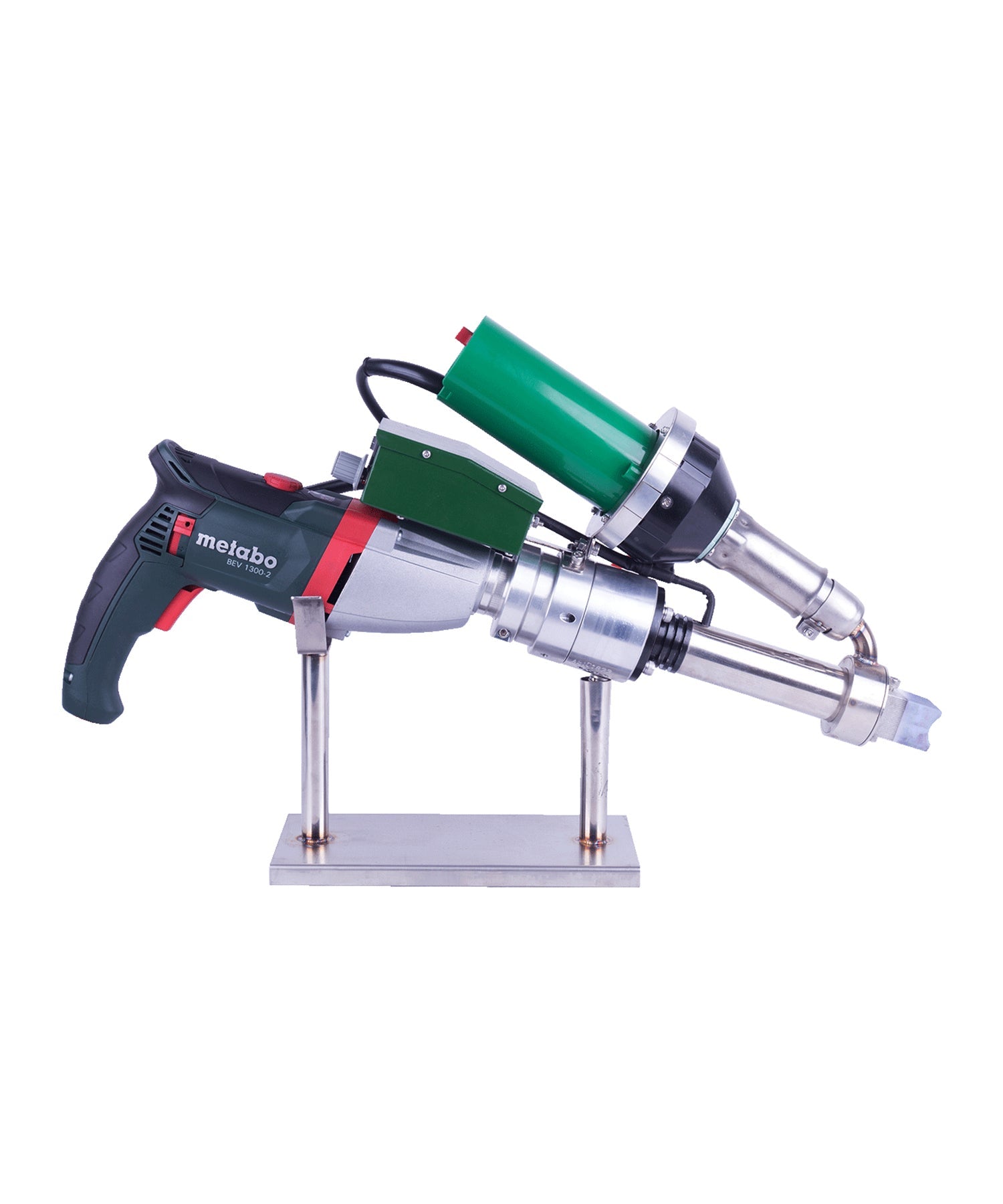
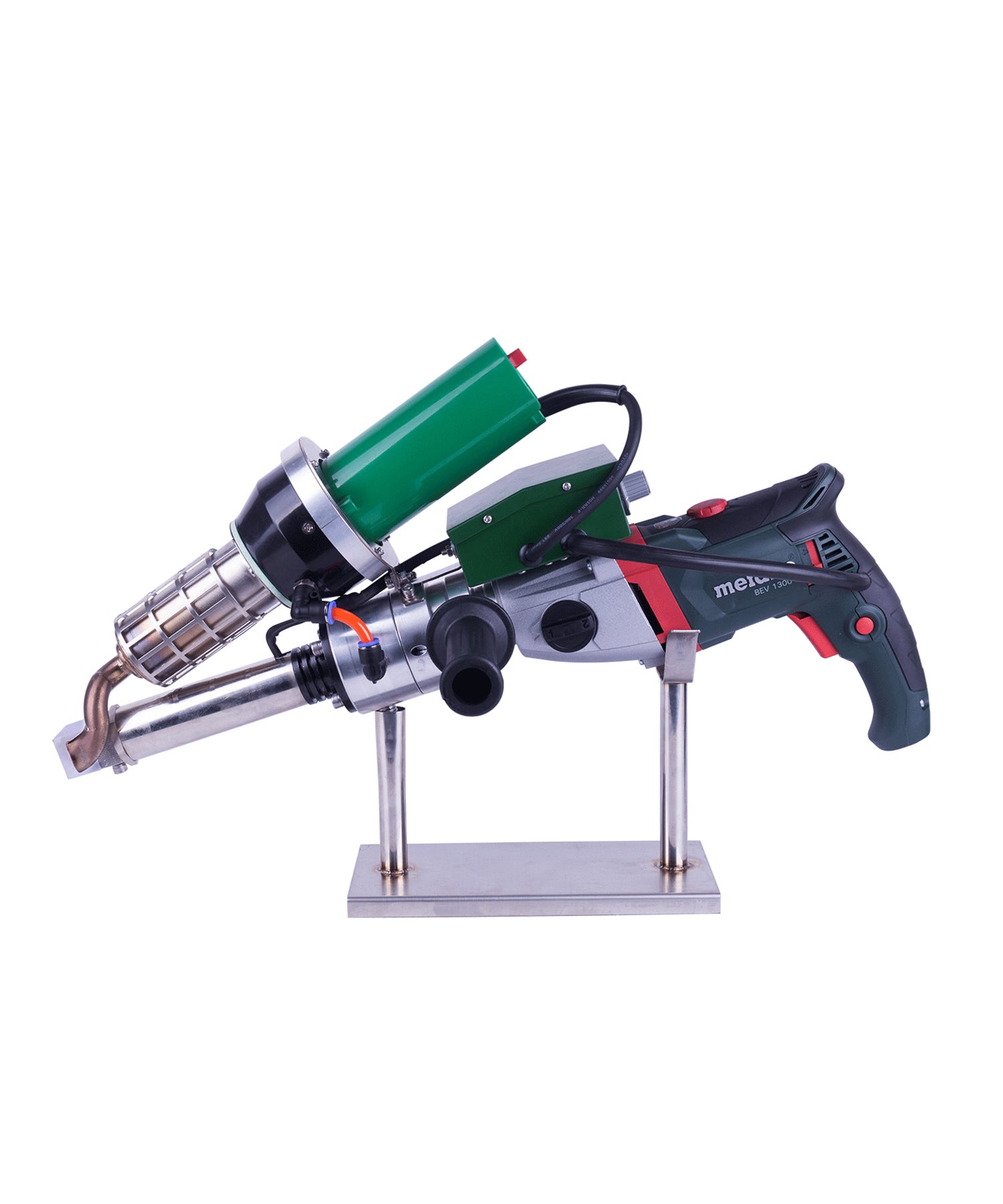
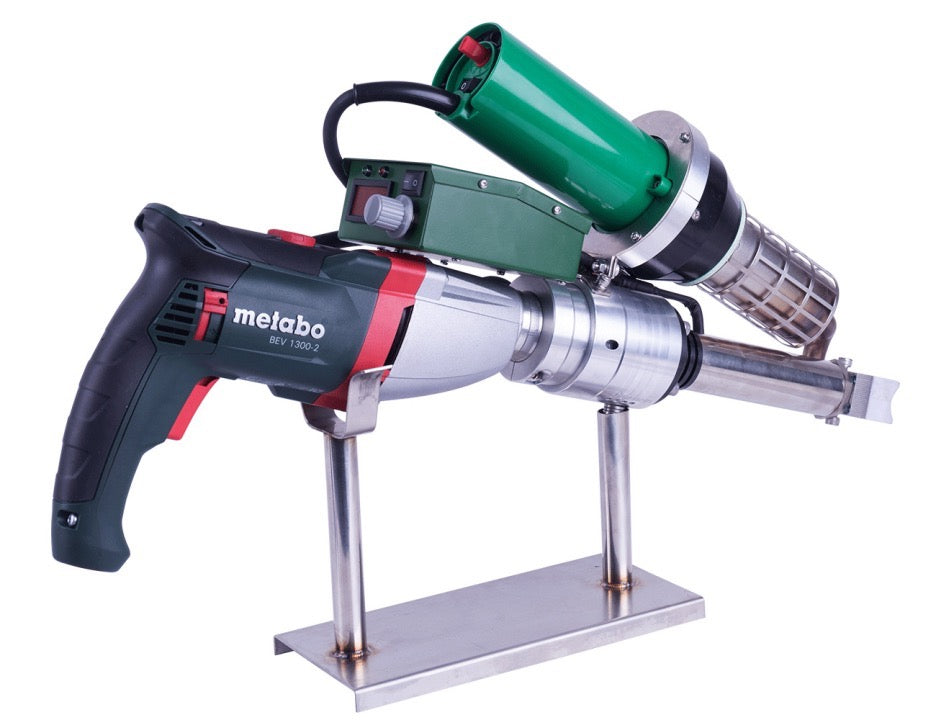
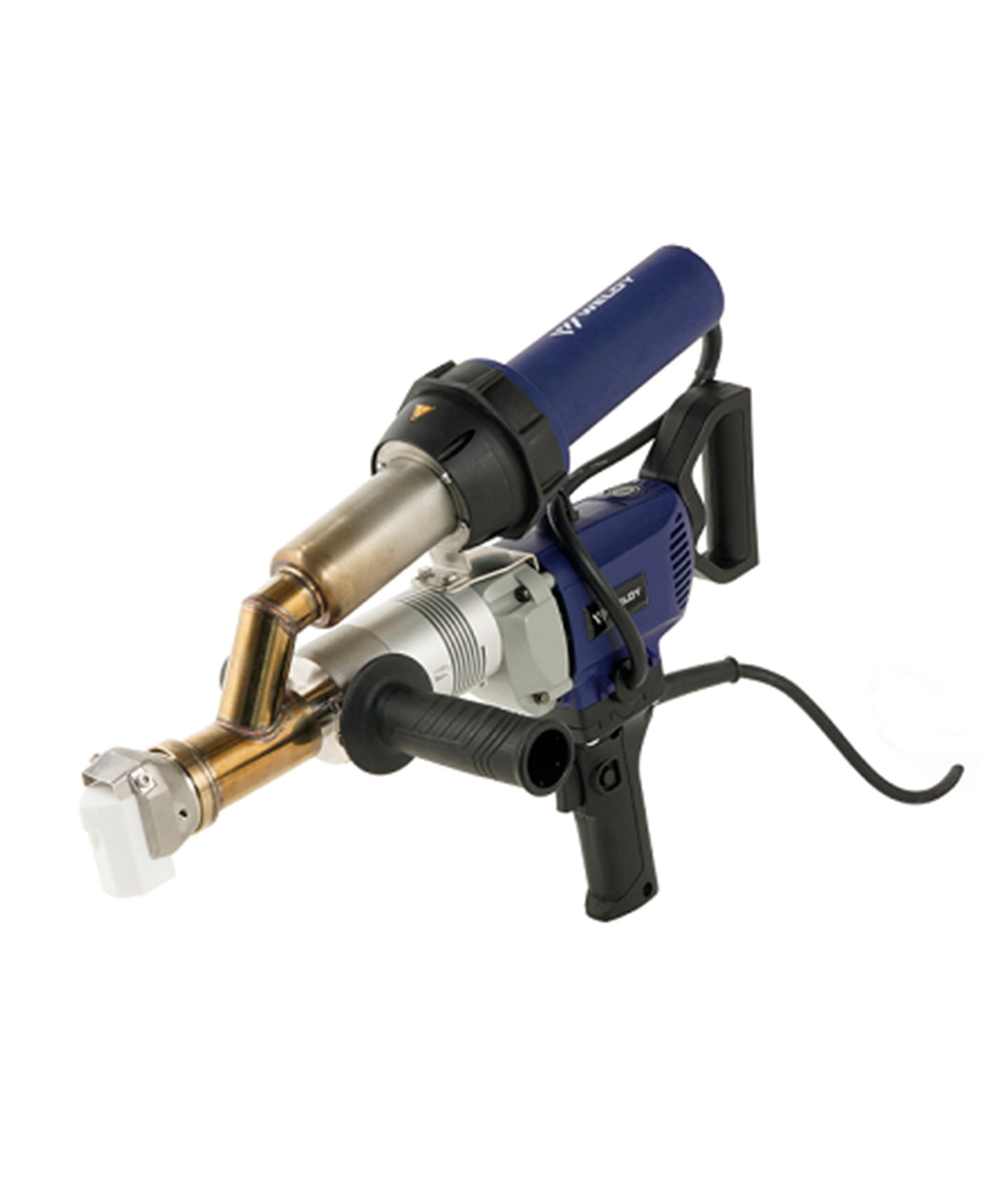
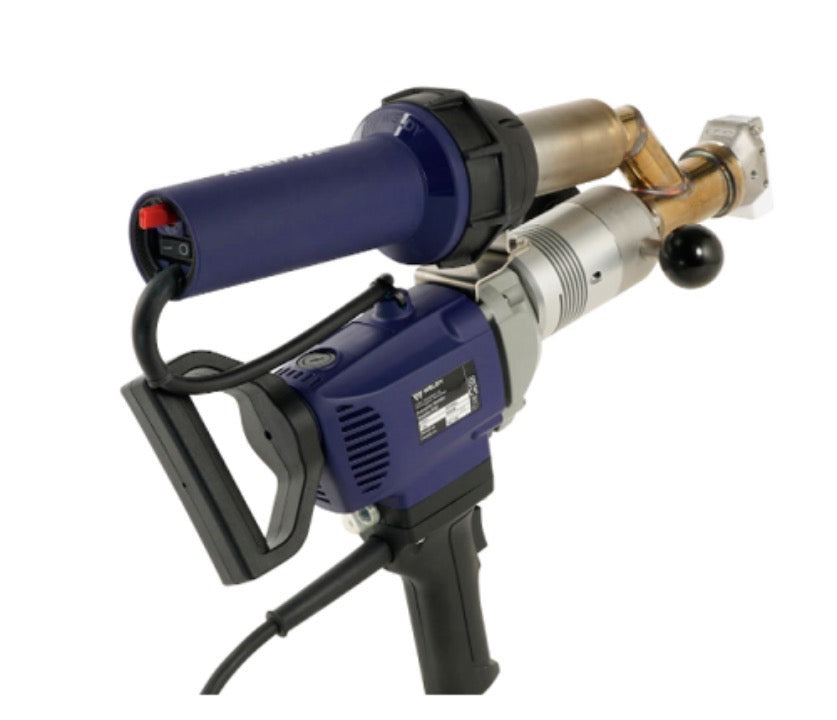
For applications demanding high-strength structural welds — tank fabrication, pipe welding, and thick geomembrane joining — Weldy's Booster EX2 and Booster EX3 extrusion welders set the industry benchmark. These tools process PE, PP, and other polyolefins with precise temperature control and consistent material output that meets DVS 2207 standards.
| Parameter | Booster EX2 | Booster EX3 |
|---|---|---|
| Power | 3000 W | 3000 W |
| Material Output (ø4mm rod) | 2.2 kg/h | 3.6 kg/h |
| Welding Rod Diameter | 3–4 mm | 3–4 mm |
| Membrane Thickness | 10–15 mm | 15–25 mm |
| Weight | 6.4 kg | 6.9 kg |
| Screw Heating | Air heated | Air heated |
Real-World Applications:
- Chemical Tank Fabrication: Welding HDPE and PP structural tanks for chemical storage and electroplating baths
- Pipe Branch Connections: Extrusion-welded saddle joints on large-diameter HDPE pipes for water and gas distribution
- Landfill Liner Repair: Filling and patching damaged geomembrane sections on active landfill sites
- Heavy Sheet Fabrication: Joining 15–25 mm thick PE/PP sheets for industrial containment structures
The EX2's compact design excels in confined spaces and detail work. The EX3, with its higher extrusion rate, is the preferred choice for large-scale civil engineering projects requiring rapid material deposition.
5. Roofing Welders: Automatic Membrane Installation for Commercial Roofing
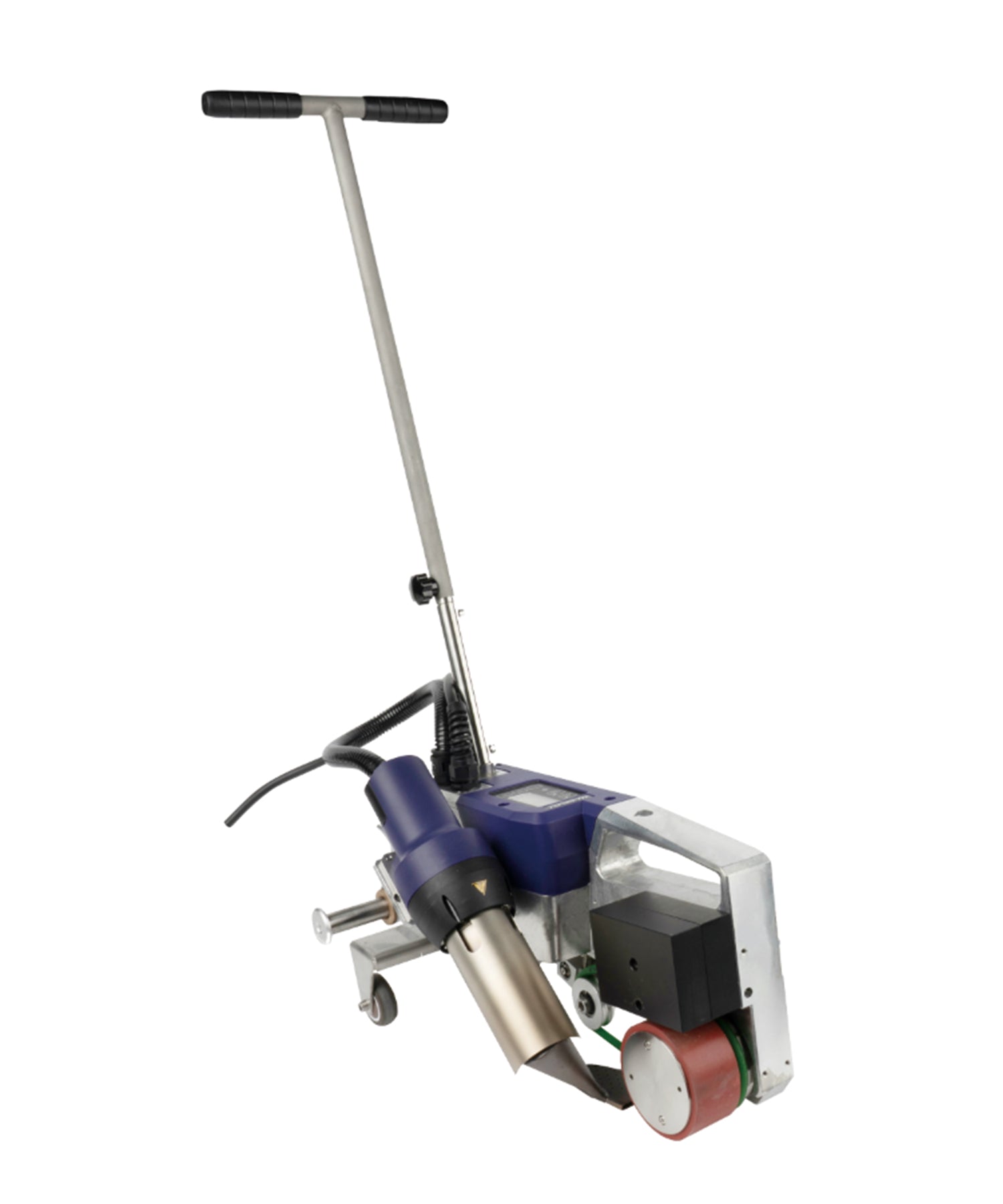
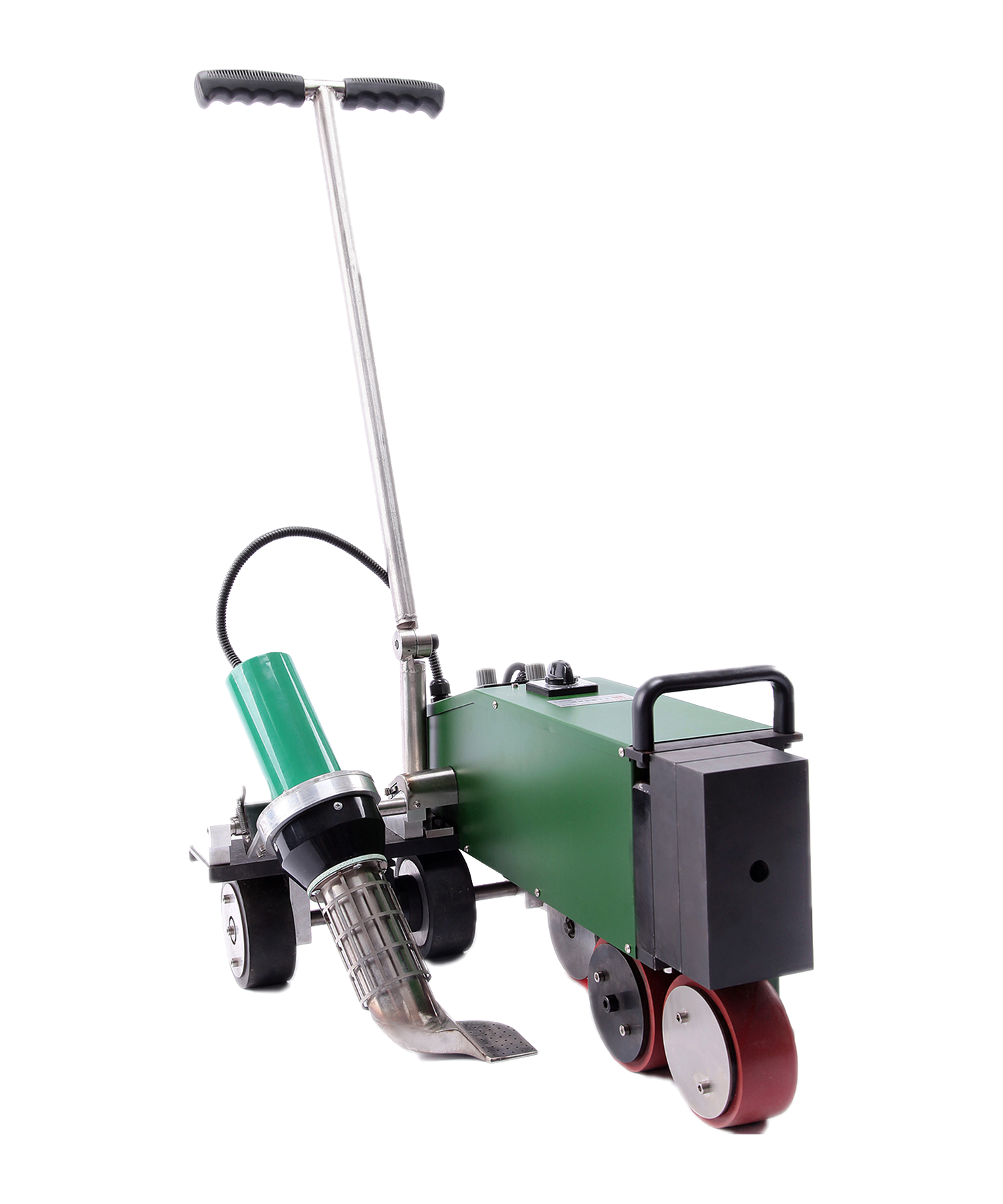
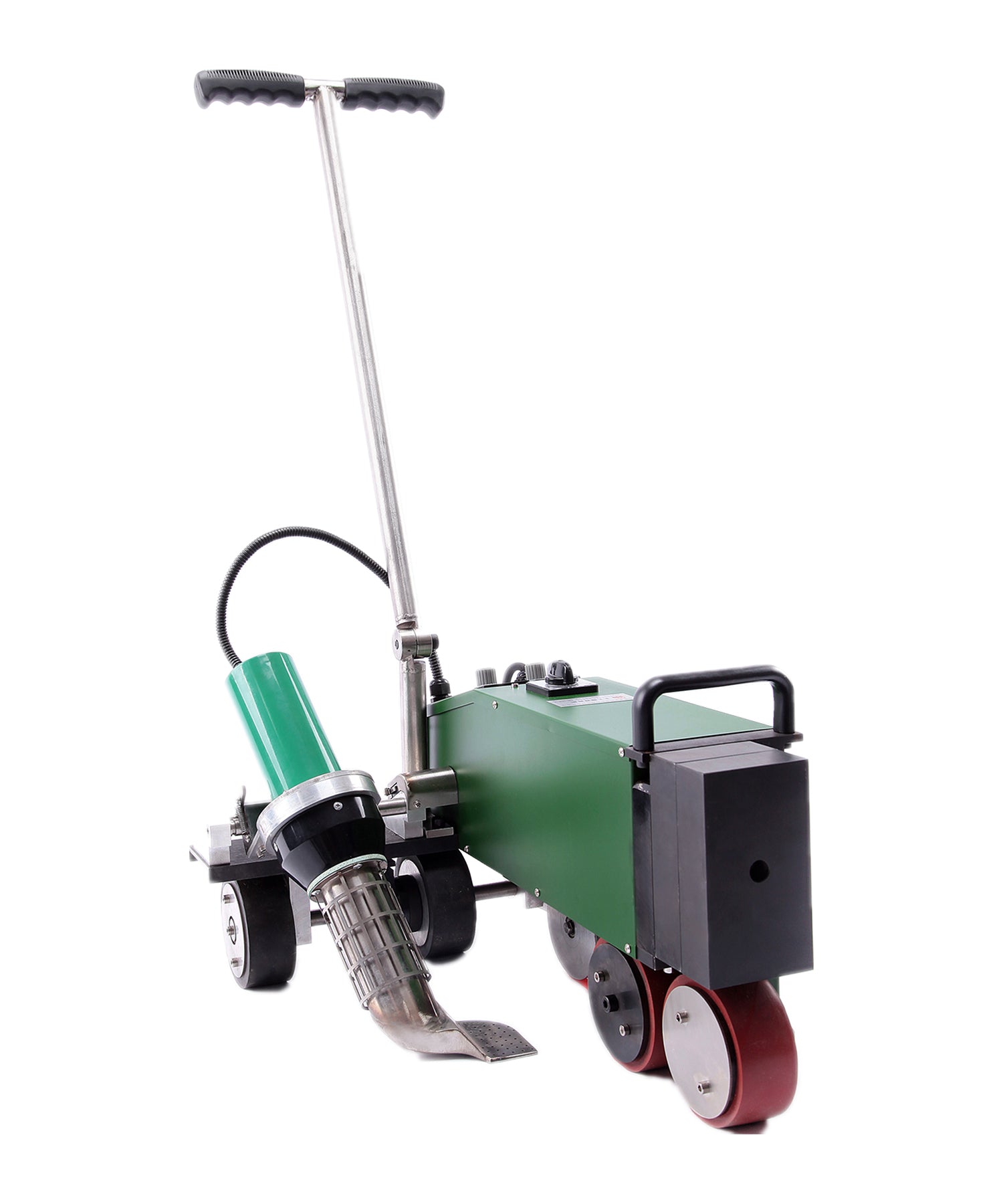
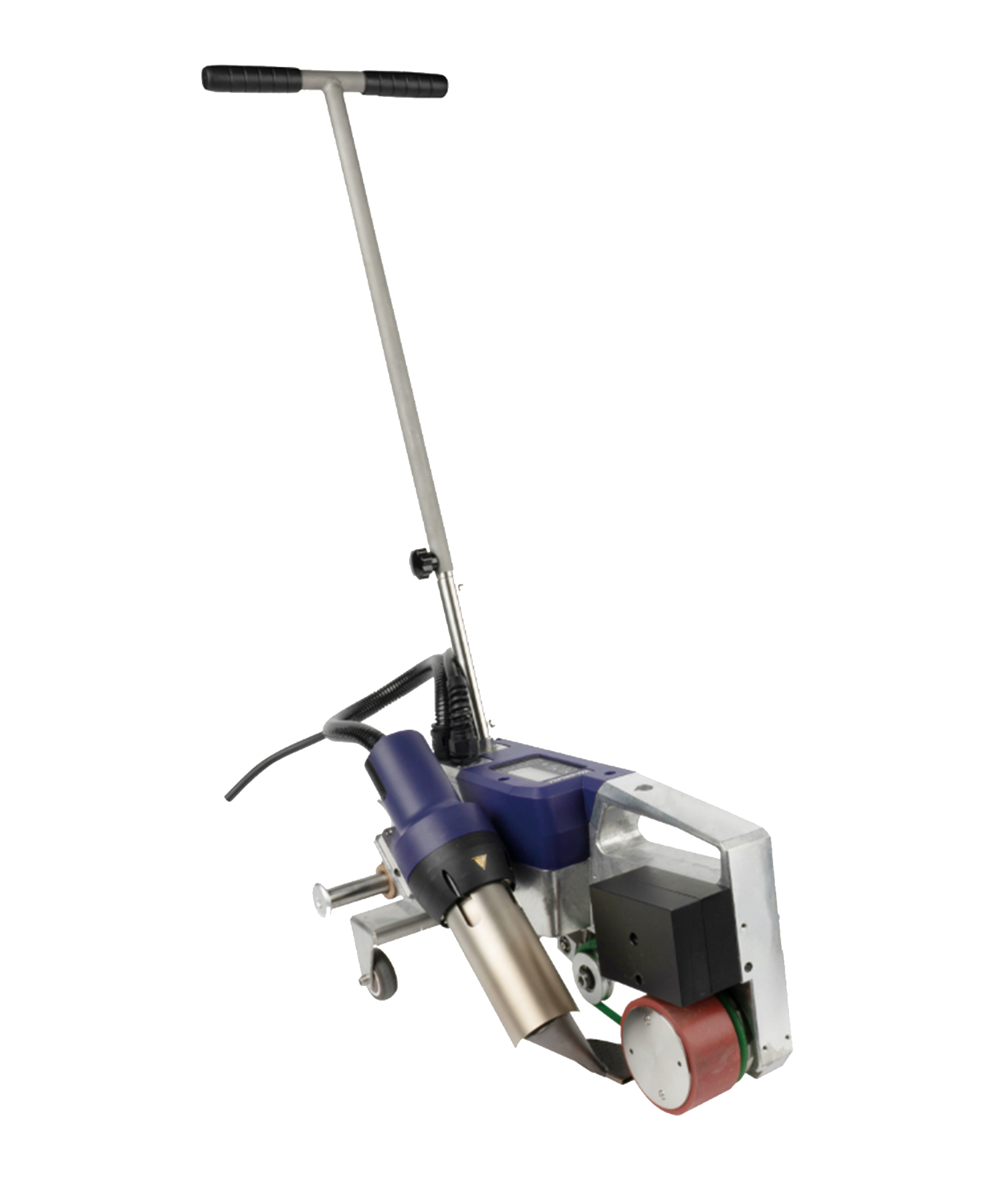
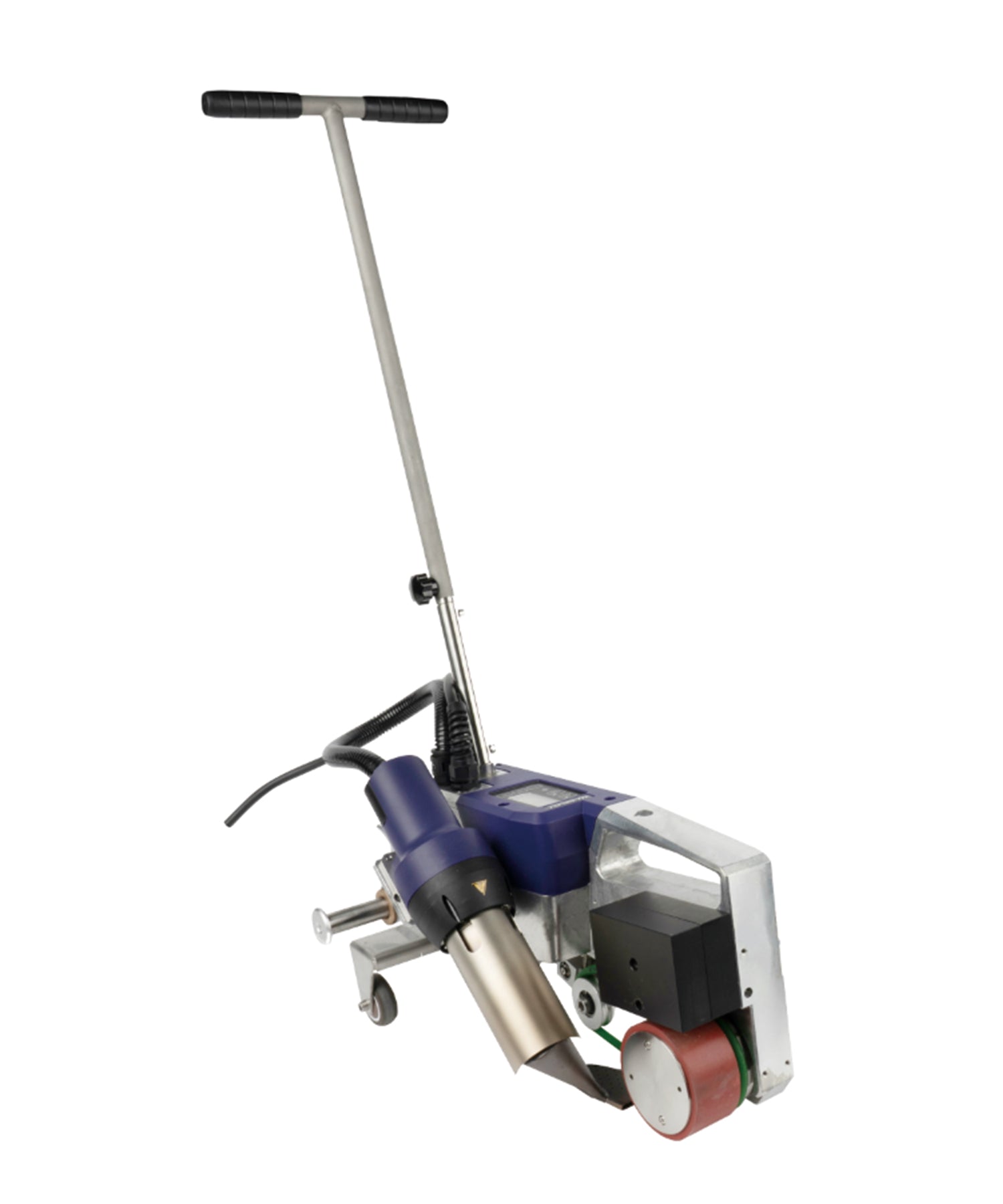
Commercial and industrial roofing projects demand speed, consistency, and seam integrity. Weldy's Roof40 automatic roofing welder is specifically engineered for TPO, PVC, and other single-ply membrane installation. Its brushless drive motor eliminates carbon brush maintenance while delivering reliable, long-term field performance.
| Parameter | Weldy Roof40 |
|---|---|
| Power | 3450 W |
| Welding Speed | 1–10 m/min |
| Temperature Range | 100–600°C |
| Seam Width | 40 mm |
| Air Volume | Adjustable |
| Edge Welding Distance | Up to 100 mm |
| Weight | 15.5 kg |
Application Spotlight: On a recent commercial roofing project in a Southeast Asian industrial zone, a contractor used the Weldy Roof40 to install over 8,000 m² of PVC roofing membrane in just 10 working days. The Roof40's digital parameter display allowed quick adjustments as ambient temperatures fluctuated between morning and afternoon, maintaining consistent seam quality throughout.
The Roof40's close-to-edge welding capability (up to 100 mm) is especially valuable for flashing, parapet walls, and roof penetrations — areas where traditional automatic welders struggle to reach.
6. Geomembrane Welders: Large-Scale Solutions for Environmental Protection
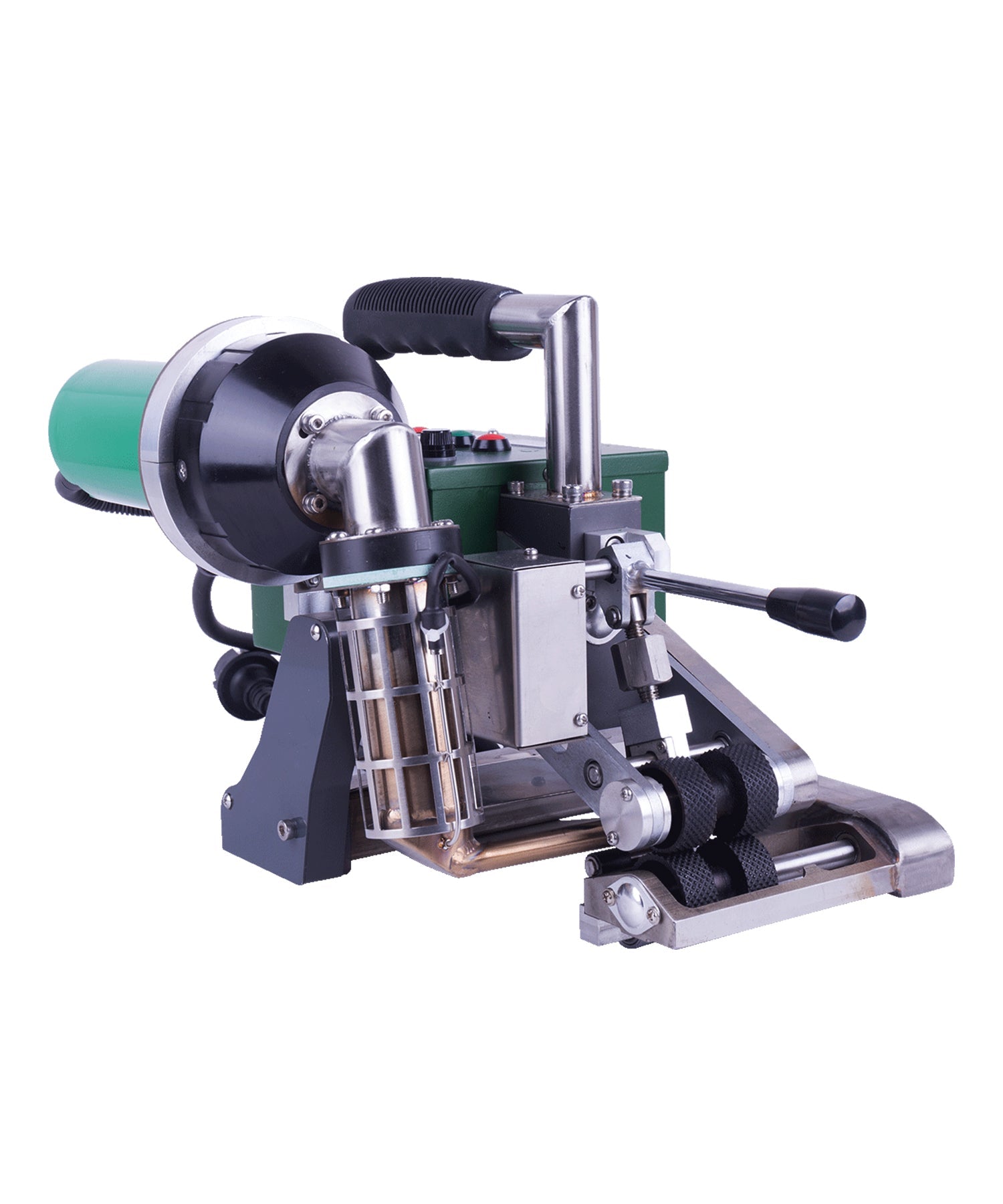
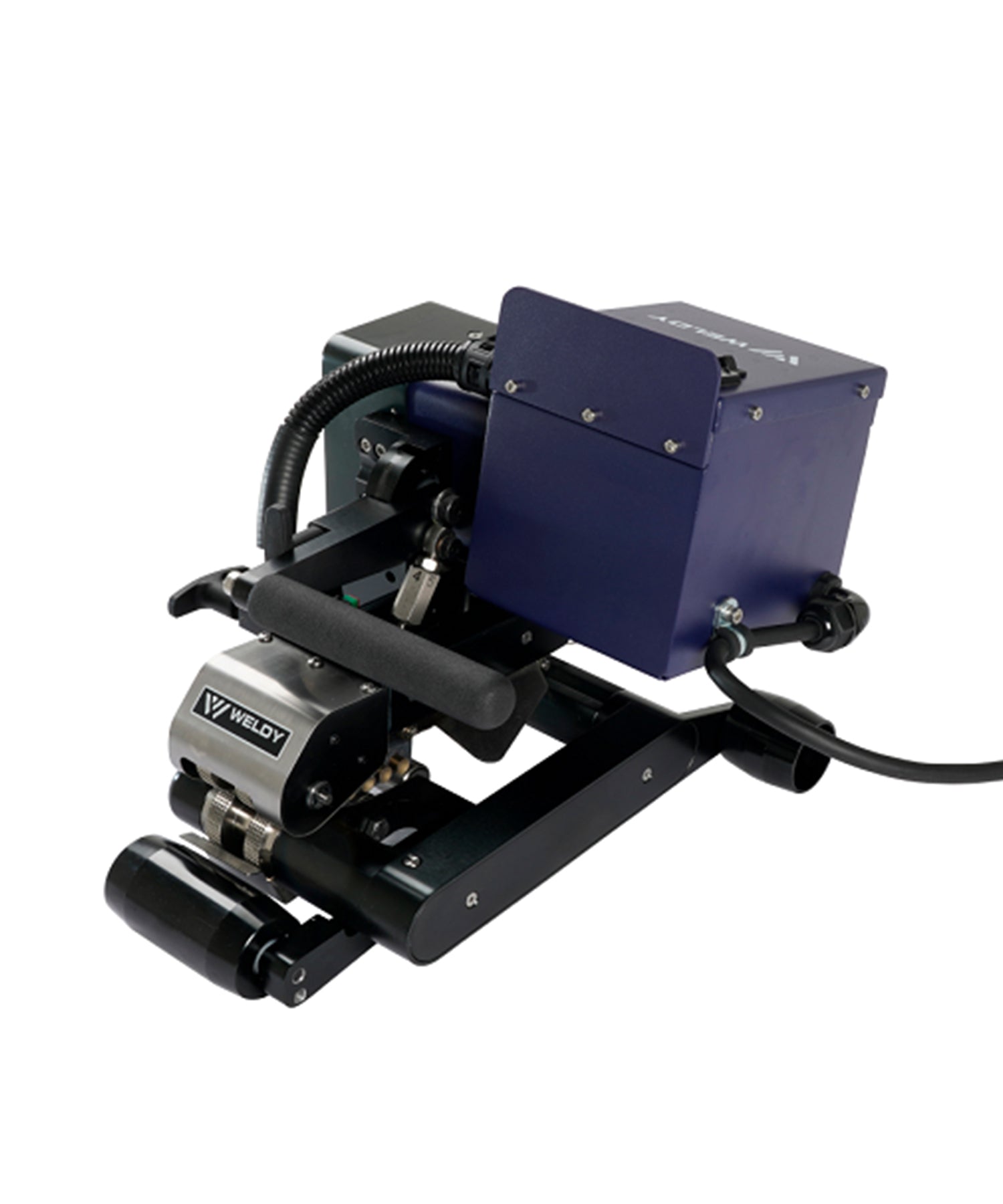
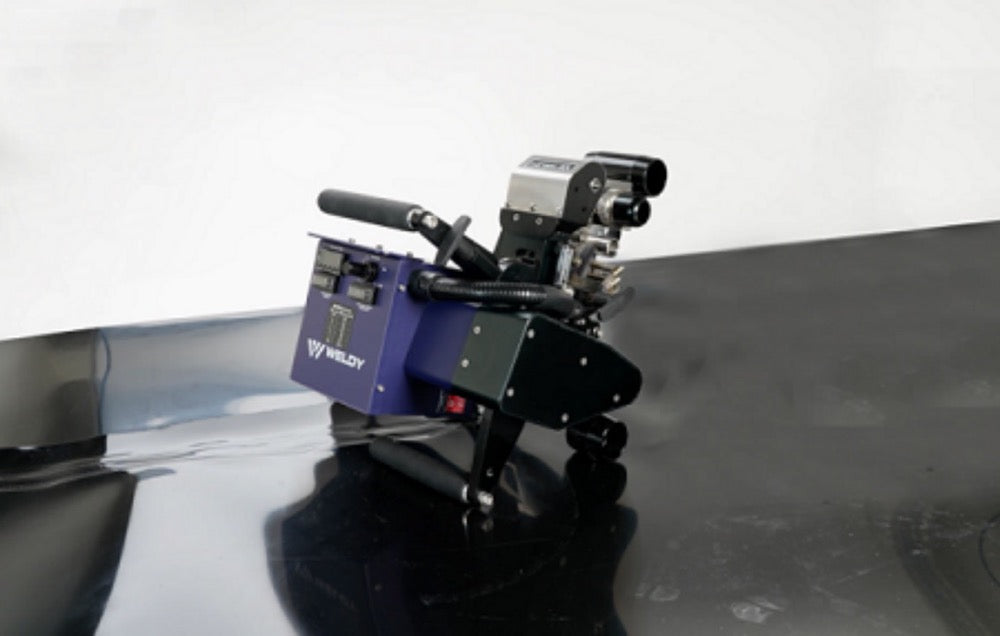
Environmental containment projects — landfill liners, mining heap leach pads, reservoir covers, and wastewater lagoons — rely on geomembrane welders that can produce consistent, testable seams over thousands of square meters. The Weldy WGW300 hot-wedge automatic welder is designed for these demanding applications.
| Parameter | Weldy WGW300 |
|---|---|
| Power | 3450 W |
| Welding Speed | 0.8–5.0 m/min |
| Temperature Range | 100–620°C |
| Seam Configuration | Dual-track with test channel |
| Material Thickness | 1.0–3.0 mm |
| Weight | 23 kg |
All seams produced by the WGW300 can be non-destructively tested using air pressure testing per ASTM D6392 and ASTM D5820 standards. The dual-track seam design includes an integrated air channel for inflation testing — a critical QA/QC requirement in landfill and mining containment projects.
Key Applications:
- Municipal solid waste landfill bottom and cap liners
- Mining heap leach pad containment (HDPE 1.5–2.0 mm)
- Potable water reservoir covers and canal lining
- Aquaculture pond and irrigation lagoon lining
- Biogas digester membranes and secondary containment

7. Welding Accessories: Nozzles, Rollers & Consumables
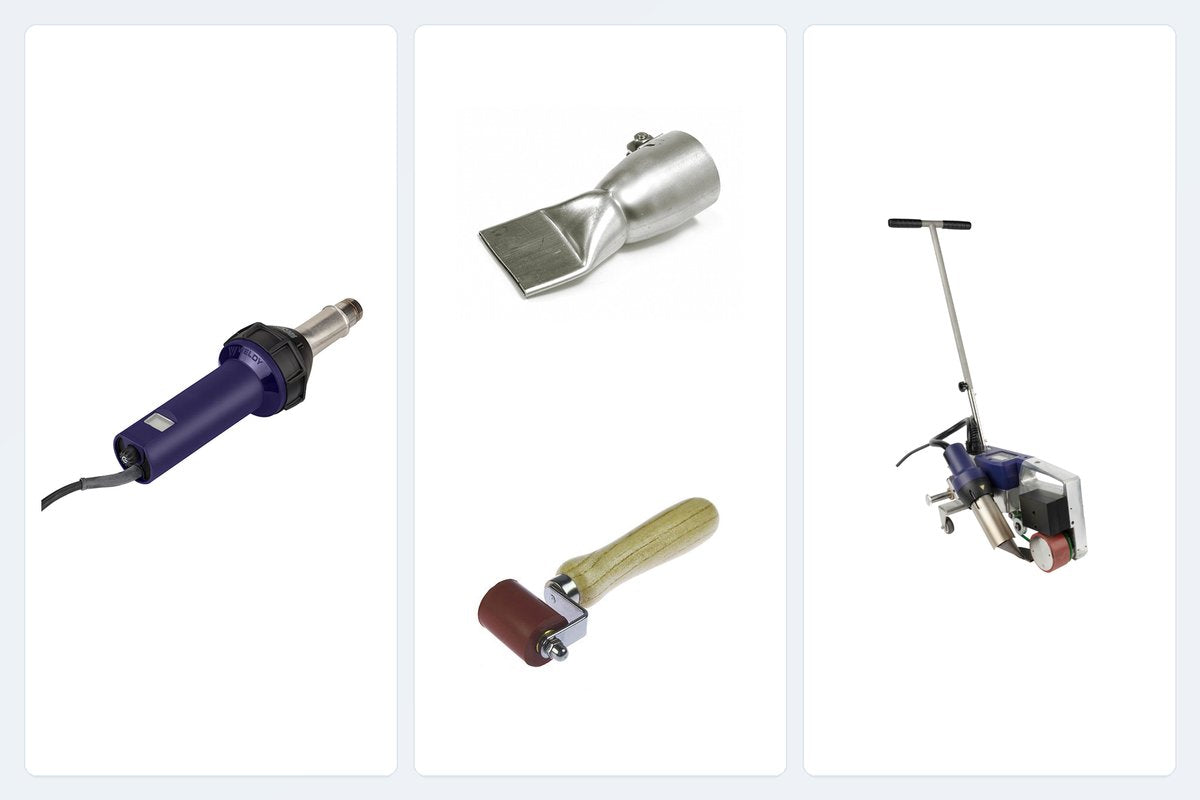
The quality of a plastic weld depends not only on the welding machine but equally on the accessories used. Weldy offers a comprehensive range of accessories designed to maximize welding efficiency and seam quality:
| Category | Product Examples | Application |
|---|---|---|
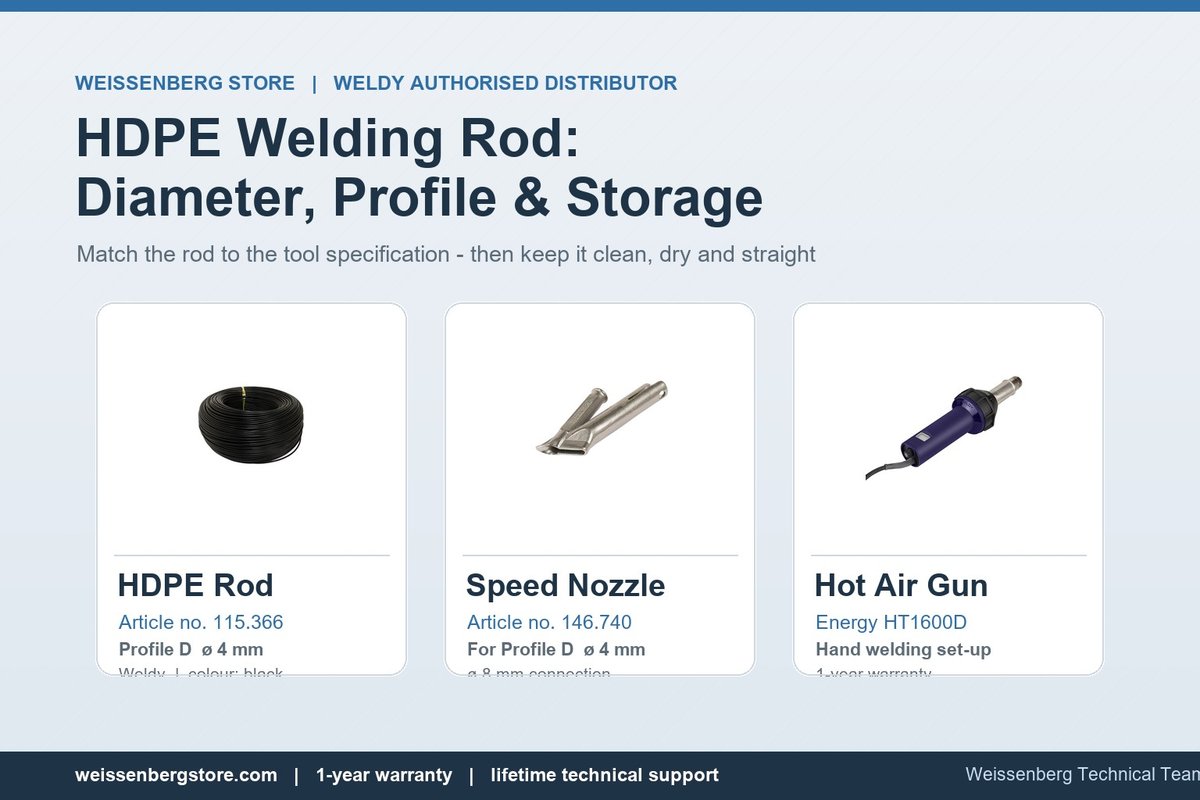
| Speed Welding Nozzles | 3 mm, 4 mm, 5 mm, 7 mm | Continuous rod-fed welding on PE, PP, PVC |
| Wide Slot Nozzles | 20 mm, 40 mm | Overlap welding of membranes and textiles |
| Tubular Nozzles | 5 mm angled | Focused hot air for detail work and pipes |
| Pressure Rollers | Silicone 30/40/80 mm, PTFE, Brass | Uniform pressure during overlap welding |
| Welding Rods | HDPE, PP, PVC, PVDF (round, triangular) | Consumable filler material for all plastics |
| Replacement Parts | Heating elements, carbon brushes, air filters | Maintenance and repair kits |
Practical Tip: Always match the welding rod material to the base material. Using HDPE rod on HDPE sheet ensures molecular compatibility and maximum bond strength. For pressure rollers, silicone rollers (40 mm wide) are the most versatile choice for general membrane overlap work.
8. How to Choose the Right Welding Equipment
Selecting the correct Weldy equipment depends on a systematic evaluation of your project requirements. Follow this decision framework:
Step 1 — Identify Your Material:
- PE and PP structural joints → Extrusion welding (Booster EX2 / EX3)
- PVC and TPO membrane overlap → Hot air (HT1600 / HT3400) or automatic wedge welder
- Geomembrane liners 1.0–3.0 mm → Hot wedge automatic (WGW300)
- Single-ply roofing → Automatic roofing welder (Roof40)
Step 2 — Assess Project Scale:
- Small repairs & detail work → Energy HT1600 with speed welding nozzle
- Medium fabrication → Booster EX2 extrusion welder
- Large civil engineering → Booster EX3 + WGW300 geomembrane welder
- Commercial roofing installation → Roof40 automatic welder
Step 3 — Verify Standards Compliance: Ensure selected equipment supports applicable standards: ISO 9001 for quality management, CE marking for European market compliance, ASTM D6392 for geomembrane seam testing, and DVS 2207 for thermoplastic welding quality.
9. Best Practices & Maintenance
To maximize equipment lifespan and maintain weld quality, implement the following maintenance routine:
| Frequency | Action | Applicable Tools |
|---|---|---|
| After each use | Clean air filter and nozzle; remove welding deposits | All hot air tools |
| After each shift | Run purge cycle with virgin PE material | Extrusion welders (EX2, EX3) |
| Monthly | Inspect carbon brushes; replace if worn to ⅓ length | HT1600, HT3400 |
| Every 100 hrs | Check brushes at service center | Booster EX2, EX3 |
| Every 6 months | Calibrate temperature with external thermocouple | All temperature-controlled tools |
| As needed | Clean wedge surface with brass brush when cooled | WGW300, Roof40 |
Pro Tip: Store all equipment in the provided transport cases in a dry environment. Dust and moisture are the leading causes of premature heating element failure. Document all temperature calibration results per ISO 9001 requirements for traceable quality management.

10. Why Partner with an Official Weldy Distributor
Purchasing Weldy equipment through an authorized distributor like Weissenberg provides tangible advantages beyond pricing:
- 100% Genuine Products with full manufacturer warranty and supply chain traceability
- Technical Expertise from a team with 20+ years of hands-on plastic welding experience
- Spare Parts Availability — genuine Weldy replacement parts shipped globally
- Application Guidance — from equipment selection to on-site troubleshooting support
- One-Stop Solutions — combine Weldy equipment with Weissenberg's own manufacturing line for complete project coverage
- Multilingual Service — English, Spanish, and Chinese support for international procurement
Whether you are a contractor equipping a new crew, a fabricator upgrading your workshop, or an environmental engineer specifying equipment for a large-scale containment project, Weissenberg delivers the right Weldy solution — backed by genuine products, expert support, and 19 years of industry commitment.
Article by Weissenberg Technical Team — 20+ Years of Experience in Thermoplastic Welding Equipment
Standards Referenced: ASTM D6392, ASTM D5820, DVS 2207-1, DVS 2207-11, ISO 9001, CE
Need help selecting the right plastic welding tool? Contact our technical team for application advice www.weissenbergstore.com
This article is for informational purposes. Product specifications may vary by model and region. Always refer to the official product manual for exact parameters.




Leave a comment
This site is protected by hCaptcha and the hCaptcha Privacy Policy and Terms of Service apply.