
Quick Answer:
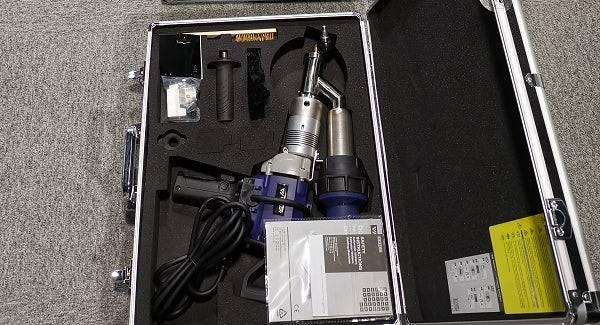
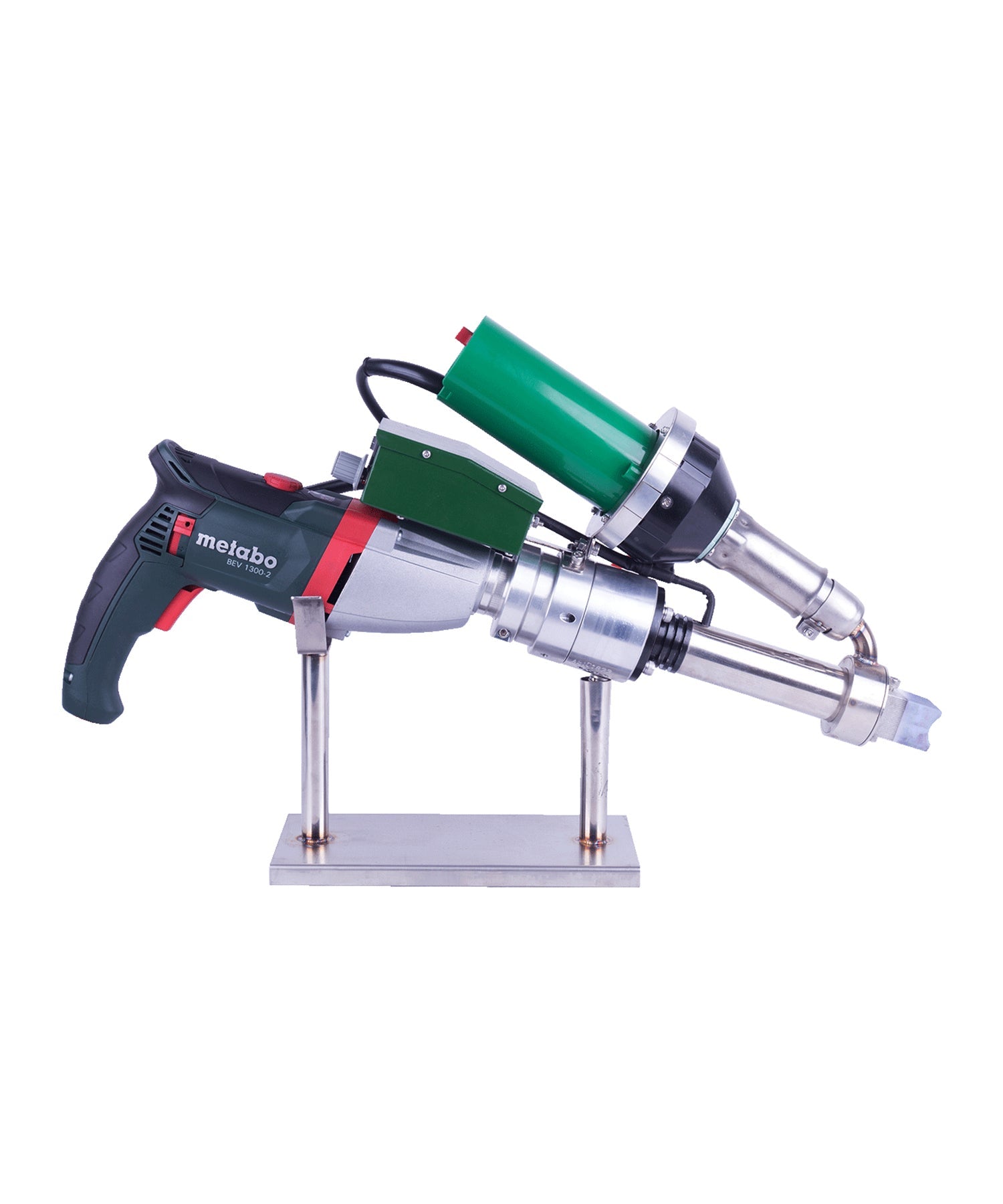
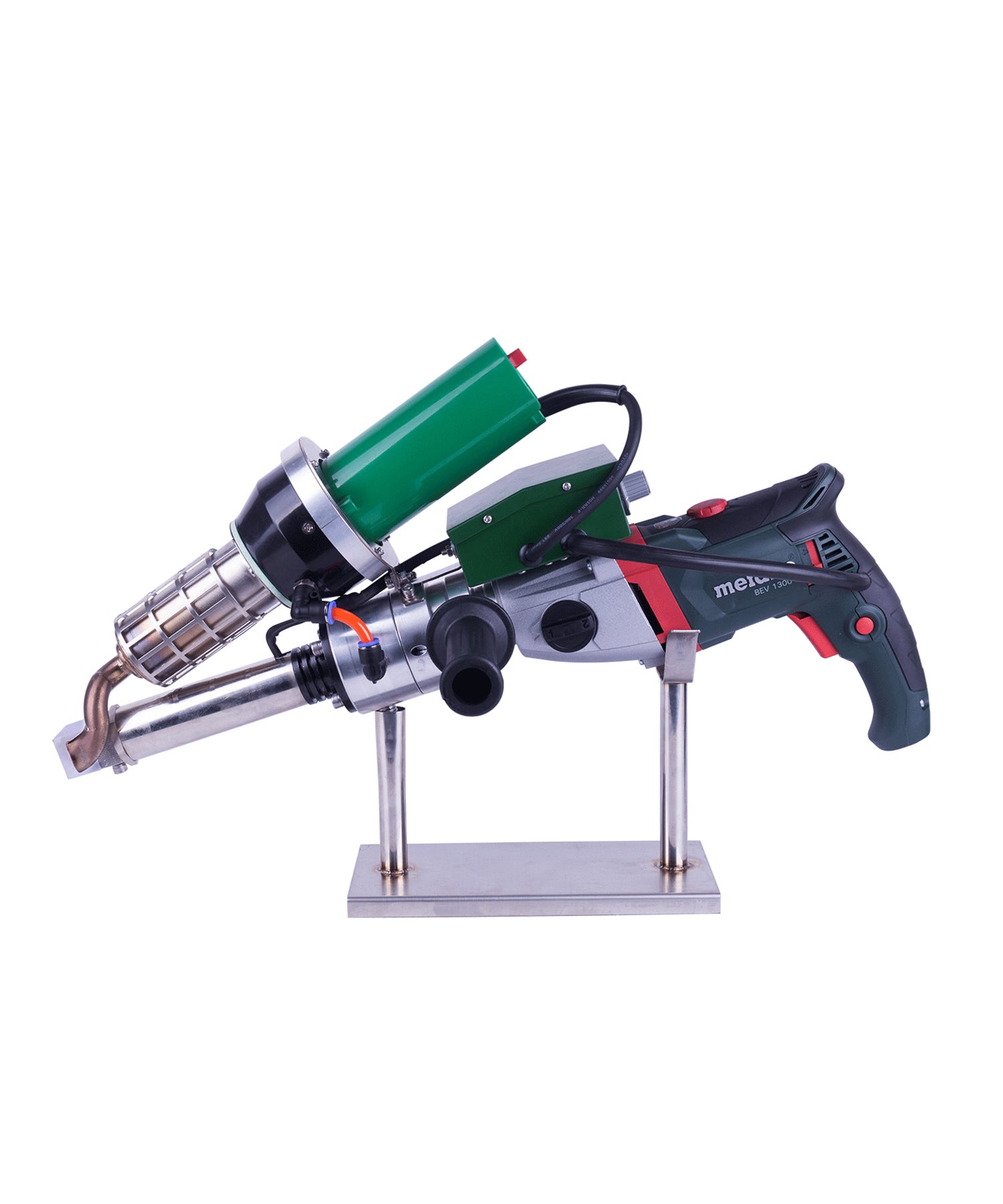
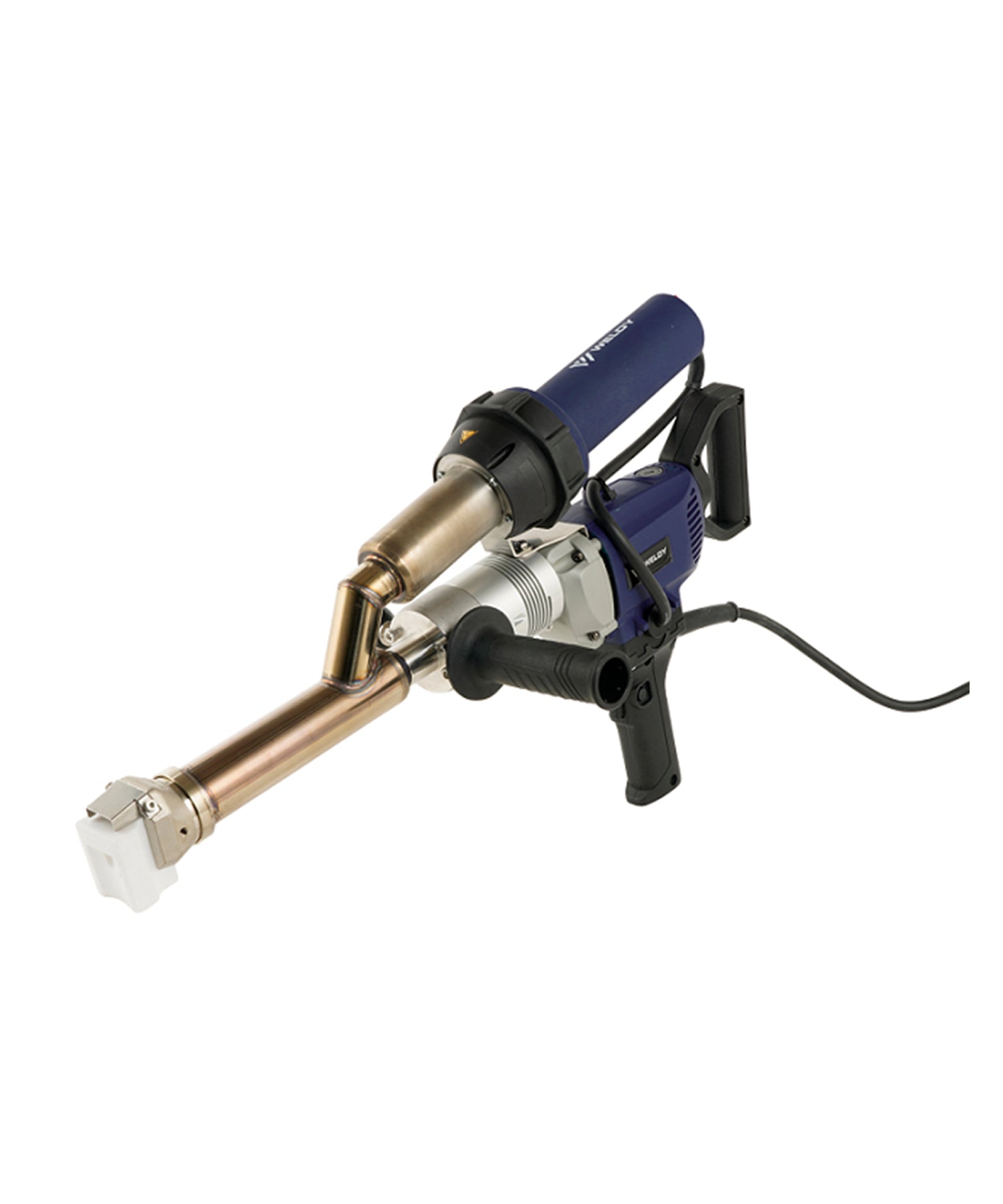
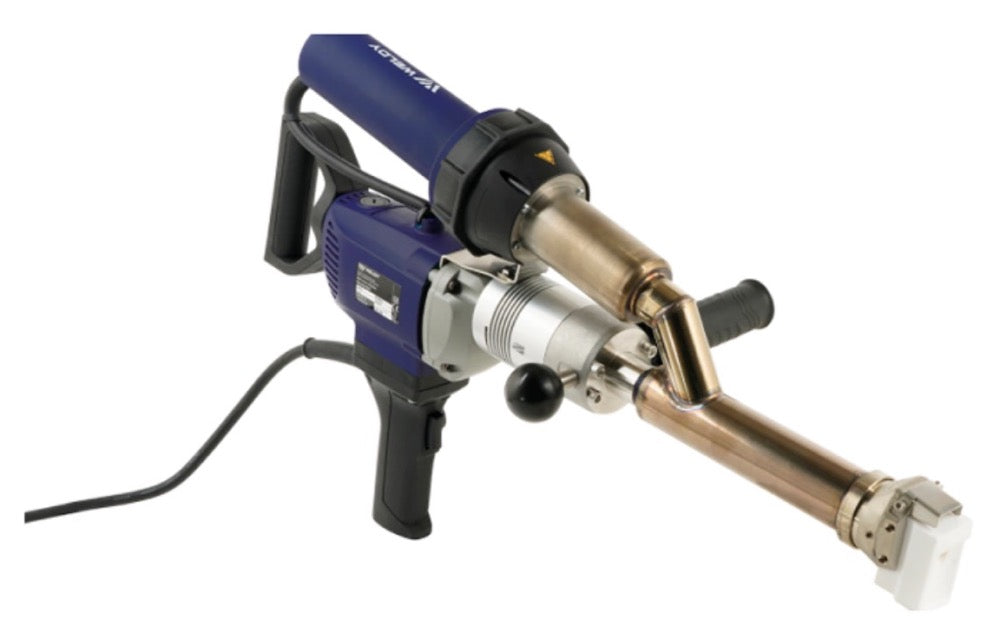
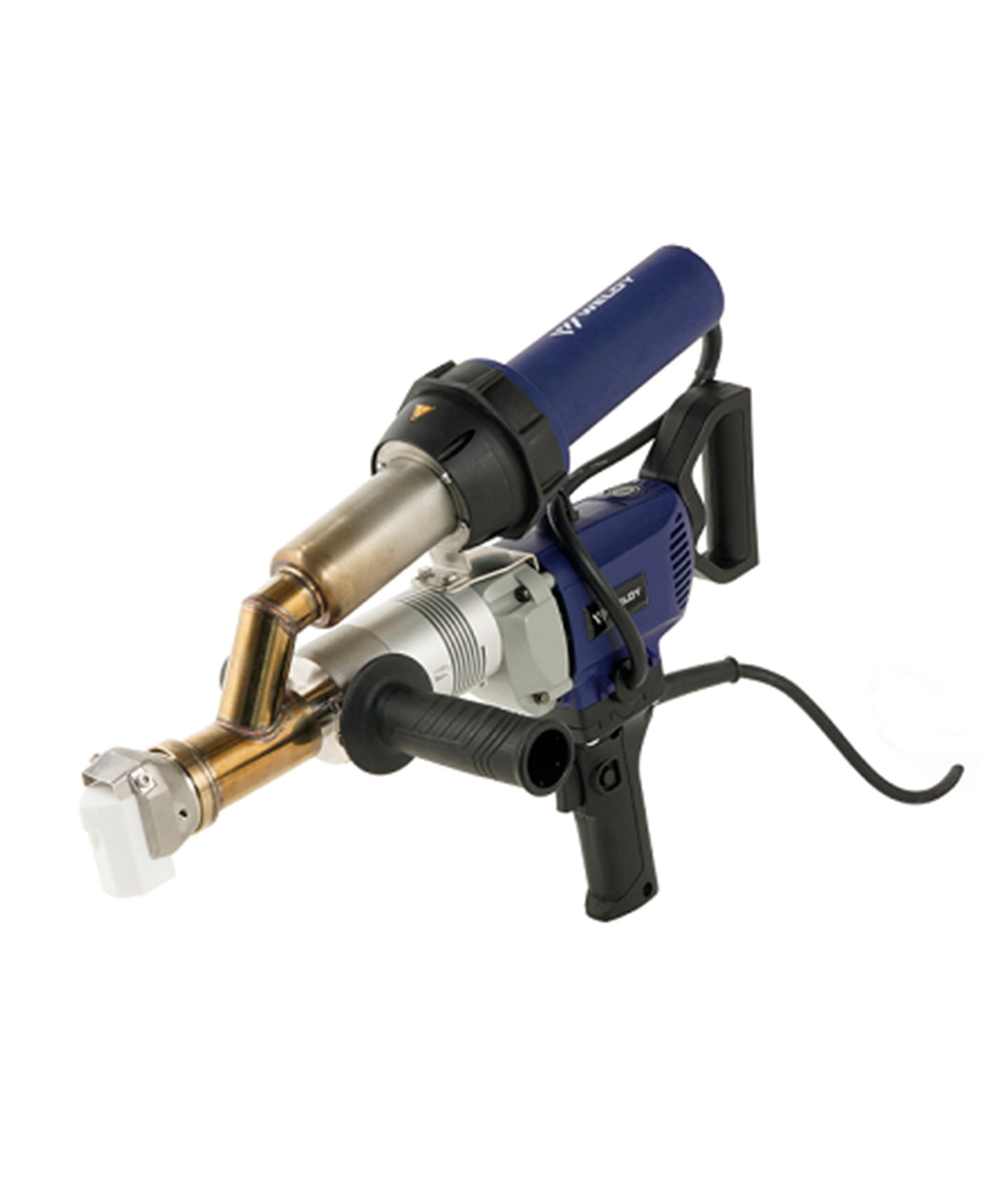
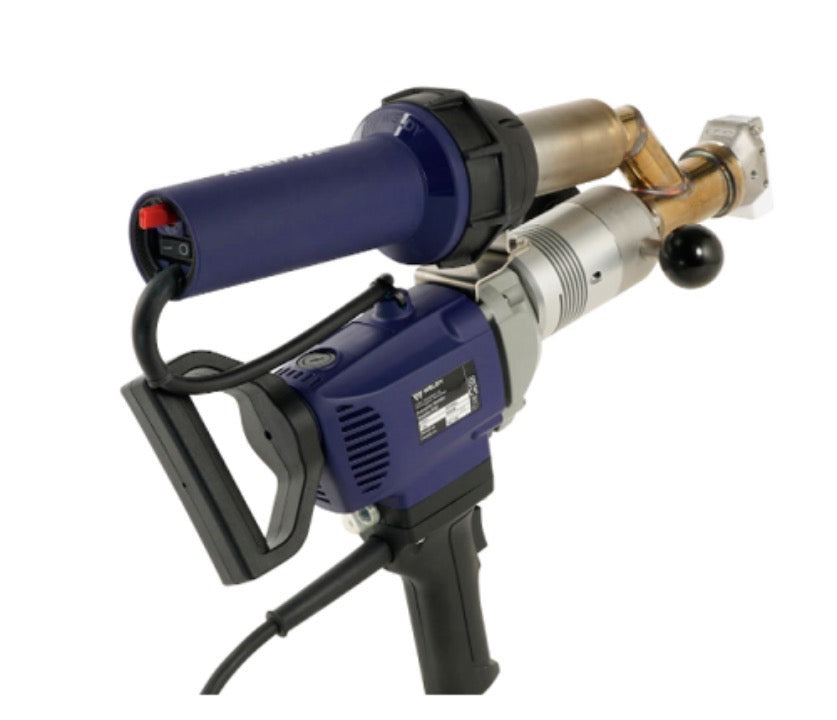
Booster EX2 — compact, lighter, 1.5–2.2 kg/h output. Best for tank fabrication, restricted-access repairs, and smaller PP/HDPE work.
Booster EX3 — longer barrel, 2.5–3.6 kg/h output. Best for long production seams, civil engineering, and high-volume geomembrane repair.
EX2 vs EX3: Side-by-Side Comparison
Both machines share the same 230 V / 3,000 W platform and accept Ø 3–4 mm PE/PP welding rods. The real difference comes down to barrel length, material output, and the jobs each one handles best.
| Parameter | Booster EX2 | Booster EX3 |
|---|---|---|
| Voltage / Power | 230 V / 3,000 W | 230 V / 3,000 W |
| Frequency | 50/60 Hz | 50/60 Hz |
| Welding rod diameter | Ø 3–4 mm | Ø 3–4 mm |
| Material output (Ø 3 mm rod) | ~1.5 kg/h | ~2.5 kg/h |
| Material output (Ø 4 mm rod) | ~2.2 kg/h | ~3.6 kg/h |
| Overall length | 500 mm | 630 mm |
| Weight | 6.4 kg | 6.9 kg |
| Air guide / screw heating | Internal / air heated | Internal / air heated |
| Noise level | 74 dB(A) | 74 dB(A) |
| Certification | CE | CE |
Key takeaway: The EX3 delivers roughly 60% more material output than the EX2 thanks to its longer barrel and extended screw. If you are running long seams or high-volume production, that extra output translates directly into saved shift time. If you are working in tanks or tight spaces, the EX2 shorter 500 mm body is the better fit.
Browse all extrusion welders →
What Is an Extrusion Welder?
An extrusion welder (hand extruder) melts a 3–4 mm welding rod and forces molten polymer into a preheated joint. It produces stronger, more consistent seams than manual hot-gas welding on sheets 6 mm and thicker, and is the standard tool for fabricating and repairing HDPE, LDPE, LLDPE, and PP structures.
Which Model Is Better for Your Application?
The right choice depends on what you are welding and where:
Plastic Tank Fabrication
Choose EX2. Tanks, scrubbers, and chemical containment vessels often involve corners, manways, and restricted-access joints. The EX2 500 mm length lets you maneuver inside and around tanks where the EX3 would be unwieldy. Typical materials: PP, HDPE.
PP Equipment & Ductwork
Choose EX2 for bench-top fabrication and ducting assemblies. The lower output is adequate for shorter seams, and the lighter weight (6.4 kg) reduces fatigue during precision work.
Pipe Welding & Fittings
Either works, depending on pipe diameter. For tight saddle-fitting joints, the EX2 compact head is an advantage. For long pipe seams in prefabrication, the EX3 higher output keeps pace with production.
Geomembrane Repair
Choose EX3 for field repair of landfill liners, pond liners, and reservoir membranes. Long repair seams benefit from the EX3 2.5–3.6 kg/h output. For small spot repairs in awkward locations, the EX2 is the backup tool.
Civil Engineering & Earthworks
Choose EX3. Civil projects—tunnel waterproofing, canal lining, mining containment—demand long, continuous seams. The EX3 extended barrel sustains higher extrusion rates over long shifts, and the extra 130 mm reaches across wide seam overlaps more comfortably.
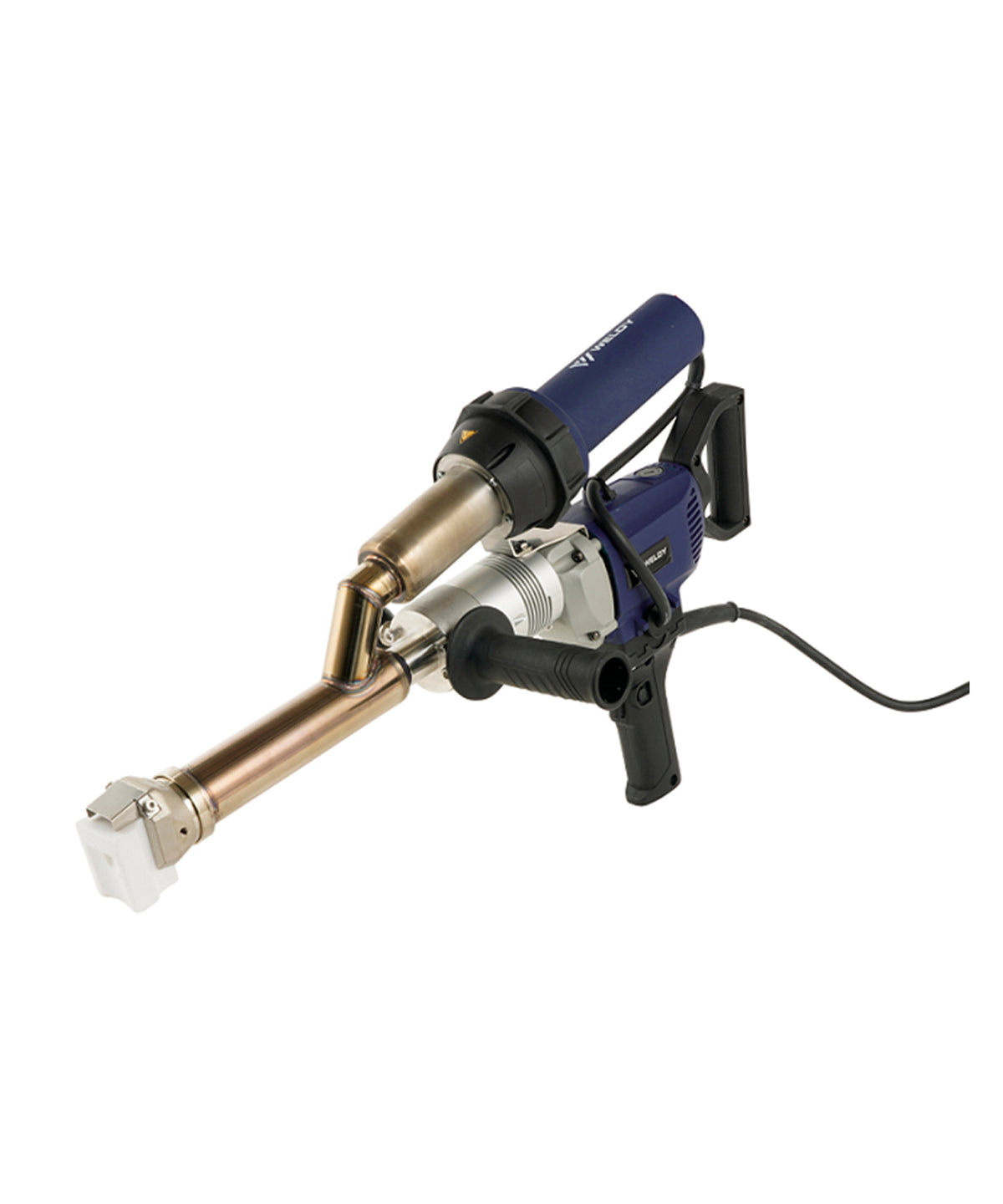
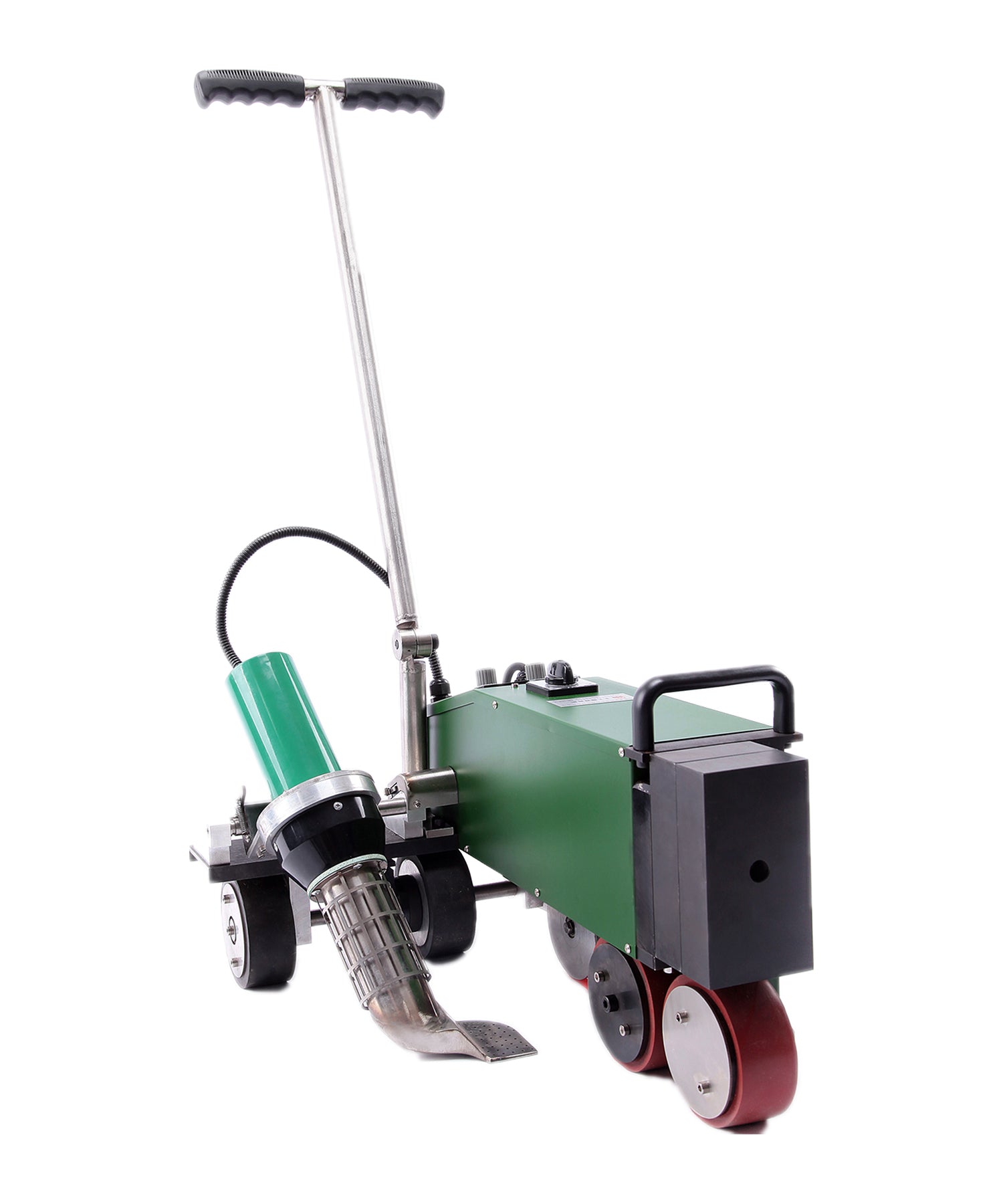
The Booster EX3 longer barrel and higher output suit civil engineering and long-seam production work.
Extrusion Welding Best Practices
A sound extrusion weld starts long before the bead is laid. Follow this workflow, aligned with DVS 2207-4 (extrusion welding of thermoplastics) and relevant ASTM standards:
- Surface preparation: Grind off oxidation along the weld zone and wipe with isopropyl alcohol. Moisture, oil, and dust are the leading causes of cold welds.
- Pre-heat: Follow DVS / Leister baseline hot-gas values—approximately 210–300 °C for PE-HD and PP. Always run a test weld on scrap material and adjust before starting production seams.
- Shoe selection & travel speed: Match the welding shoe to the joint geometry. Move steadily—too slow burns the polymer; too fast traps voids.
- Testing: For nonreinforced geomembrane seams, destructive peel/shear testing per ASTM D6392 is the industry standard. A film-tearing bond (FTB) result is often observed in sound welds, but it is only a qualitative indicator—always confirm acceptance against the pass/fail criteria defined in your project specification. For vacuum-box testing of seam continuity, refer to ASTM D5641 / D5641M, which is a separate test method from D6392.
Always record weld parameters, ambient conditions, and test results—good documentation practice that supports quality assurance on any project.
Maintenance
Protect your investment with consistent habits rather than rigid calendar intervals—actual service needs depend on usage intensity and materials welded:
- Clean after use: Clear residual rod from the barrel and shoe while the tool is still warm (unplugged). Cured polymer in the screw is the #1 cause of feeding issues.
- Inspect heating elements: Watch for temperature drift or uneven melting—a sign the element needs replacement. Keep a spare heating element on hand to avoid downtime.
- Check carbon brushes: Inspect drive brushes periodically and replace when worn. Replacement drive brushes for Booster are inexpensive and quick to swap.
- Lubricate the feed mechanism: Follow the manufacturer schedule in the user manual rather than a fixed interval—heavy daily use needs more frequent service than occasional operation.
- Store dry: Keep the tool in its case to prevent corrosion of electrical contacts and the screw.
Buyer FAQ
Can the EX2 and EX3 weld the same materials?
Yes. Both weld HDPE, LDPE, LLDPE, and PP with Ø 3–4 mm welding rods. The difference is output volume and physical reach, not material compatibility.
Which is better for beginners?
The EX2 lower output gives you more control while learning technique. It is also lighter (6.4 kg vs 6.9 kg), which reduces fatigue during practice sessions.
Do I need a hot air gun as well?
No—the Booster EX2 and EX3 both include integrated pre-heating hot air for the joint, so you can start welding right out of the box. A standalone hot air gun is an optional auxiliary tool for wider pre-heating zones or detail work, not a requirement.
What welding rods should I use?
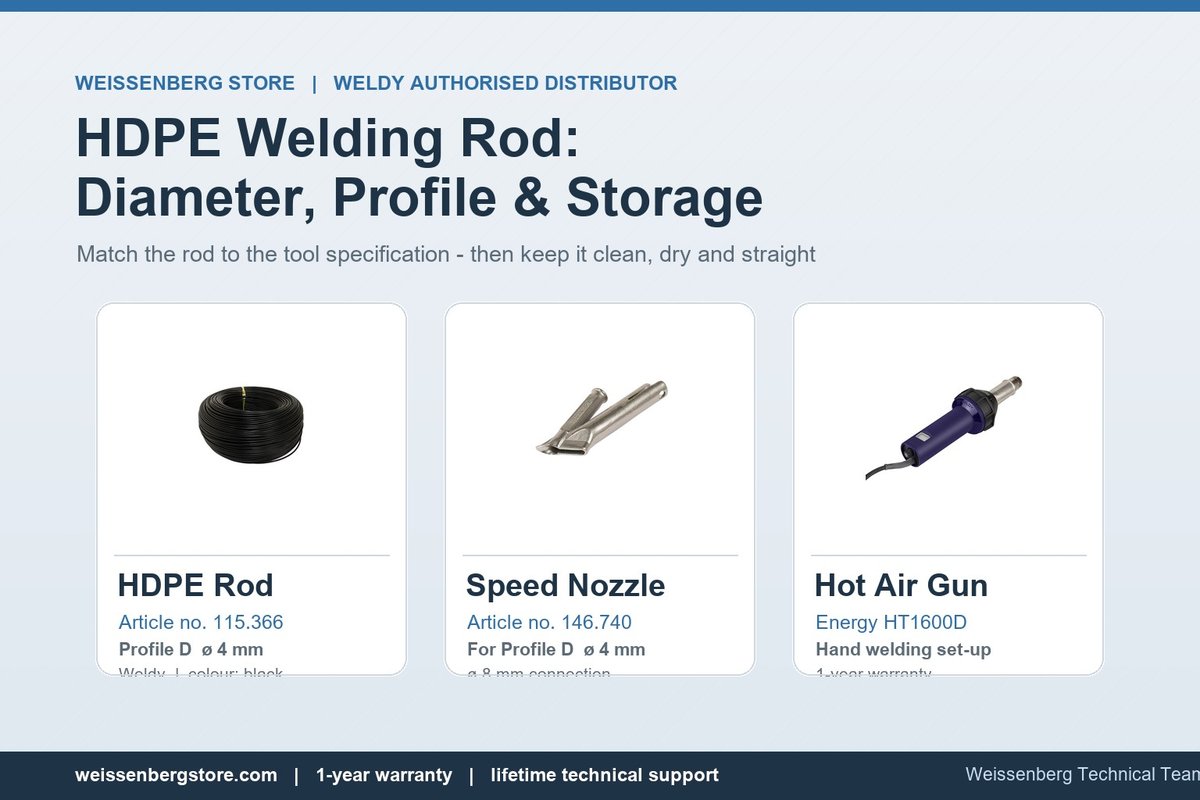
Match the rod material to your base material—HDPE rod for HDPE sheet, PP rod for PP sheet. HDPE welding rods (Ø 4 mm) are the most common for tank and liner work.
Are spare parts available?
Yes. Weissenberg stocks original welding shoes, heating elements, drive brushes, feeding screws, and handles for both EX2 and EX3. See the Accessories collection for the full range.
What warranty comes with the Booster series?
Both the EX2 and EX3 include a 1-year warranty and lifetime free technical support from the Weissenberg team.
Compatible Shoes & Welding Rods
The Booster EX2 and EX3 use the same welding shoes and rods. Choosing the right shoe depends on your joint type:
- Right-angle shoes (e.g., K8/10) — for corner and T-joints in tank fabrication
- Round shoes — for pipe and curved-surface welding
- Overlapping shoes — for flat sheet seams and liner repairs
- Blank shoes — custom-machined to your specific joint geometry
For welding rods, always match the polymer type and use Ø 3 or 4 mm as specified for your joint thickness. HDPE welding rods (Ø 4 mm, black) are in stock and ship worldwide.
Final Verdict
Choose Booster EX2 if you:
- Weld inside tanks, vessels, or restricted spaces
- Fabricate PP ductwork and bench-top assemblies
- Need a lighter tool (6.4 kg) for precision work
- Work primarily with shorter seams
Choose Booster EX3 if you:
- Run long production seams in civil engineering or lining projects
- Need higher output (up to 3.6 kg/h) to keep up with shift demands
- Repair large-area geomembrane liners
- Work on long, continuous seams as the mainstay of your workload
Still unsure? The Weissenberg Technical Team has supported plastic welding professionals for 20+ years. Browse the full Extrusion Welder collection or reach out via weissenbergstore.com live chat—we will help you match the right tool to your project.




Leave a comment
This site is protected by hCaptcha and the hCaptcha Privacy Policy and Terms of Service apply.