
By Weissenberg Technical Team — 20+ years of experience in thermoplastic welding technology
Quick Answer
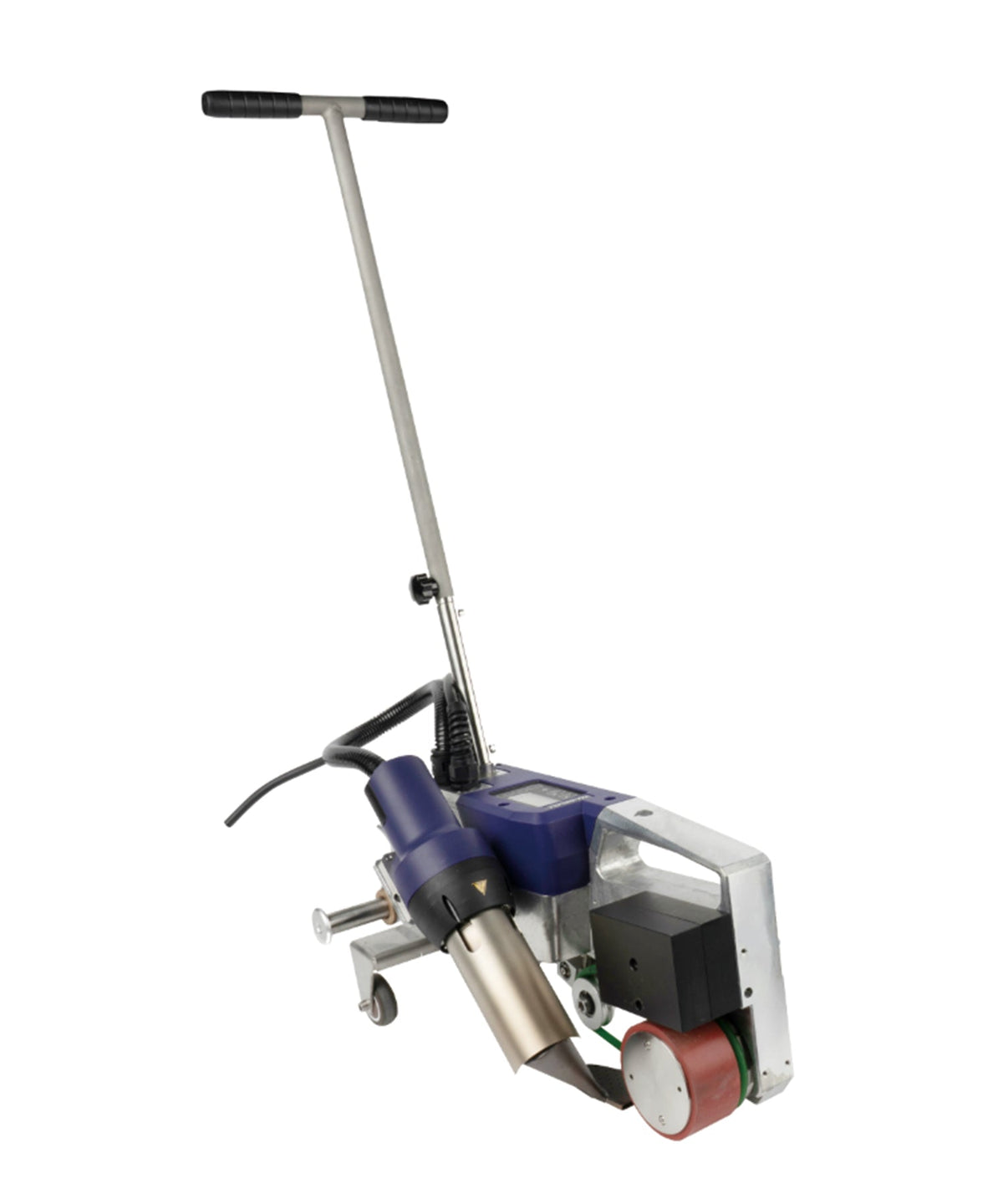
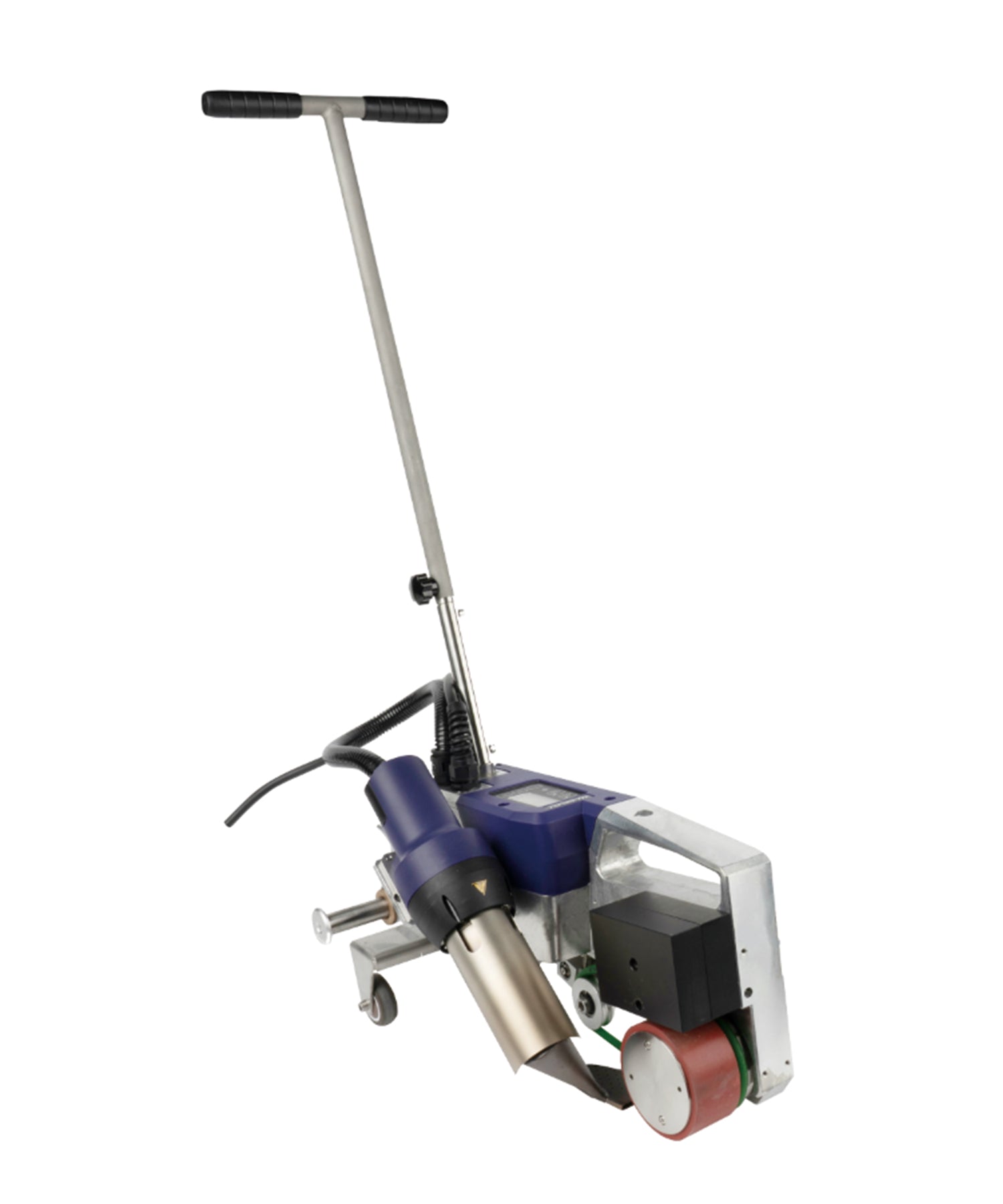
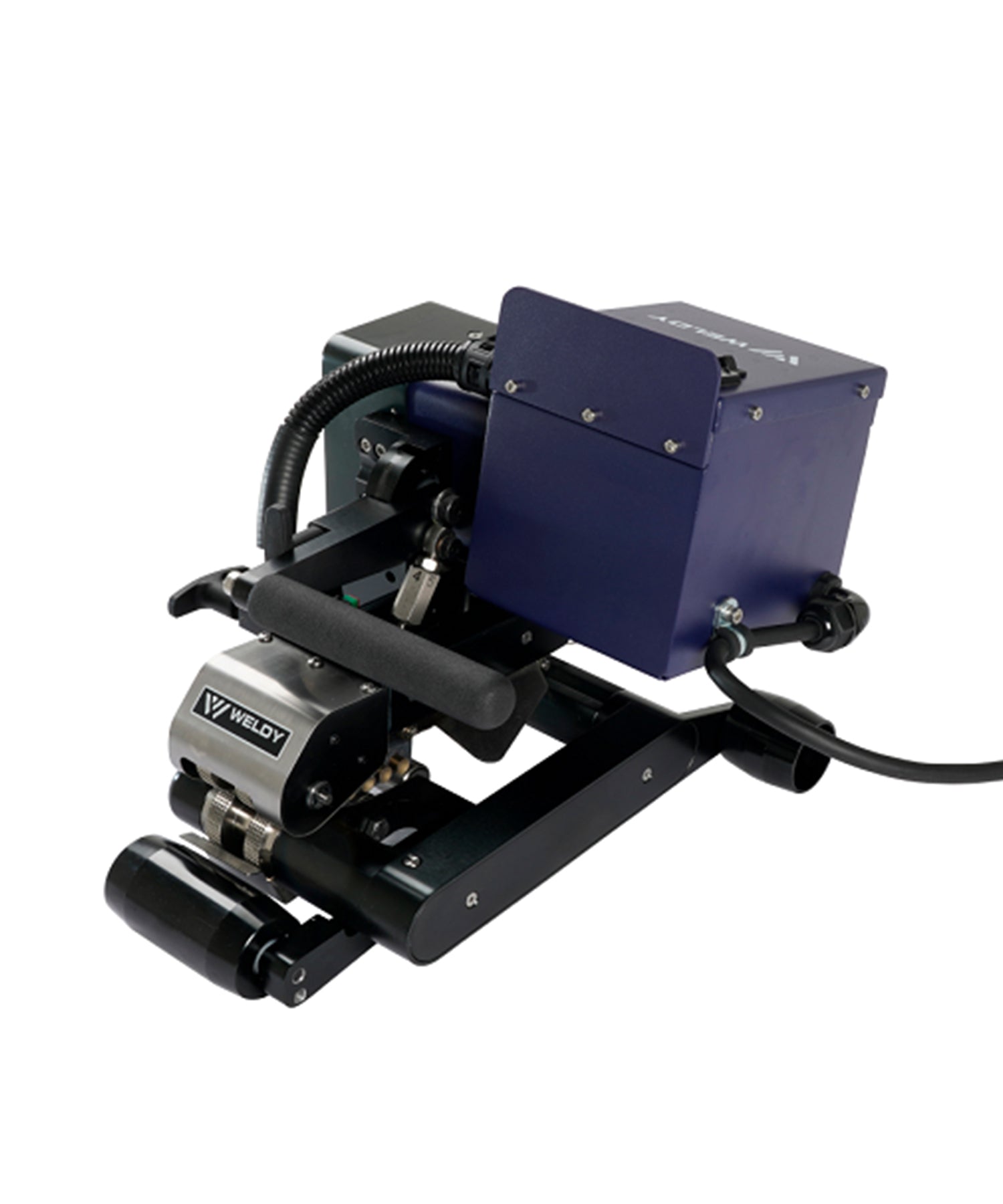
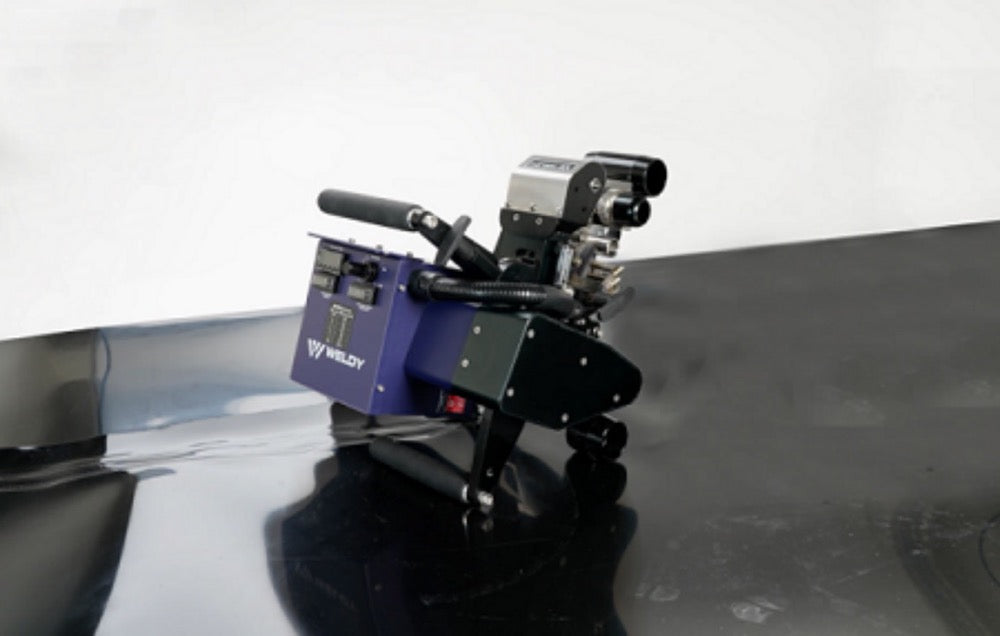
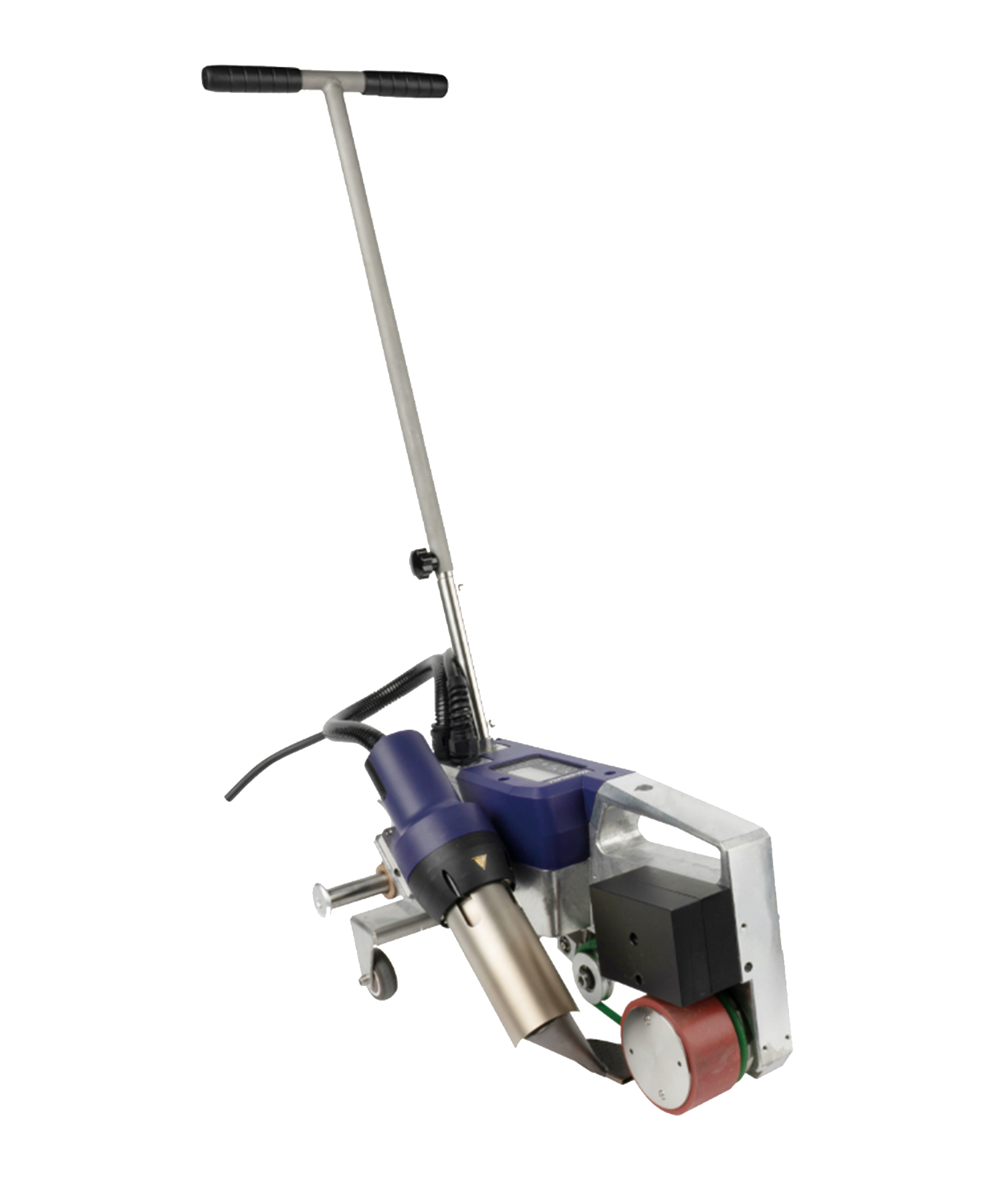
If your crew welds long field laps on TPO, PVC or other single-ply membranes day in and day out, the Weldy Roof40 is an effective way to increase productivity: one operator steers a self-propelled welder that lays a uniform 40 mm overlap seam at up to 10 m/min. If most of your work is patches, flashings, corners and tight penetrations, a handheld hot-air welder is still the right tool — and many contractors run both.
Who should buy the Roof40
Roofing crews installing or repairing large flat-roof areas of TPO/PVC membrane, factory prefabrication shops welding panels and technical textiles at production-line speed, and contractors who want consistent, repeatable seams without tying up a skilled operator for every metre.
When you still need a handheld
Detail work: flashings, parapets, skylight perimeters, patches, pipe penetrations and anywhere the machine physically cannot reach. A handheld hot-air gun such as the Weldy Energy HT1600 or HT3400 covers these jobs.
Shop Weldy Roof40 → Shop Hot Air Gun →
1. Roof40 Key Specifications
Built around a 3450 W heating system and a low-maintenance brushless drive, the Roof40 suits both factory prefabrication and on-site installation. Closed-loop digital control keeps temperature, airflow and speed consistent — the foundation of repeatable weld quality.
| Parameter | Specification |
|---|---|
| Power | 3450 W (230 V, 50/60 Hz) |
| Welding speed | 1–10 m/min (stepless) |
| Temperature range | 100–600 °C |
| Air volume | Adjustable |
| Seam width | 40 mm |
| Close-to-edge welding | Up to 100 mm |
| Max incline | 30° (patented drive) |
| Dimensions (L×W×H) | 475 × 244 × 260 mm |
| Weight | 15.5 kg |
| Drive / control | Brushless motor / closed-loop digital |
| Membranes | TPO, PVC, FPO, EVA, ECB, EPDM, TPE, TPU, PIB |

2. Where Roof40 Works Best
- Large field seams — the Roof40's home turf. Long, straight laps across big flat roofs are where automatic welding pays for itself fastest: one operator can cover a large membrane area in a single working day while keeping a uniform seam from start to finish.
- Straight seams close to roof edges and parapets — the Roof40's close-to-edge capability allows automatic welding within 100 mm of an edge where the seam geometry remains straight and accessible. Complex flashing, corners and penetrations still require a handheld hot-air welder.
- Pitched roofs — the patented drive holds seams on inclines up to 30°.
- Technical textiles — tarpaulins, banners and films welded at production-line speed in fabrication shops.
For real project examples across TPO, PVC and membrane waterproofing, see our roofing welder application cases.
3. Roof40 vs Handheld Hot Air Welder
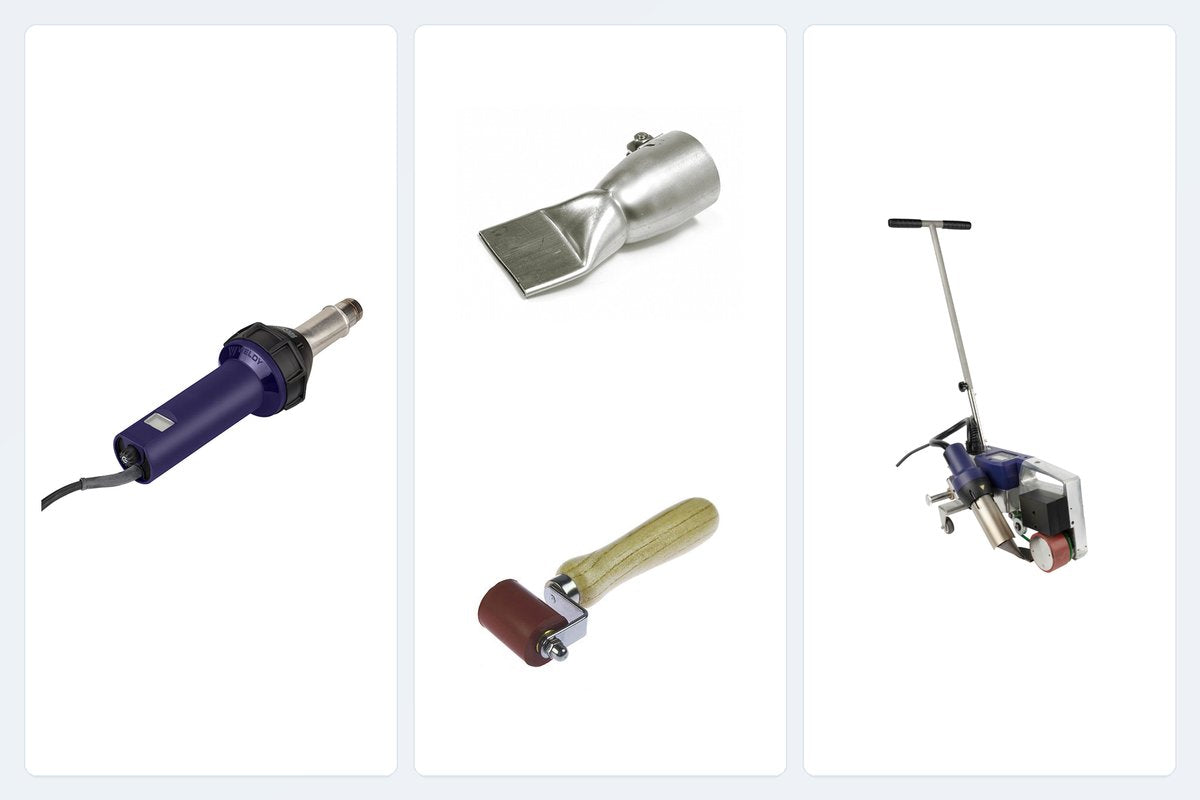
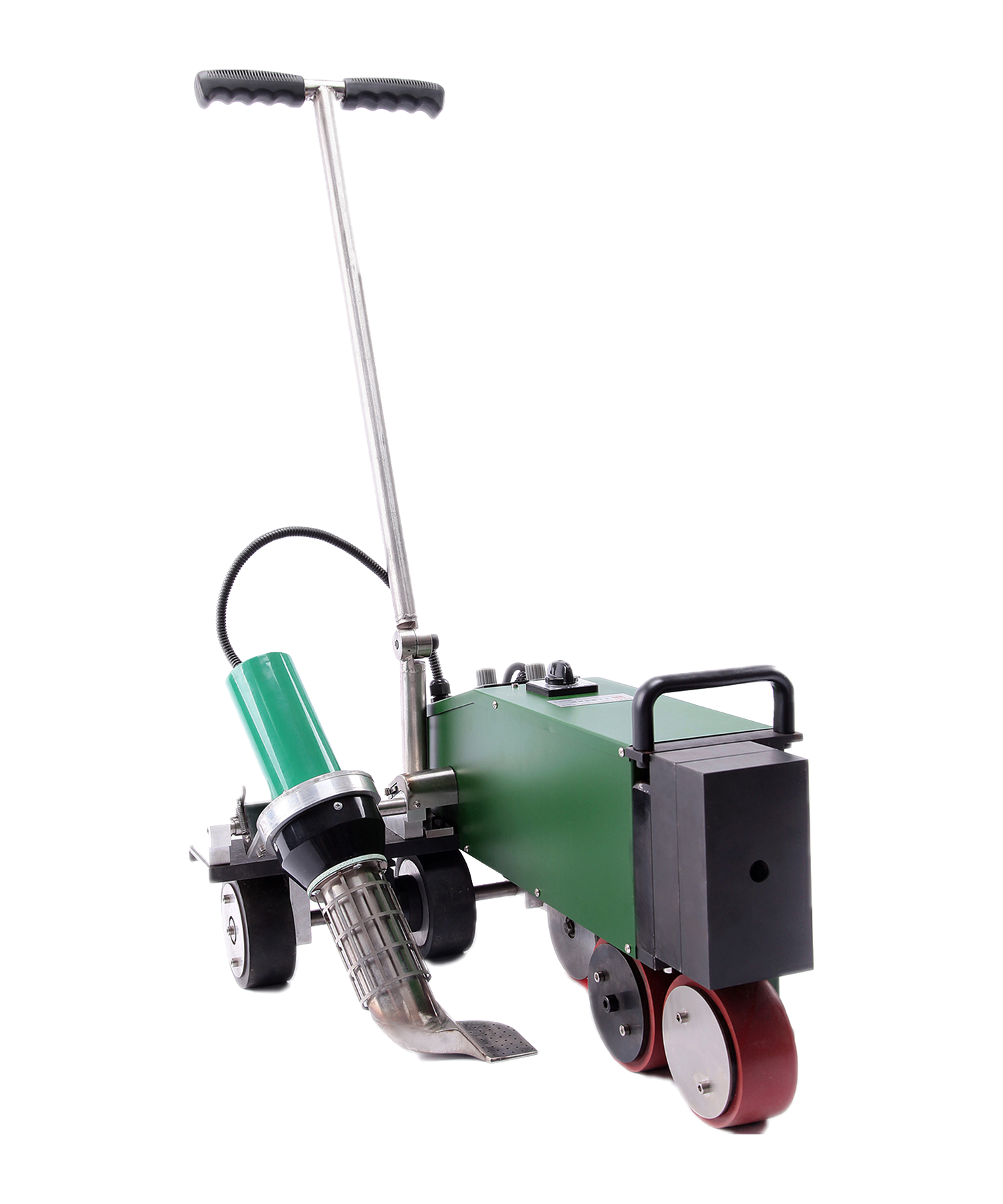
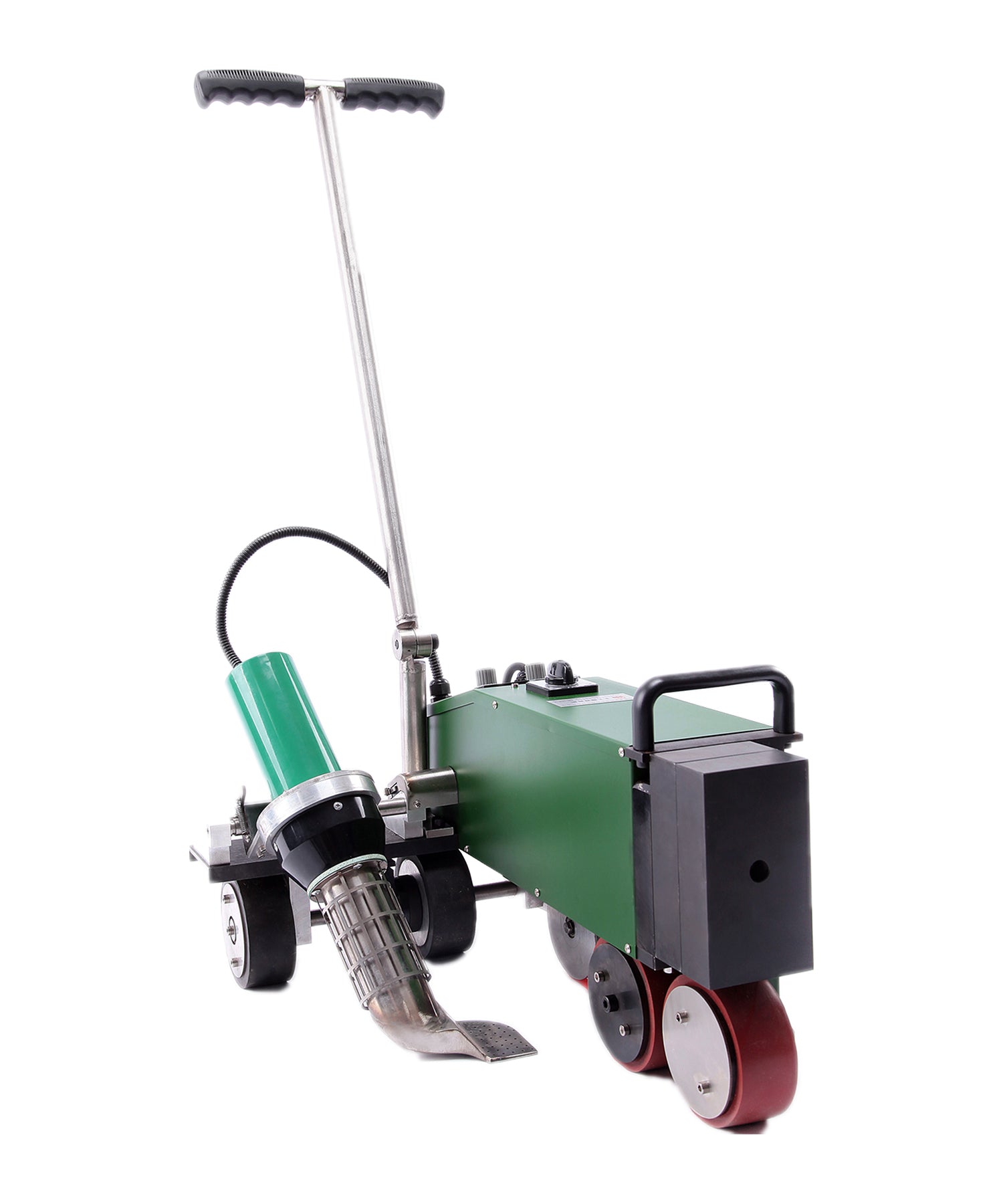
Selection starts with seam volume and geometry. For long, straight field laps on single-ply membranes, an automatic welder is the clear productivity win; for patches, corners and tight penetrations, a handheld hot-air gun remains essential. Many crews run both — auto for the field, hand for the details.
| Task | Recommended Tool | Why |
|---|---|---|
| Long field laps, large roofs | Roof40 (automatic) | 1–10 m/min, consistent 40 mm overlap seam |
| Straight seams near roof edges / parapets | Roof40 (close-to-edge) | Automatic welding within 100 mm of accessible edges |
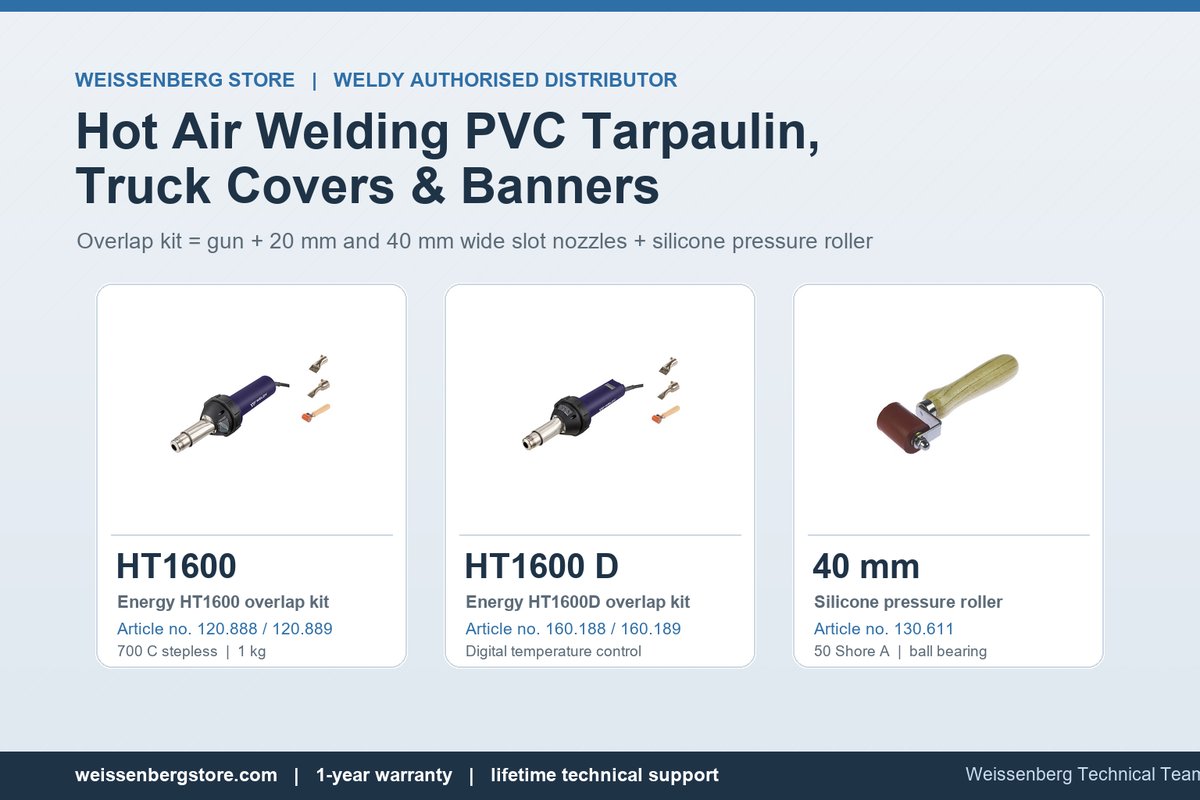
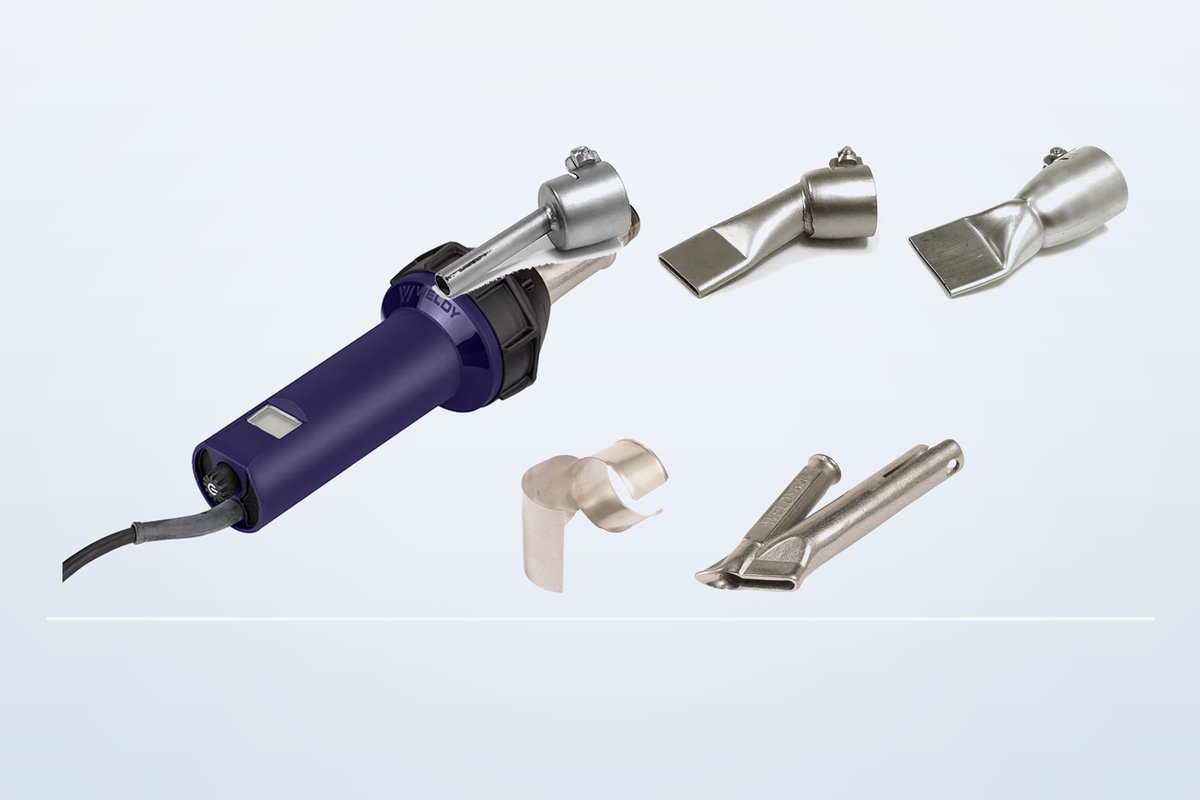
| Complex flashing, corners, skylight details, penetrations and patches | Handheld hot-air gun (HT1600 / HT3400) | Agility in tight geometry |
| Heavy geomembranes, dual-track seams | Hot-wedge welder (e.g. WGW300) | Wedge welding for 1–3 mm liners |
Still deciding on the handheld side? We compared the two most popular hot-air guns in HT1600 vs HT3400: which Weldy hot air gun should you buy?

4. Setting Temperature, Speed & Airflow
Weld quality follows the "welding triangle" of temperature, speed and pressure — all three must sit inside the membrane's welding window. There is no universal formula; the reliable way to find the right settings is to start from the membrane manufacturer's data and verify with test welds:
- Start from the membrane manufacturer's recommended parameters — TPO, PVC and FPO each have different welding windows. The manufacturer's datasheet is the authoritative starting point for temperature and speed.
- Run a test weld before production — and whenever site conditions, membrane batch, or machine settings change, following the membrane manufacturer's installation guidance. Adjust temperature or speed one variable at a time until the seam looks and peels consistently.
- Respect the machine's limits — the Roof40 holds temperature, airflow and speed automatically, but the operator still chooses the right window for the membrane being welded.
- Supply clean, adequate power — a 3450 W machine deserves a capable generator and a properly rated extension cord; voltage drop affects heating performance.
5. Checking Weld Quality in the Field
Consistent welds come from consistent checks. Practical field QA that does not depend on lab equipment:
- Probe the seam edge — after the weld cools, a blunt metal probe should not easily force its way into the seam edge on a sound weld.
- Visual inspection — look for a uniform bead width, no burn-through, no gaps or skips along the seam.
- Periodic destructive checks on test pieces — keep offcuts from the same membrane batch and check that test welds bond across the full seam width, following the membrane manufacturer's acceptance guidance.
- Document results — a simple log of settings, date and check results keeps your project QC file credible.
6. Roof40 Maintenance
The Roof40's brushless drive removes the most common wear item on welding machines (carbon brushes), so maintenance is condition-based rather than a fixed daily/weekly ritual. Practical guidance:
- Keep the air intake filter clean — a clogged filter reduces airflow and raises temperatures. Check it in dusty conditions and whenever performance drops.
- Inspect the nozzle and pressure wheels — before big jobs and after heavy use, look for char build-up, debris and uneven wheel wear; clean with the brass wire brush when cool.
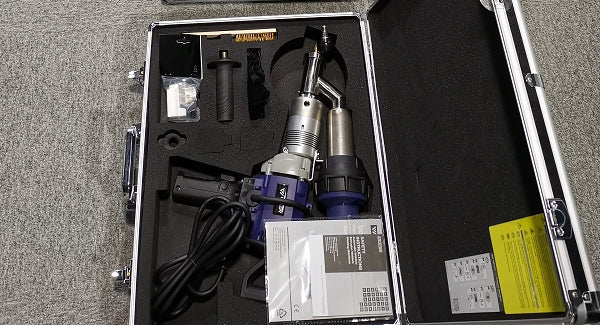
- Store properly — keep the machine in its transport case in a dry, clean environment between jobs.
- Follow the operator manual's service schedule — scheduled checks and replacement intervals in the manual still apply; they are simply fewer with a brushless drive.
7. Buyer FAQ
- What membranes can the Roof40 weld? — TPO, PVC, FPO, EVA, ECB, EPDM, TPE, TPU and PIB single-ply membranes.
- How fast can it weld? — Up to 10 m/min, steplessly adjustable, with a 40 mm seam width.
- Can it weld on slopes? — Yes, up to a 30° incline thanks to the patented drive system.
- Do I still need a handheld welder if I buy the Roof40? — For flashings, patches and penetrations, yes — most crews run an automatic welder for the field and a handheld gun for details.
- Is the Roof40 certified for the European market? — No. The Roof40 is not CE-marked and is not intended for use in Europe; it is built for markets where CE marking is not required.
8. Is Roof40 Right for Your Crew?
Ask yourself two questions. Do most of your seams run long and straight on single-ply membranes? If yes, the Roof40 can deliver substantial labor savings on large roofing projects. Is your work mostly patches, flashings and tight geometry? Then a handheld hot-air gun is the better first purchase — and you can add automation later as project volume grows.
For many contractors the answer is both. The Roof40 handles the field; a Weldy hot-air gun handles the details. Weissenberg is an official Weldy distributor and has supported thermoplastic welding professionals since 2006 — every machine ships with the manufacturer warranty and our lifetime technical support. If you are not sure which setup fits your volume, our technical team will help you match the machine to your projects.
For a spec-by-spec breakdown of the Roof40, see our earlier Roof40 ultimate guide to TPO/PVC membrane welding.
Shop Weldy Roof40 → Shop HT1600 / Hot Air Gun →
Author: Weissenberg Technical Team | 20+ Years in Thermoplastic Welding Industry
Disclaimer: Welding parameters vary with membrane formulation, ambient conditions and project requirements. Always follow the machine manual and the membrane manufacturer's installation guidelines.




Leave a comment
This site is protected by hCaptcha and the hCaptcha Privacy Policy and Terms of Service apply.