
By Weissenberg Technical Team | 19+ years in thermoplastic welding | Official Weldy Distributor
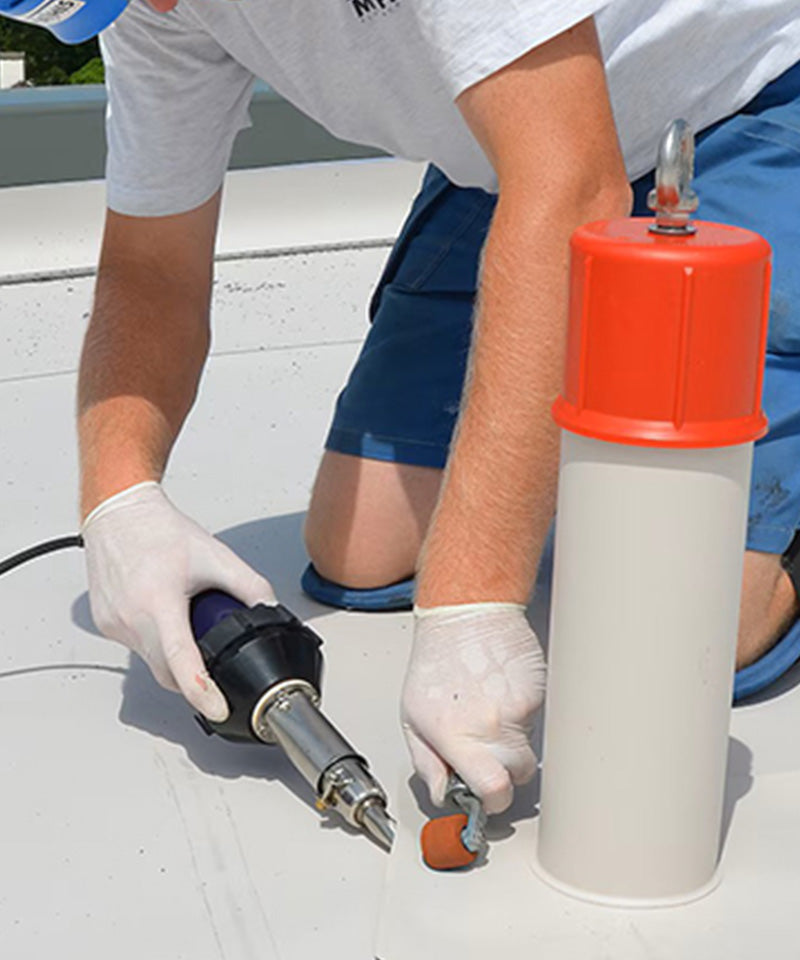
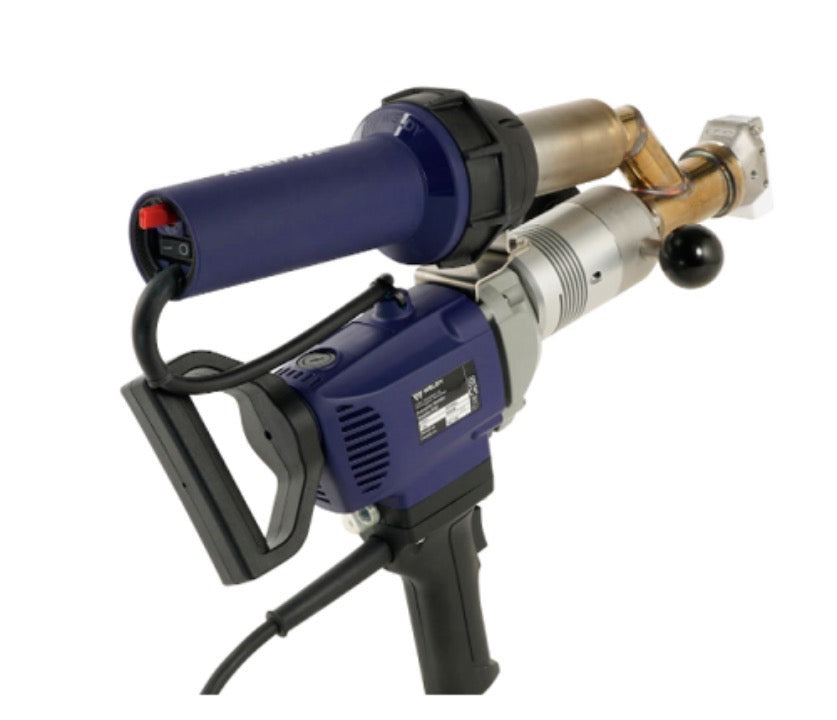
For fabricators, roofers and repair crews, the hand-held hot air gun remains the most versatile tool in plastic welding — capable of joining thermoplastic membranes, sealing tarpaulins, repairing geomembranes and forming plastic components on site. The Weldy Energy HT1600 and Energy HT3400, engineered in Switzerland and CE-certified, are the two professional workhorses of this category. This guide covers their specifications, real-world applications, welding technique and the maintenance routines that keep them running for years.
Why the Energy Series Is the Benchmark in Handheld Hot Air Welding
Weldy builds the Energy series for continuous professional duty, not hobby use. Both models feature stepless temperature control, ceramic heating elements for consistent heat output, and rugged housings rated protection class II. As the official Weldy distributor, Weissenberg supplies these tools with full manufacturer warranty and factory traceability — genuine units that meet CE certification and are produced under ISO 9001 quality management.
Energy HT1600 vs HT3400: Technical Specifications
| Parameter | Energy HT1600 | Energy HT3400 |
| Power | 1,600 W | 3,400 W |
| Temperature range | 40–700 °C | 40–650 °C |
| Temperature control | Stepless | Stepless |
| Airflow (20 °C) | 240 l/min | 320 l/min |
| Static pressure | 2,600 Pa | 3,000 Pa |
| Nozzle connection | ø 31.5 mm | ø 50 mm |
| Weight | 0.99 kg | 1.28 kg |
| Noise level | 67 dB(A) | 67 dB(A) |
| Certification | CE | CE, KC |

Where Professionals Use Hot Air Welders
Both Energy models handle the same family of applications, scaled by power and airflow:
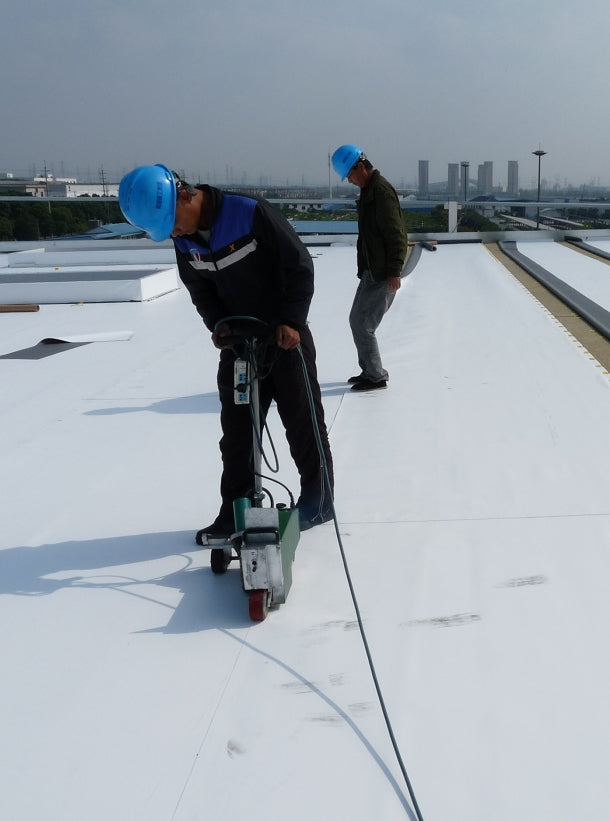
- Roofing: overlap welding of TPO and PVC single-ply membranes on commercial and residential roofs.
- Tarpaulins & banners: seam welding and repair of truck covers, industrial curtains, awnings and large-format PVC banners.
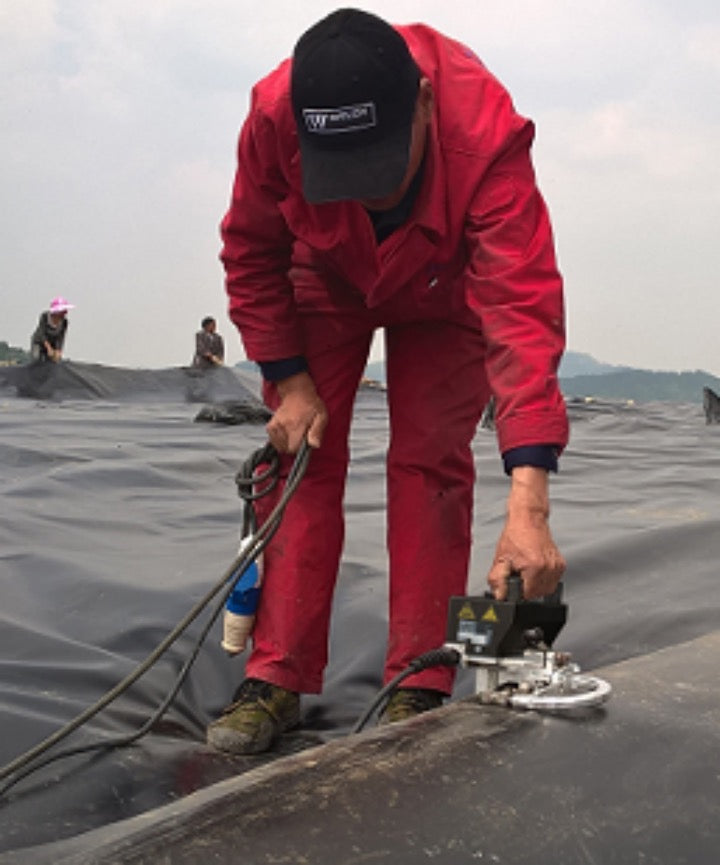
- Geomembrane repair: patch welding on HDPE and LLDPE pond liners and landfill caps.
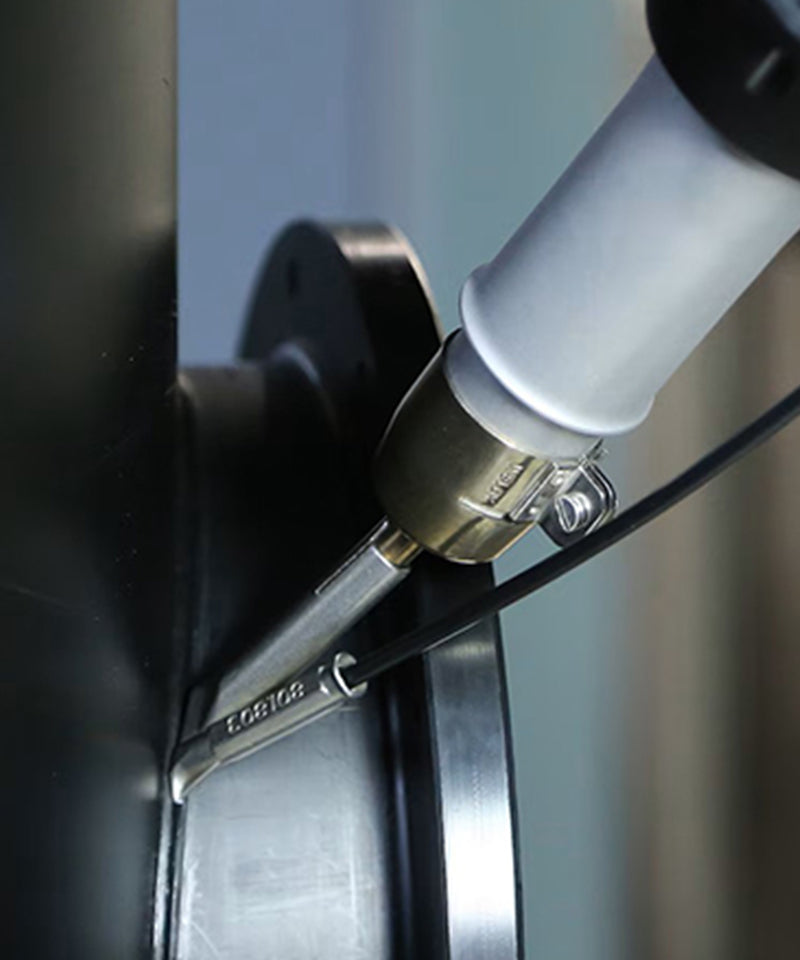
- Plastics fabrication: tank and duct forming, pipe bending, shrink-film operations and automotive plastic repair.

Welding Techniques for Consistent, Code-Compliant Seams
Hot air welding melts the base material itself — no adhesive — so seam quality depends entirely on heat, pressure and speed control. Follow this proven sequence:
- Clean the joint: wipe both overlap surfaces with isopropyl alcohol to remove dirt, oil and release agents.
- Set overlap width: mark a consistent 30–50 mm overlap for structural seams; 20 mm minimum for light repairs.
- Run a test weld: weld a 200 mm sample on offcut material, let it cool, then peel it. A correct weld tears the fabric before the seam separates; a cold weld peels cleanly (increase heat or slow down); a brittle weld means too much heat.
- Weld and consolidate: insert the nozzle between the layers and follow immediately with the silicone pressure roller while the material is above its softening temperature.
- Inspect the full length: probe the seam edge for unbonded sections and re-weld any cold spots before loading the seam.
Seam performance on single-ply membranes is typically validated against ASTM D6392 peel and shear test methods, while hot air welding procedure guidance follows DVS 2207-1.
Recommended Temperature Reference by Material
| Material | Typical air temperature | Note |
| PVC / PVC-coated fabrics | 300–400 °C | Keep speed steady to avoid burn-through |
| TPO / single-ply membranes | 350–450 °C | Always validate with a test weld |
| HDPE / LLDPE | 350–400 °C | Higher airflow helps thick sheets |
| PP | 350–400 °C | Do not overheat — PP softens quickly |
| Heat-shrink tasks | 150–250 °C | Low-temperature setting only |
Always confirm settings with a test weld on scrap material; actual values depend on ambient temperature, material thickness and weld speed.
Choosing Between HT1600 and HT3400
- Energy HT1600 — under 1 kg with a compact body, it is ideal for precision work, overhead welding and extended hand-held use. Choose it for repair crews and detail work.
- Energy HT3400 — more than double the heating power with 320 l/min airflow, it drives large-surface overlap welding and heavy shrink/bending tasks. Choose it for production and large-format membrane work.
Browse both models with full specifications and genuine accessories at Energy HT1600 and Energy HT3400.

Maintenance That Extends Service Life
A hot air gun is an investment that pays back for years — if it is looked after. Our field team recommends:
- Weekly: clean the intake filter with compressed air (≤ 0.3 MPa); a clogged filter drops airflow 10–15% in the first month and forces the motor to overheat.
- Monthly: inspect the nozzle for carbon deposits and clean with isopropanol; check the power cord insulation and plug contacts.
- Every 3 months: have heating elements and carbon brushes inspected; the Energy series uses replaceable ceramic elements and spare carbon brushes.
- Shutdown procedure: after use, set temperature below 150 °C and run the fan for 90 seconds to cool the element before switching off.
- Storage: keep the gun in its case in a dry, dust-free environment at 0–50 °C.
For a maintenance checklist and spare parts, visit the Weissenberg Store — our team supports you from selection through on-site troubleshooting.
Final Thoughts
The Weldy Energy HT1600 and HT3400 deliver the reliability, precision and Swiss build quality that professional plastic welding demands. Whether you are seaming a PVC roof, joining tarpaulin panels or forming plastic components, the right hot air gun — operated and maintained correctly — is the difference between a seam that fails and a seam that outlasts the structure it protects.




Leave a comment
This site is protected by hCaptcha and the hCaptcha Privacy Policy and Terms of Service apply.