
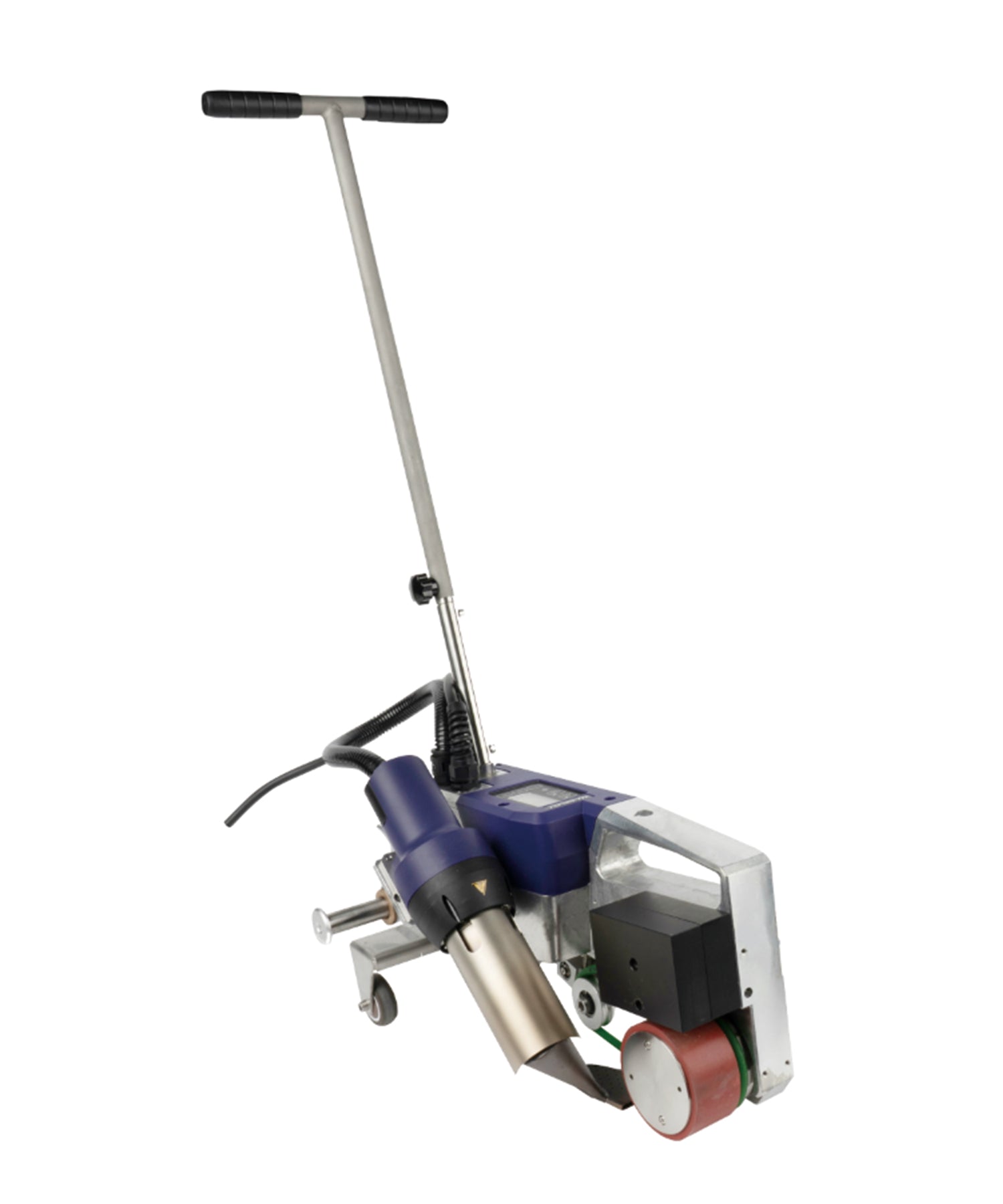
Flat Roof Membrane Welding: Choosing the Right Equipment for Your Project Type
Whether you're waterproofing a factory roof, installing a PVC membrane on a commercial building, or repairing a damaged TPO rooftop, the choice of roofing welder directly affects your project timeline, weld quality, and overall cost. Automatic roofing welders are designed for speed and consistency on large seams, while handheld hot air tools offer the flexibility needed for edges, repairs, and tight corners.
In this article, we walk through three real-world application scenarios to help you identify which roofing welding approach—and which machine—fits your next project.

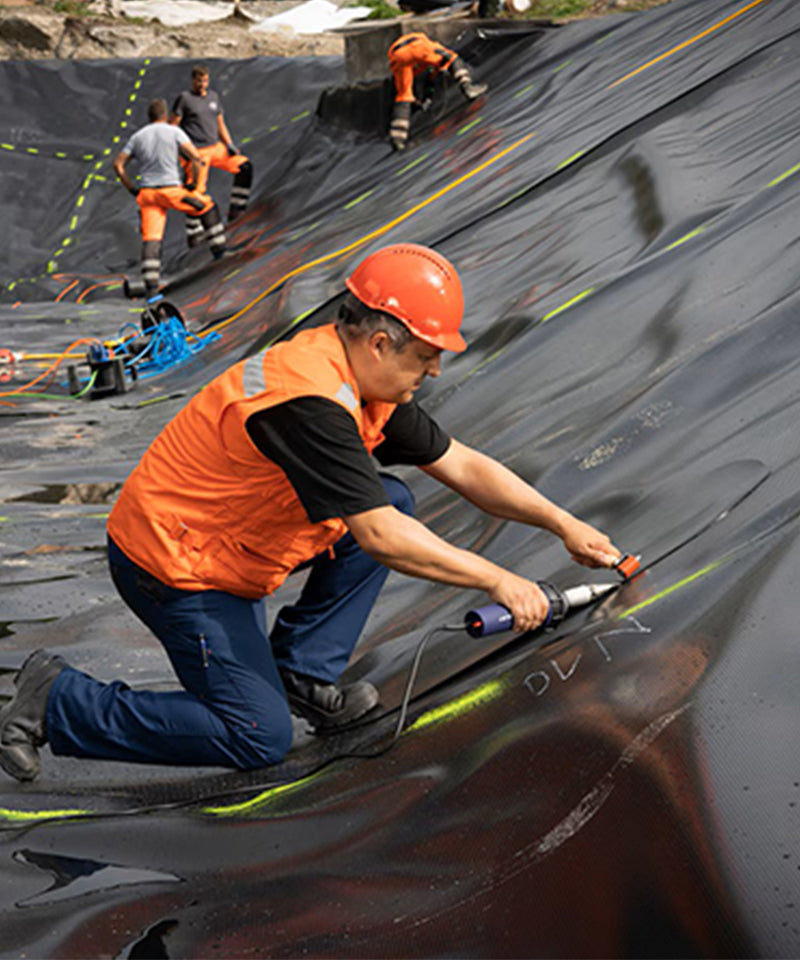
Application Case 1: Large-Scale Commercial Roofing Installation
Scenario: A shopping center needs 5,000 m² of PVC waterproofing membrane installed on a flat concrete roof deck. The client requires consistent seam strength and a tight deadline of 10 working days.
The challenge: Manual welding of 5,000 m² would take weeks and produce inconsistent seam quality across different welders. The large surface area calls for automation.
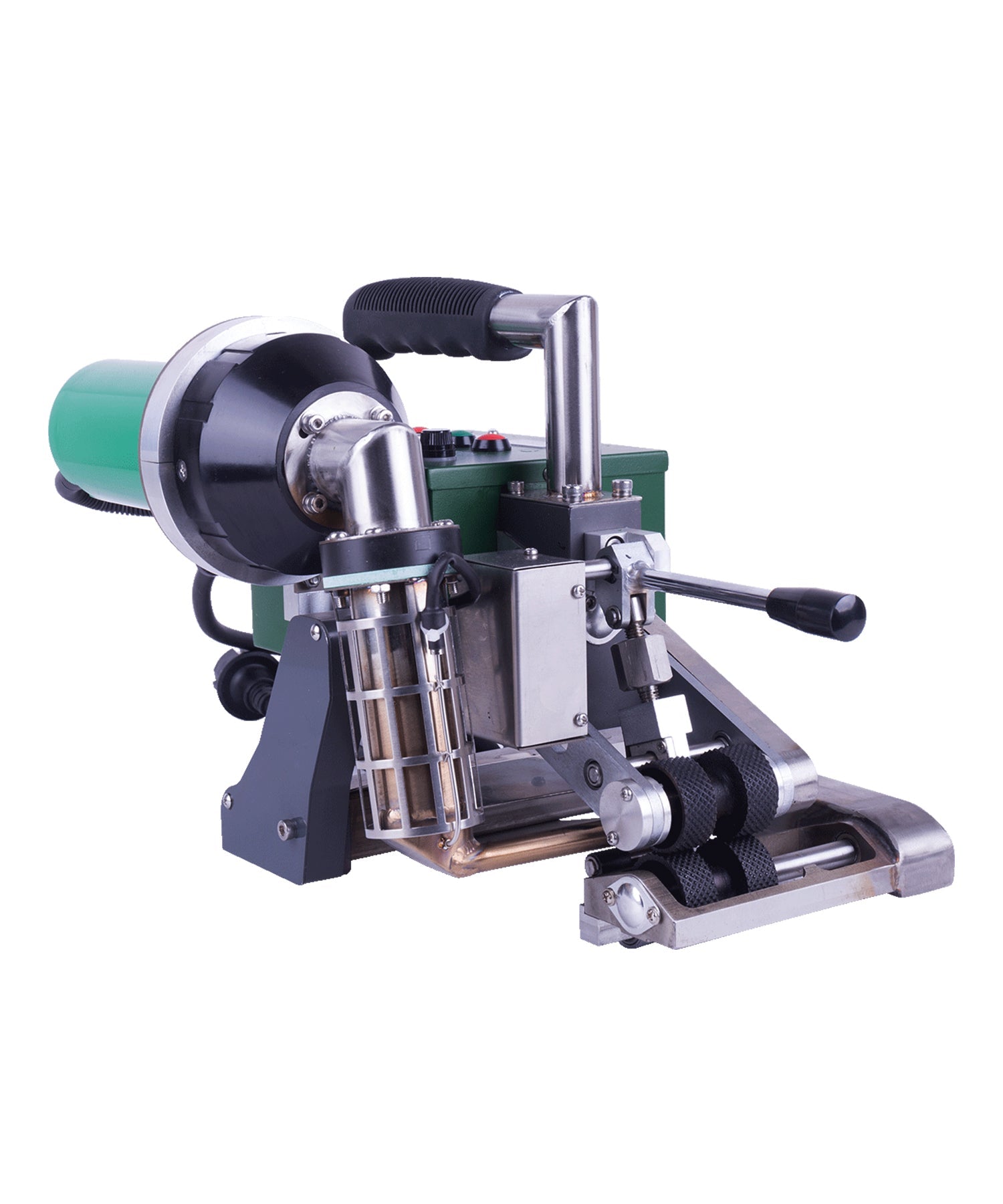
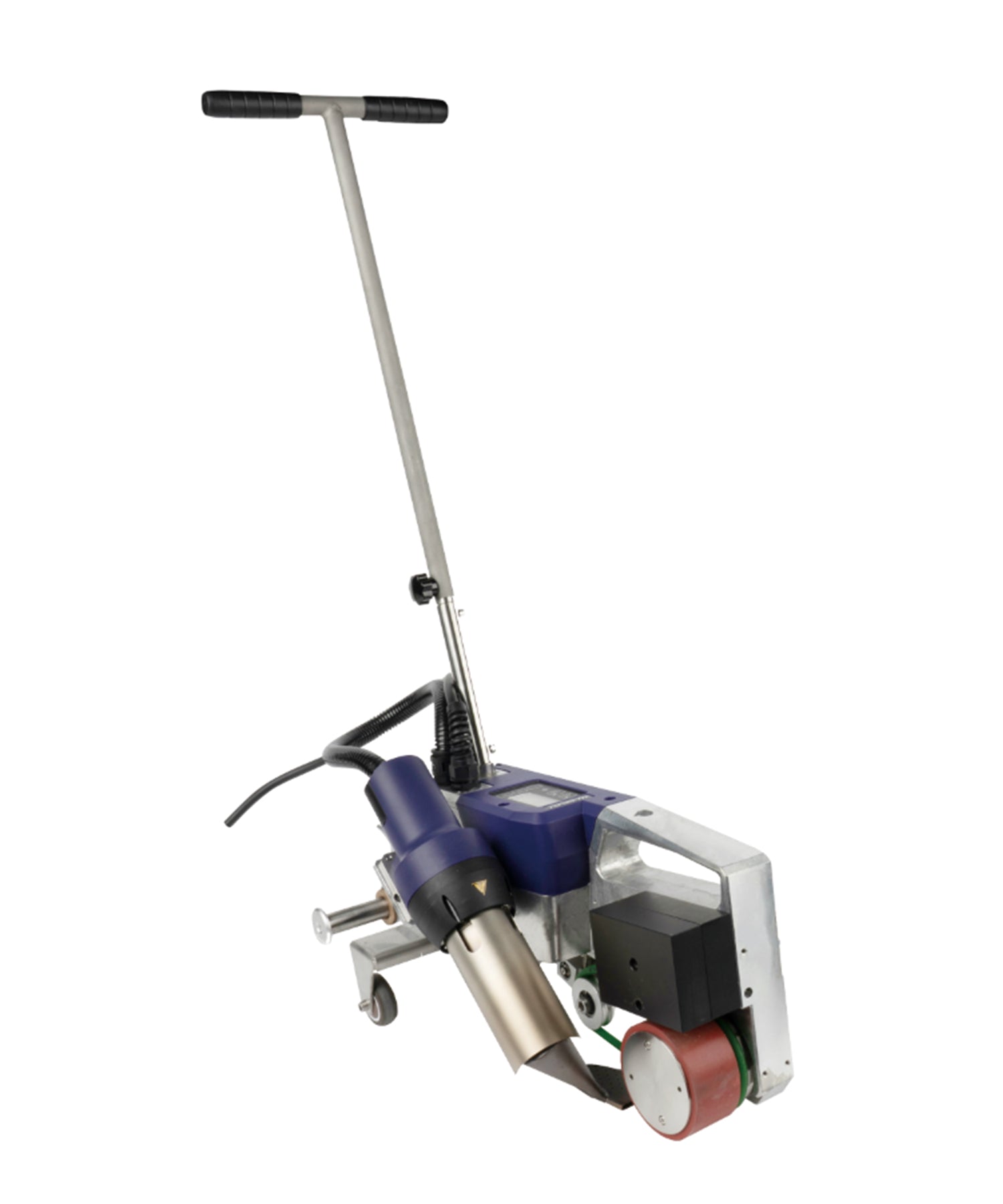
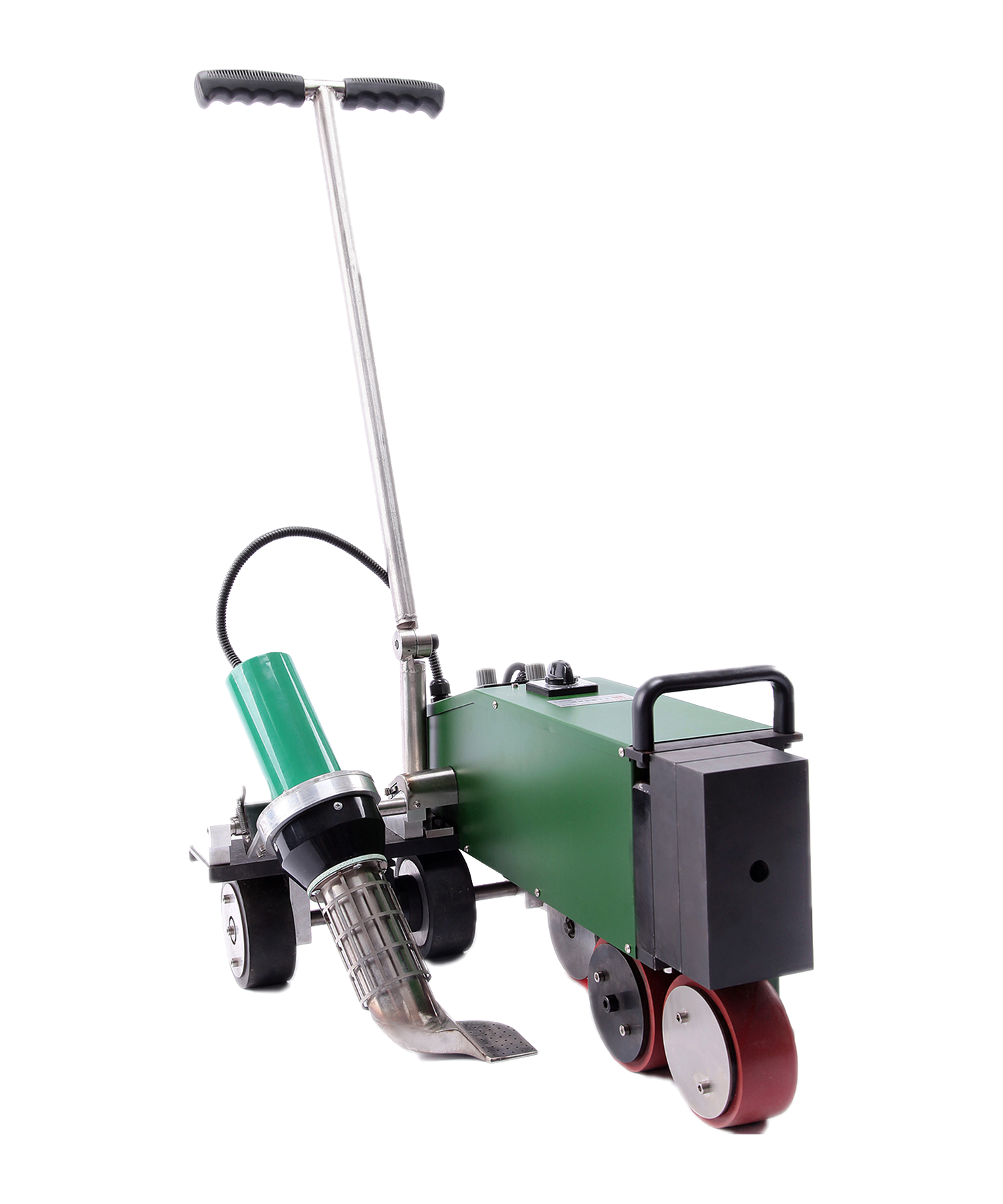
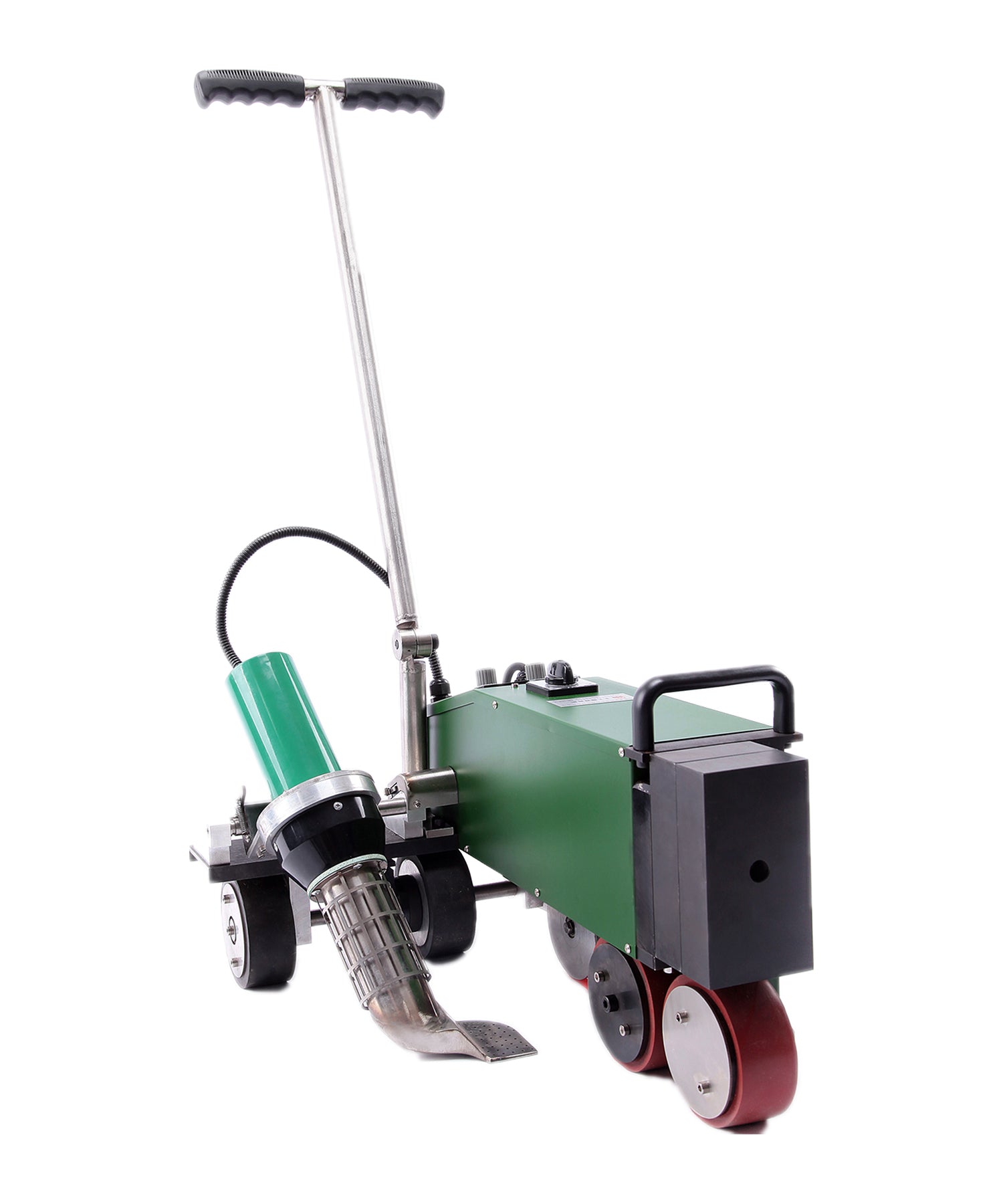
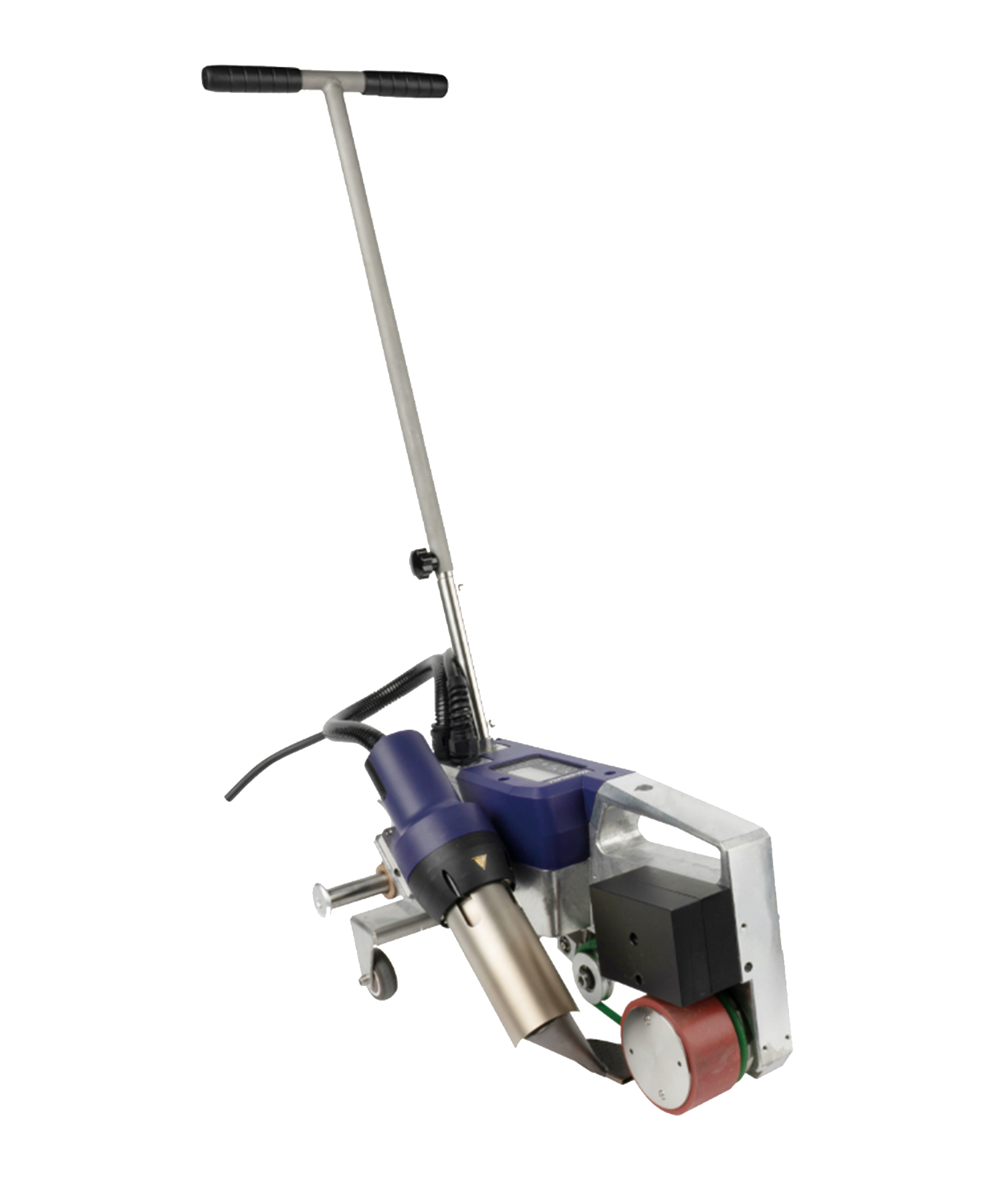
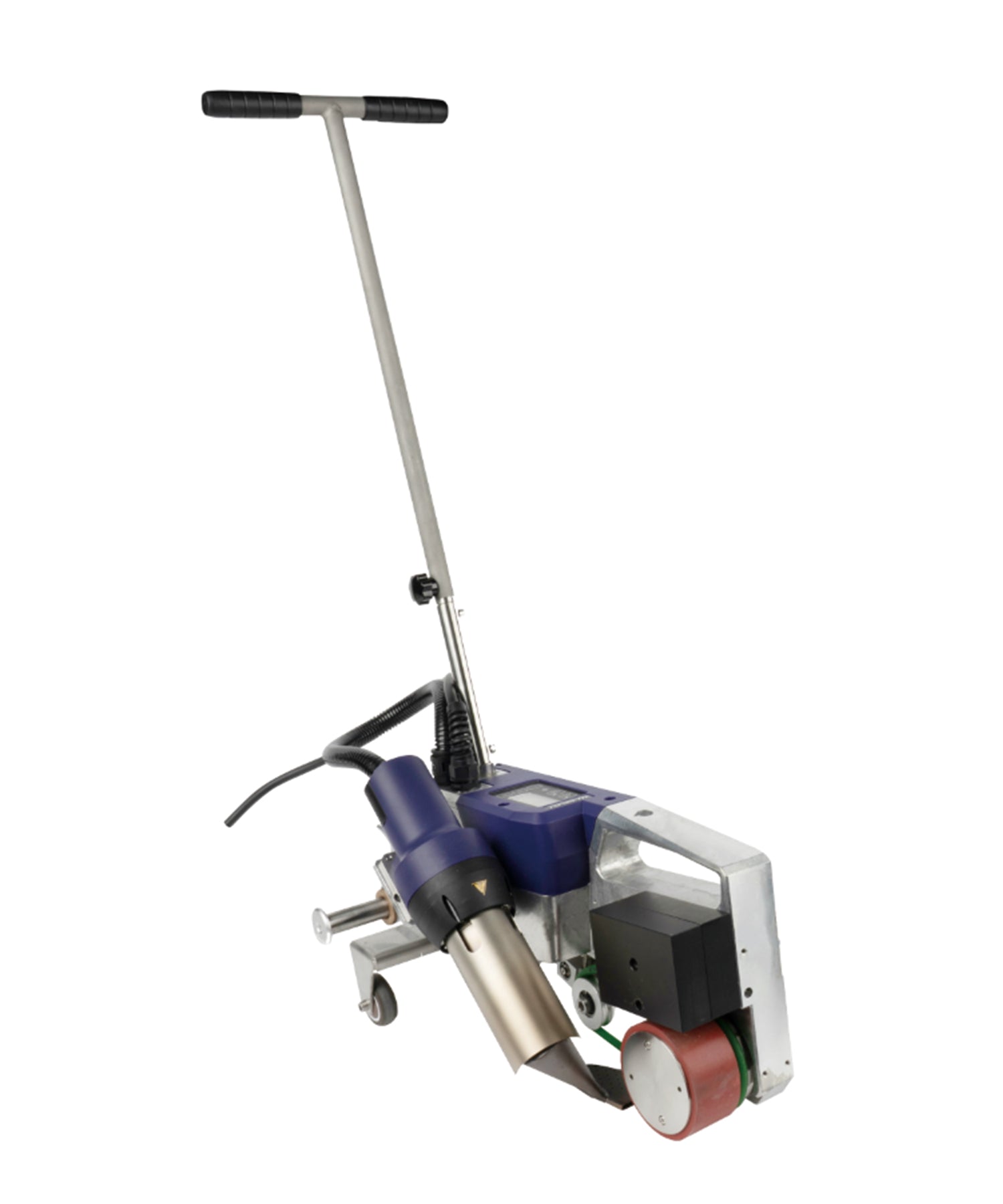
The solution: The Weldy Roof40 automatic roofing welder delivers 3,450 W of heating power with adjustable speed from 1 to 10 m/min, producing 40 mm wide seams at a consistent depth and temperature. Its brushless drive motor requires no carbon brush replacement and provides stable operation over long shifts. With the Roof40, a two-person crew can achieve 300–400 linear meters of high-quality welds per day.
Key outcome: The project completed on schedule with 100 % passing rate on peel tests. The closed-loop temperature control compensated for ambient temperature changes on the roof, ensuring every seam met the required weld standards.
Application Case 2: Industrial Factory Roof Repair and Extension
Scenario: A chemical processing plant needs to repair damaged sections of an existing TPO roof and extend coverage to a newly built annex. The work area includes pipe penetrations, roof vents, and expansion joints.
The challenge: The repair zones are scattered across the roof surface, making an automatic welder inefficient for short runs. The welder must handle both long straight seams on the new annex and detail work around existing roof penetrations.
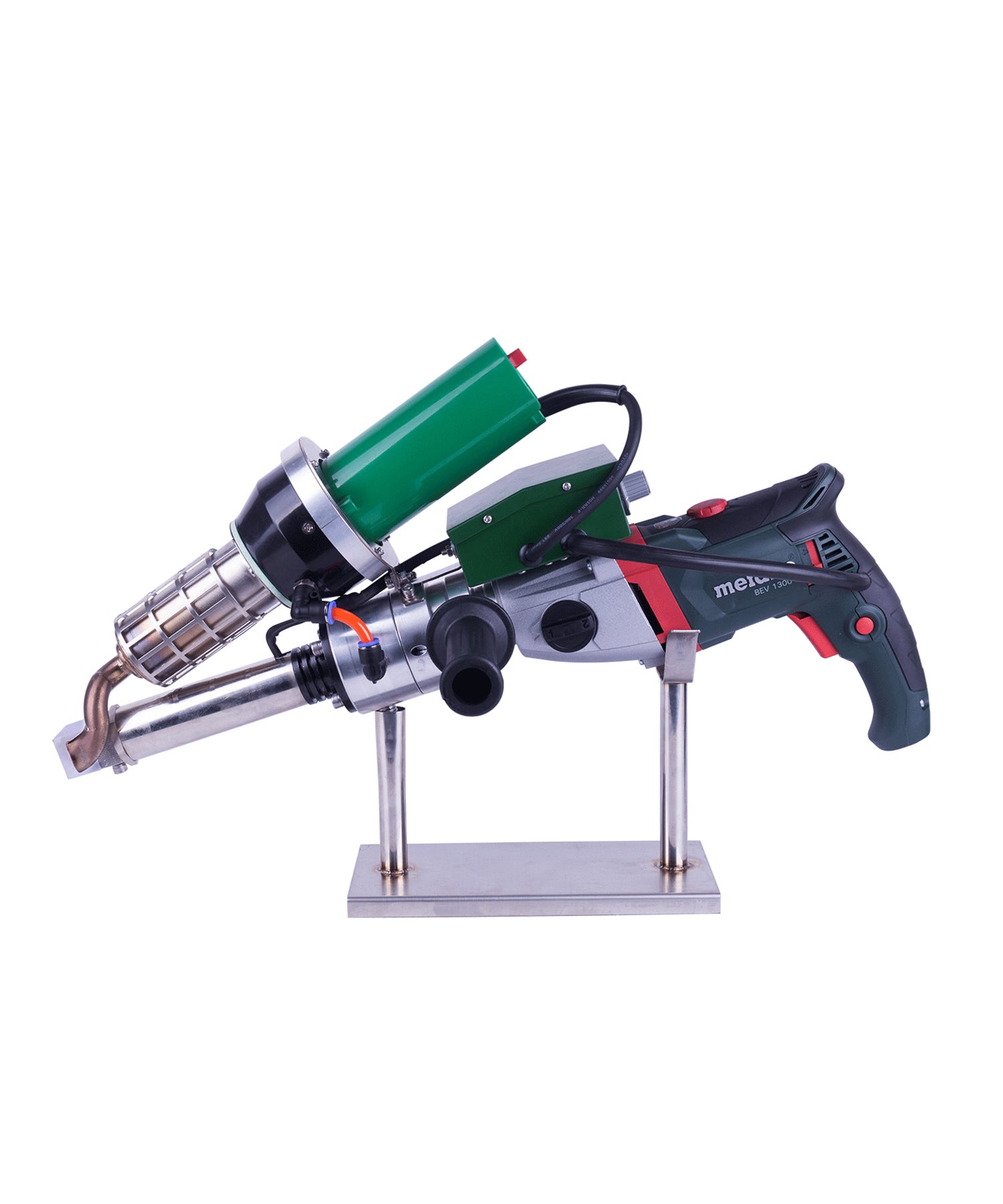
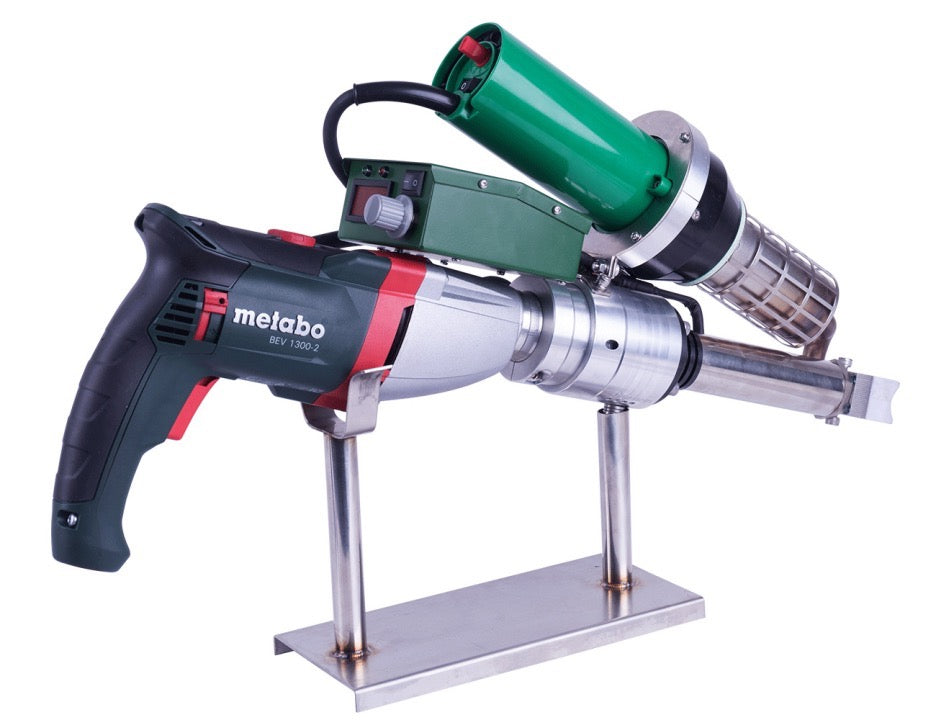
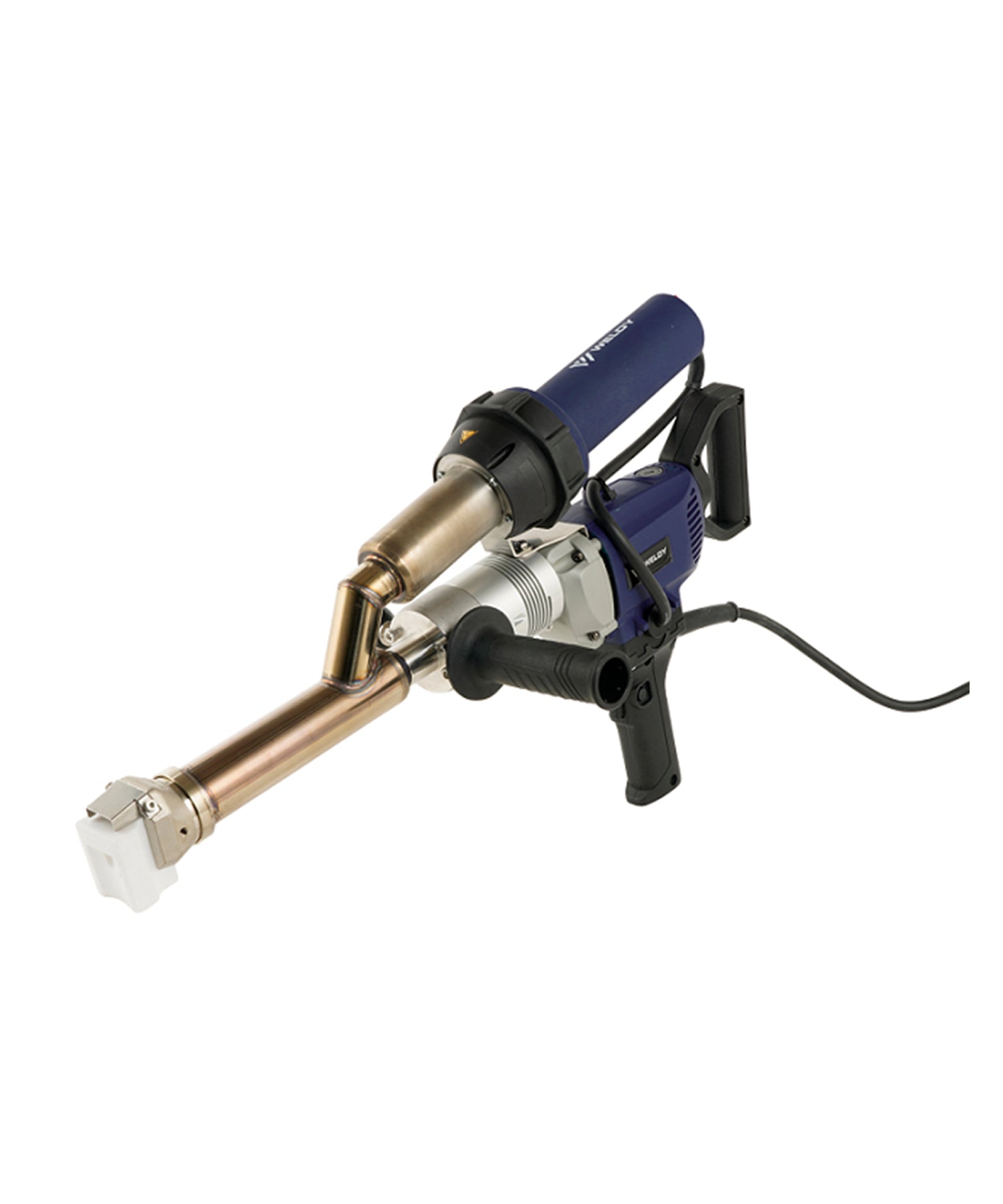
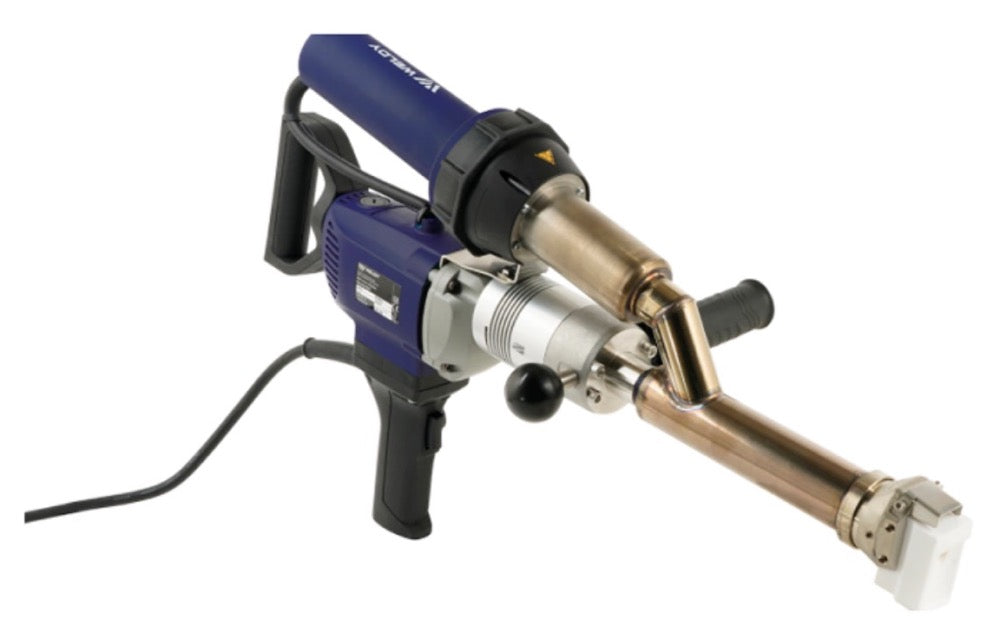
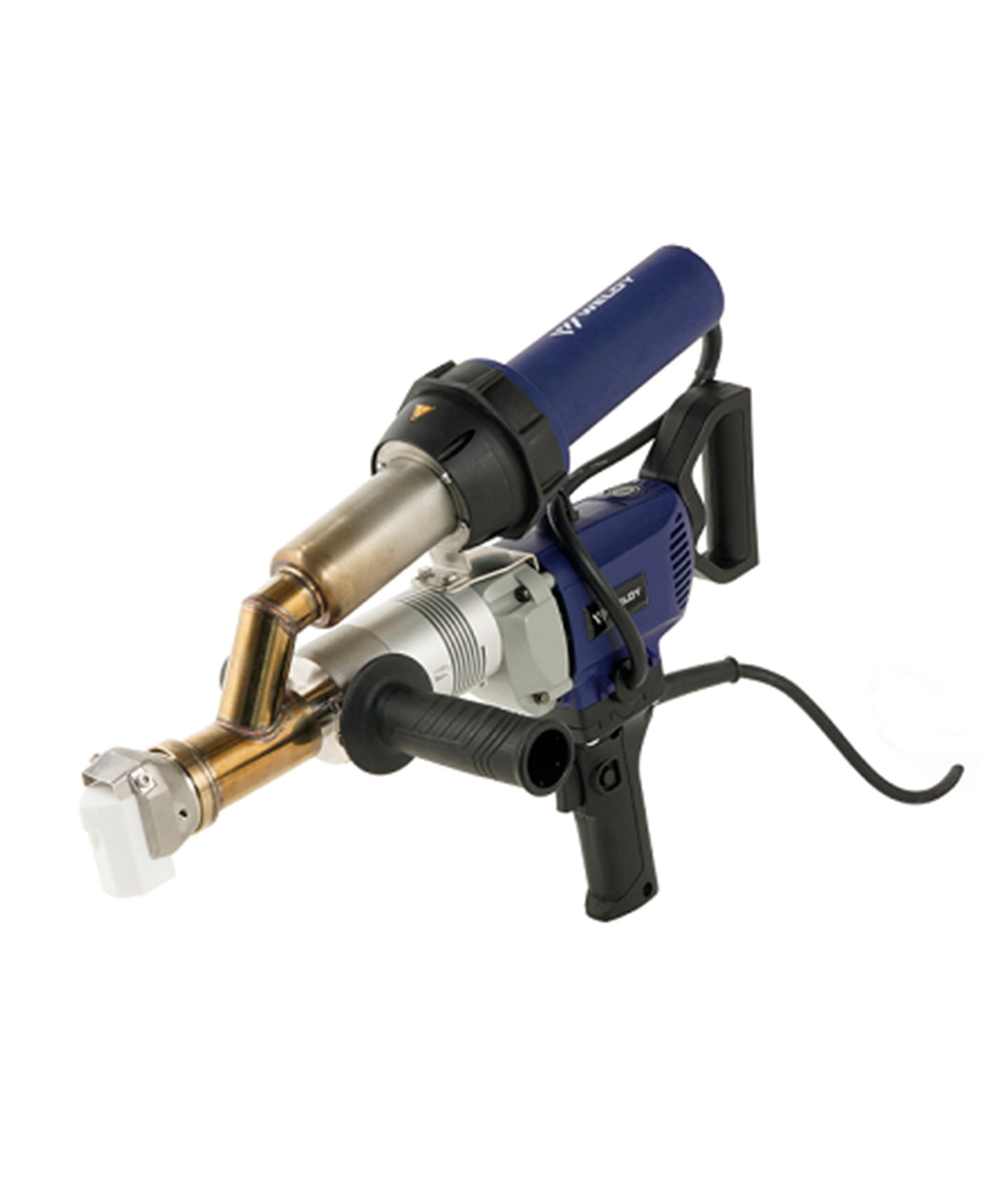
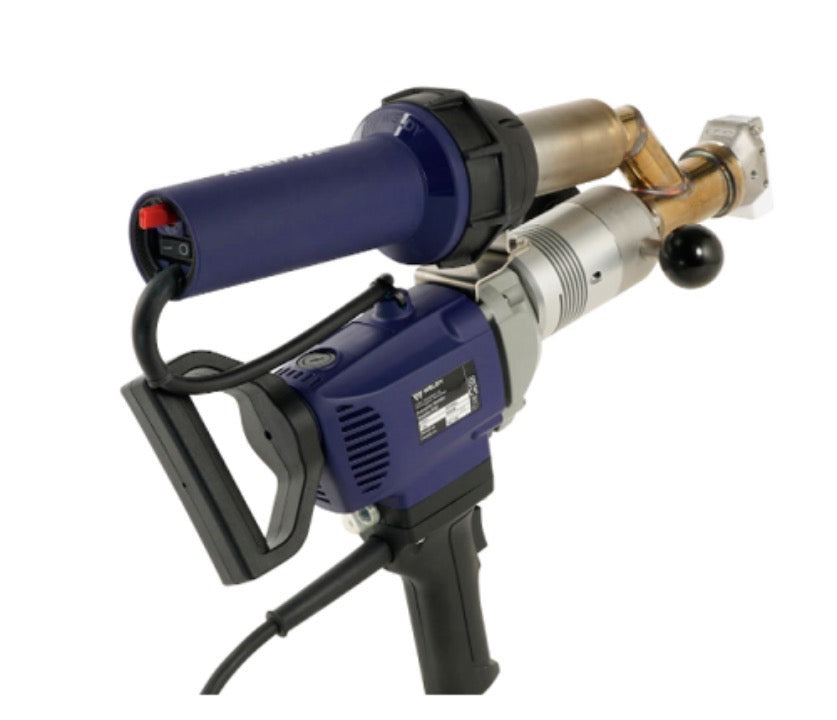
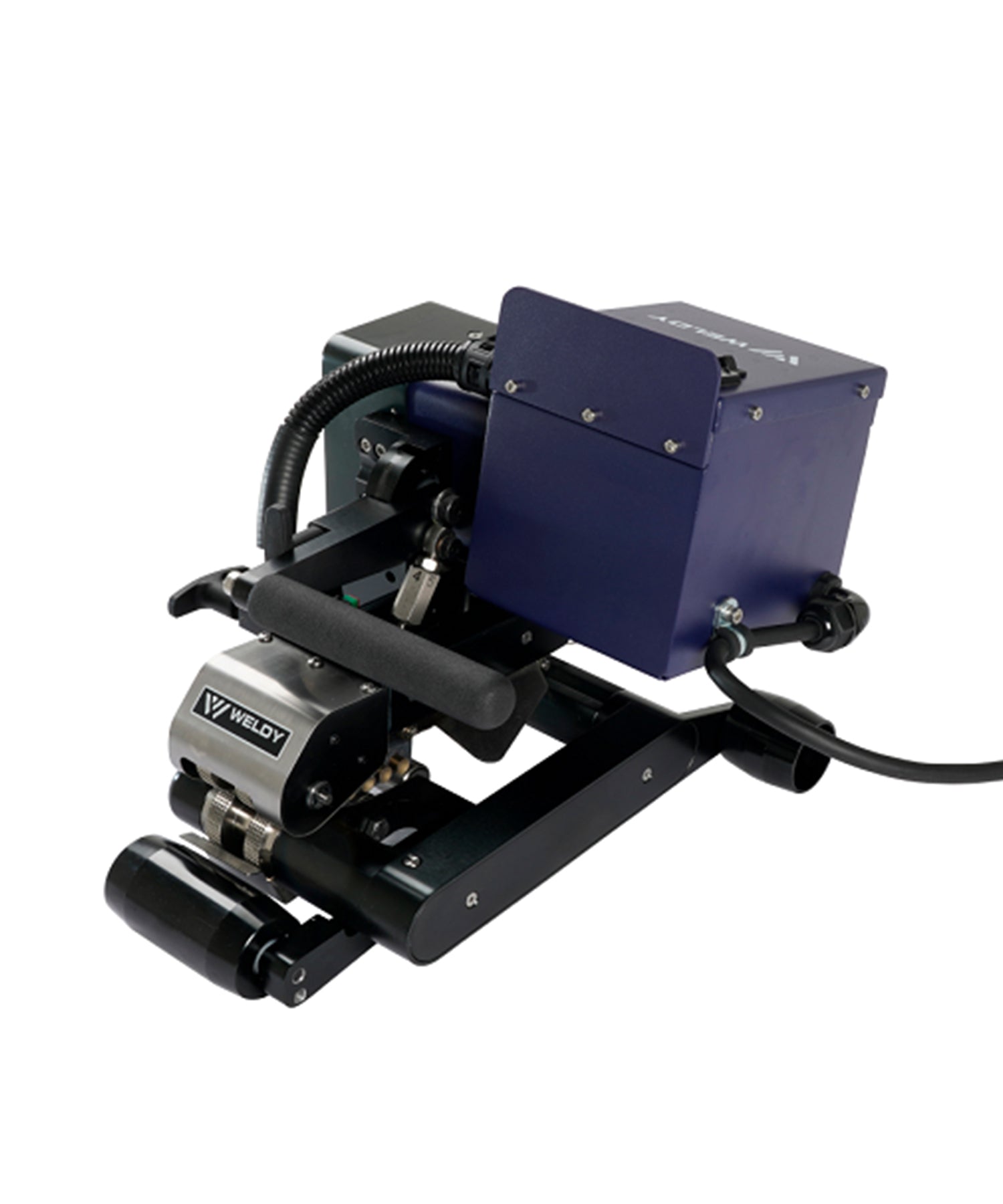
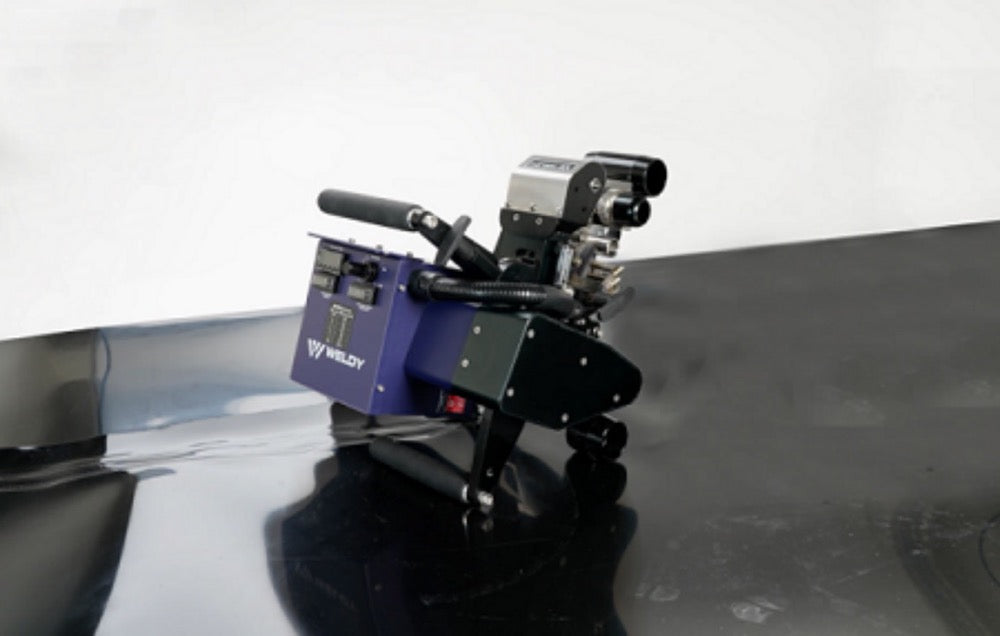
The solution: The Roofing Welder RWP1 combines the portability of a hot air hand tool with the precision settings needed for professional TPO welding. Its brushless motor (6,000-hour lifespan) and closed-loop control system automatically adjust temperature and airflow to compensate for voltage fluctuations on the job site. For the long seams on the new annex, the RWP1's adjustable stand attachment provides semi-automated guidance, while the handheld configuration handles detail work around pipes and vents.

Key outcome: One operator handled both repair and new installation without switching machines. The no-carbon-brush design eliminated mid-project maintenance downtime—critical for completing the work before an incoming weather front.
Application Case 3: Swimming Pool and Underground Project Waterproofing
Scenario: A contractor is waterproofing a municipal swimming pool basin and an underground parking structure using PVC membrane. The pool basin requires watertight seams with zero leakage; the parking garage involves vertical wall applications.
The challenge: Pool basins involve curved surfaces and complex geometry. Underground environments have higher humidity and lower ambient temperatures, which can affect weld quality if temperature control is not precise.
The solution: Both the Roof40 and RWP1 can be deployed together—the Roof40 for the long straight seams on the garage floor, and the RWP1 for the pool basin's contoured surfaces and vertical wall transitions. The Roof40's 100–600 °C adjustable temperature range and 1–10 m/min speed control produce repeatable results on the flat sections. The RWP1's handheld flexibility allows the welder to follow the pool's curved geometry precisely, while the closed-loop system maintains consistent welding temperature even in the cooler underground environment.

Key outcome: The pool basin passed water-tightness testing on the first attempt. No cold joints or delamination were observed along the curved sections welded with the RWP1.
Roof40 vs RWP1: Application Suitability at a Glance
| Application Scenario | Recommended Machine | Why It Works |
|---|---|---|
| New large-area commercial roofing (TPO/PVC) | Roof40 | Fast continuous feed, 40 mm seam width, consistent heat over long runs |
| Roof repair with scattered damage zones | RWP1 | Portable, handles short seams and detail work efficiently |
| Swimming pool basin waterproofing | RWP1 | Follows curved geometry, precise temperature control in humid conditions |
| Underground parking membrane | Roof40 + RWP1 | Roof40 for floor seams, RWP1 for walls and edge detailing |
| Close-to-edge welding (<100 mm from wall) | Roof40 | Edge welding capability down to 100 mm clearance |
| Expansion joint and detail welding | RWP1 | Handheld precision for tight spots and irregular shapes |
How to Choose the Right Roofing Welder for Your Project
- Consider project scale first: For new installations above 1,000 m², an automatic welder like the Roof40 saves significant labor time. For projects under 500 m² or involving complex geometries, a versatile handheld unit like the RWP1 is more practical.
- Evaluate membrane type: Both the Roof40 and RWP1 work with PVC, TPO, and EPDM membranes. However, the RWP1's wider temperature range gives you more flexibility when switching between membrane materials on mixed-material projects.
- Factor in site conditions: Outdoor projects face temperature and humidity variations. Machines with closed-loop control (like the RWP1) automatically adjust parameters to maintain consistent weld quality regardless of weather shifts.
- Plan for maintenance: Brushless motors (found in both the Roof40 and RWP1) significantly reduce long-term maintenance compared to brushed alternatives. The RWP1's 6,000-hour brushless motor life means years of reliable operation under regular use.
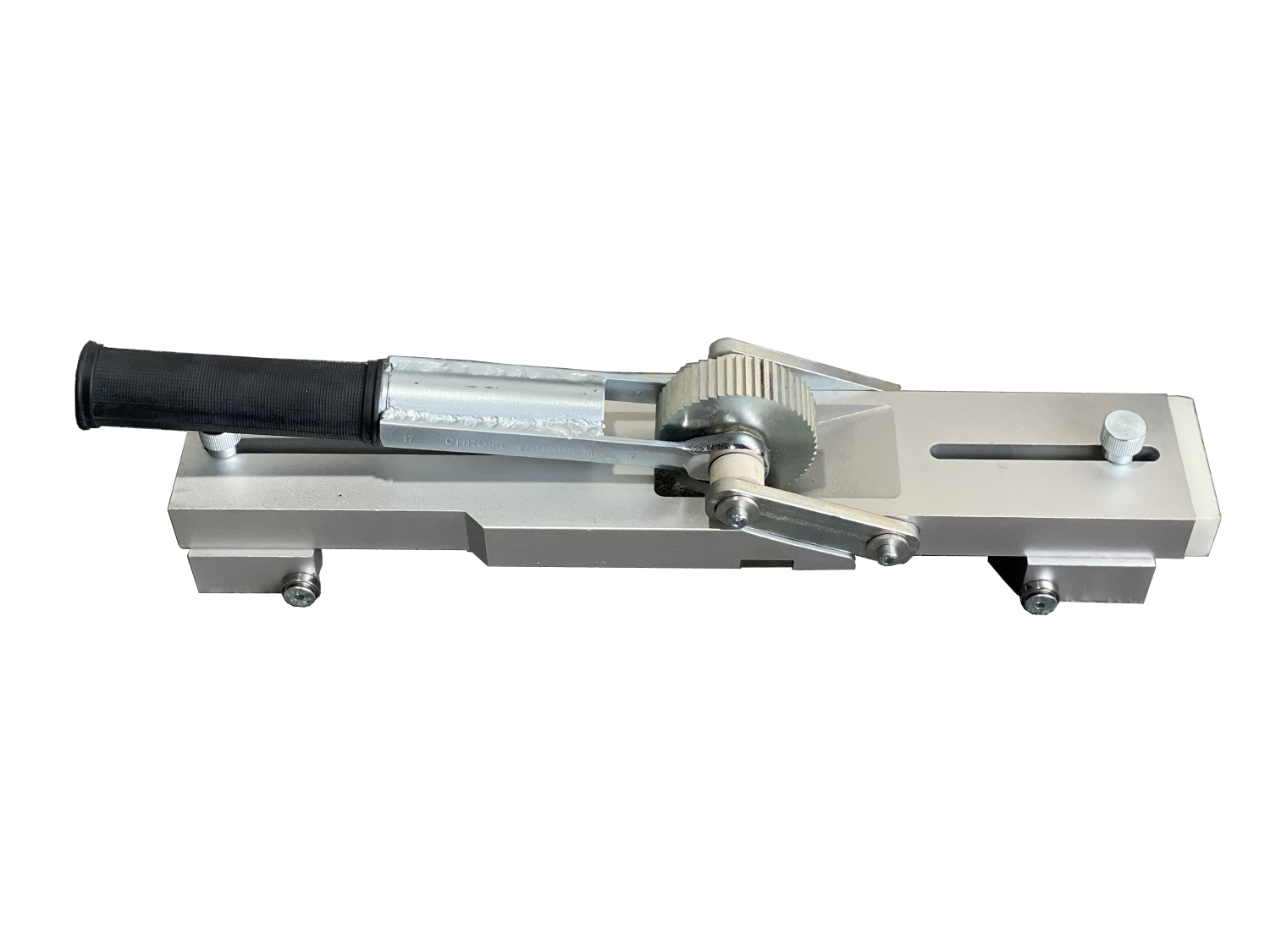
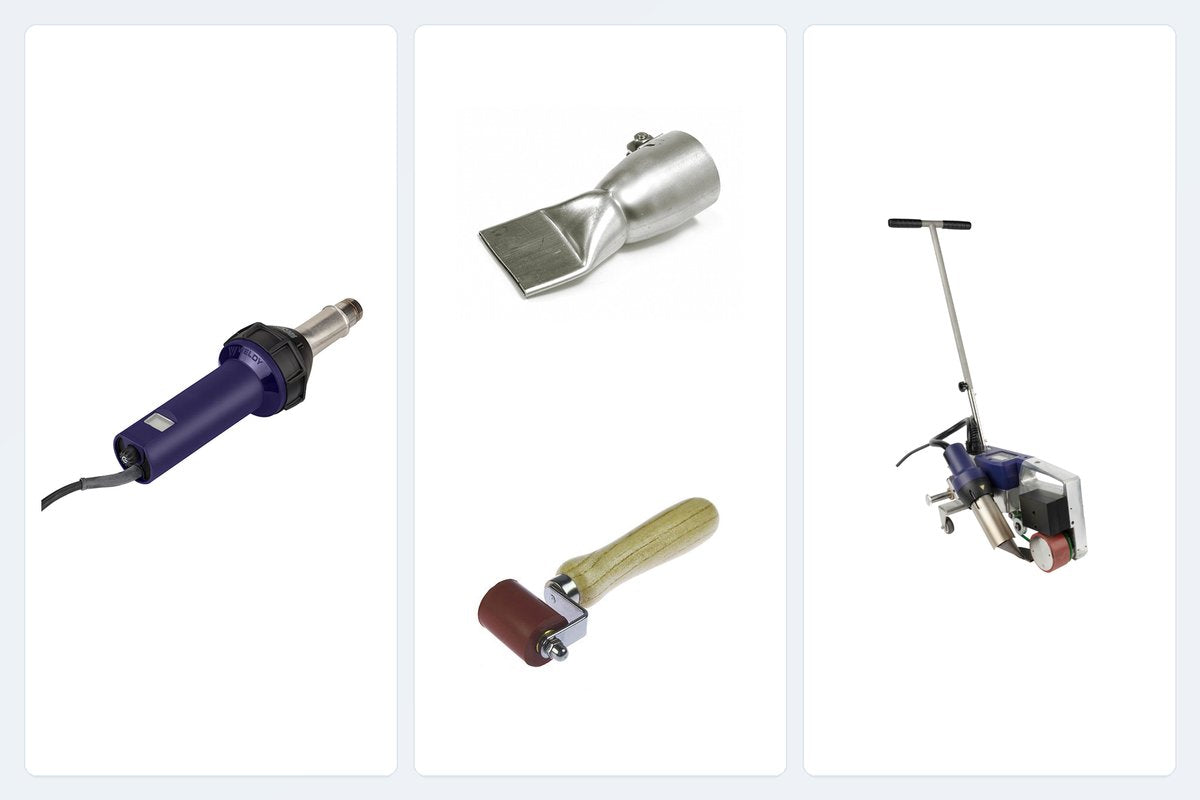
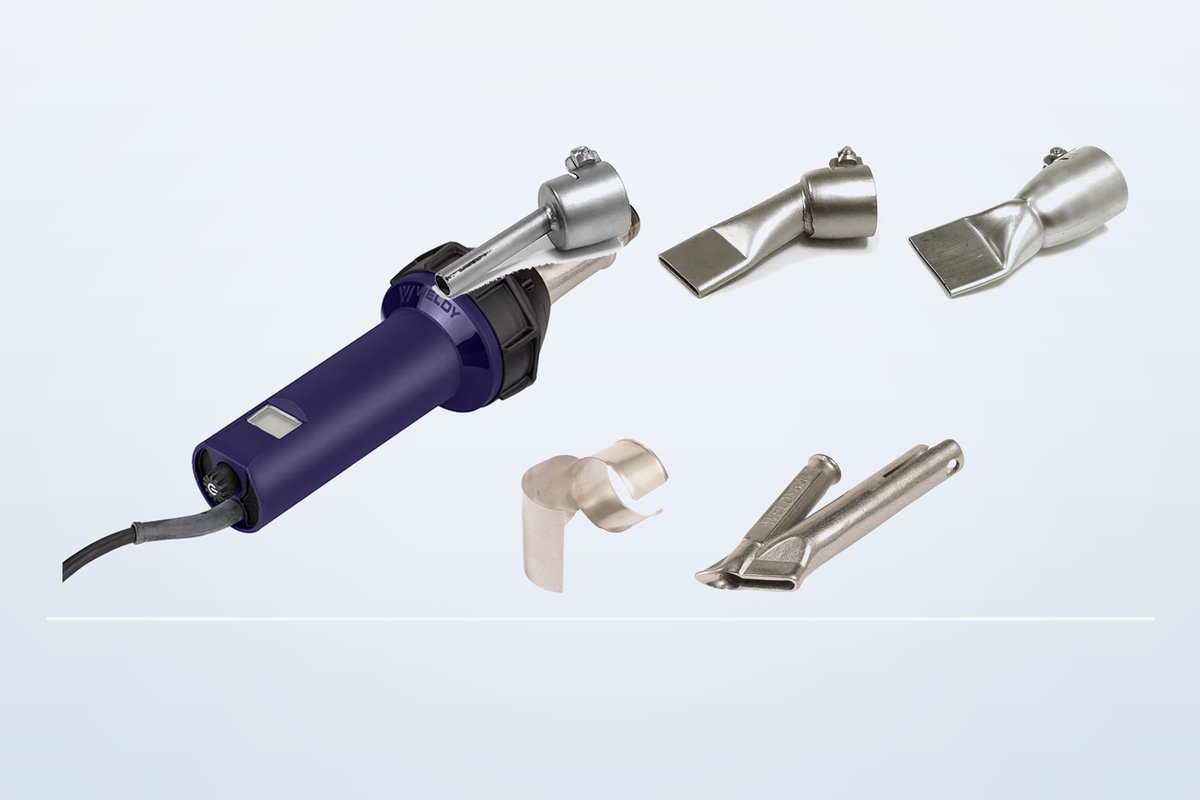
- Don't forget accessories: Supplementary tools like pressure rollers and right-angle welding shoes can significantly improve edge weld quality. Browse the full roofing welder collection to find the right combination for your application.
Frequently Asked Questions
Can the Roof40 weld PVC membrane as well as TPO?
Yes. The Roof40 is compatible with PVC, TPO, and EPDM membranes. Its adjustable temperature range (100–600 °C) and speed control (1–10 m/min) let you dial in the correct parameters for each material type.
Is the RWP1 suitable for large-scale roofing projects?
The RWP1 is designed primarily for flexibility and precision. For very large continuous seams (above 1,000 m²), an automatic welder like the Roof40 will deliver faster throughput. The RWP1 excels in repair work, detail sections, and projects with varying geometry.
How long do brushless motors last in roofing welders?
The RWP1's brushless motor is rated for approximately 6,000 operating hours without carbon brush replacement. The Roof40 also uses brushless drive technology, significantly reducing maintenance frequency compared to traditional brushed motors.
Do I need a generator for outdoor use?
Both the Roof40 (3,450 W) and RWP1 require reliable power. For outdoor sites without grid access, a generator rated at 5,000 W or higher is recommended to handle startup current and provide stable voltage.
What seam width does the Roof40 produce?
The Roof40 produces 40 mm seam width, which meets the standard requirements for most PVC and TPO roofing membrane specifications.
Can one person operate the Roof40?
Yes. The Roof40 weighs 15.5 kg and is designed for single-operator use. However, for very large projects, a two-person team (one feeding the machine, one inspecting the seam behind) improves quality control and throughput.
Ready to Choose Your Roofing Welder?
Selecting the right roofing welding equipment is about matching the machine to your specific project type and scale. The Weldy Roof40 is purpose-built for large-scale automatic welding of flat roof membranes, while the Roofing Welder RWP1 offers flexible handheld precision for repairs, complex geometry, and mixed applications.
Visit the Roofing Welder collection to compare specifications, or contact our team for personalized advice on your next project.





Leave a comment
This site is protected by hCaptcha and the hCaptcha Privacy Policy and Terms of Service apply.