
Author: Weissenberg Technical Team · 20+ years in plastic welding equipment · ISO 9001 certified manufacturer
Quick Answer: When Do You Need a 3400 W Hand Extrusion Welder?
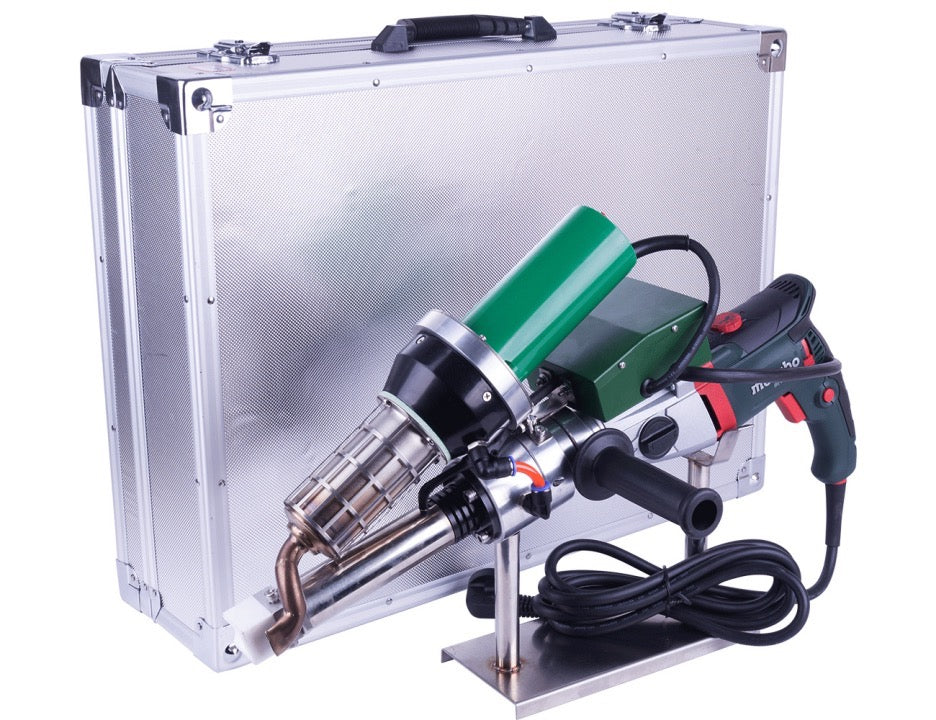
Choose a heavy-duty hand extrusion welder like the RYH3400C when your work calls for higher preheating capacity — thick sections, heat-sinking parts, or cold site conditions — for tanks, scrubbers, ductwork, and structural reinforcements. Its 3400 W preheater brings thick sheet up to temperature fast and keeps the seam hot on cold job sites, while the 1300 W extruder deposits 2.0–3.0 kg of filler per hour.
What Is the RYH3400C Hand Extrusion Welder?
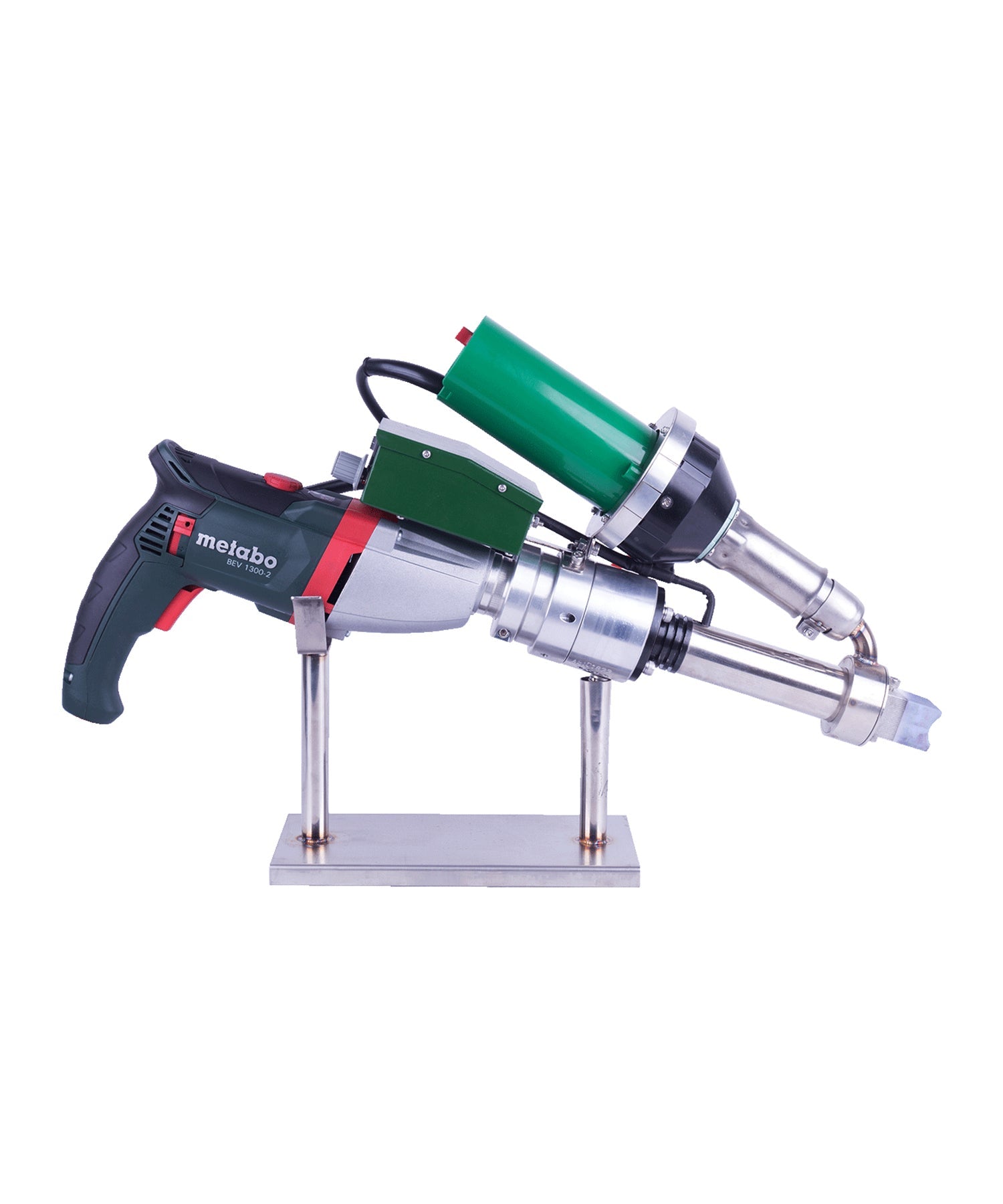
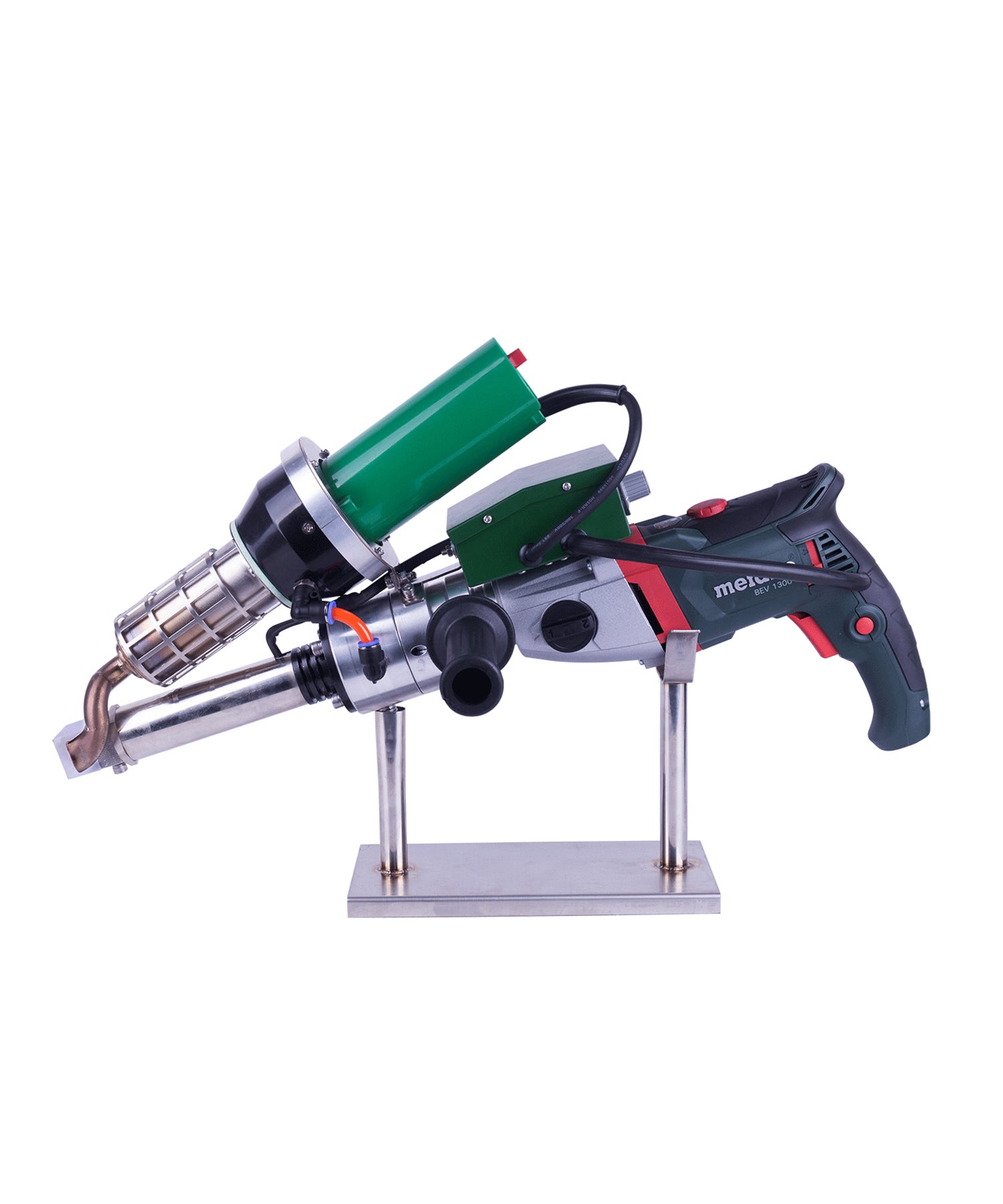
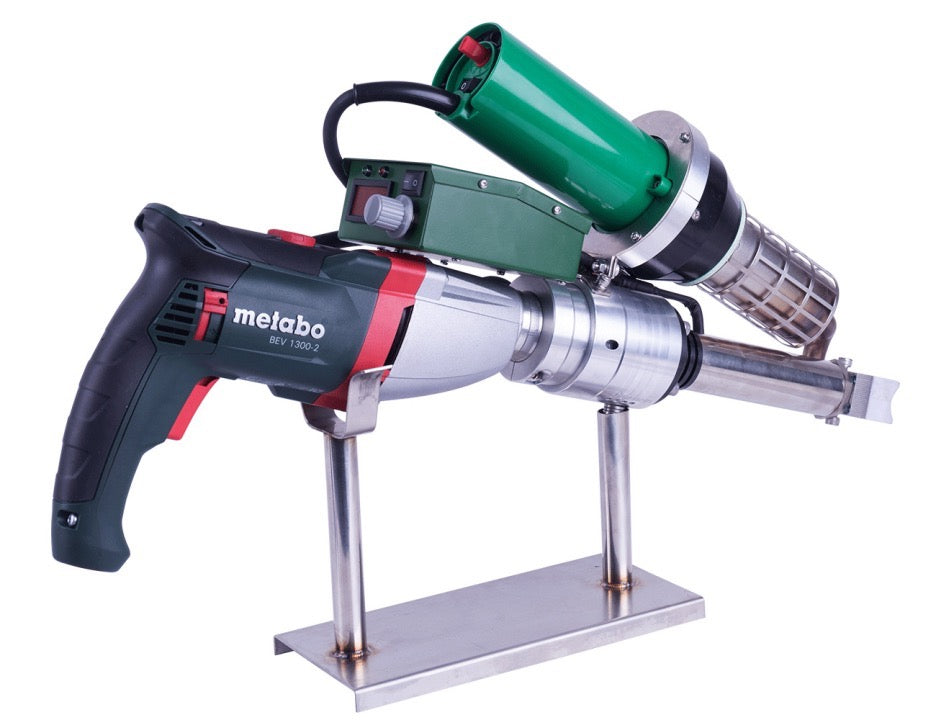
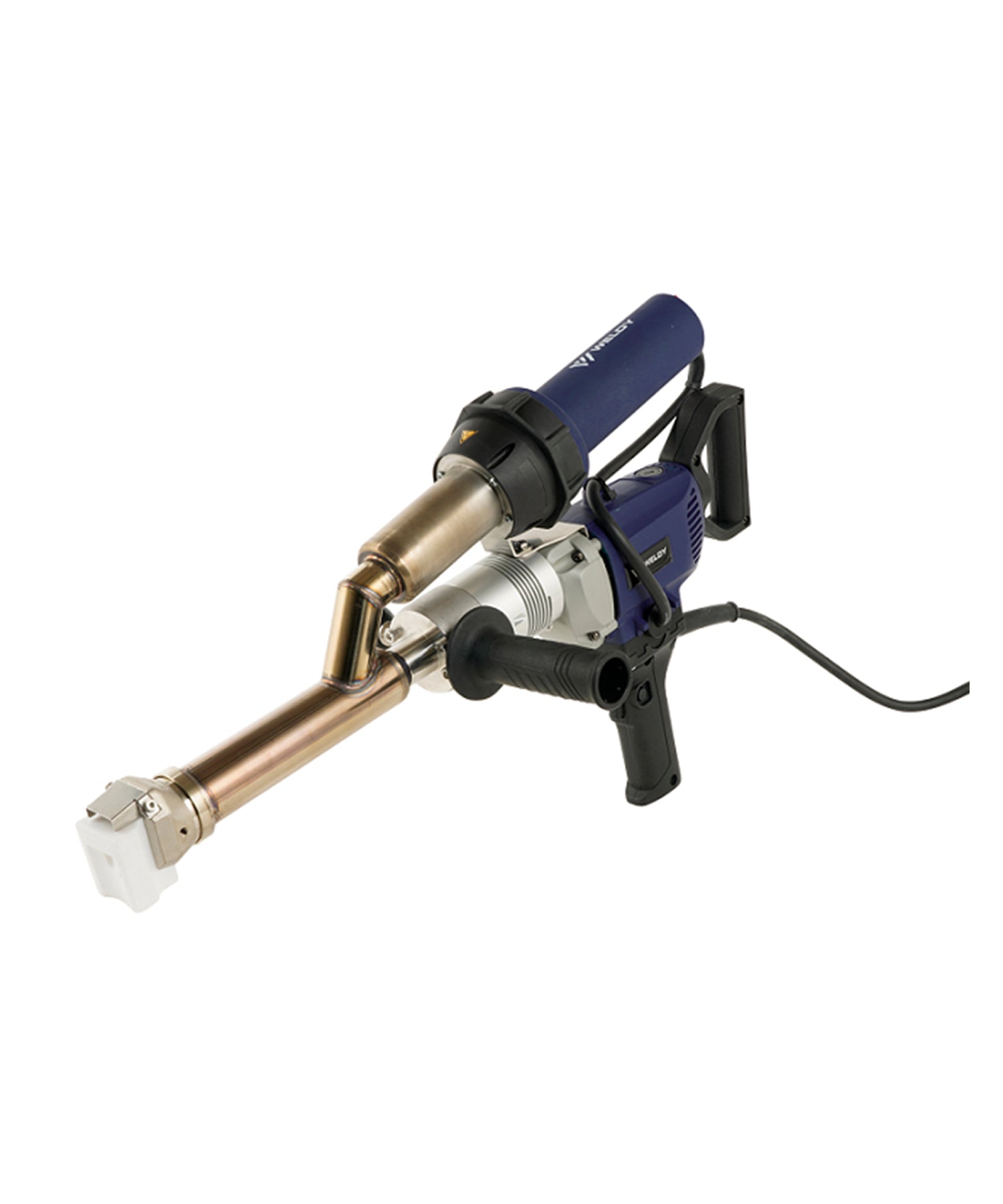
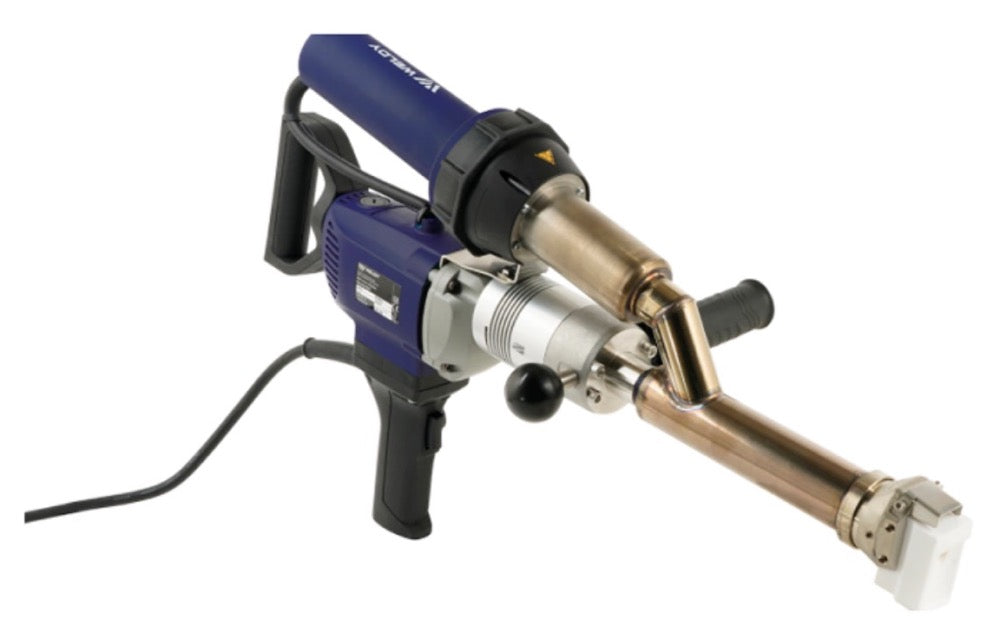
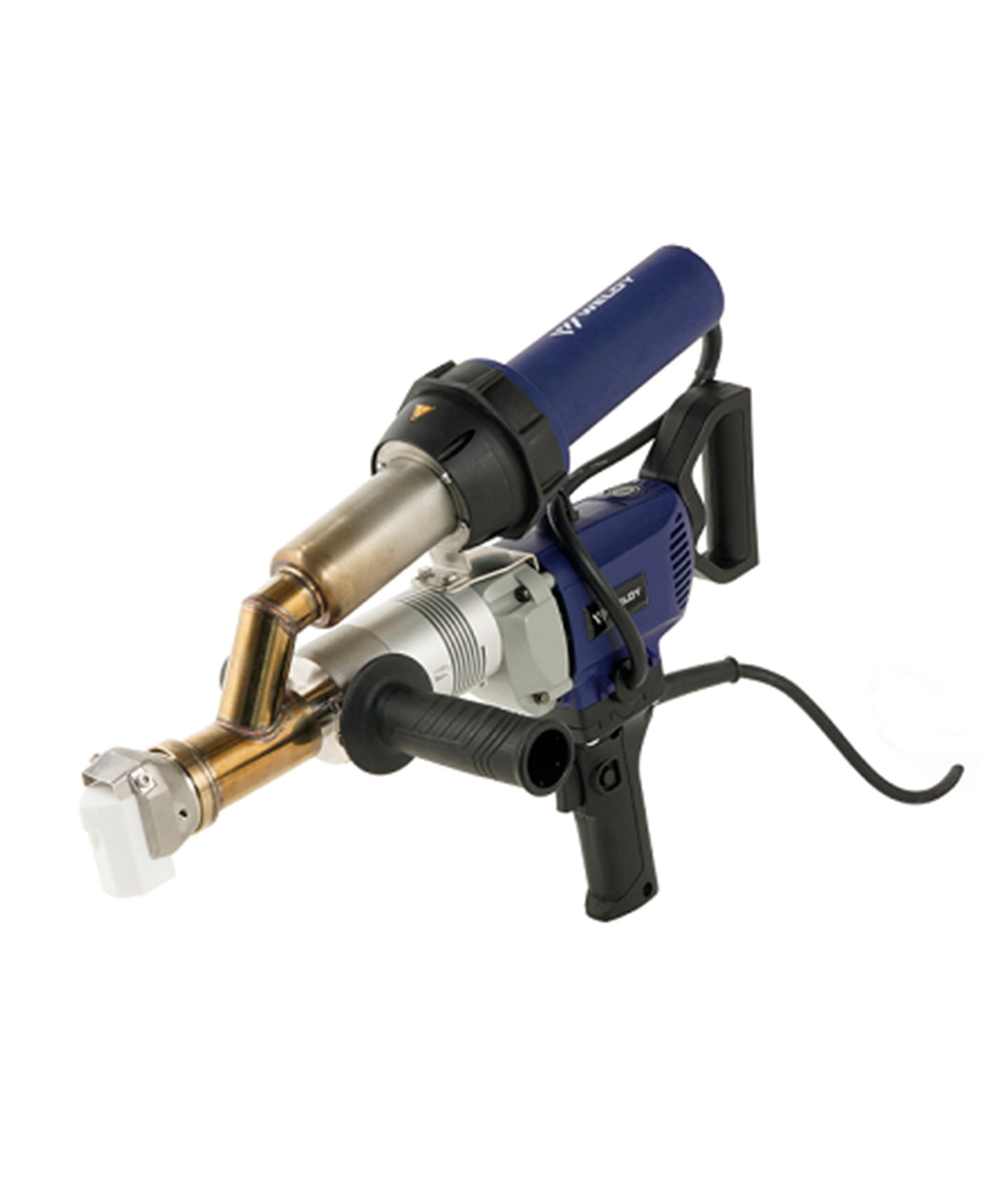
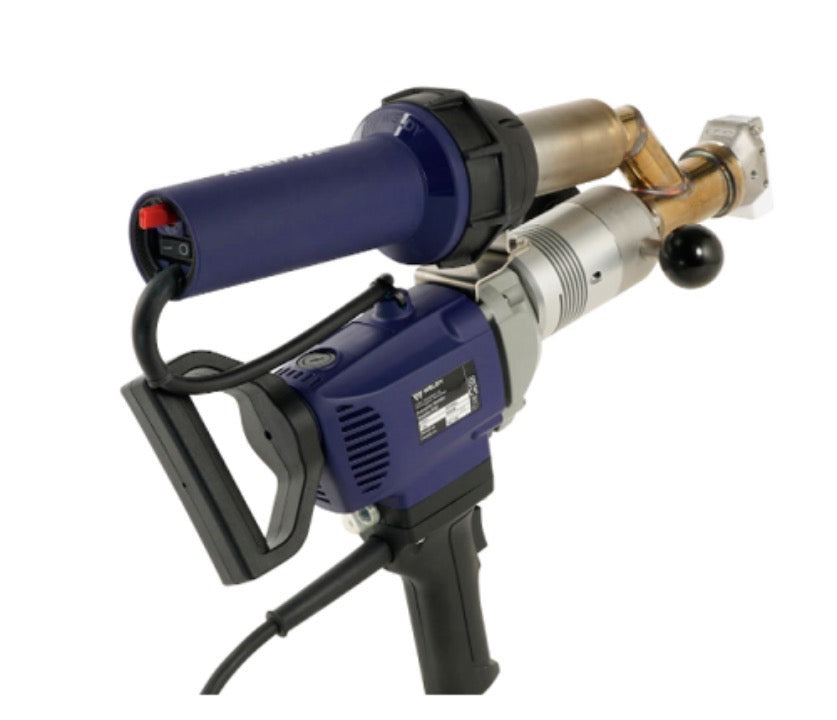
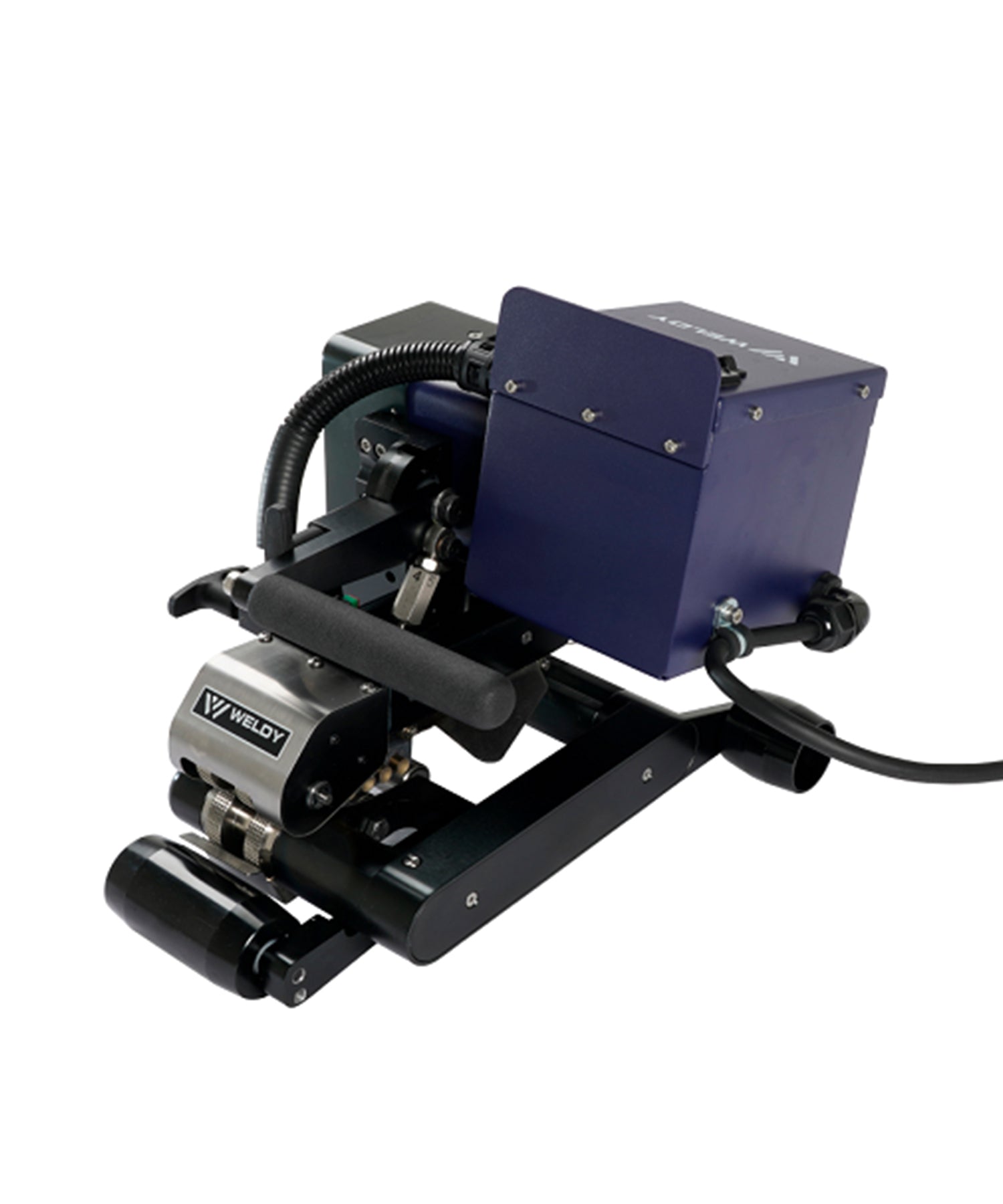
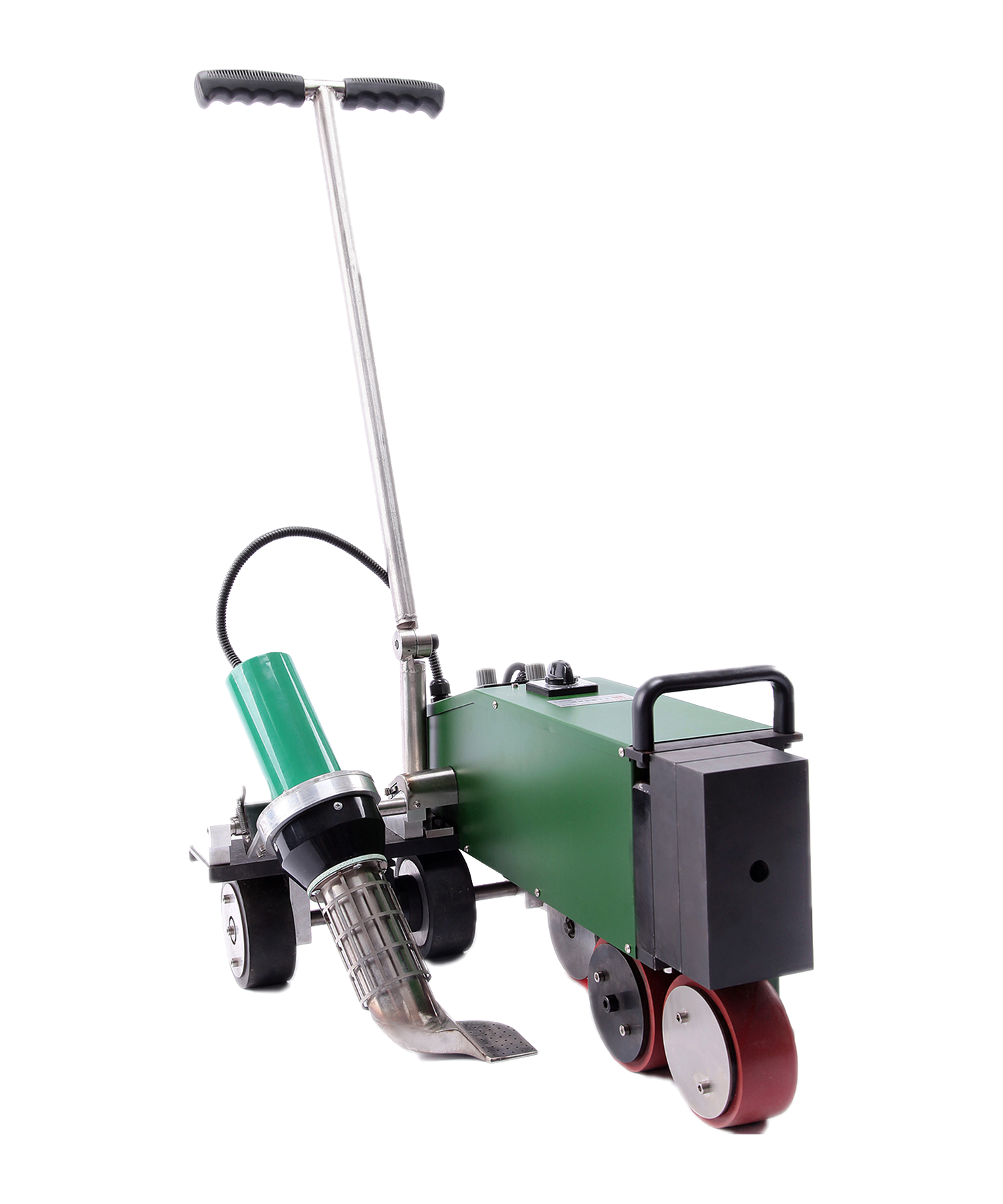
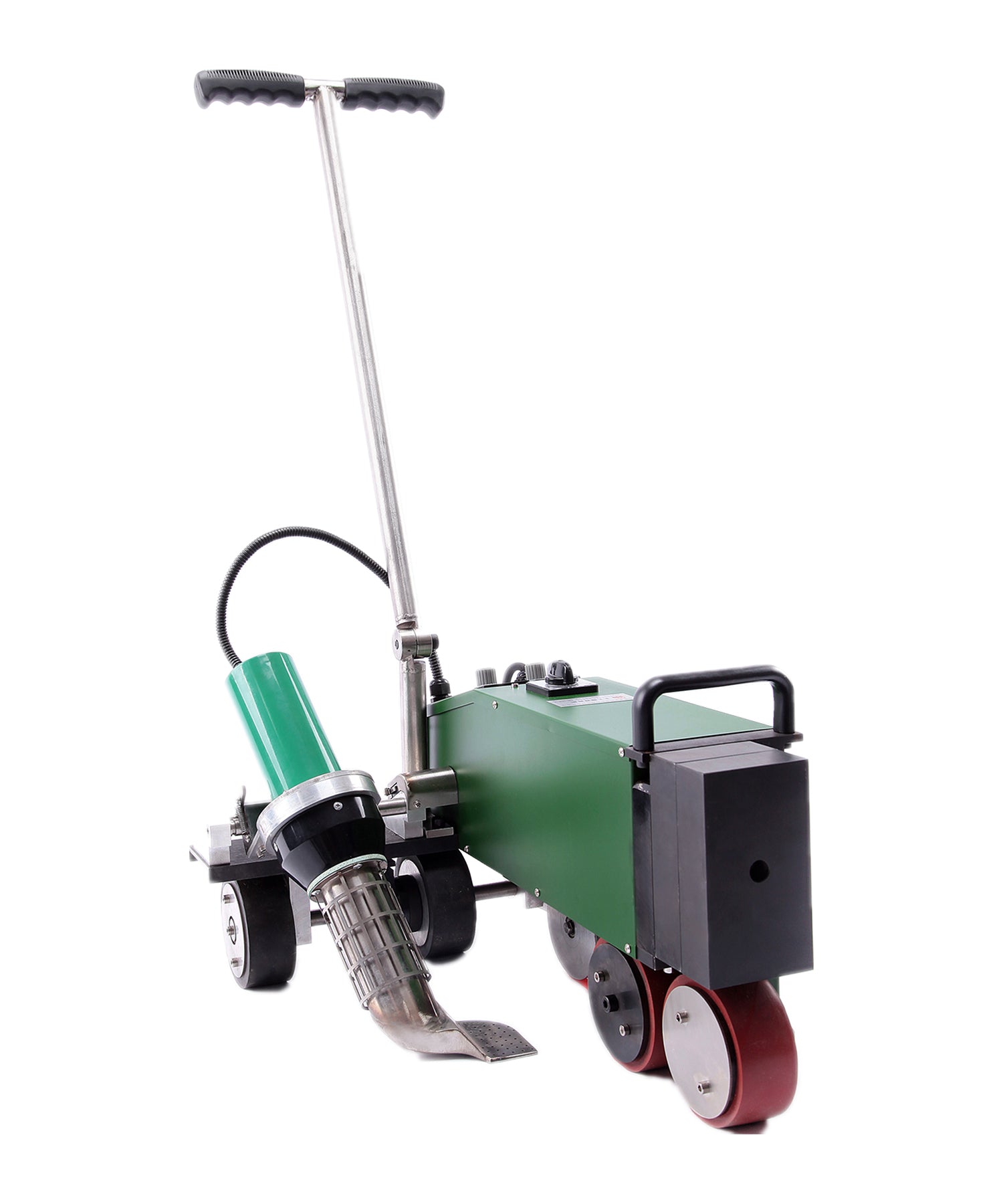
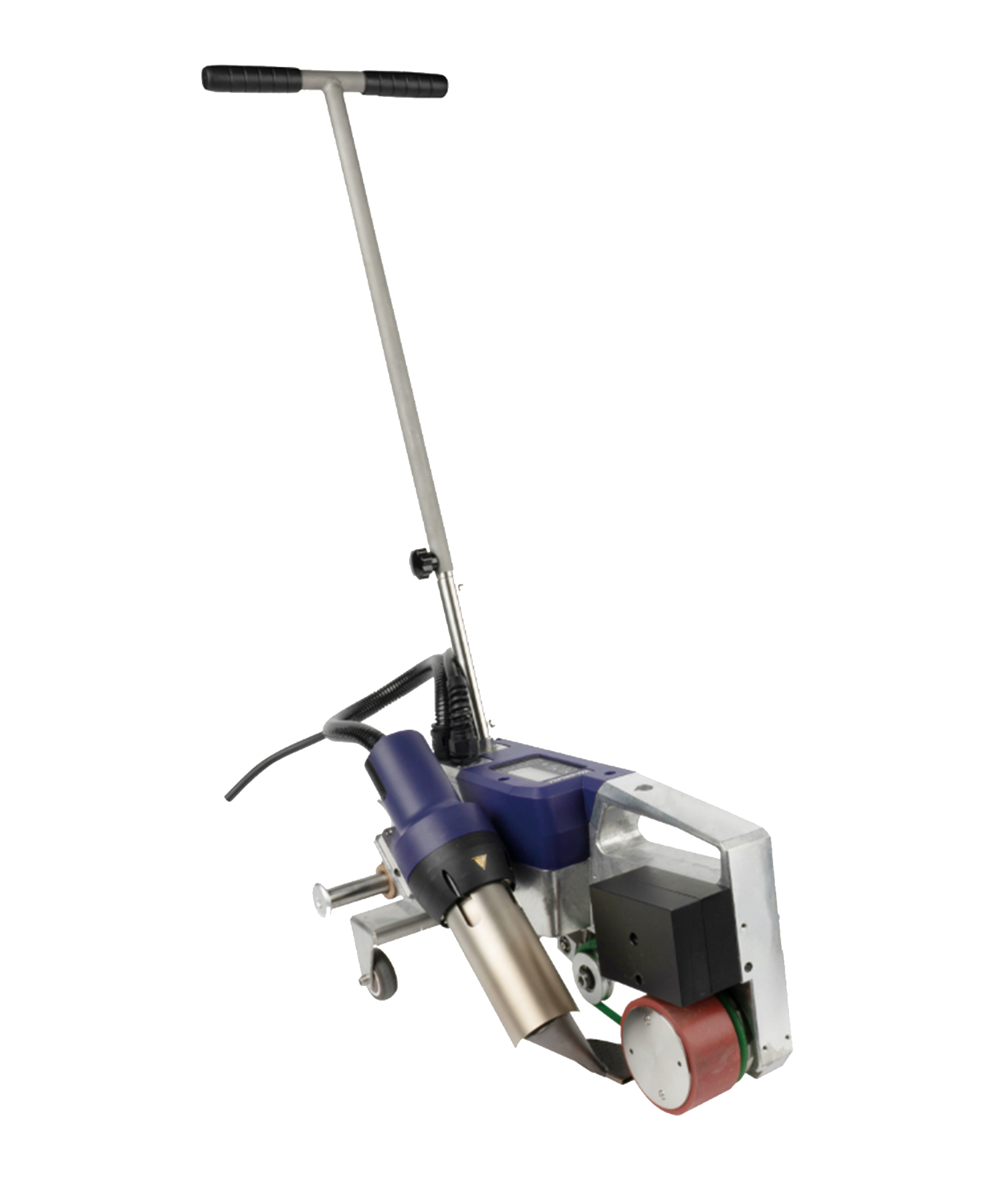
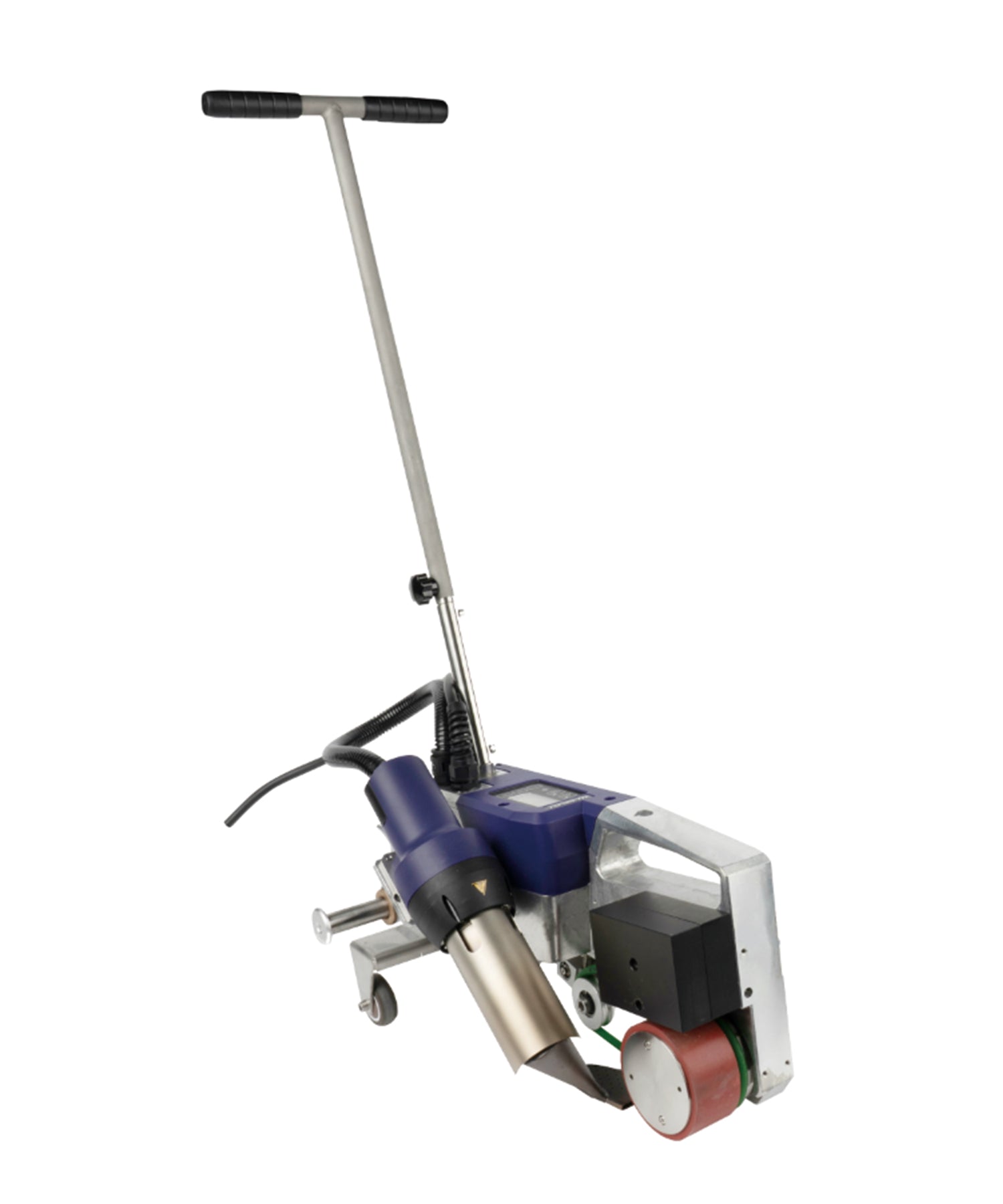
The RYH3400C is Weissenberg's heavy-duty hand extrusion welder, built for reliable, high-strength extrusion welds on thick thermoplastic sheet and profiles. It plasticizes welding rod and presses it into a prepared groove, creating a monolithic joint whose strength approaches the parent material when parameters are correct.
The defining feature is its 3400 W hot air power. Thick HDPE and PP act as large heat sinks, and on very thick sheet a lower-power preheater has a harder time holding welding temperature — especially outdoors in cold weather. The RYH3400C's larger preheater provides more heating capacity for thick-section welding, particularly when working with heat-sinking parts or under cold site conditions.

RYH3400C Key Specifications
| Parameter | RYH3400C |
|---|---|
| Voltage | 230 V |
| Hot air power | 3400 W |
| Extruding motor power | 1300 W |
| Welding rod heating power | 800 W |
| Air temperature range | 20–620 °C |
| Extruding temperature range | 50–380 °C |
| Extrusion output | 2.0–3.0 kg/h |
| Welding rod diameter | Φ 3.0–5.0 mm |
| Driving motor | METABO |
| Weight | 7.2 kg |
RYH3400C vs RYH1600D: Which Hand Extruder Fits Your Shop?
The two machines share the same extruder core — 1300 W drive, 2.0–3.0 kg/h output, Φ 3.0–5.0 mm rod — and differ mainly in preheating capacity.
| Feature | RYH3400C | RYH1600D |
|---|---|---|
| Hot air power | 3400 W | 1600 W |
| Extrusion output | 2.0–3.0 kg/h | 2.0–3.0 kg/h |
| Weight | 7.2 kg | 7.2 kg |
| Best suited for | Thick sections, heat-sinking parts, cold-site work | General fabrication where 1600 W preheat suffices |
Buy the RYH3400C if your work needs higher preheating capacity — thick sections, heat-sinking parts, or cold site conditions; choose the RYH1600D if its 1600 W preheating capacity is enough for your general fabrication. Both carry a 1-year warranty and lifetime technical support.

Where the RYH3400C Excels: Applications
- Chemical and water treatment tanks — bottom seams, corner joints and reinforcement ribs where weld integrity is safety-critical.
- Fume scrubbers and ductwork — PP and HDPE process equipment with long seams demanding continuous, void-free extrusion.
- Liner repair — structural patch welding and seam reinforcement on thick HDPE liners.
- On-site civil and mining projects — HDPE tanks and troughs fabricated where ambient temperature is out of your control.
Recommended Welding Parameters (DVS 2207-4 Supplement 1)
DVS 2207-4 Supplement 1 defines extrusion welding (WE) parameters for common thermoplastics. Use these as starting points, then always run test welds and adjust for ambient temperature, material grade, and groove geometry:
| Material | Extrudate temp (°C) | Hot air temp (°C) | Speed (mm/min) |
|---|---|---|---|
| PE-HD (HDPE) | 210–230 | 250–300 | 200–350 |
| PP-H / PP-B / PP-R | 210–240 | 210–300 | 200–350 |
| PVC-U | 190–200 | 330–360 | 200–350 |
| PVDF | 240–260 | 280–350 | 200–350 |
Extrudate temperature is measured at the extrudate outlet of the hand extruder; hot gas temperature 5 mm inside the nozzle. For a deeper look at process parameters for HDPE/PP fabrication, see our guide on extrusion welding with the Weldy Booster EX2 & EX3.
How to Weld Thick HDPE Sheet: Practical Steps
- Prepare the joint — cut a clean V-groove and keep surfaces dry and free of dust or oil. Store rods dry; moist filler is a leading cause of porosity in thick seams.
- Preheat correctly — bring the groove to material temperature with the 3400 W preheater before starting; on thick sections, preheat longer rather than raising extrudate temperature.
- Set parameters — start from the DVS table and confirm a smooth, void-free bead on a test weld before production.
- Feed steadily — keep consistent speed and rod feed; on very thick seams, overlapping passes must fully fuse to the previous pass.
- Cool naturally — do not water-quench; even cooling avoids internal stress and cracking.
Maintenance That Keeps the RYH3400C Dependable
- Keep the screw and barrel clean — burned residual polymer degrades weld quality; clean the feed area when carbonized material builds up.
- Check heating elements and airflow — erratic temperature or reduced airflow signals element or blower wear; replace with genuine parts promptly.
- Inspect the welding shoe — a smooth, correct-profile shoe is essential for even bead pressure; replace when worn or scored.
- Store dry — keep the unit and rods in a dry environment to avoid moisture absorption.
Buyer FAQ
Q: Can the RYH3400C weld PVC and PVDF?
It can work with PVC and PVDF where the application allows — using the correct nozzle, shoe and DVS parameters, with proper ventilation for PVC fumes. For critical or high-purity work, confirm compatibility with your material supplier or our technical team first. Most production welding is HDPE and PP.
Q: Do I need a separate hot air gun as well?
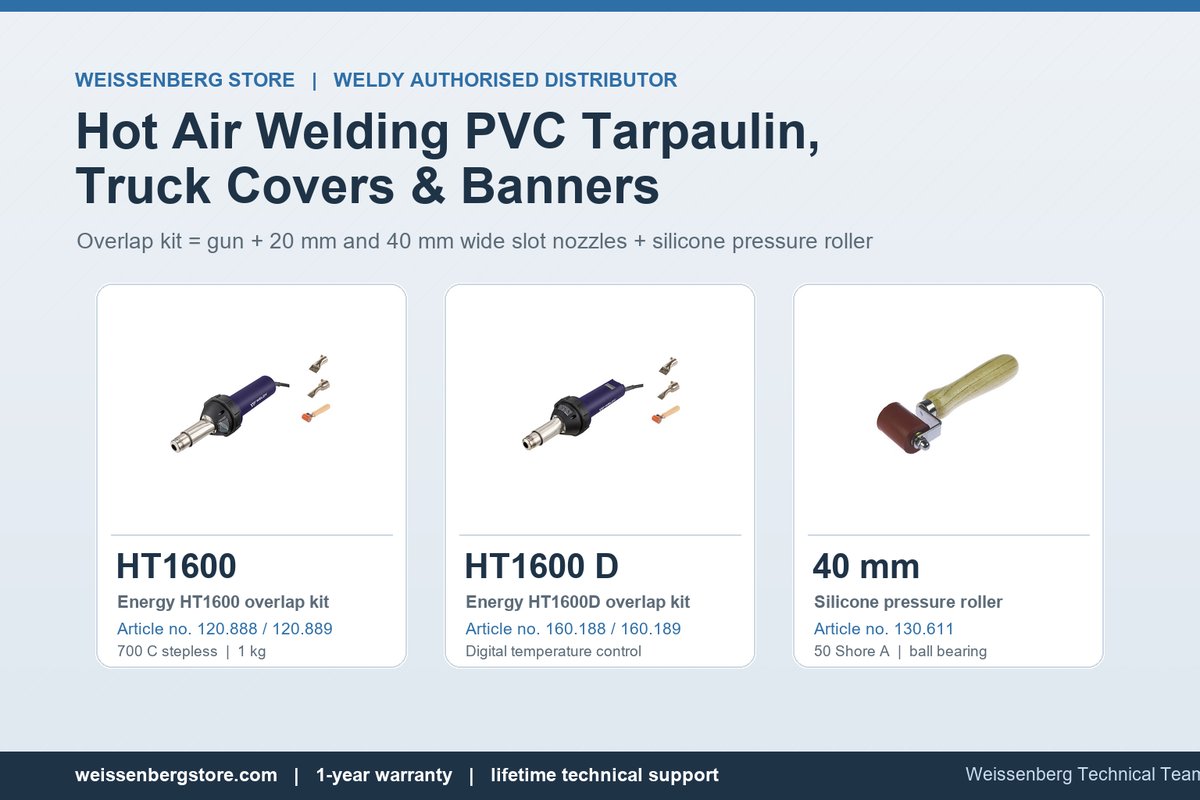
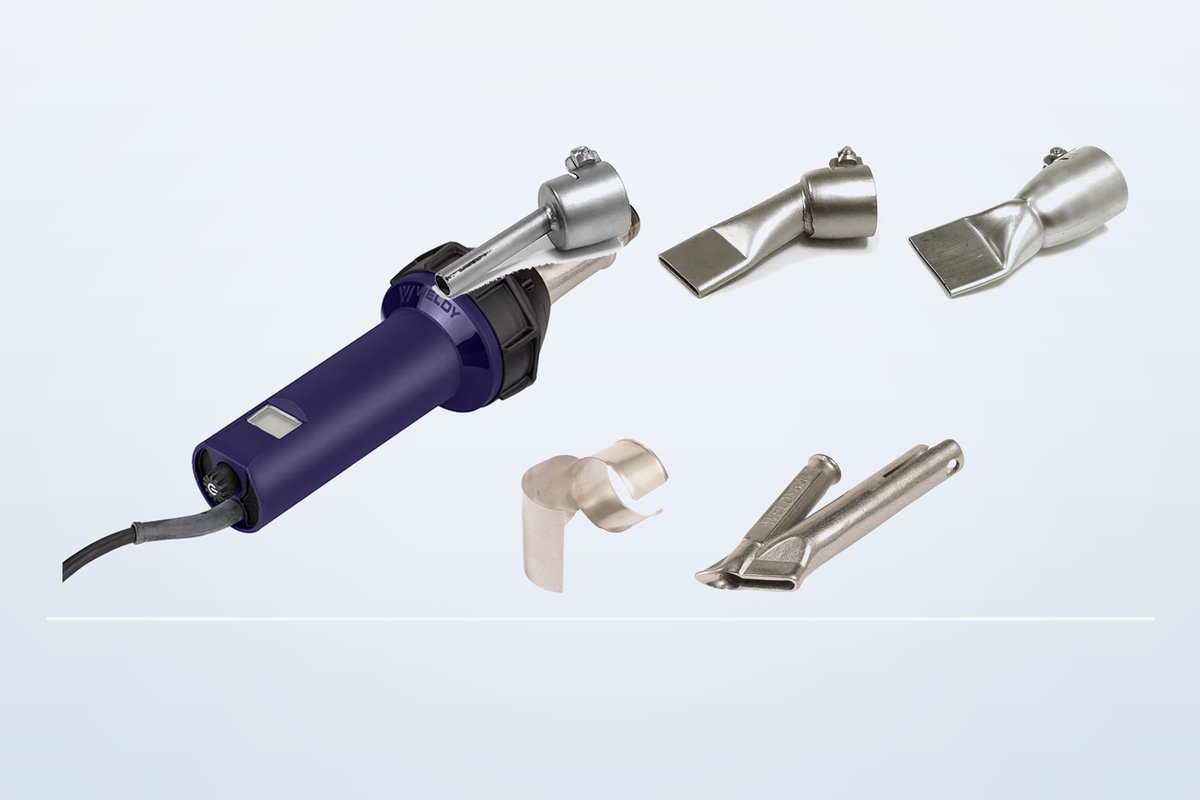
Many fabricators keep one for tack welding and thin work, and use the RYH3400C for structural extrusion — see our HT1600 vs HT3400 guide.
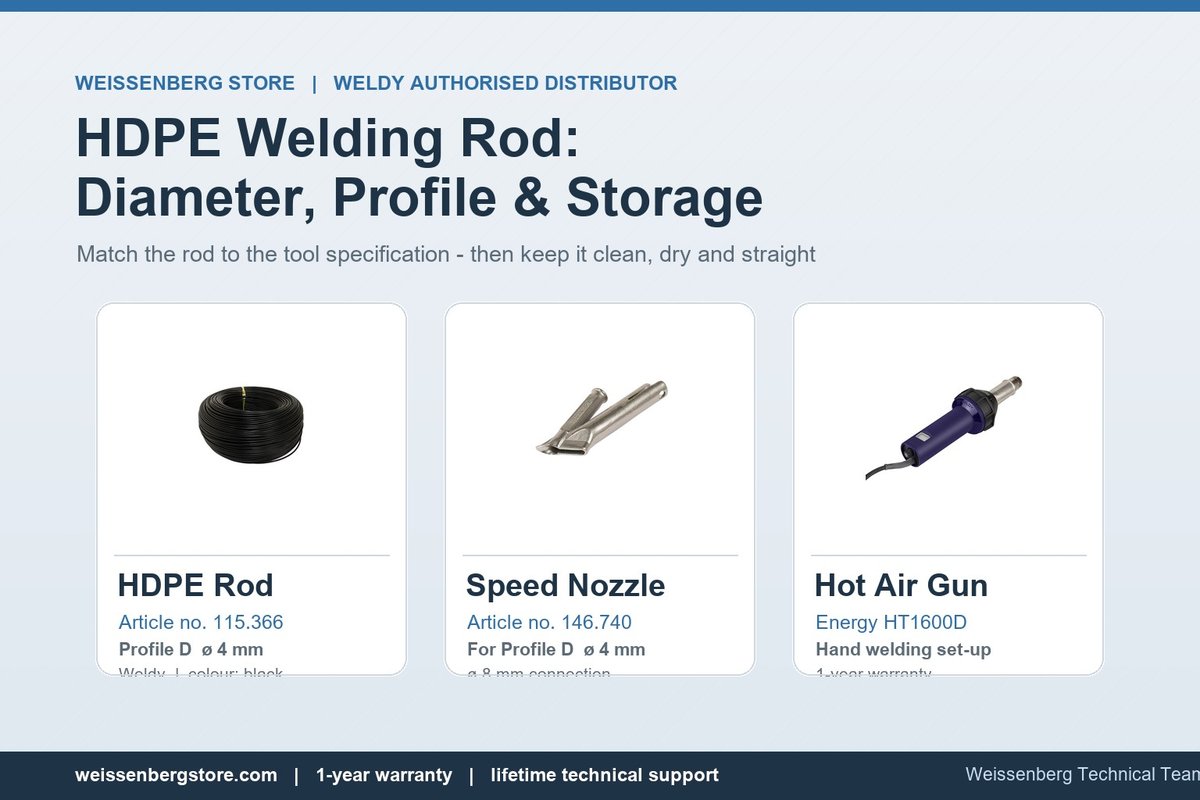
Q: What weld rod do I use?
Match the resin to the base material — HDPE rod for HDPE, PP rod for PP. The extruder accepts Φ 3.0–5.0 mm.
Ready to upgrade your thick-section welding?
See the RYH3400C product page and the full hand extrusion welder range at weissenbergstore.com, or ask our online support for a recommendation for your materials.




Leave a comment
This site is protected by hCaptcha and the hCaptcha Privacy Policy and Terms of Service apply.