
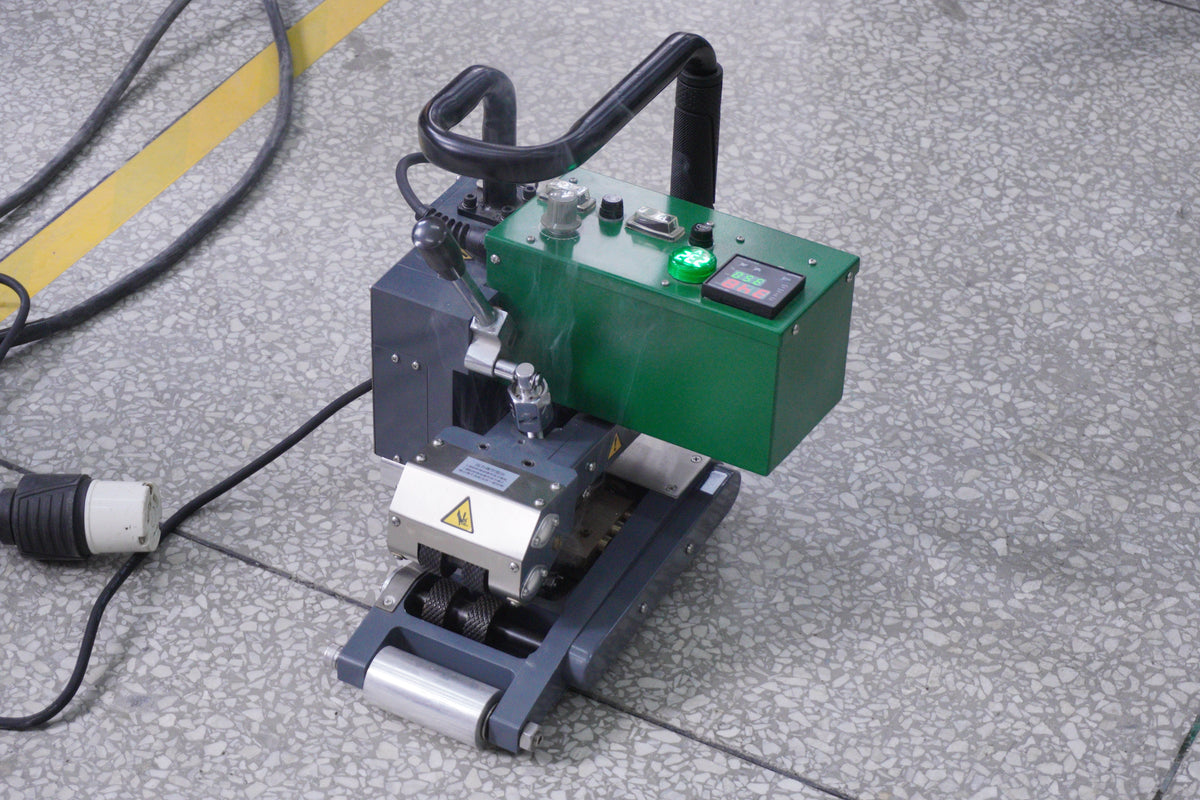
Choosing a geomembrane wedge welder starts before the model comparison does. It starts with the jobsite: what liner is being installed, what power is available, what the weather is doing, whether the work is on flat ground or a slope, how far the crew carries the machine, and how many metres of seam they need to close each day. Every one of these conditions translates into an equipment requirement. Only after those requirements are listed does it make sense to look at specific models. This guide walks through each condition and what to look for. For a full model-by-model comparison of the RYG series, see our RYG Complete Buying Guide; for testing the dual-track seams you produce on site, see our Dual-Track QC Guide.
1. Membrane Material and Thickness
Material comes first. HDPE, the most common geomembrane, needs a higher wedge temperature; LDPE, PVC and EVA soften at lower temperatures and are more sensitive to over-heating, sticking or burn-through. Thickness then sets the practical range for temperature, overlap width and the pressure the machine must apply.
- Thin liners (about 0.2–1.5 mm) — ponds, secondary containment and aquaculture: a 450 °C-class machine with a narrow overlap keeps heat concentrated and seams tidy.
- Standard membranes (about 1.0–3.0 mm) — landfill base liners and reservoirs: more power, a 15 mm dual-track seam and a wider overlap match most project drawings.
- Thick HDPE (up to about 3.5 mm) — mining cells and hazardous-waste areas: a higher temperature ceiling and a wider overlap give the operator margin on heavy material.
Give your supplier the membrane specification (material, thickness and the overlap in your drawings) and ask for recommended parameters. The machine must be able to hold the temperature and speed those parameters require.
2. Site Power: Mains Voltage and Generator Output
Voltage is the first thing to confirm, because RYG machines are supplied in different voltage configurations for different markets — a 230 V version or a 120 V version. Match the machine to the site voltage; do not assume one unit covers both.
Many projects run on generators. Compare the welder's rated power draw with the generator's continuous output and keep headroom for other tools on the same supply. If the power is unstable, wedge temperature and speed readouts lose accuracy, so a voltage-stable supply protects seam quality. Long extension cables on big sites cause voltage drop — check cable gauge and run length before starting production welding.
3. Ambient Temperature and Weather
Cold weather changes both machine and membrane behaviour. HDPE becomes stiffer and welding conditions may need to be re-evaluated: the wedge needs more time to reach full temperature, and the seam cools faster once the wedge has passed. Allow adequate warm-up and qualify the settings with trial seams before production. In rain or high humidity, moisture on the membrane surface and condensation on the wedge can weaken fusion — dry surfaces matter as much as temperature.
In hot, sunny conditions, look for a wide temperature setting range and an easily readable display so the operator can confirm parameters even in glare. Between shifts, store the machine in its transport box to keep the wedge face clean and dry.
4. Terrain: Flat Ground vs Slope
Slope changes how a welder behaves more than any other single condition — but the right answer is not "buy this model because it is safer." It is: decide what the machine must do on your terrain, then check which models meet those requirements.
- Flat ground: long straight pulls reward steady speed and consistent pressure over the full run.
- Slopes: machine weight and centre of gravity affect how well the welder tracks against the membrane and how easily the operator controls it going up or across a grade. On steep work, lifting, anchoring and operator-control methods should be defined in the site safety plan according to the slope, equipment and working conditions. Terrain planning is part of the site risk assessment. Thin liners on slopes wrinkle more easily, so overlap alignment needs extra attention.
Terrain planning is part of the site risk assessment; the welder is one input to it.
5. Machine Weight and Portability
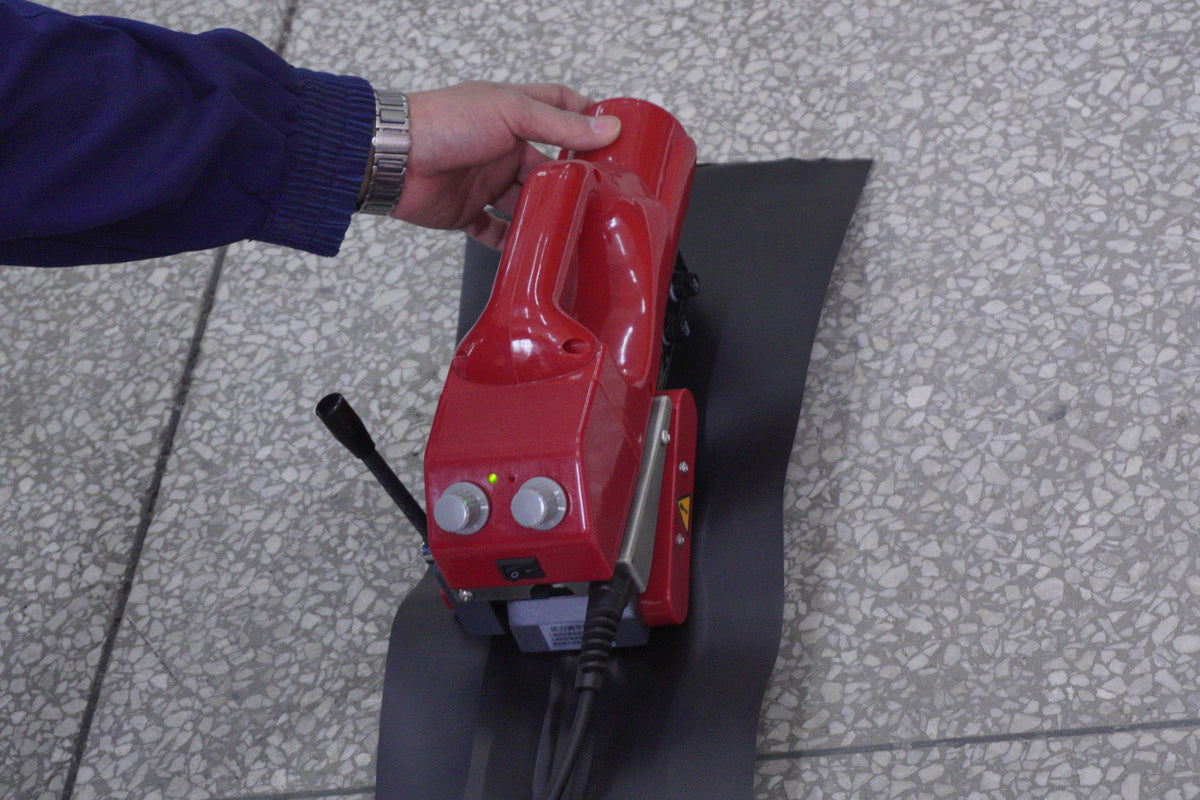
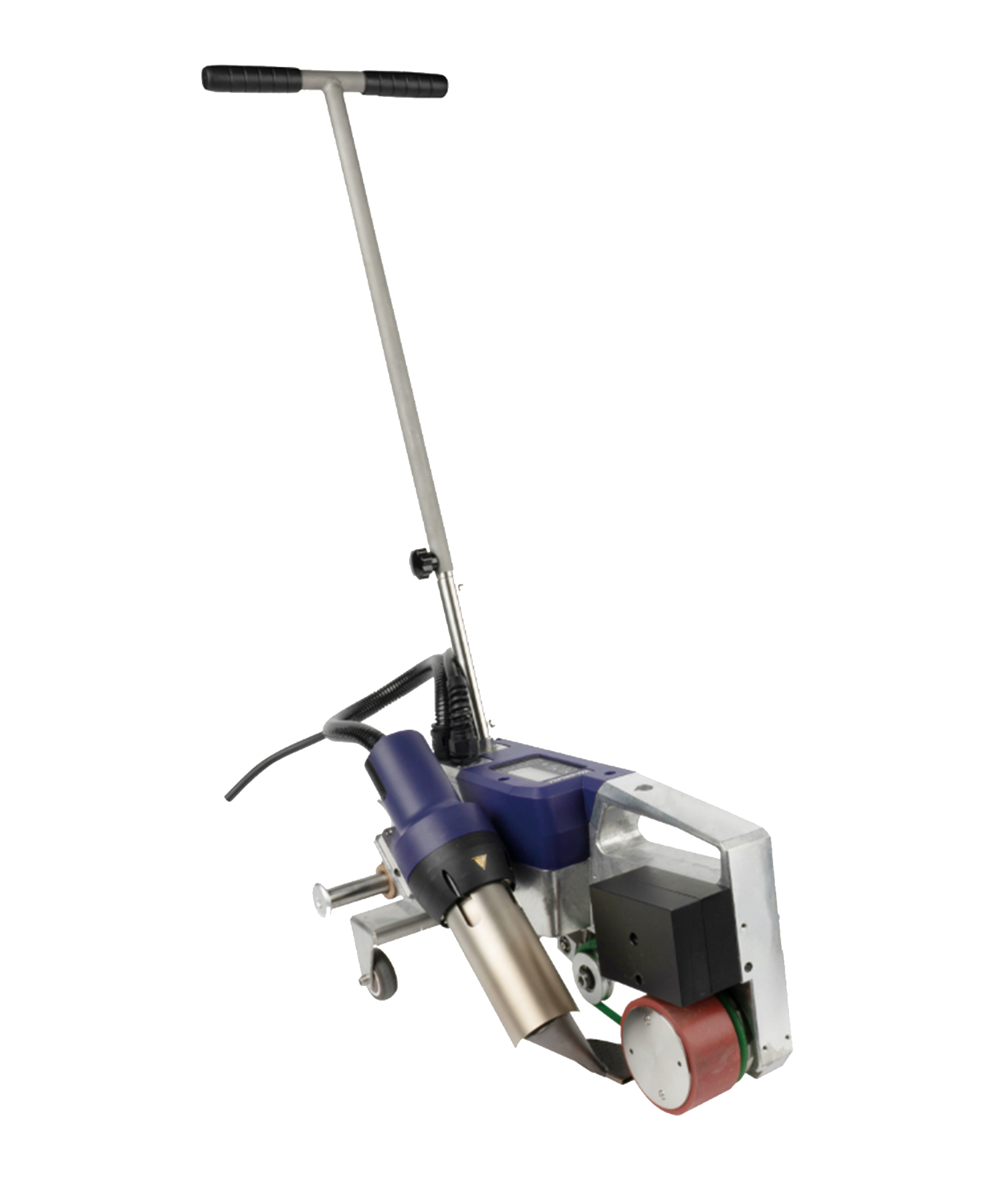
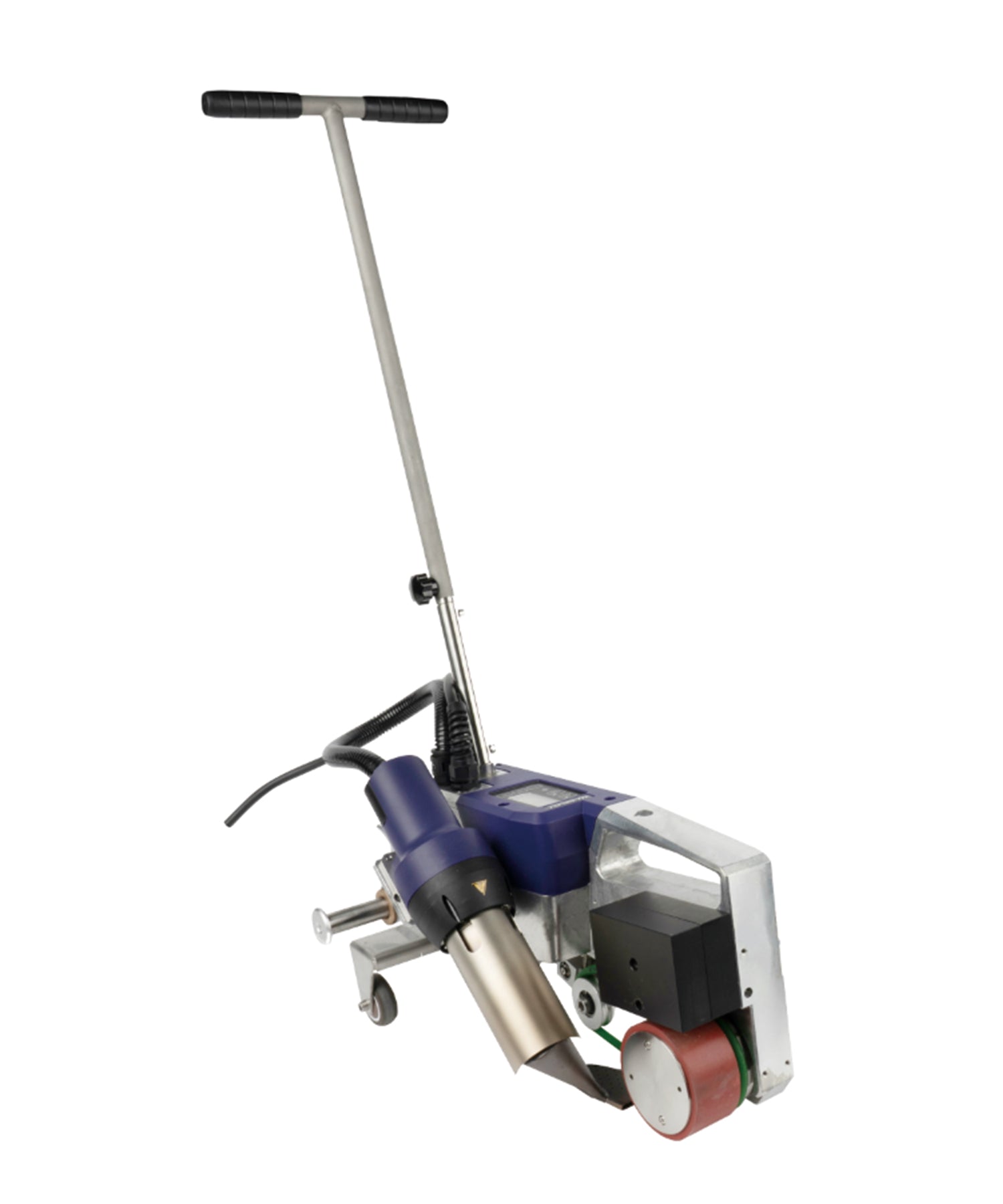
Weight is a productivity factor, not just a specification. A crew moving the machine by hand across a site, up a slope or through narrow access will value a lighter unit; machine weight can affect handling and tracking characteristics on different surfaces. Think about daily carry distance and whether the transport box protects the wedge during handling. Match the weight to the logistics of your site.
6. Temperature and Speed Visibility (Process Monitoring)
On projects where QA documentation is required, the operator needs to see — and record — the parameters that produced the seam. Digital parameter displays support continuous process monitoring: the operator holds settings against the welding procedure and can log values for the quality file. On simpler, routine jobs with an experienced crew, a basic machine without a display may be perfectly adequate. Choose the visibility level the project actually requires, and see our Dual-Track QC Guide for how parameters feed into weld testing.
7. Daily Seam Length and Productivity
Work out the daily target: how many metres of seam the crew must close per day, in one shift or two. That number sets the required welding speed and how often the machine can be stopped for adjustment. A welder that holds its speed over a full pull reduces stops and rework. Speed range, speed stability and warm-up time are the productivity levers worth comparing.
8. Jobsite Conditions Checklist
- Membrane material and thickness confirmed
- Site voltage (230 V or 120 V version) and power source (mains or generator) identified
- Ambient temperature range and weather exposure assessed
- Slope length and gradient reviewed; lifting and anchoring plan in place
- Daily carry distance and access route for the machine
- Need for digital parameter display for QA documentation
- Daily seam length target and shift pattern agreed
9. From Site Conditions to RYG Model: A Small Bridge
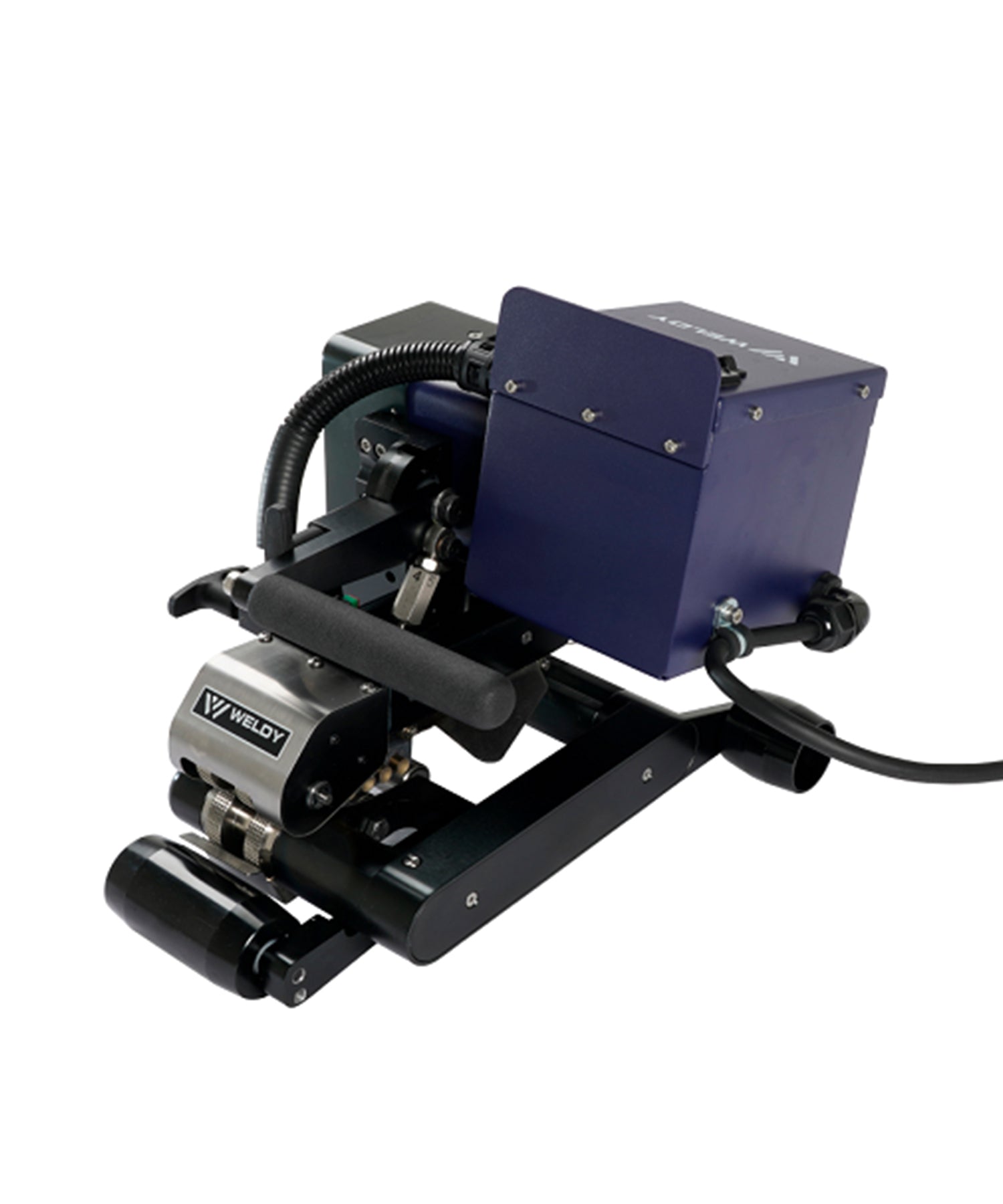
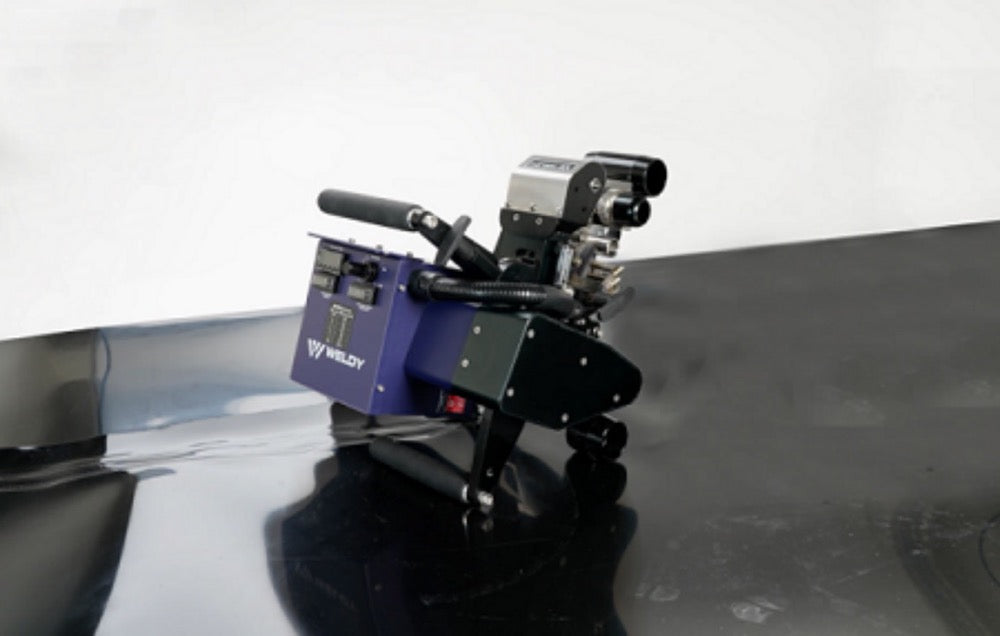
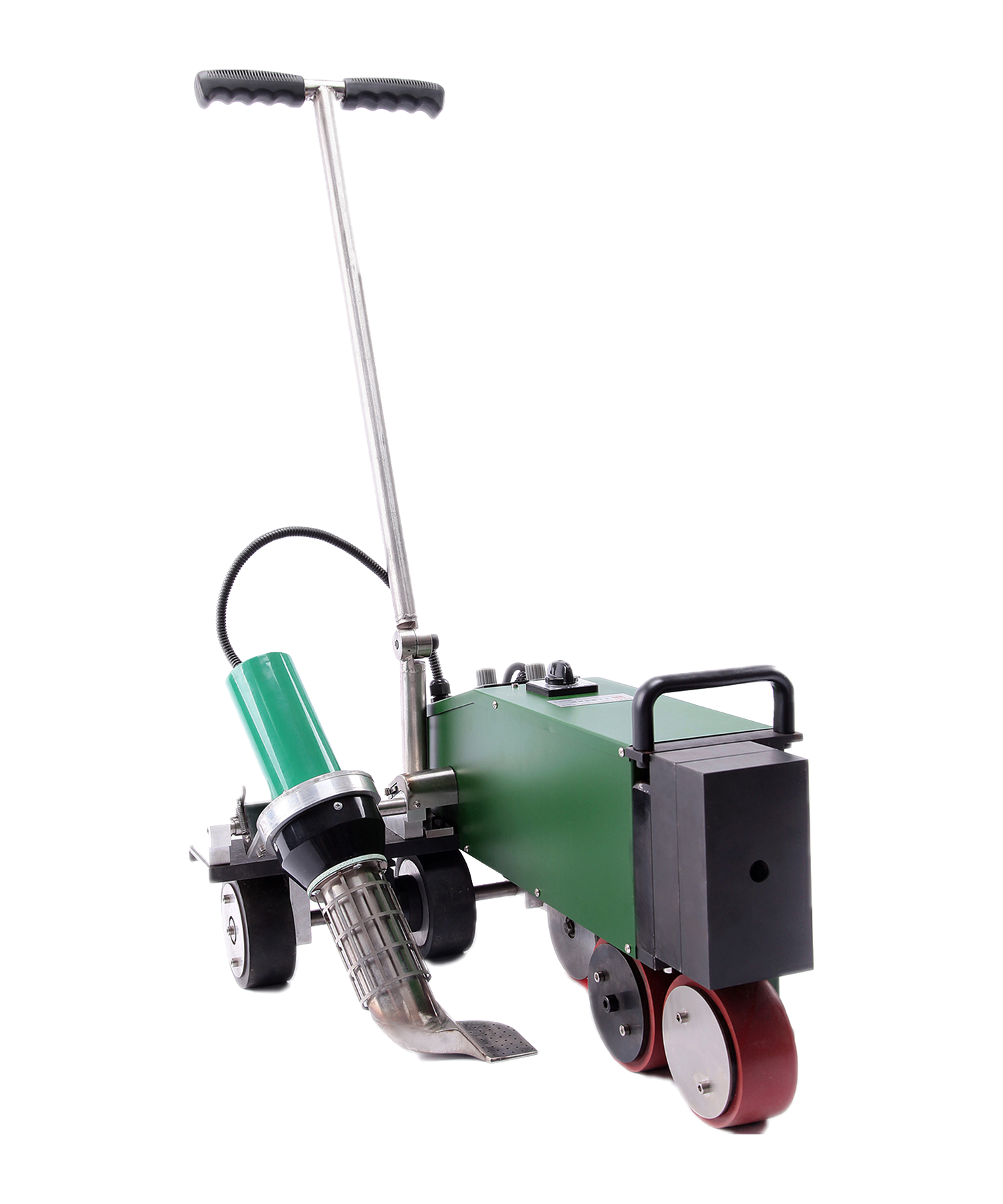
Once the conditions above are listed, they point to a shortlist of RYG models. This table only bridges conditions to models — for full parameter-by-parameter comparison, use the RYG Complete Buying Guide.
| Site conditions | Equipment requirements | RYG models to consider |
|---|---|---|
| Thin liners (0.2–1.5 mm), flat ponds, light daily runs | Light weight, ≤450 °C, narrow overlap | RYG800 / RYG800D |
| Standard HDPE (1.0–3.0 mm), landfill and reservoir base, moderate slopes | Higher power, 15 mm dual-track seam, 12 cm overlap | RYG900 / RYG900D |
| Thick HDPE (up to 3.5 mm), mining and hazardous-waste cells | High temperature ceiling (620 °C), 16 cm overlap | RYG700 |
| QA-heavy projects requiring parameter documentation | Digital parameter visibility | RYG800D / RYG900D / RYG1200 |
10. Related Reading
RYG Complete Buying Guide — RYG700 vs RYG800 vs RYG900 vs RYG1200: full model comparison and specifications.
How to Test Dual-Track Geomembrane Welds with RYG Wedge Welders: testing and QA on site.
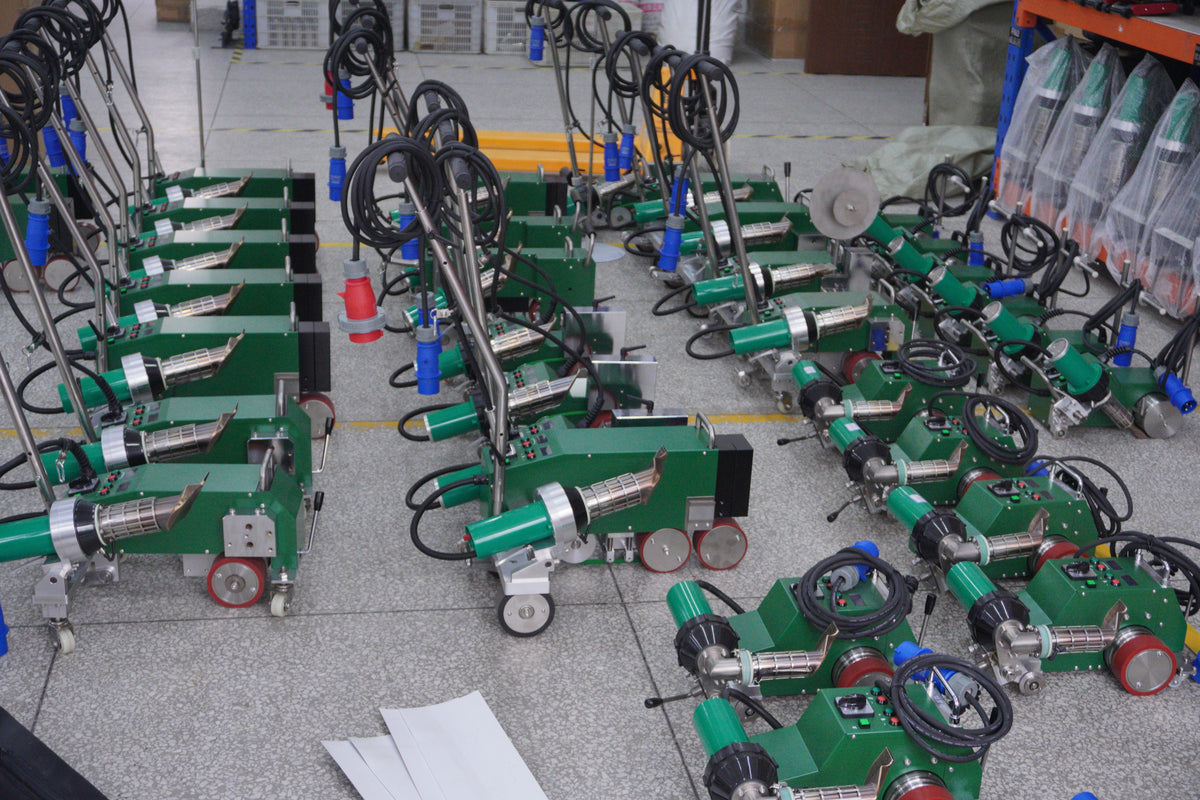
Weissenberg manufactures RYG wedge welders in Dongguan to the same quality system behind its official Weldy distribution, with ISO 9001 production, a one-year warranty and lifetime technical support from a team with over 19 years of plastic-welding experience. Send your membrane thickness, site power and daily seam target to our technical team and we will point you to the right configuration.
References:
- ASTM D6392 — Standard Test Method for Determining the Integrity of Nonreinforced Geomembrane Seams Produced Using Thermo-Fusion Methods (destructive peel and shear testing of nonreinforced thermo-fusion geomembrane seams).
- ISO 9001 — Quality management systems, applied to Weissenberg manufacturing and distribution.




Leave a comment
This site is protected by hCaptcha and the hCaptcha Privacy Policy and Terms of Service apply.