
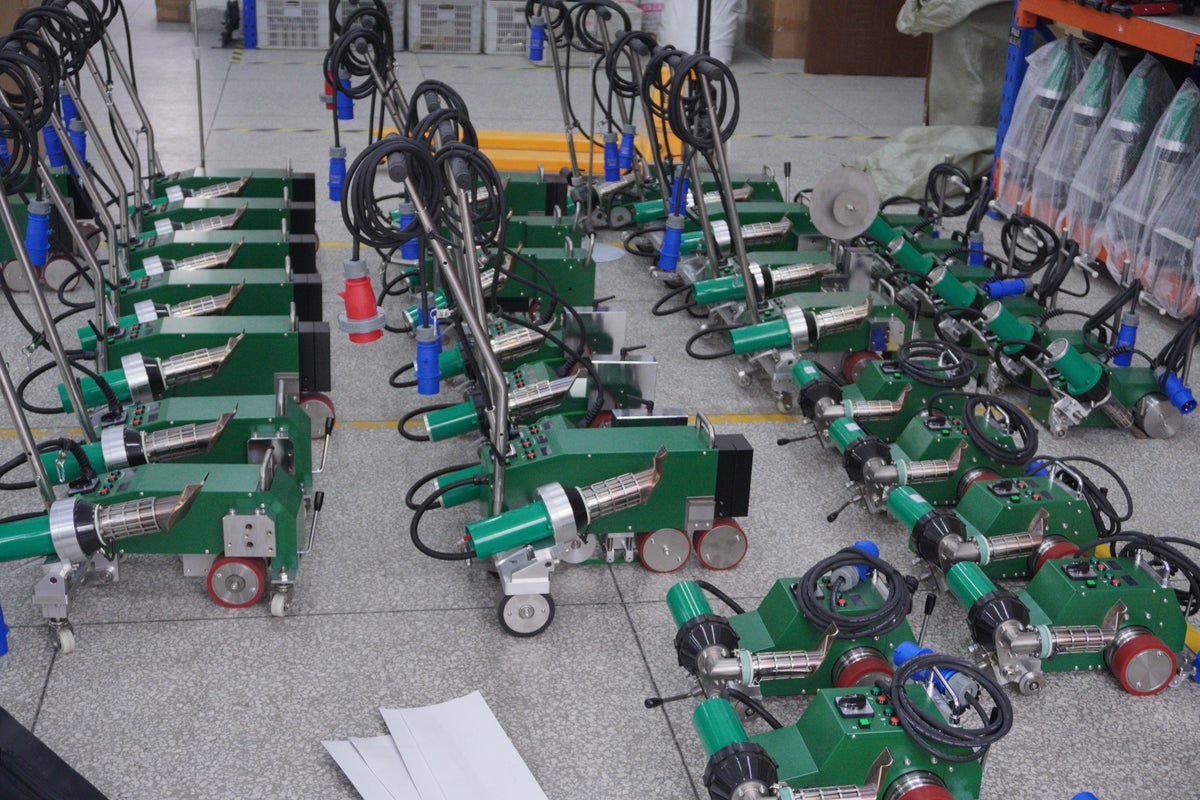
Single-ply TPO and PVC roofing is only as good as its seams. When you are choosing an automatic walk-behind roofing welder, the two machines we sell side-by-side most often are the Weldy Roof40 and the Weissenberg RWP1. On paper they look similar — both 230 V automatic welders, both 40 mm seams, both 1–10 m/min — yet they are engineered for different crews and different rooftops. With only about $170 separating them, the question that matters is not price, but fit. Here is how to decide in five minutes.
⚡ Quick Answer
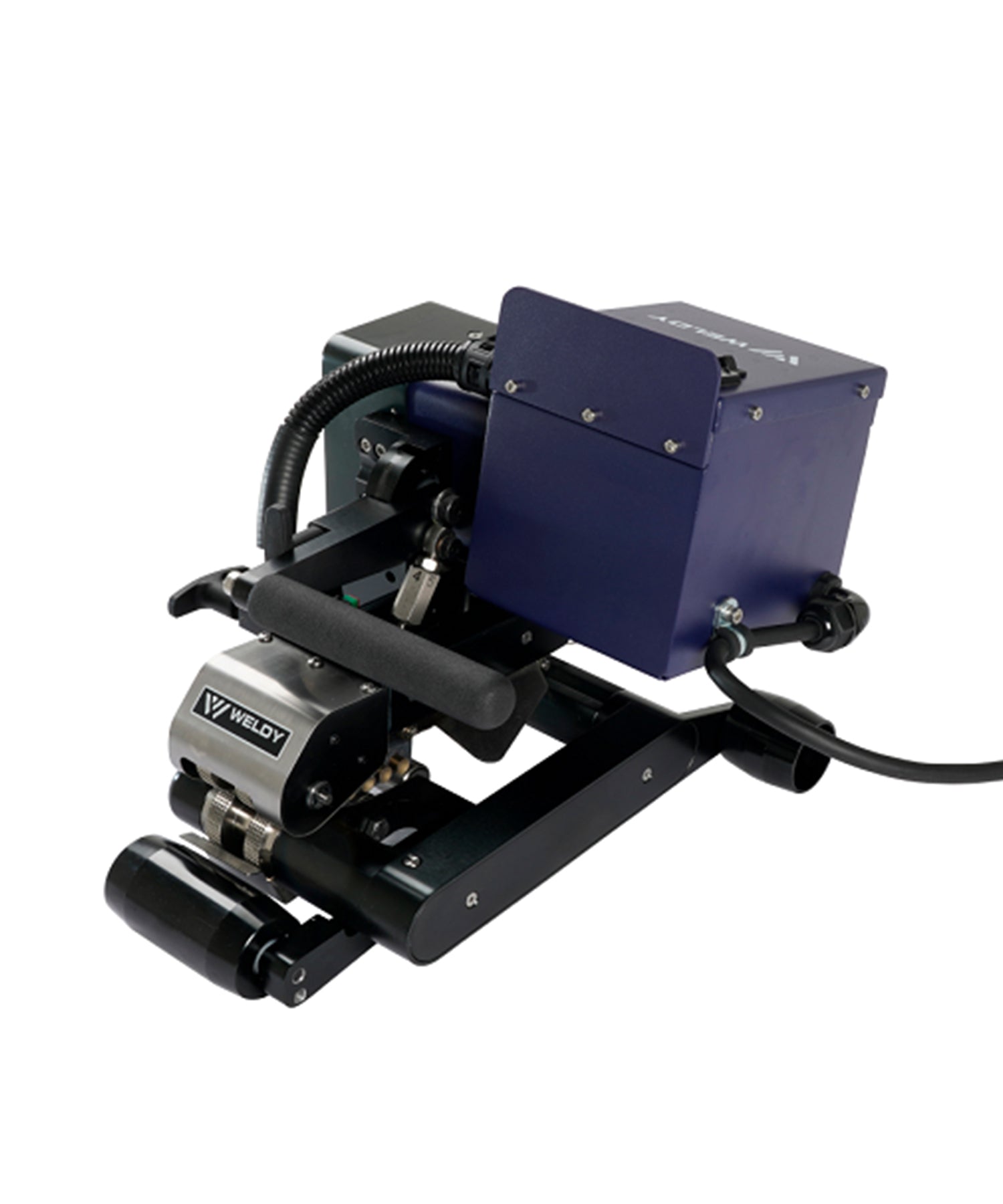
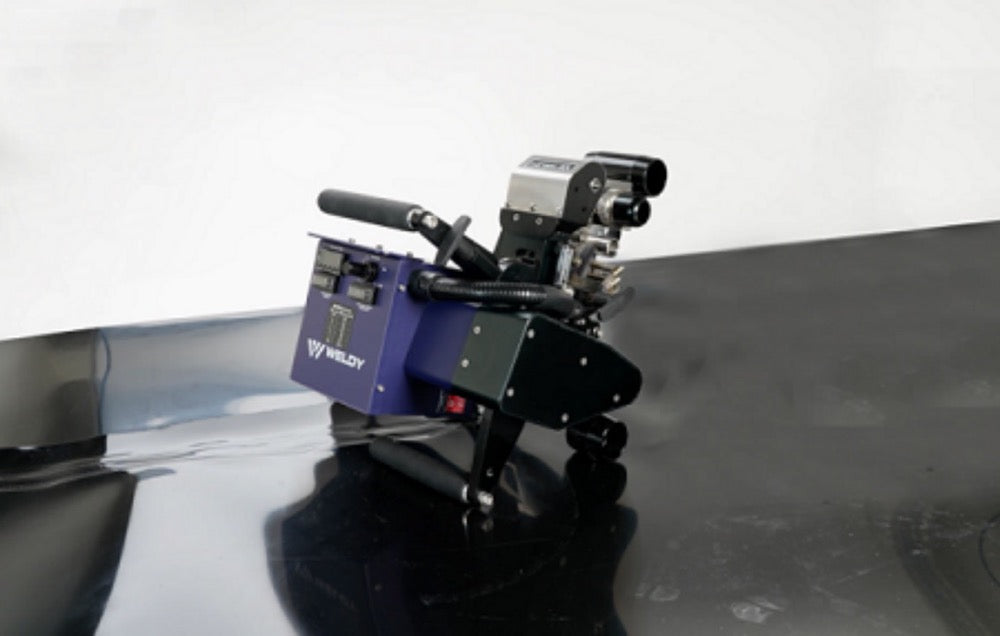
✅ Choose the Weldy Roof40 when portability, lower machine weight and the established Weldy platform matter most.
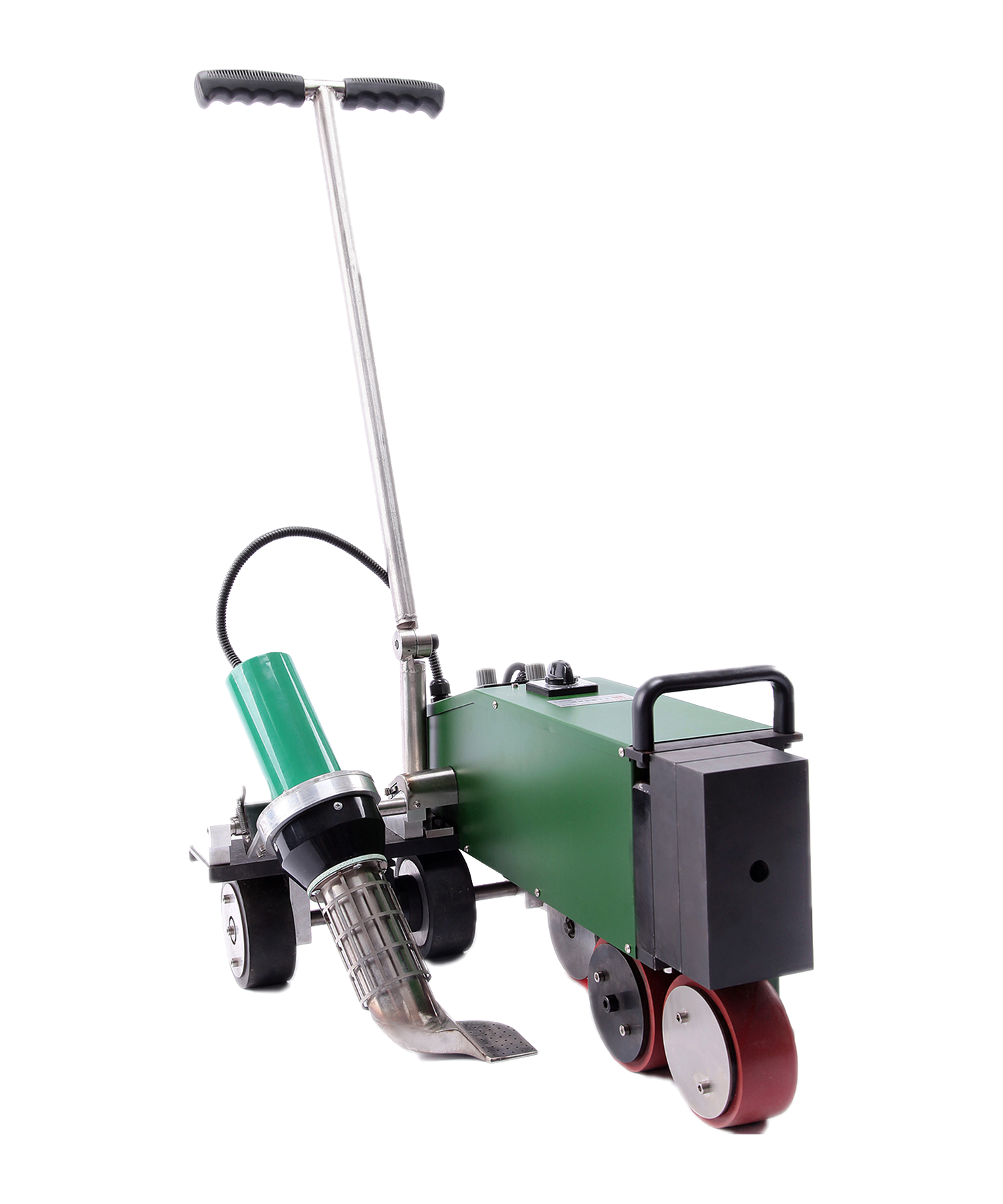
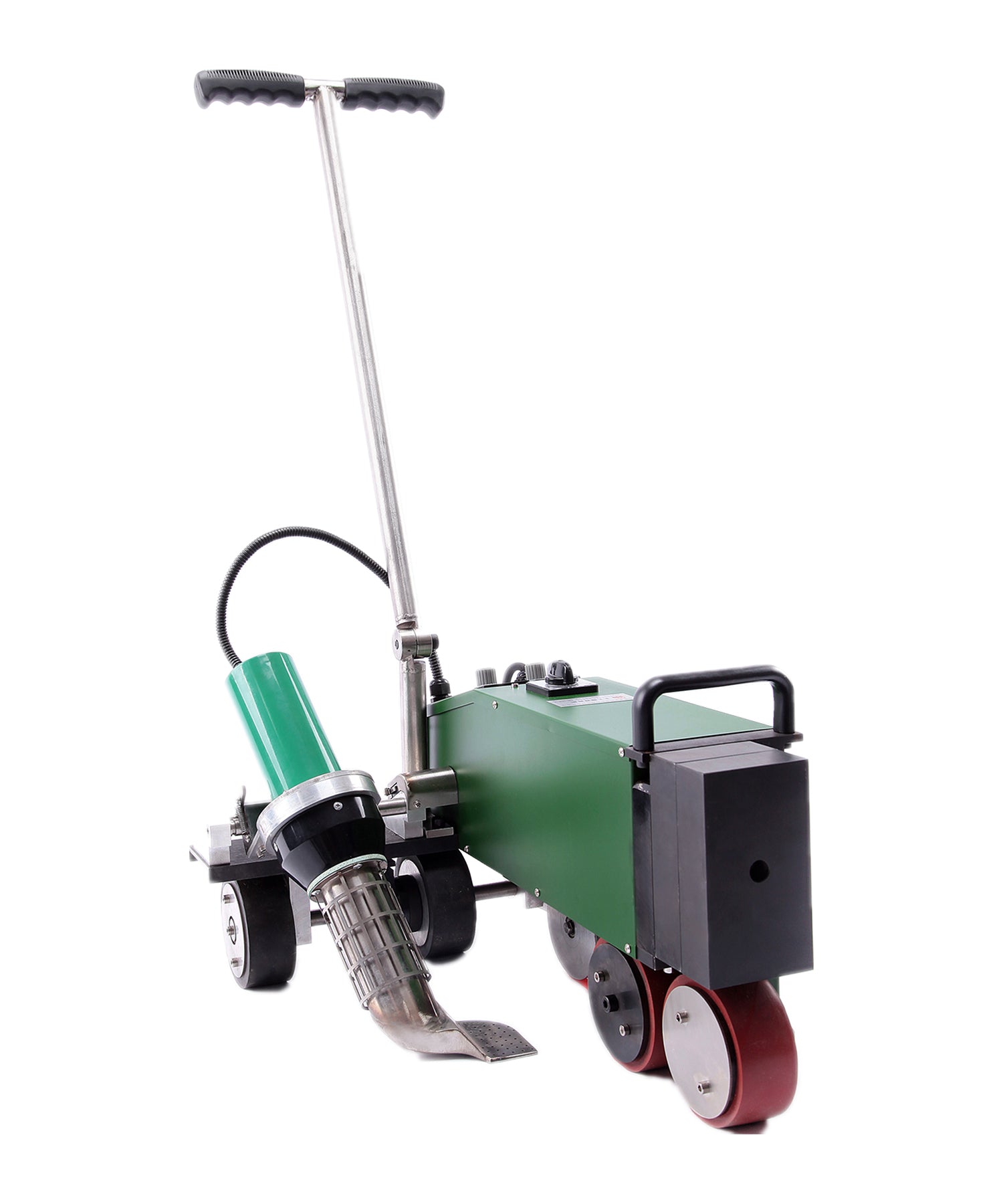
✅ Choose the Weissenberg RWP1 when higher heating capacity and a heavier-duty platform are the priorities.
1. Roof40 vs RWP1: Core Specifications at a Glance
Both are professional automatic roofing welders for thermoplastic membranes. Here is the full spec comparison verified from our product data:
2. For a Portable Roofing Crew: The Weldy Roof40
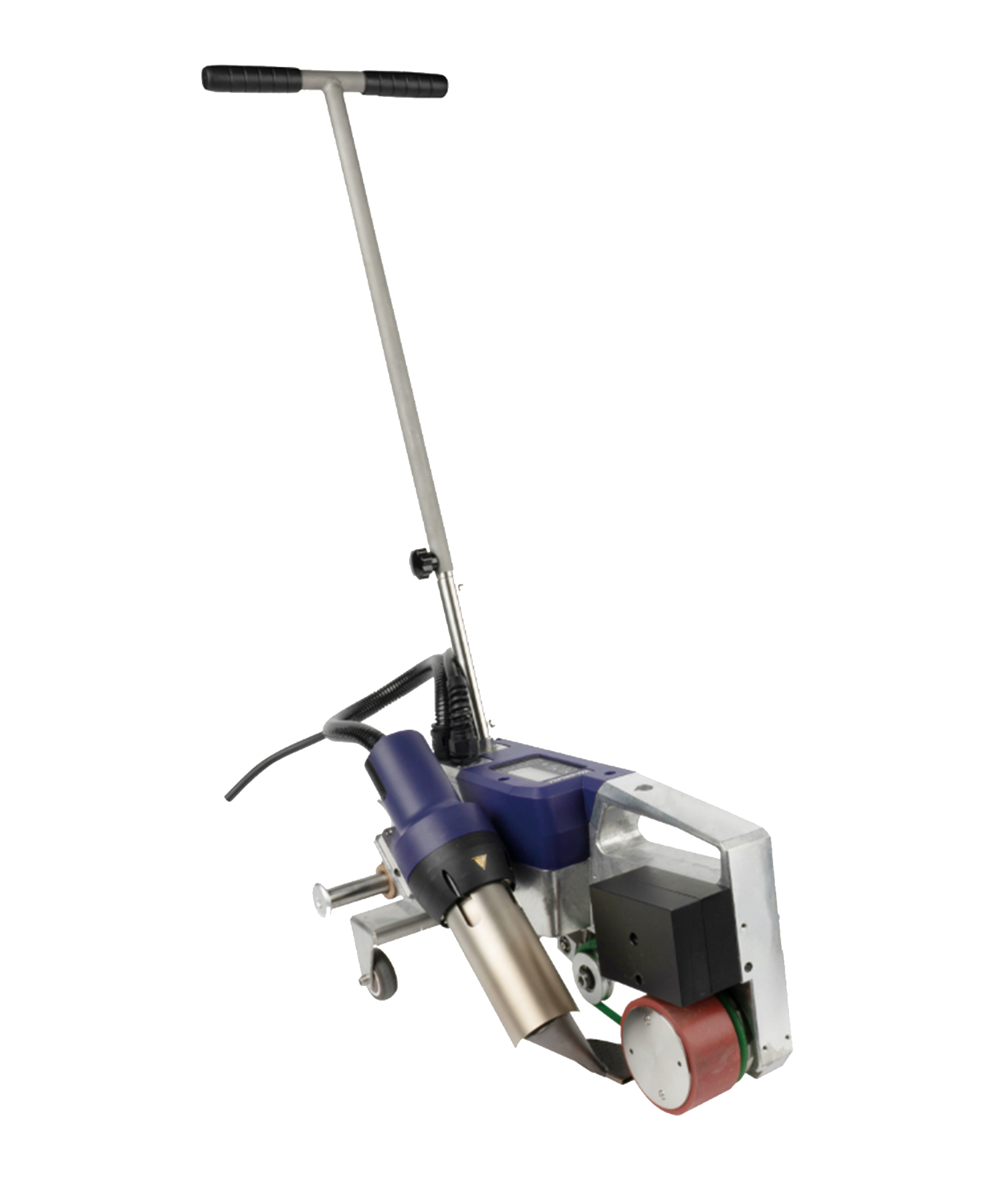
Roof repair and small-to-mid crews move between sites every day. At 15.5 kg, the Roof40 is substantially easier to transport and reposition between work areas than the 38 kg RWP1. Its close-to-the-edge capability (up to 100 mm) is a genuine differentiator — you can run right up against parapets, curbs and penetrations where most welders have to stop and switch to a handheld gun. And for teams already running Weldy handheld tools, the controls and service platform are instantly familiar.
3. For Large Commercial Roofs: The Weissenberg RWP1
On big-box retail, warehouse and industrial roofs, the metric that matters is linear metres per day. The RWP1 provides 750 W more installed heating capacity than the Roof40, giving it greater thermal headroom. How much that matters depends on membrane type, ambient conditions, welding speed and the roofing manufacturer’s welding procedure. Its 38 kg frame and high-torque brushless drive give it the stability to lay a straight, uniform 40 mm seam for long runs, which is exactly where production pays for the machine.
4. TPO vs PVC: Why Temperature Control Decides
TPO welding can be sensitive to heat input: insufficient heat may produce weak fusion, while excessive heat can damage the membrane. PVC is generally more forgiving. Actual welding parameters should follow the membrane manufacturer’s instructions and be confirmed with trial welds. Both machines provide closed-loop temperature control, so seam consistency is not a trade-off between the two; they differ mainly in control range and heating capacity. The RWP1 offers a wider published temperature range (50–620 °C vs 100–600 °C) and 750 W more installed heating capacity, giving it greater thermal headroom for demanding work. The Roof40 covers typical TPO/PVC overlap welding with the same closed-loop temperature control, in a lighter package.
5. 230 V Site Power: More Than a Plug
Both machines require a stable, correctly sized 230 V power supply. Closed-loop control helps maintain operating parameters within the machine’s available power range, but it does not replace proper generator sizing or extension-cable selection.
6. Weight: 15.5 kg vs 38 kg — What It Really Means
At 38 kg, the RWP1 requires more planning for lifting, roof access and movement between work areas. At 15.5 kg, the Roof40 is substantially easier to transport and reposition between work areas than the 38 kg RWP1. If your week is five different rooftops, weight is time and labour cost, not comfort. If your week is one big roof, set-up weight barely matters — uptime and weld speed do. Match the machine to your typical week, not your dream job.
7. 3450 W vs 4200 W: When Does It Actually Matter?
At 3450 W the Roof40 covers standard TPO/PVC overlap work; at 4200 W the RWP1 provides 750 W more installed heating capacity and greater thermal headroom. Whether that headroom matters on your jobs depends on membrane type, ambient conditions, welding speed and the roofing manufacturer’s welding procedure. If your projects are typical commercial re-roofs in moderate climates, the Roof40 may be all you need; if you regularly run high-output conditions, the RWP1’s headroom is real.
8. Maintenance & Drive: Both Use Brushless Technology
Both machines use brushless drive technology — no carbon brushes to replace, longer service intervals. The RWP1’s brushless motor is rated to roughly 6000 operating hours, a clearly specified service life. Routine care includes keeping the air path clean and checking the silicone pressure roller regularly; always follow each machine’s maintenance instructions to keep seam quality consistent.
9. Is the ~$170 Difference Worth It?
At $2,754 versus $2,926 (current store prices) the gap is under 6%. With the current price difference at $172, operating fit is likely to matter more than initial purchase price for many professional buyers. The Roof40 gives you portability and Weldy heritage; the RWP1 gives you 750 W more installed heating capacity and a heavy-duty frame. Choose the machine that matches your crew and rooftop profile.
10. Final Decision Table
11. Ready to Pick Yours?
Both machines ship from our warehouse with a 1-year warranty and lifetime free technical support from our engineering team. Not sure after reading? Send us your typical membrane, roof size and crew setup — we will tell you which one fits.




Leave a comment
This site is protected by hCaptcha and the hCaptcha Privacy Policy and Terms of Service apply.