
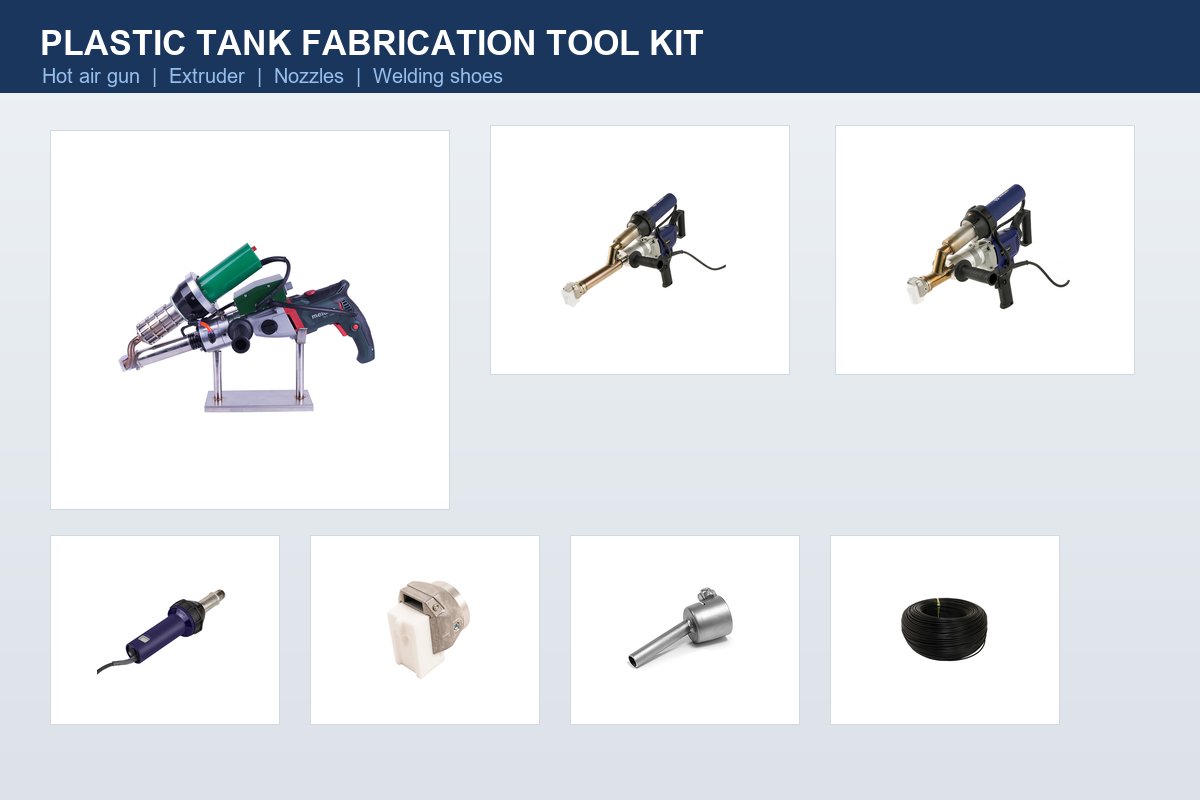

Fabricating a plastic tank is not a single welding job. It is a sequence of different joints — base to shell, shell to top rim, internal baffles, and every pipe, fitting and manway that has to pass through the wall without leaking. A kit that covers only one of those joints leaves a fabricator short halfway through the build. This guide sets out the plastic tank fabrication tools that actually get used, which tool does which job, and what to check before you order.
Quick answer: A practical tank fabrication kit combines an extrusion welder for the rod-fed structural and fillet welds, a hot air gun with a compatible nozzle for overlap work, small details and repairs, welding rod in the base material, and a set of welding shoes — a K shoe for the fillet joints and a V shoe for V-prepared butt joints. Overlap welding is served separately, by a wide slot nozzle and a pressure roller.
What a Plastic Tank Fabrication Tool Kit Has to Cover
Before buying anything, list the joints on the drawing. Most HDPE and PP tanks come down to five groups:
- Structural and fillet welds — base-to-shell and shell-to-top joints, plus internal supports, where filler material is fed into an open joint.
- Overlap and tack welds — holding geometry in place before the main weld, and closing thin sheet overlaps.
- Nozzle and penetration welds — short, curved, often awkward-to-reach joints around fittings and manways.
- Corner and detail work — baffles, weirs, stiffeners and any joint a machine cannot reach.
- Surface preparation — cleaning and preparing the weld zone before any of the above.
A kit is only complete when it can handle all five with the material and wall thickness actually specified.
Hot Air Gun and Extrusion Welder: Two Different Jobs
These two tools are often talked about as alternatives. In tank fabrication they are complementary, and they do not cover the same joints.
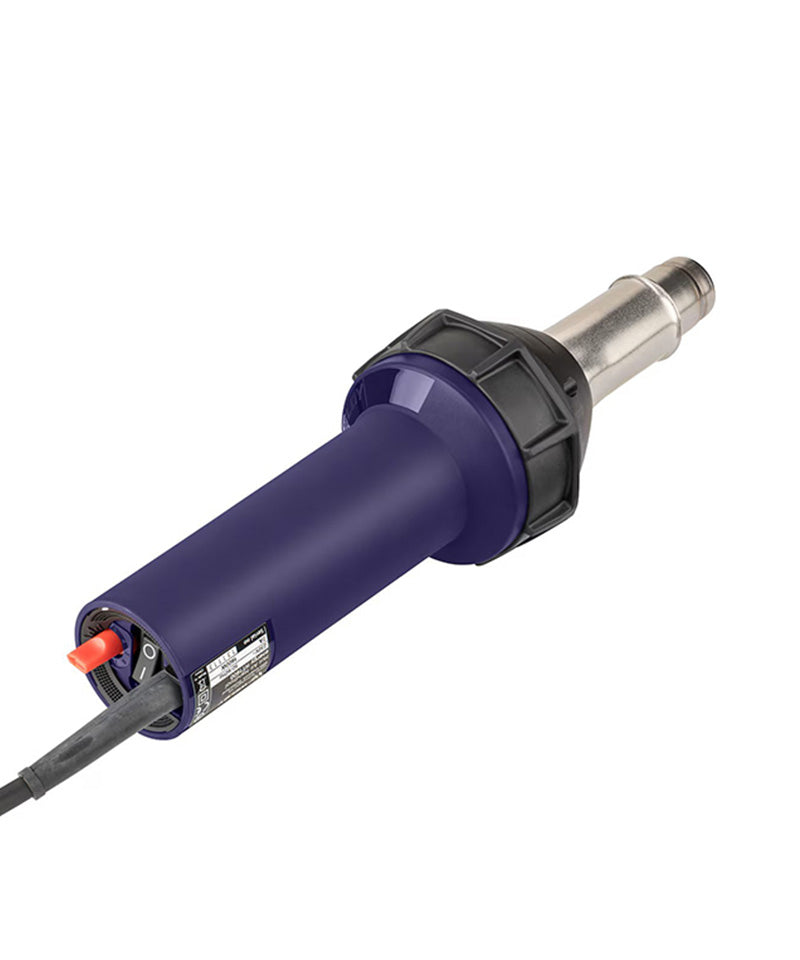
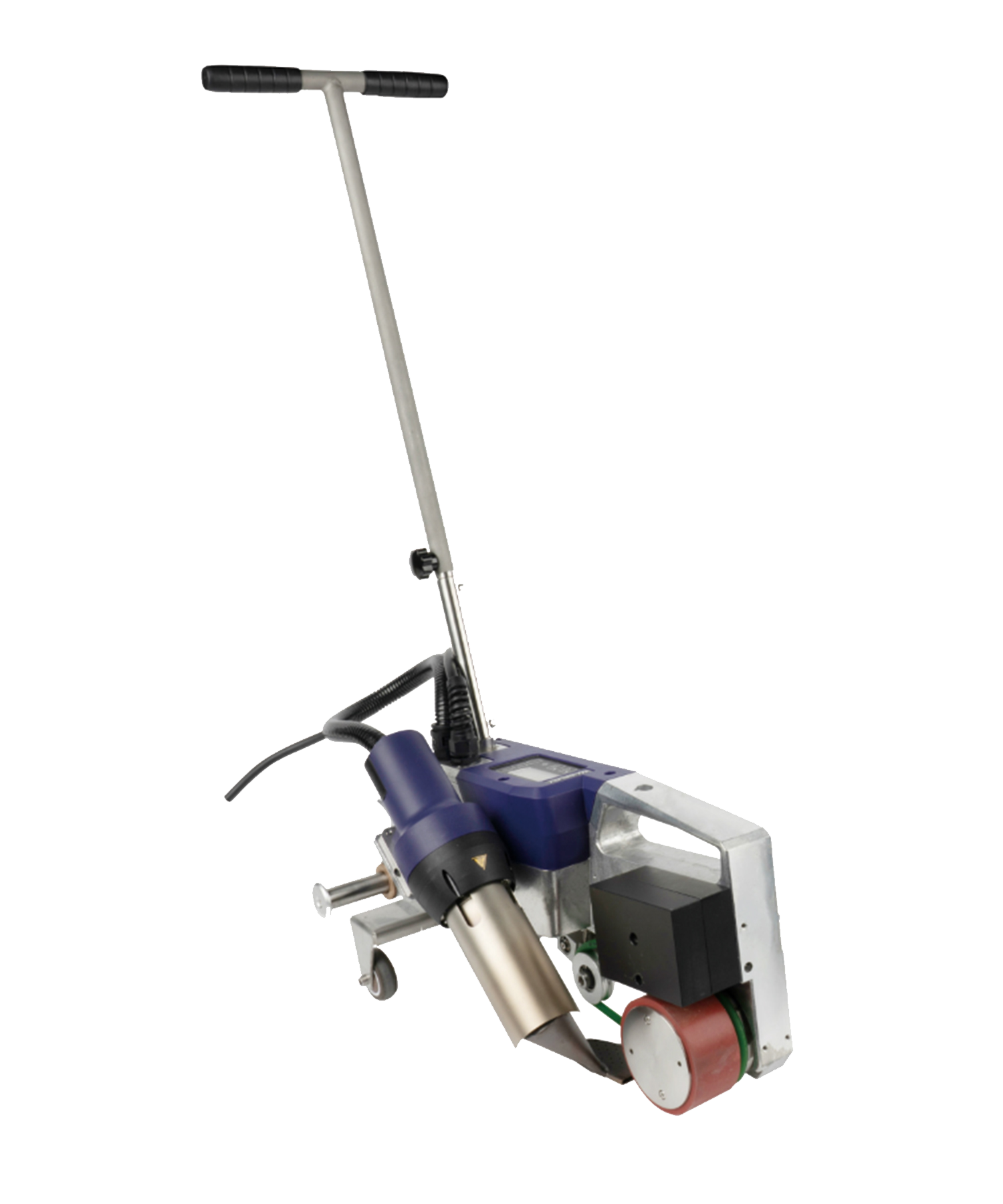
A hot air gun supplies heated air through a nozzle. It is used for overlap welding of sheet and liner, for tacking and holding parts before the structural weld, for preheating, for small details, and for field repairs. It does not feed filler material, so it is not the tool that builds a thick structural fillet.
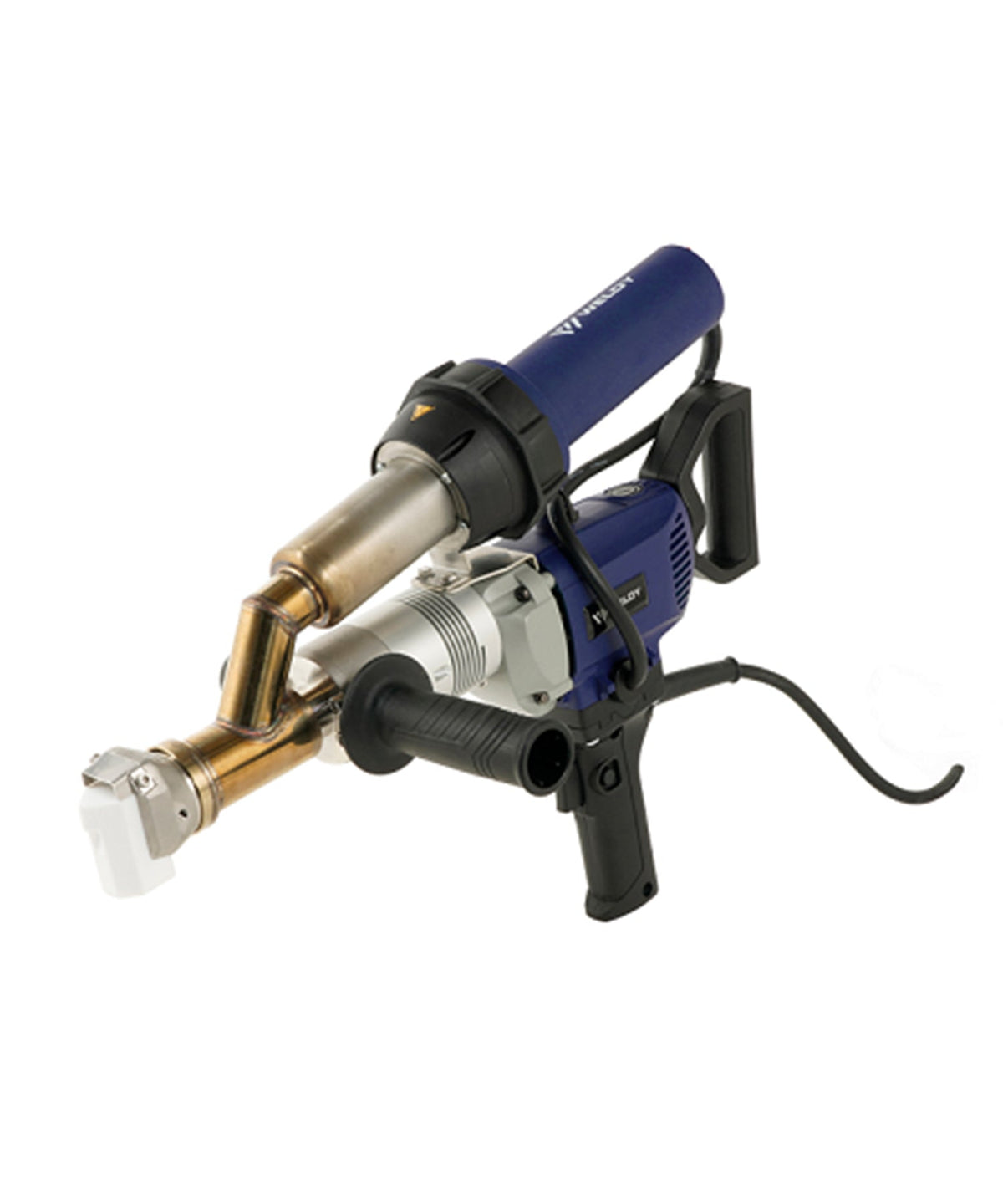
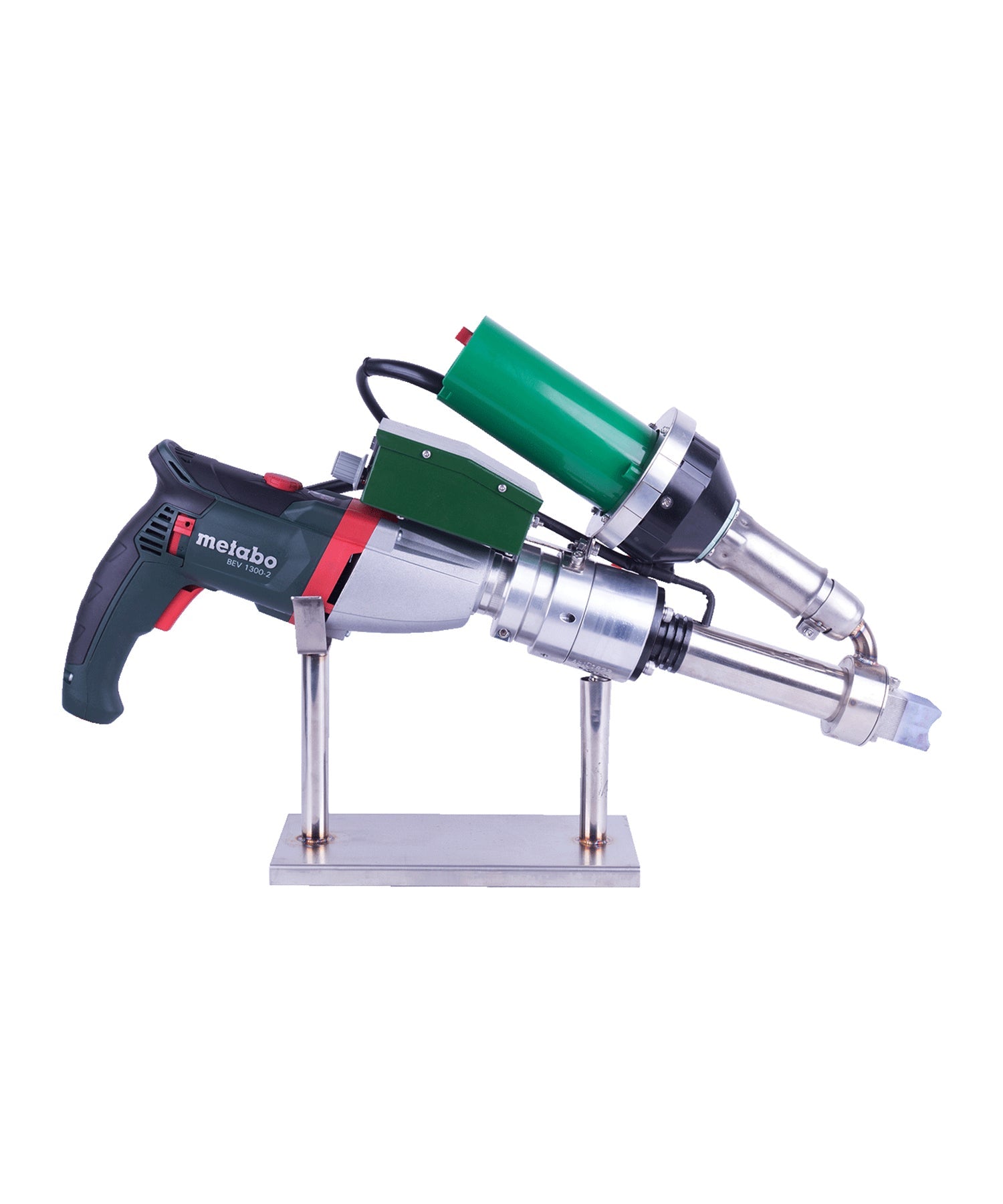
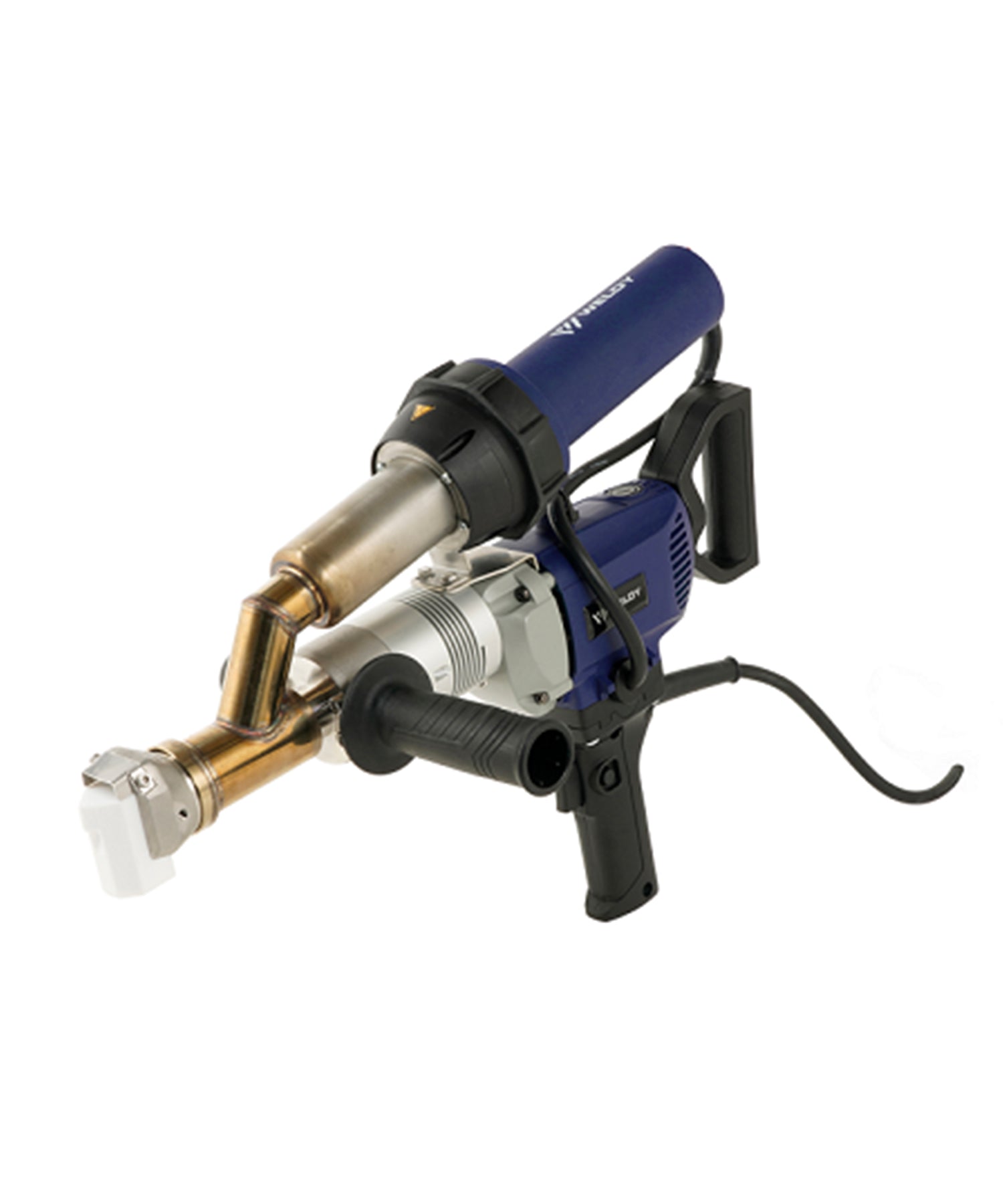
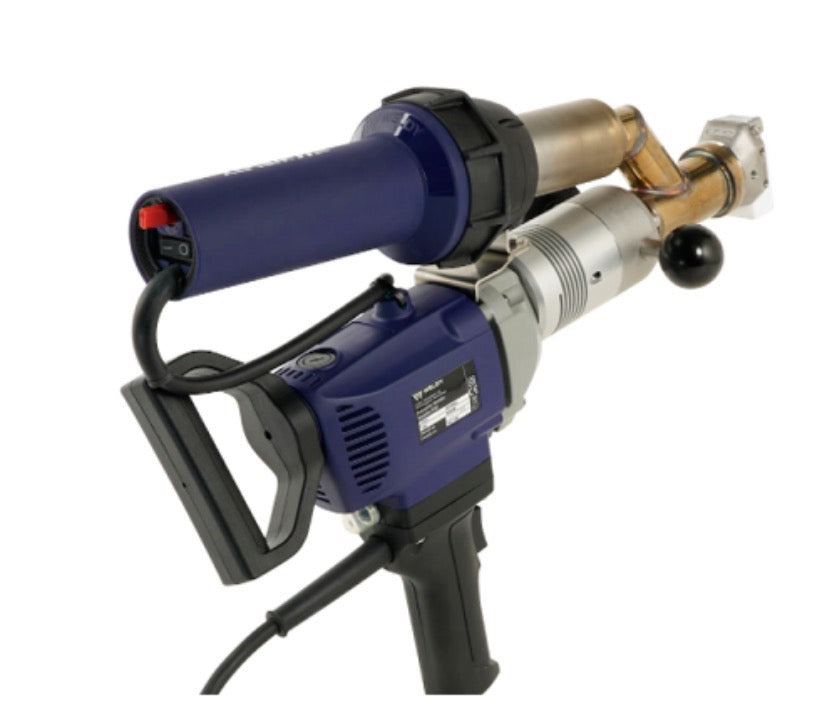
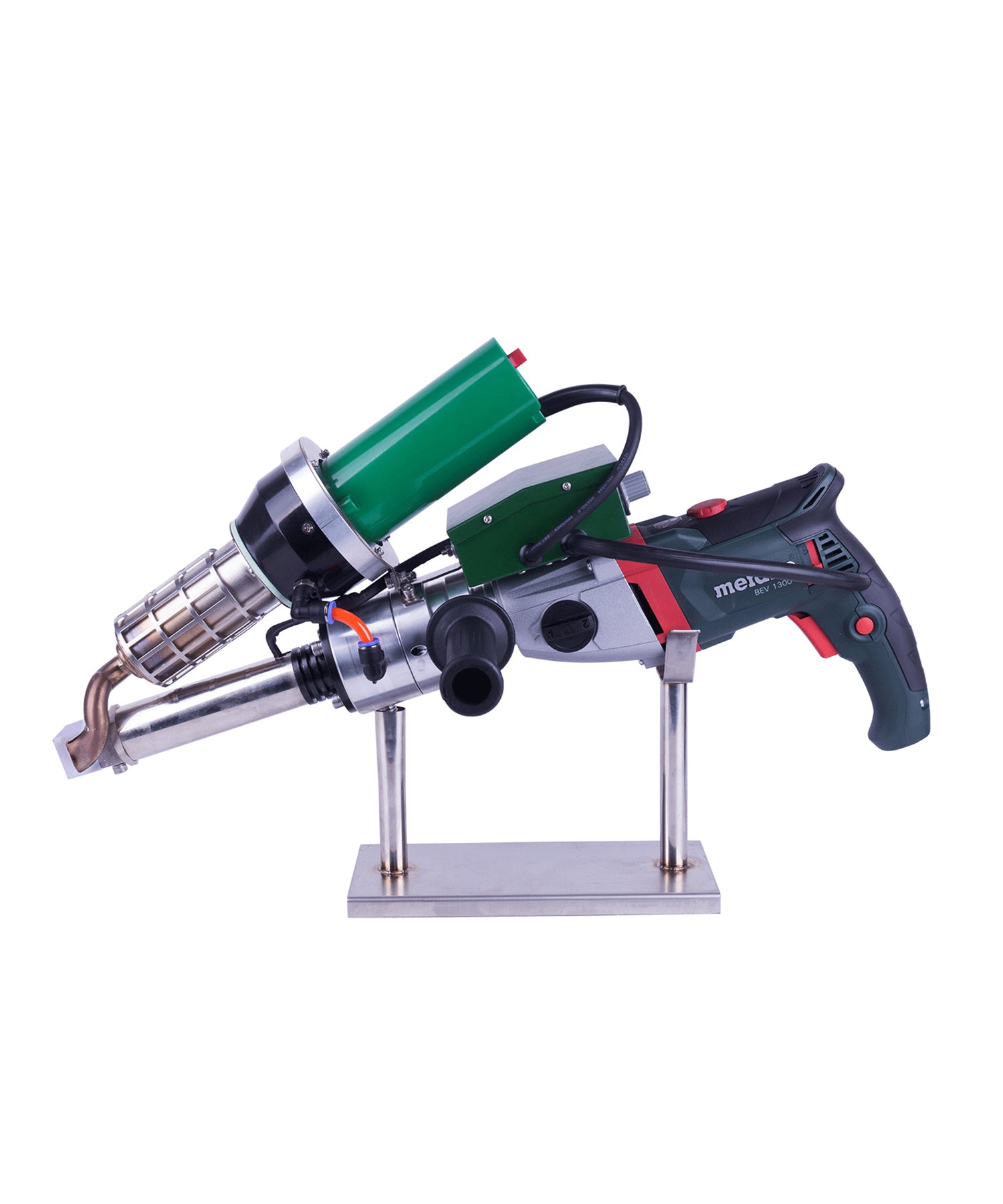
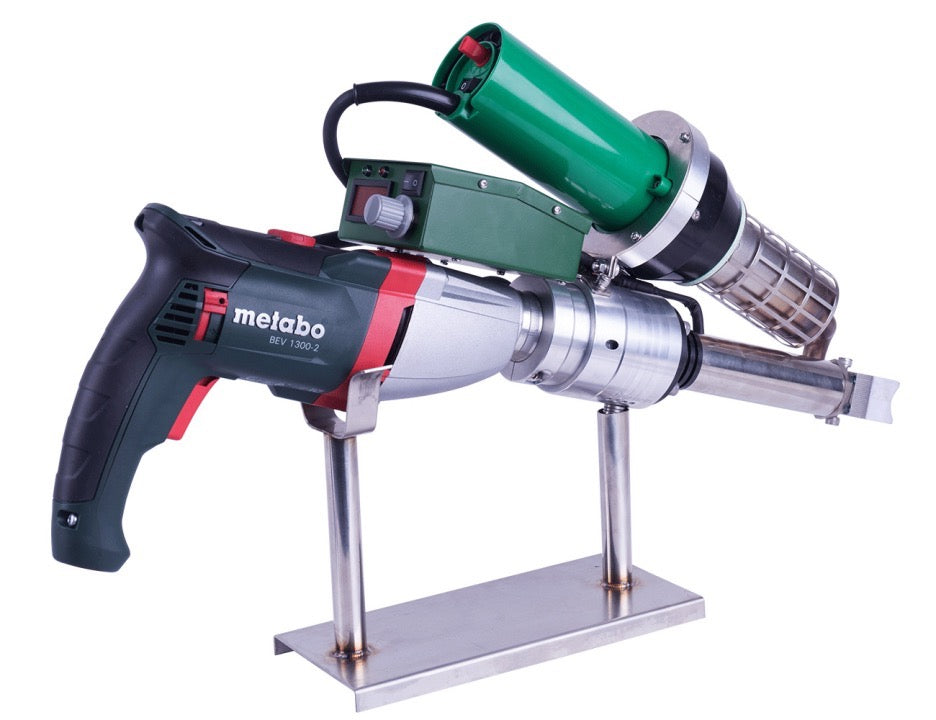
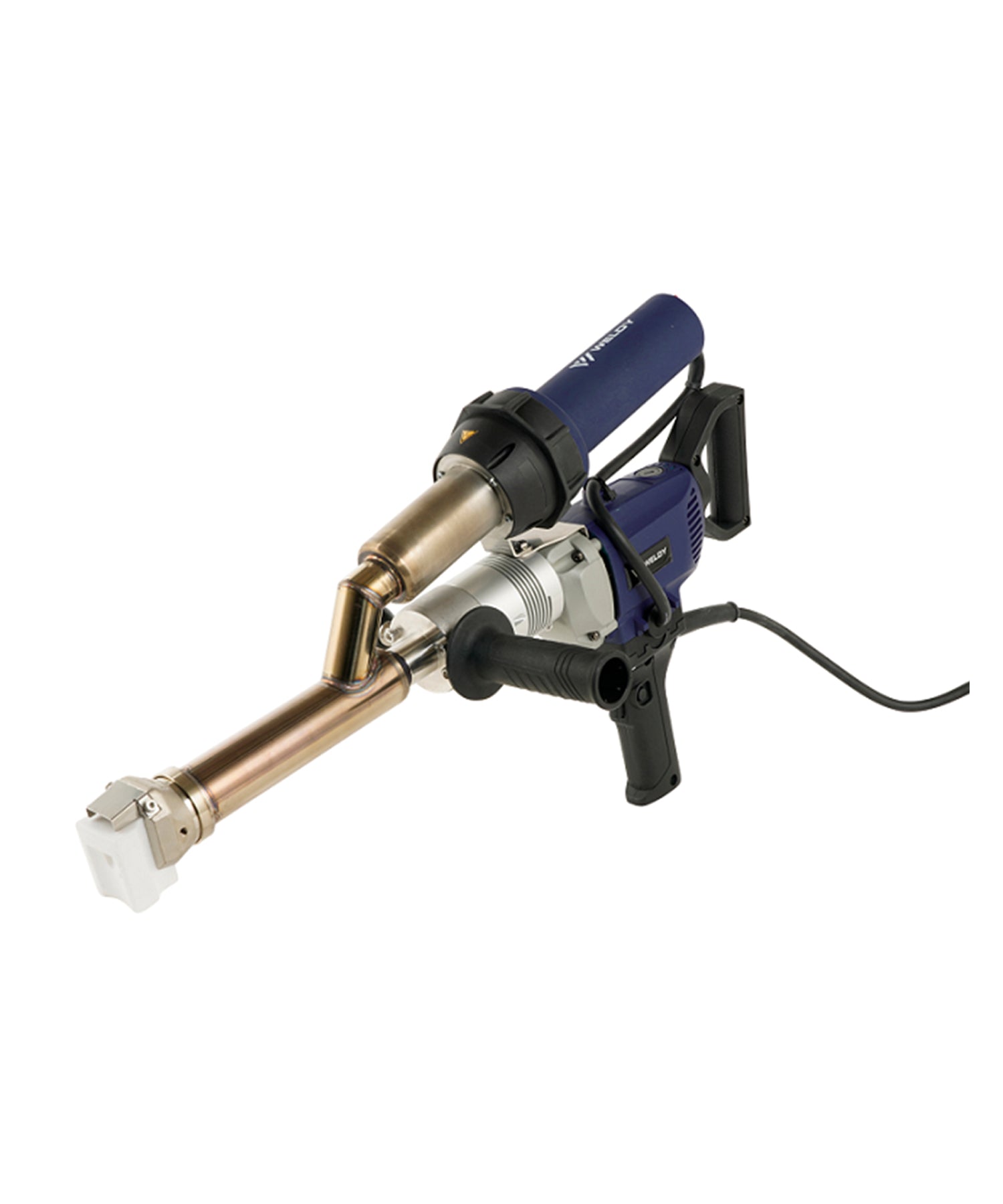
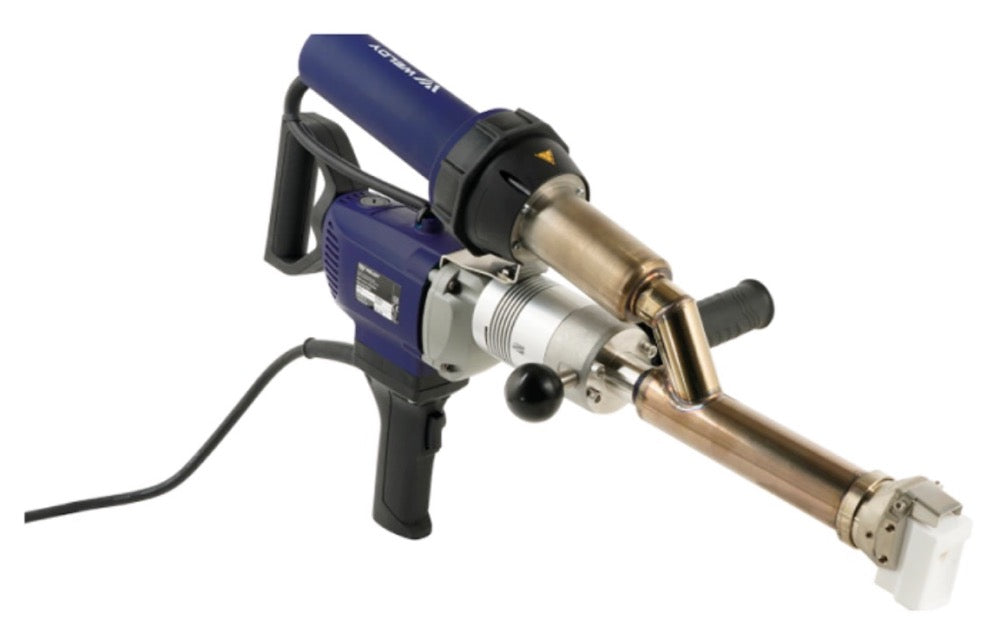
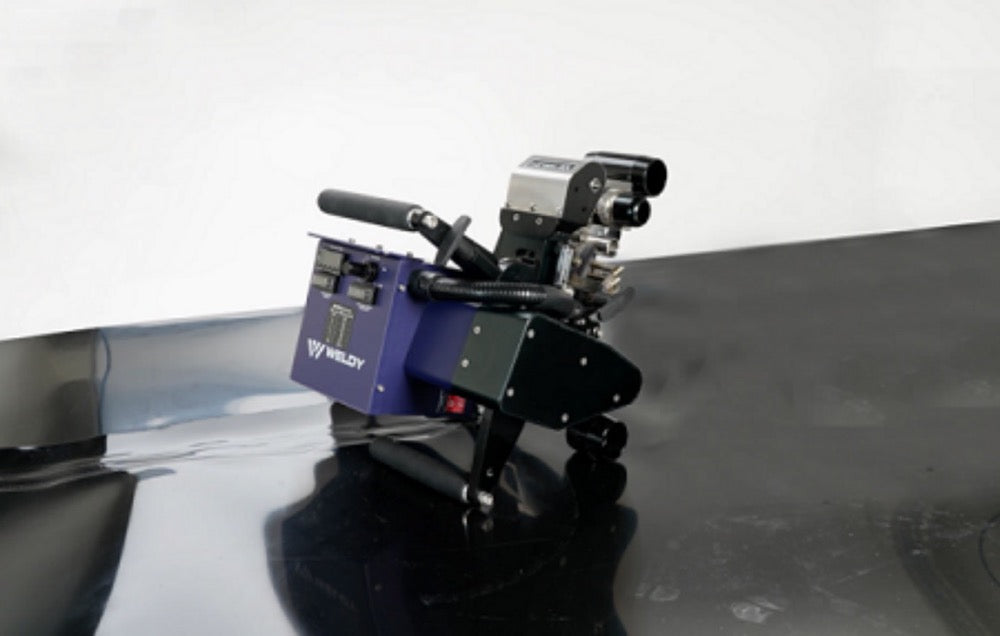
An extrusion welder feeds welding rod through a heated screw and extrudes a plastic bead into the joint, adding filler material as it travels. That added material is what makes it the primary tool for the structural and fillet welds on tank walls and bases.
Where the tank specification calls for rod-fed welding at the structural joints, the hand extruder is the primary tool and the hot air gun supports it. Where the job is overlap welding, tacking or a small repair, the hot air gun takes the lead.
Choosing the Extrusion Welder: Output, Rod Diameter and Working Range
The three hand extruders we stock give a useful spread of output and working range. The differences that matter when you are matching a machine to a tank drawing are the extrusion rate, the welding rod diameter accepted, and the working range for the sheet thickness you are running.
| Model | Power | Welding rod | Extrusion rate | Working range | Weight |
|---|---|---|---|---|---|
| BOOSTER EX2 | 3,000 W | ø 3–4 mm | ≤ 1.5 kg/h (ø 3 mm) · ≤ 2.2 kg/h (ø 4 mm) | 10–15 mm sheet | 6.4 kg |
| BOOSTER EX3 | 3,000 W | ø 3–4 mm | ≤ 2.5 kg/h (ø 3 mm) · ≤ 3.6 kg/h (ø 4 mm) | 15–25 mm sheet | 6.9 kg |
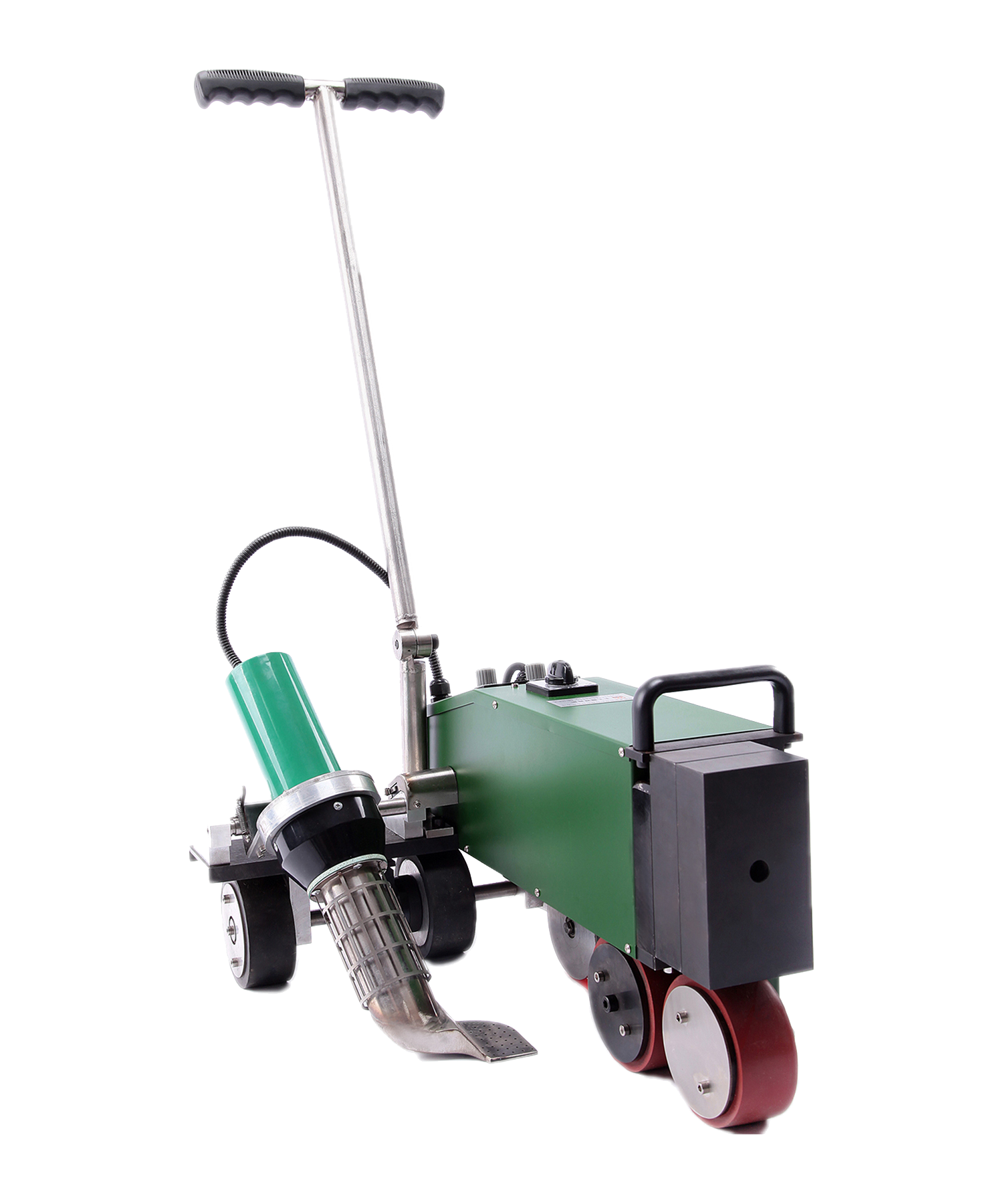
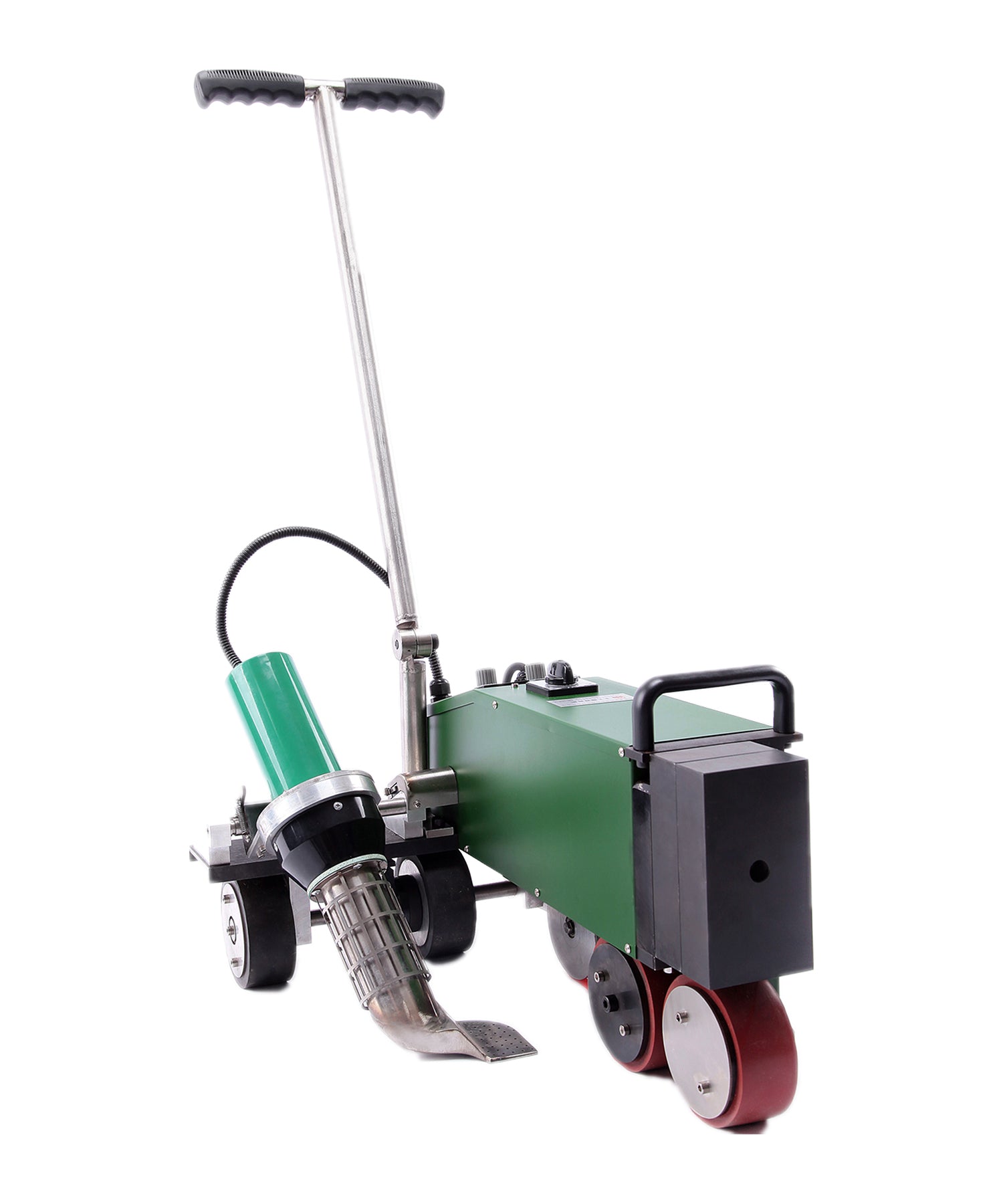
| RYH3400C | 1,300 W extruding motor · 3,400 W hot air | ø 3.0–5.0 mm | 2.0–3.0 kg/h | Thick-wall HDPE and PP tank work | 7.2 kg |
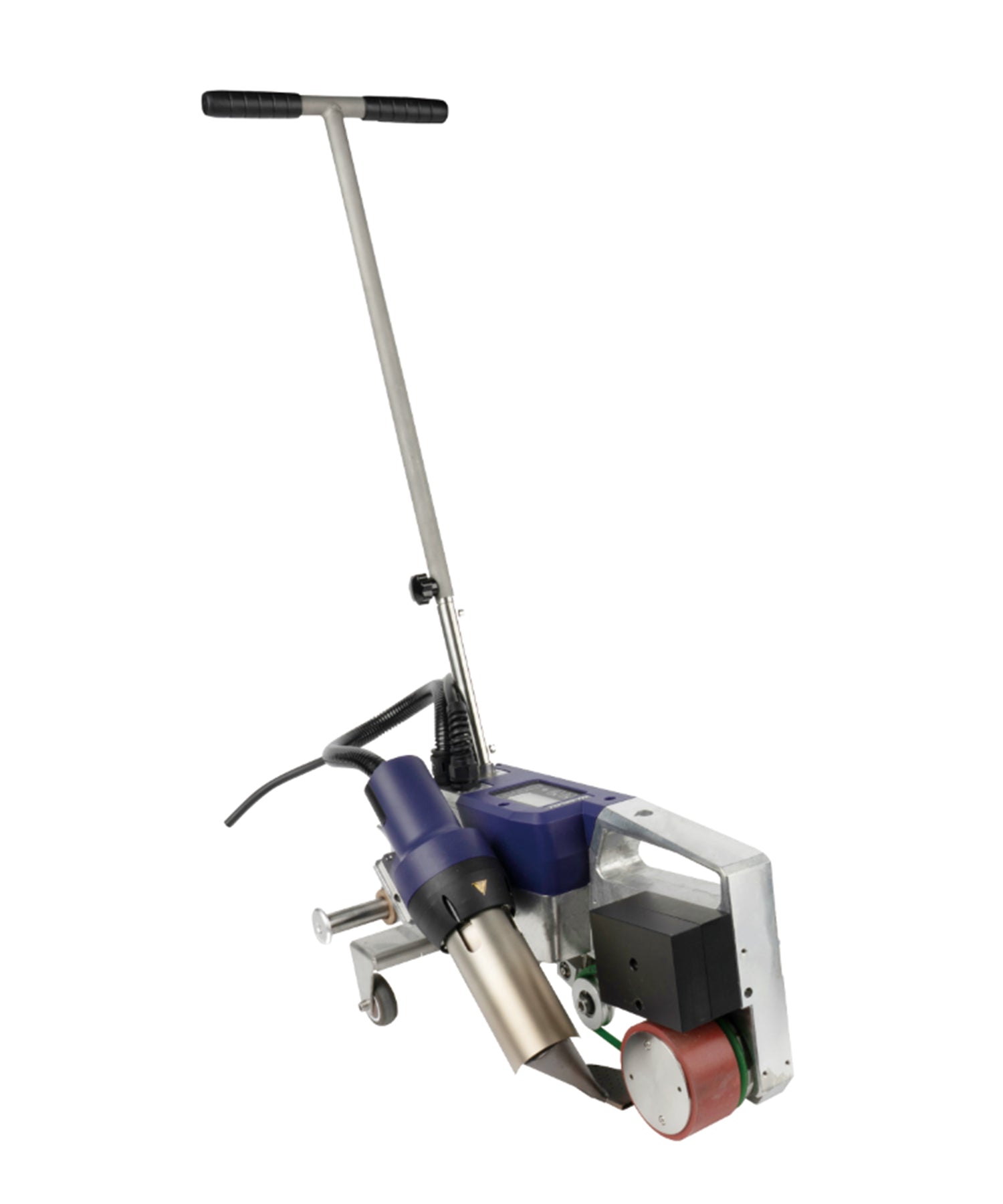
The two BOOSTER machines share the same motor rating and accept the same rod diameter, but they differ in output rating and working range, so the choice between them is driven by the wall thickness and the length of weld on the drawing. The RYH3400C is our own machine and takes a wider rod range up to ø 5.0 mm, which suits fabricators running heavier work on thick-wall tanks. It is built in our own factory to our internal quality-control requirements, and it carries a 1-year warranty with lifetime technical support.

Nozzles for Tank Work: Tubular, Speed and Wide Slot
Nozzles are where ordering mistakes can easily happen, because the connection on the gun and the nozzle you actually weld with are often two separate parts.
On the ENERGY HT1600D the gun connection takes a tubular nozzle. The tubular nozzle (ø 31.5) ø 5 mm mounts on the gun first, and the smaller speed welding nozzle (ø 8.0) Profile D then mounts through that tubular nozzle. The two parts are ordered together, not as alternatives. Our nozzle guide compares the three families in more detail.
A wide slot nozzle spreads the hot air across a band instead of a point. That band is what overlap welding of sheet and liner needs, so the wide slot nozzle belongs to the overlap side of the kit — a different working width suits a different seam geometry and access, and a narrower slot reaches edges, corners and confined detail where a wider nozzle may not sit flat. It is not the nozzle that builds the structural fillet joints on a tank; the extruder and its shoe do that.
Welding Shoes: Matching the Shoe to the Joint
On an extrusion welder the welding shoe sits at the working end and shapes how the extruded bead enters the joint. It is a wear part, and the joint geometry decides which family you need. On tank work the two families that come up again and again are K shoes and V shoes — and they are not interchangeable, because they are made for different joints:
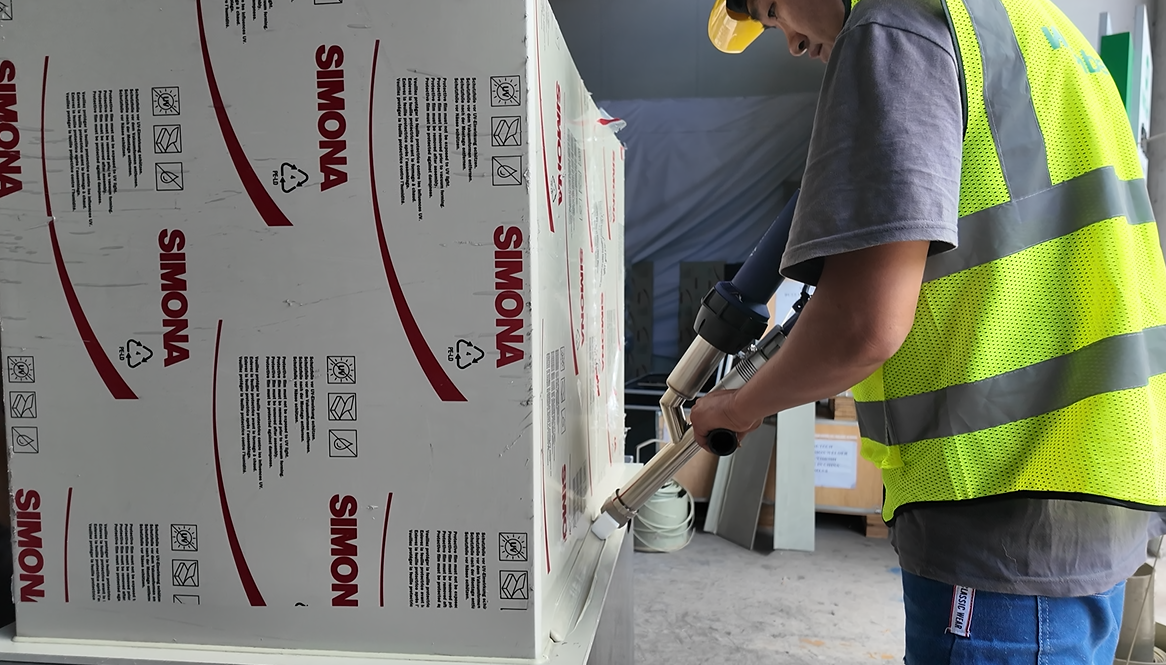
- K shoes for fillet joints, where one surface meets another at an angle — base-to-shell, shell-to-stiffener, baffle and support welds. These are common structural joints in plastic tank fabrication, so the K shoe is usually one of the first profiles to get right.
- V shoes for V-joints and butt welds of different sizes, where two edges are prepared to meet in a V.
- Round and right-angle shoes for curved joints and inside corners around fittings, manways and internal details.
- Overlapping welding shoes for extrusion edge or overlap joints where filler material is deposited along the joint.
- Blank shoes when a joint needs a profile that is not a standard shape.
A useful starting set is a K shoe in the size that matches your most common fillet joint, a V shoe for V-prepared butt joints, and a round or right-angle shoe for penetration work. Keep a spare of the one you wear fastest, because a worn profile changes how the bead sits. The K8/10 welding shoe and the overlapping welding shoes are examples of two of these families to check against your own machine; our EX2/EX3 welding shoe guide walks through the profiles and part numbers.

The Rest of the Kit: Rod, Roller, Preparation and Cleaning
The consumables and support tools matter as much as the machines:
- Welding rod in the base material and diameter the machine accepts — for example HDPE welding rod, ø 4 mm. Rod has to match the sheet you are welding, and it is worth holding it in the diameter your extruder runs most often.
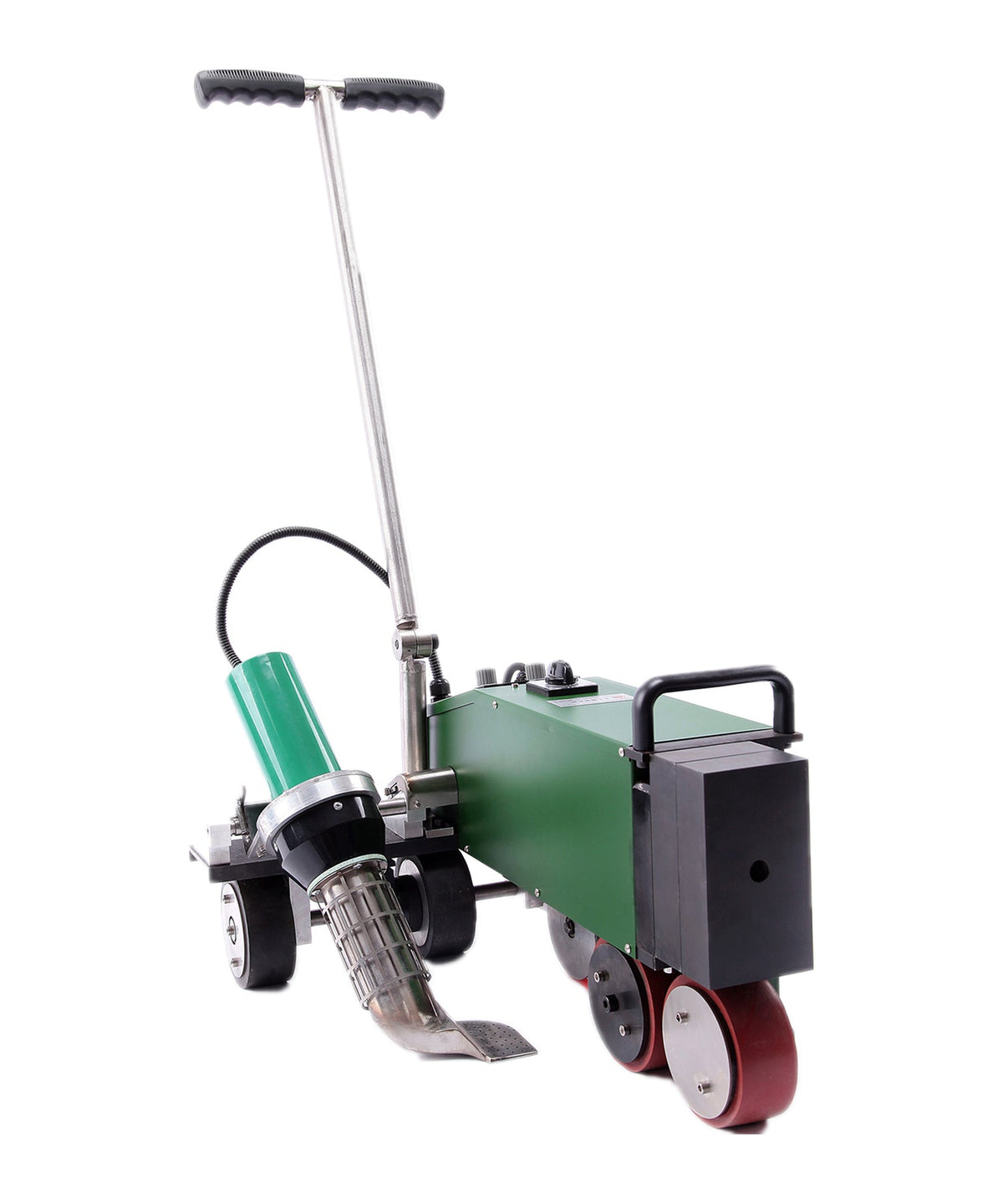
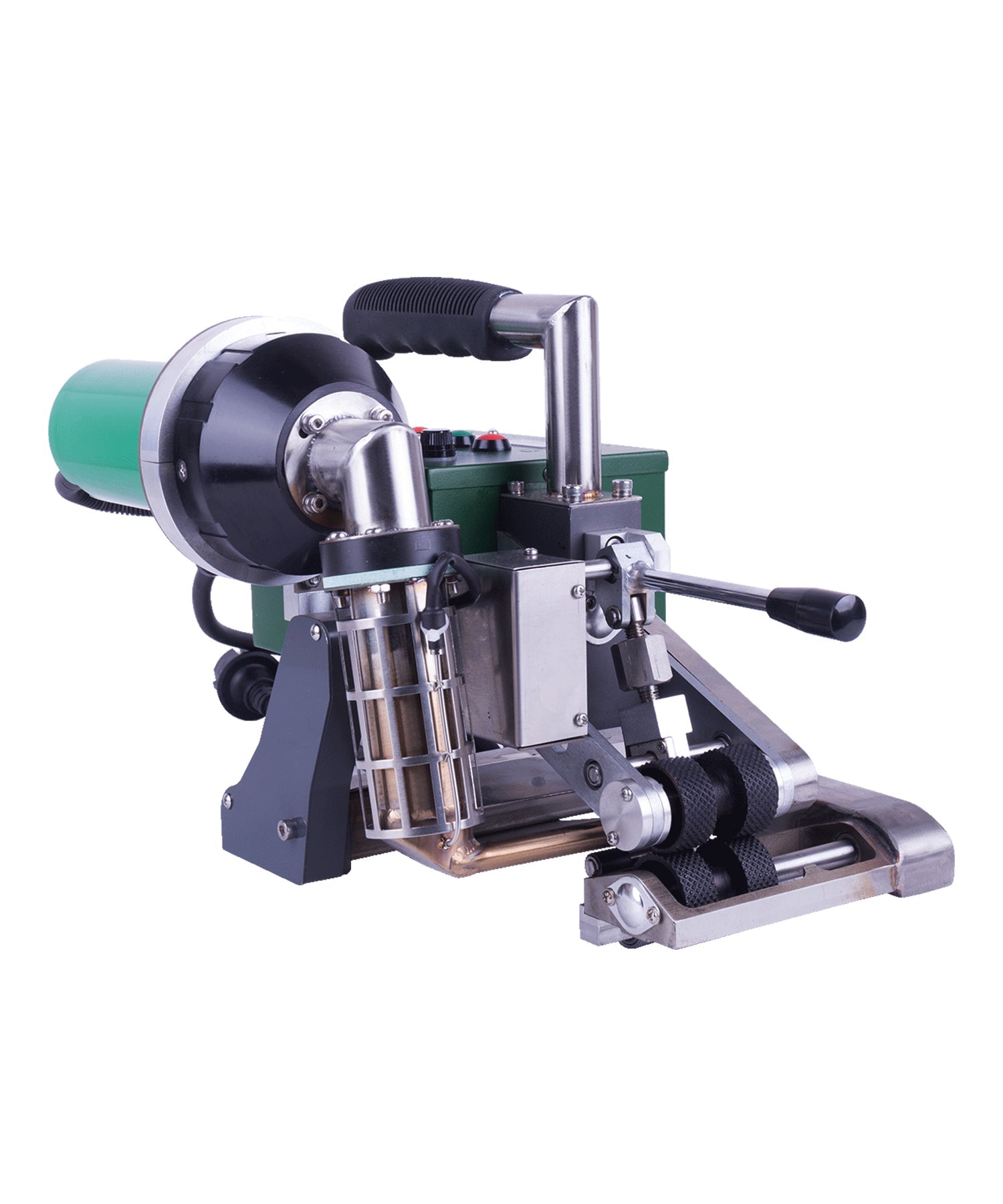
- A pressure roller for overlap welding, where the seam is pressed as the hot air gun passes — a 40 mm silicone pressure roller is a practical option for wider overlap work; choose the roller width to match the seam geometry and access. Like the wide slot nozzle, it belongs to the overlap side of the kit rather than the structural joints.
- Surface preparation and cleaning tools — scrapers, a brass wire brush and clean cloths. Contamination and weathered surface layers are a common cause of poor fusion, and they are cheaper to deal with before the weld than after.
A Practical Kit Checklist for Tank Fabricators
| Job on the drawing | Tool in the kit | Check before ordering |
|---|---|---|
| Base, shell and stiffener fillet welds | Hand extrusion welder + K-profile shoe | Working range vs wall thickness; rod diameter |
| Butt joints prepared as a V | Hand extrusion welder + V-profile shoe | Joint size and preparation |
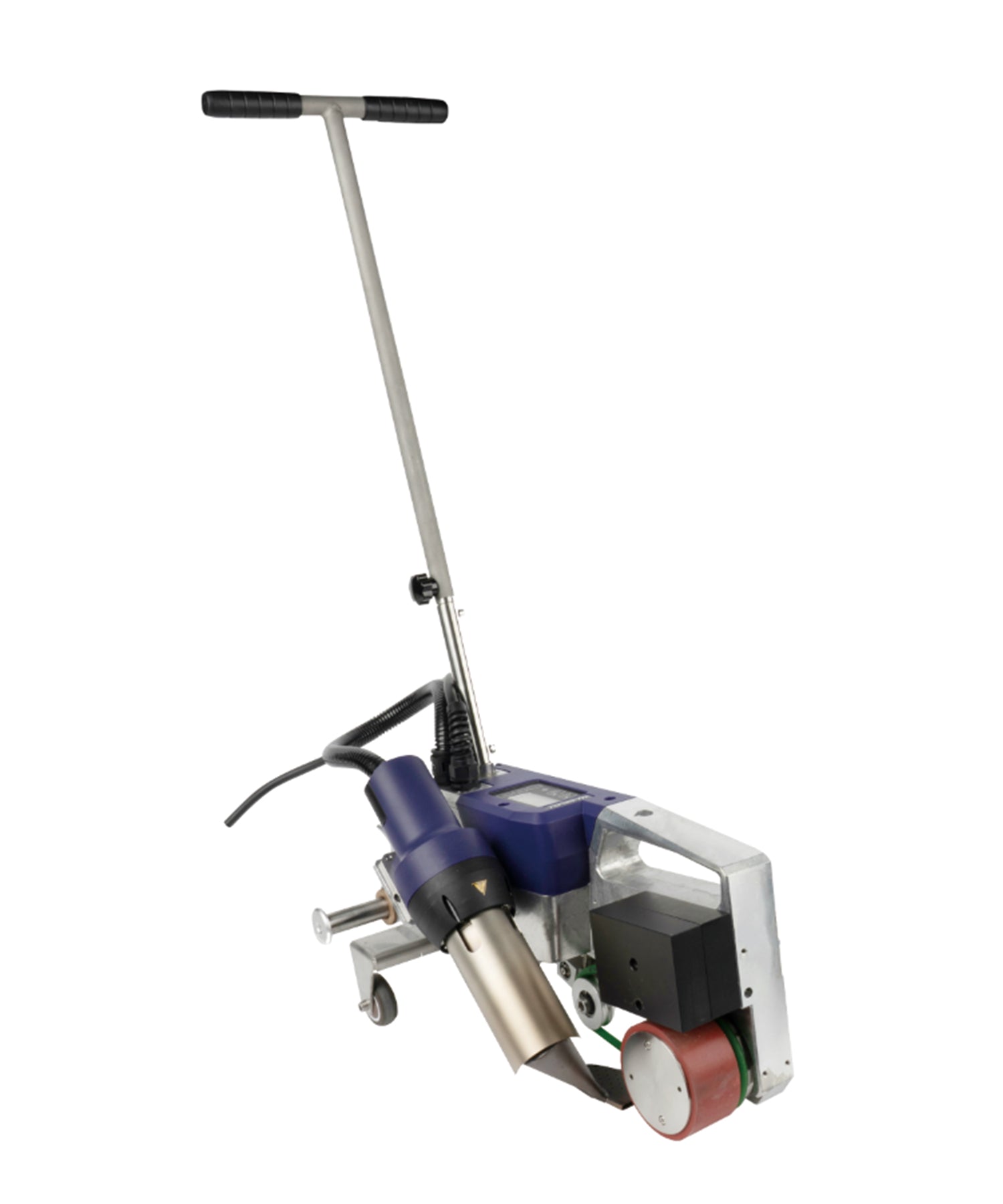
| Overlap seams and tacking | Hot air gun + wide slot nozzle + pressure roller | Nozzle connection on your gun |
| Tank nozzles, manways and penetrations | Round or right-angle shoe, small nozzle | Access and joint geometry |
| Weld zone preparation | Scraper, brass brush, cloths | Material and surface condition |
What to Confirm Before You Order
Four checks avoid most wrong orders:
- Machine model and nozzle connection. Confirm which gun you own before choosing nozzles. Connections are not shared across every model, and the nozzle family that fits one gun may not fit another.
- Rod and shoe for your machine and material. Match the rod diameter to the extruder and the shoe profile to the joint — a K shoe and a V shoe are made for different joints. Shoe profiles are not universally interchangeable between models. Our Weldy part number guide shows how to confirm an item before you order it.
- Voltage version. Confirm the supply at your site and order the version that matches it. We list separate voltage versions for a reason; do not assume one can be substituted for the other.
- Weld parameters and acceptance. Set the working parameters from the sheet supplier's instructions or the project specification for the tank, then trial weld a sample of the sheet you are fabricating and record the settings that give a sound joint before you run production welds.
Safety: Work with adequate ventilation, keep the hot nozzle and freshly welded bead away from skin and combustible material, and do not overheat the sheet — a softened or discoloured surface is a sign to back off, not to continue. Follow the material supplier's safety data sheets and your site rules for hot work.
Building the Kit Around the Job, Not the Other Way Round
The most efficient way to buy is to start from the joint list on the drawing and work backwards. The fillet joints set the extruder, the extrusion rate and the K shoe. The overlap and detail work set the hot air gun, its nozzle and the roller. The material sets the rod — and preparation tools keep all of them producing sound welds.
Our extrusion welder range covers the hand extruders above and the support tools that go with them.
Not sure which combination fits your tank build? Our technical team has worked with plastic welding equipment since 2006 — tell us the material, wall thickness and joints on your drawing, and we will help you put the kit together. You can read more about our technical team or ask us directly.
Nozzles, welding shoes, rod and rollers for tank work:
Article by the Weissenberg Technical Team. Product specifications may vary by model and by the version supplied; confirm the current specification on the product page before ordering.




Leave a comment
This site is protected by hCaptcha and the hCaptcha Privacy Policy and Terms of Service apply.