
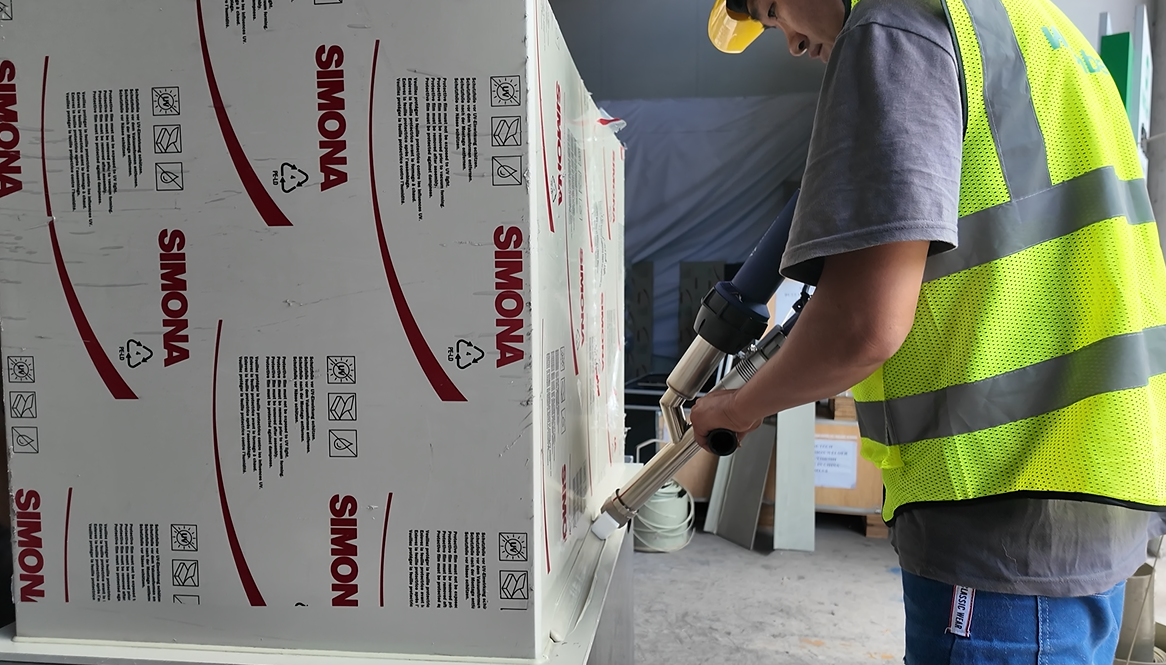
HDPE Boat Repair Tools: Hot Air Gun vs Extrusion Welder
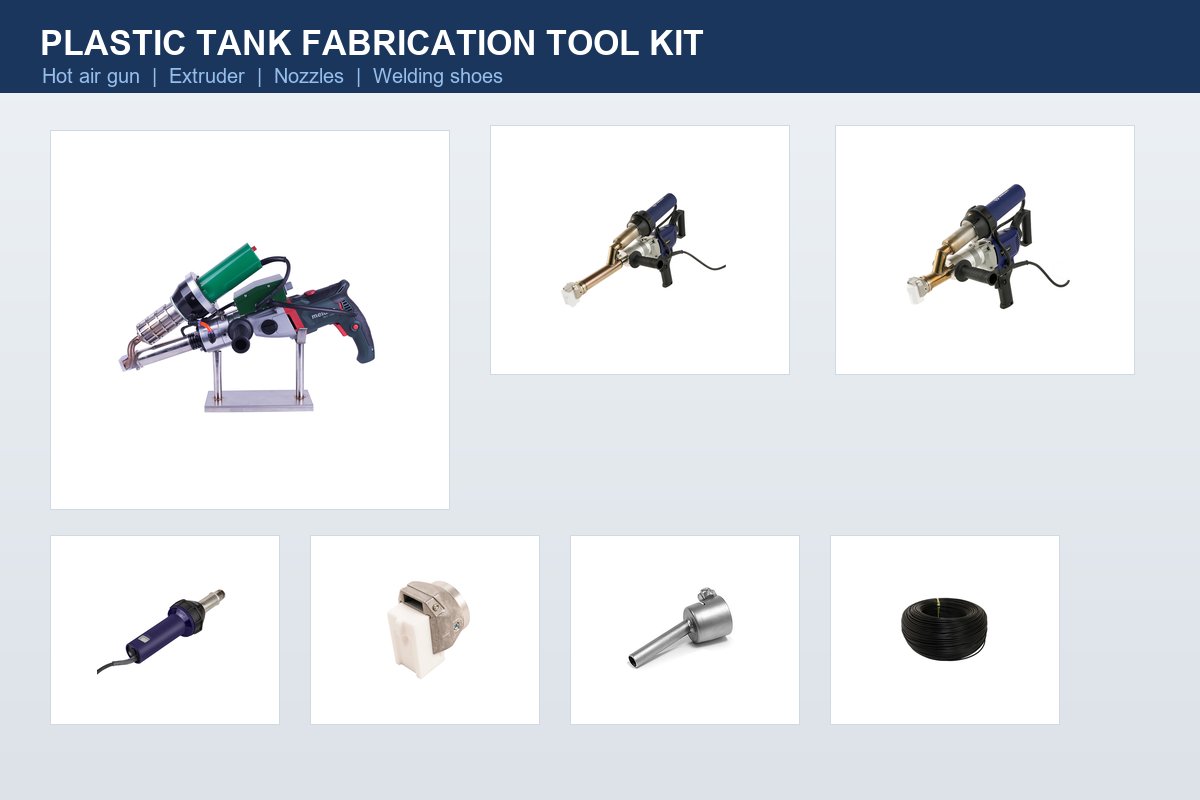
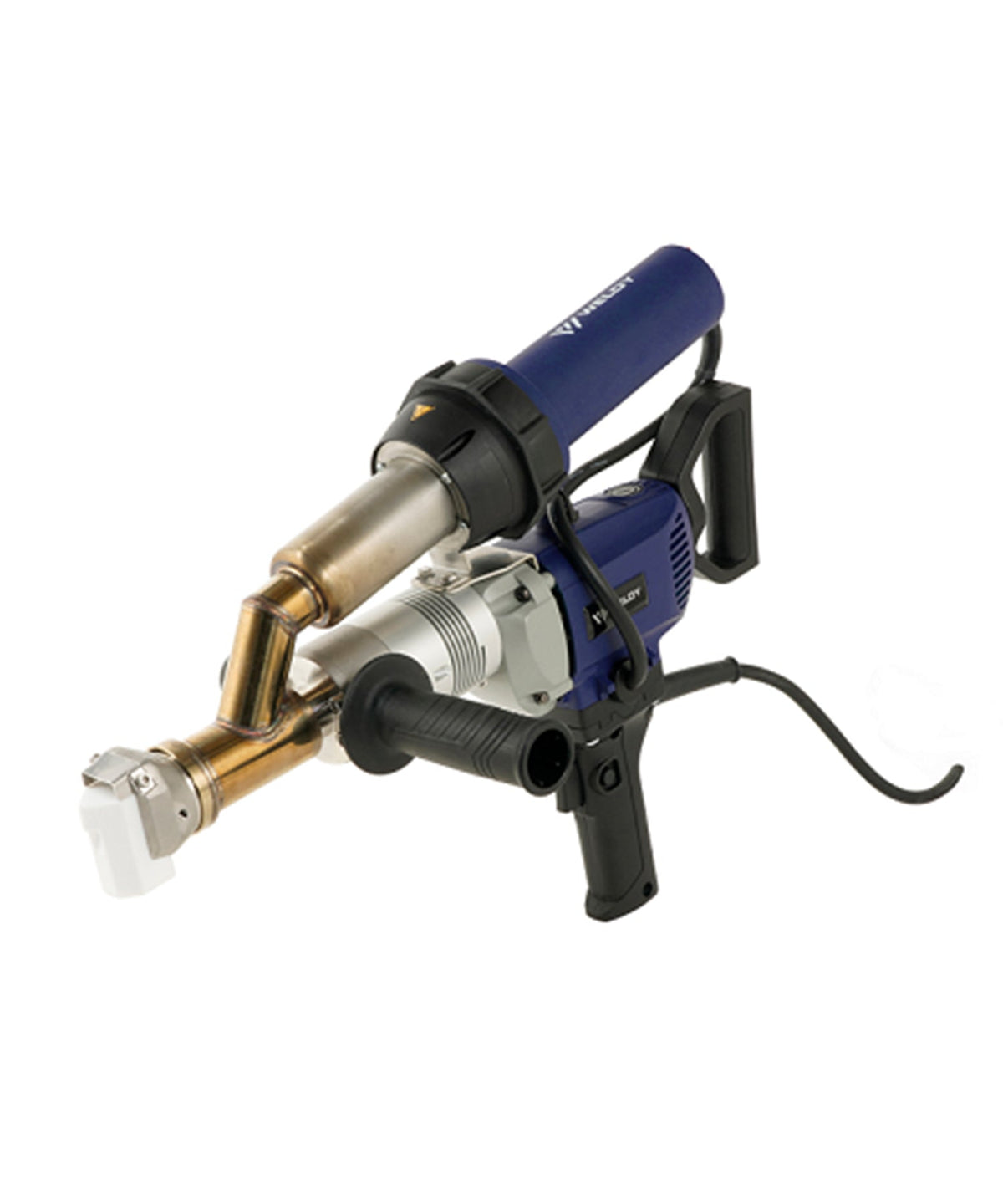
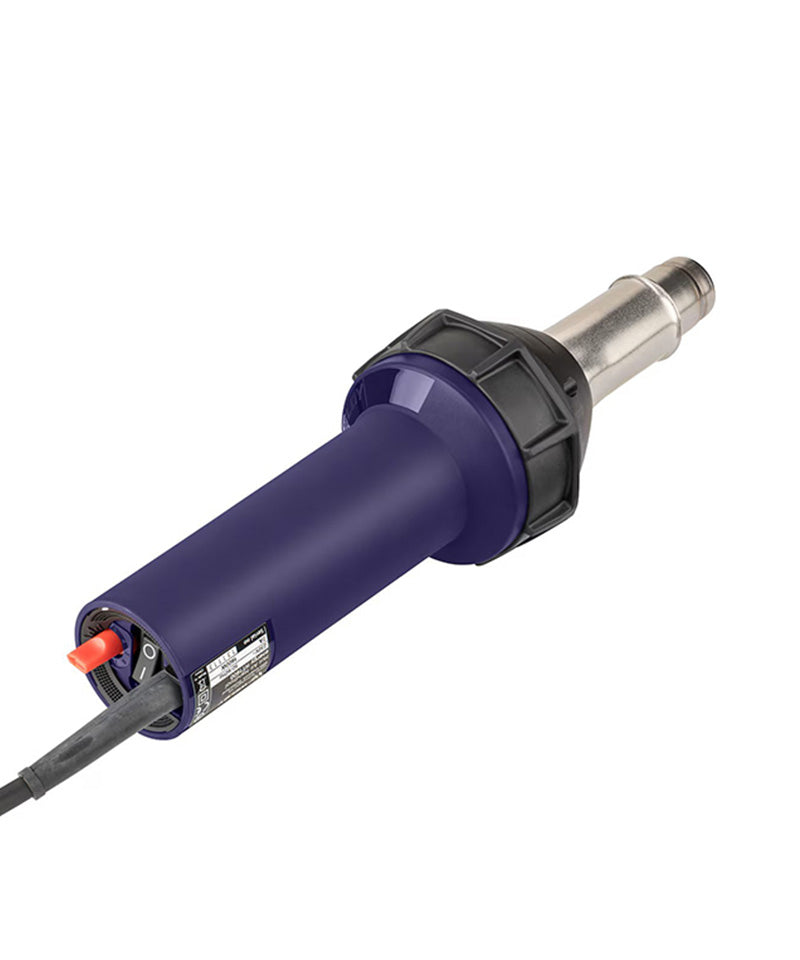
For HDPE boat repair, the choice is usually between two tool families. A hot air gun (such as the Weldy ENERGY HT1600 or HT1600D) is the common option for hand-welded overlap patches, tacking and detail work on thin or complex geometry. An extrusion welder (such as the Weldy BOOSTER EX2 or EX3) is the common option where a manufacturer-approved repair procedure calls for extrusion welding on hull panels or thicker sections. Match the tool to the damage, pair it with the right accessories, and confirm every step against the manufacturer-approved repair procedure for the boat.
What HDPE Boat Repair Covers Here
This page looks at plastic welding as a repair method for HDPE hulls, decks, internal tanks, console panels and similar fabricated components. It does not cover structural design, laminate layup, or work that should be referred back to the boat builder or a qualified survey shop. The aim is to help you choose between the two tool families most builders reach for, and to set out the accessories that go with each so the repair can be carried out in line with the manufacturer's approved procedure.
Reading the Damage: Quick Decision Path
Use the path below to land on a tool family before opening the manufacturer's procedure. The procedure itself still decides the final step.
How to Identify the Damage Before Picking a Tool
Tool selection follows from the damage, not the other way around. A short read-through of the affected area, before any equipment is heated up, is what keeps the repair inside the manufacturer's procedure.
- Type of damage. Surface scuff, hairline crack, puncture, open seam, missing corner, or full panel replacement each point to a different welding approach.
- Location on the boat. Hull bottom, chine, transom, deck joint, internal tank baffle, or console cut-out each constrain access and how the gun or extruder is held.
- Sheet thickness and geometry. Thin sheet, tight radius and edge work favour a hot air setup; thicker panels and longer runs more often sit with an extrusion setup.
- Whether a filler material is permitted. Some manufacturer-approved procedures only allow hand-welded overlap; others specifically call for extrusion welding. The procedure decides this — not the tool on the shelf.
Hot Air Welding for HDPE Boat Repair
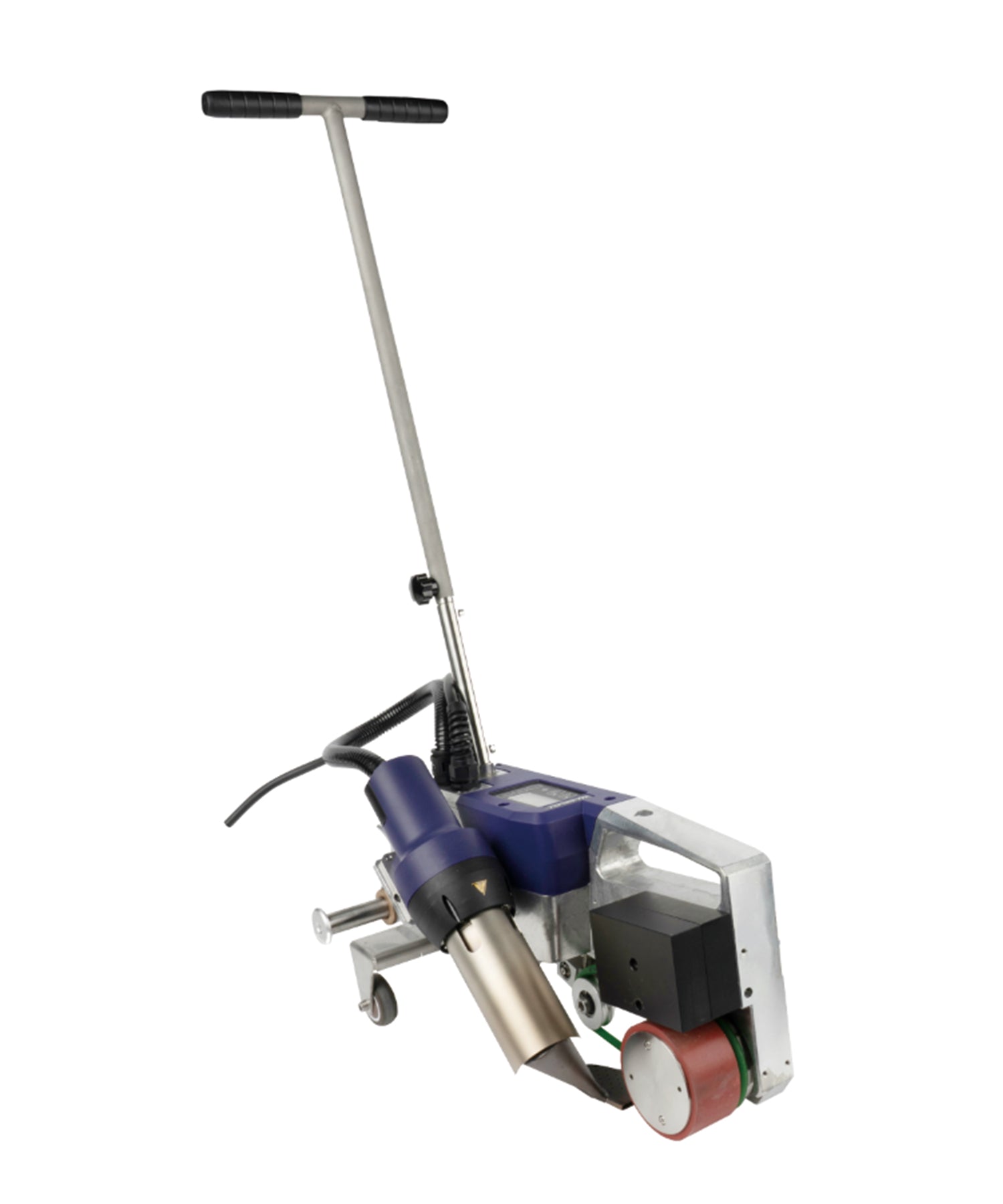
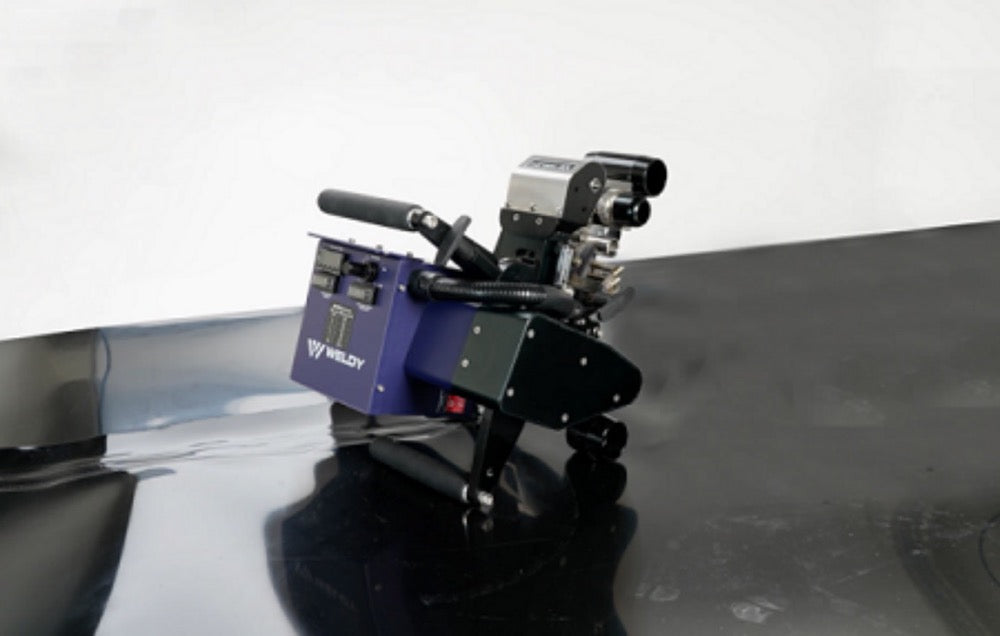
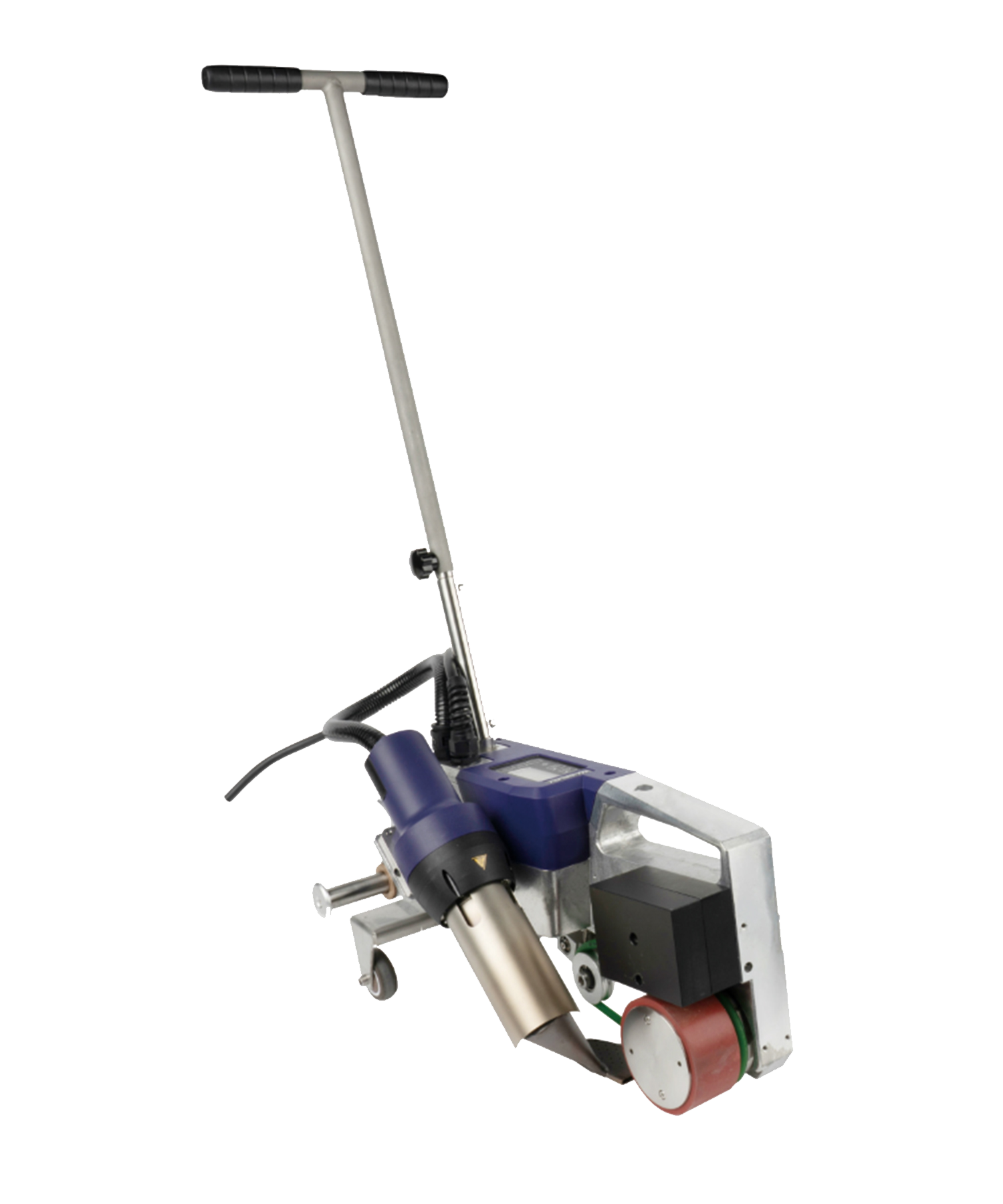
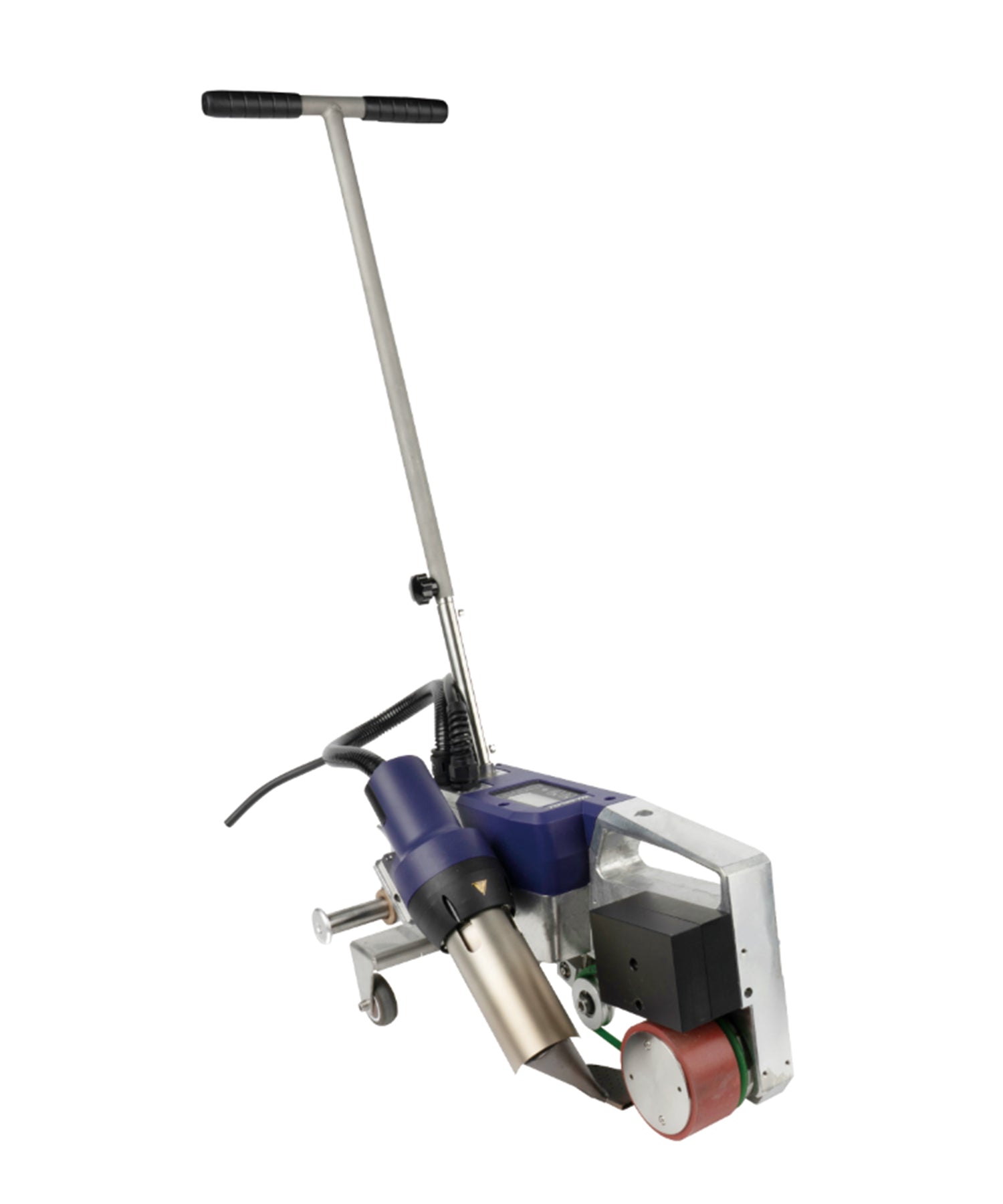
For overlap-patch welding, a pressure roller consolidates the heated seam. For speed welding, tacking, preheating and detail work, the nozzle and technique depend on the approved repair procedure. For HDPE boat repair this is the common path for hand-welded overlap patches, tacking, preheating and detail work on thin sheet, edges, corners, internal baffles and other confined geometry where an extruder would be hard to position.
Two Weldy ENERGY models in the Store cover most boat-repair work:
- Weldy HT1600 — 1,600 W, 40–700 °C stepless temperature, fixed 240 l/min airflow, 0.99 kg.
- Weldy HT1600D — 1,600 W, 40–620 °C on an LCD readout, 120–240 l/min adjustable airflow, 1.2 kg. The LCD readout is useful when a procedure calls out a target temperature band rather than a dial position.
Both guns share the same Ø 31.5 mm tubular nozzle interface. Voltage versions are listed as separate articles — 120 V and 230 V are not the same product, so confirm the article that matches your supply before ordering. For a closer look at nozzle and accessory fit across the HT1600, HT1600D and HT3400, see the Weldy nozzle compatibility guide.
Extrusion Welding for HDPE Boat Repair
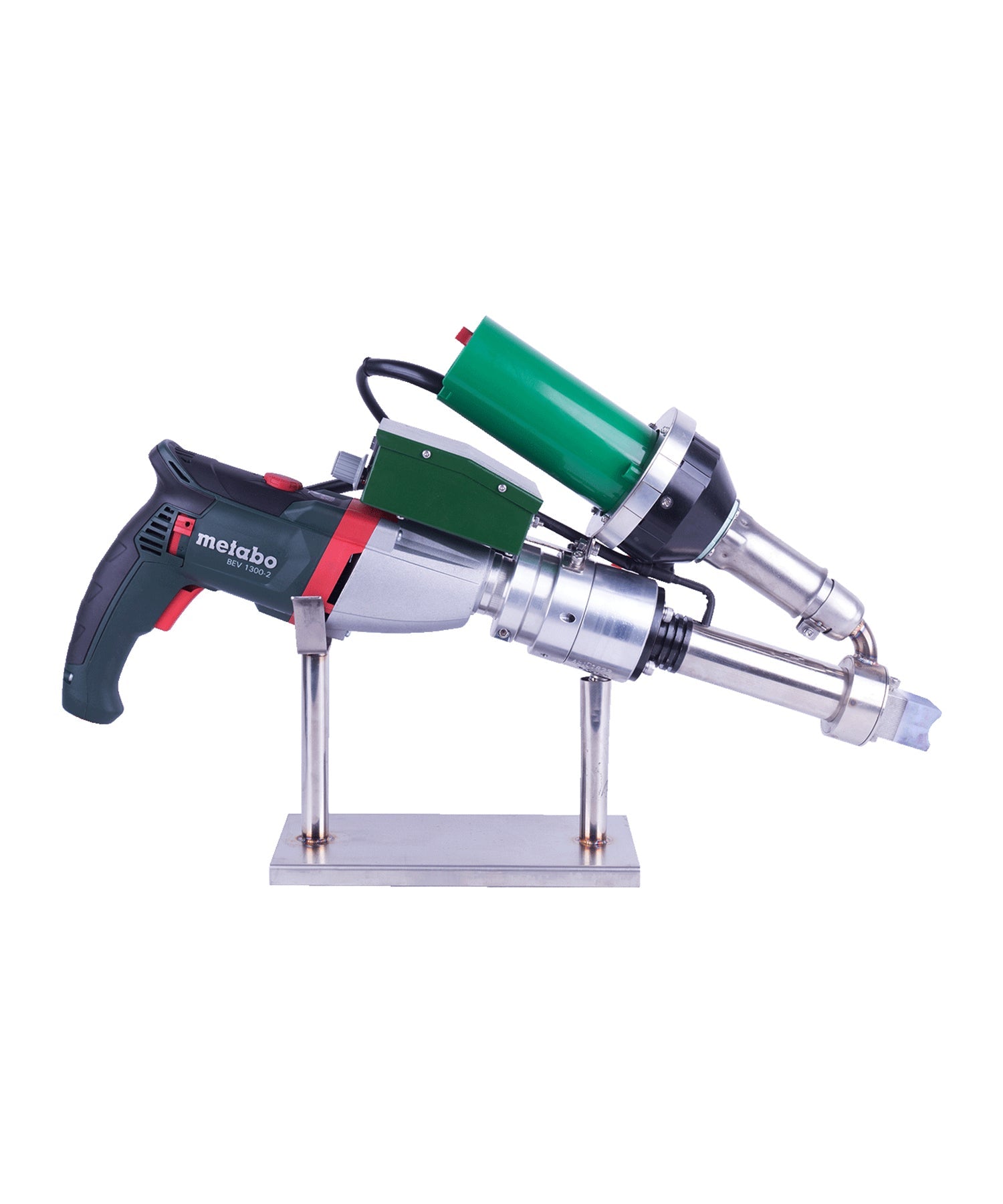
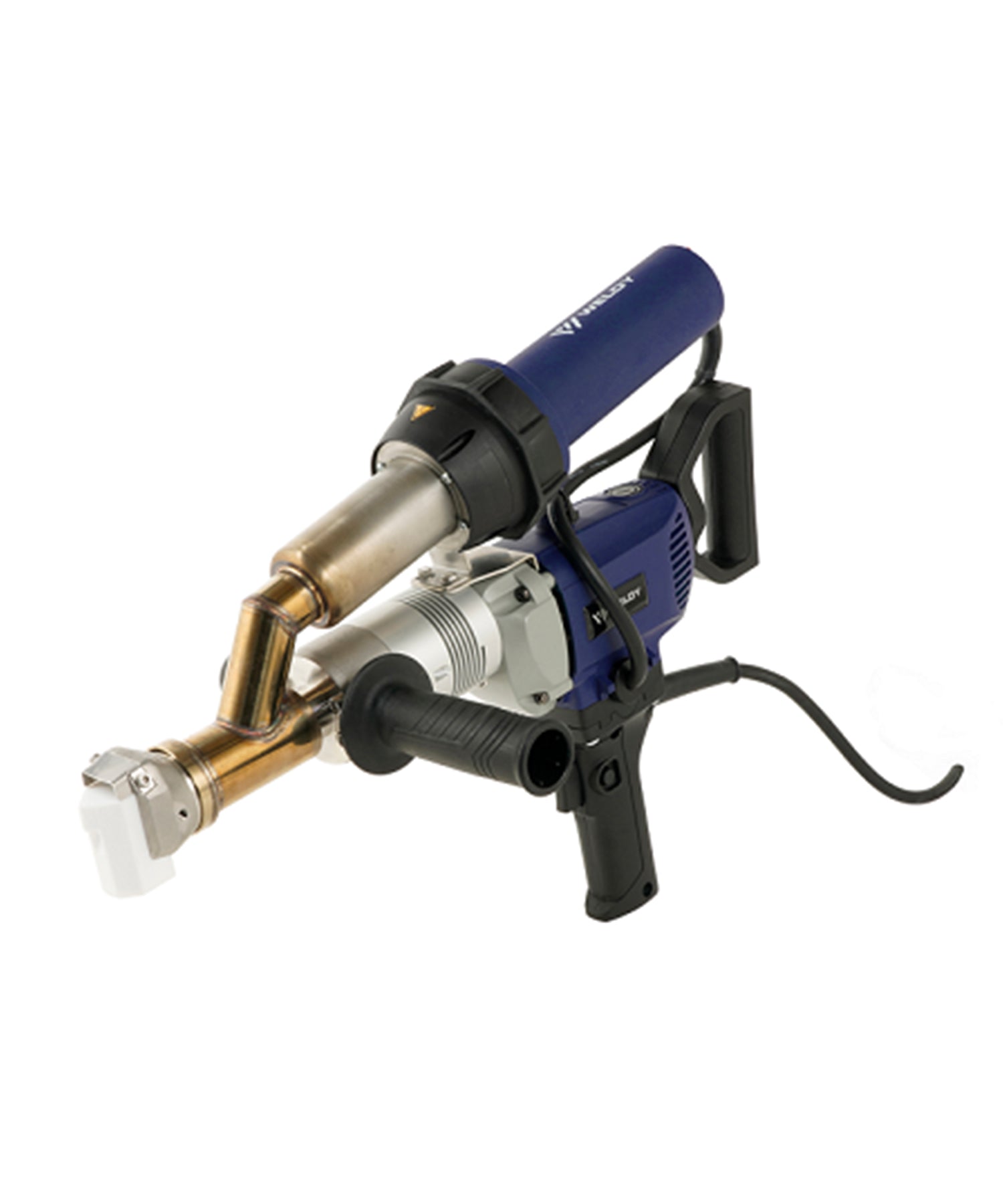
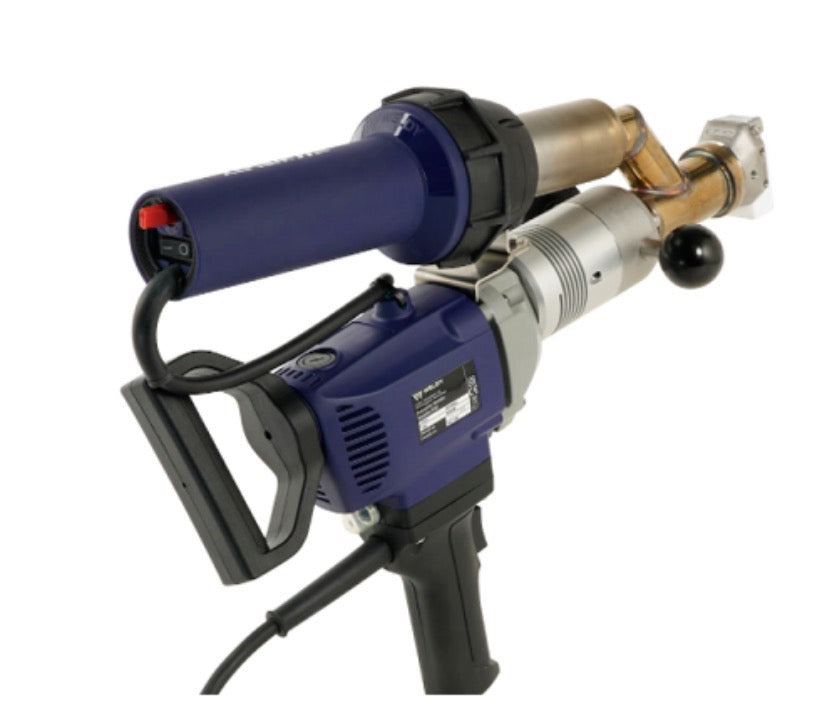
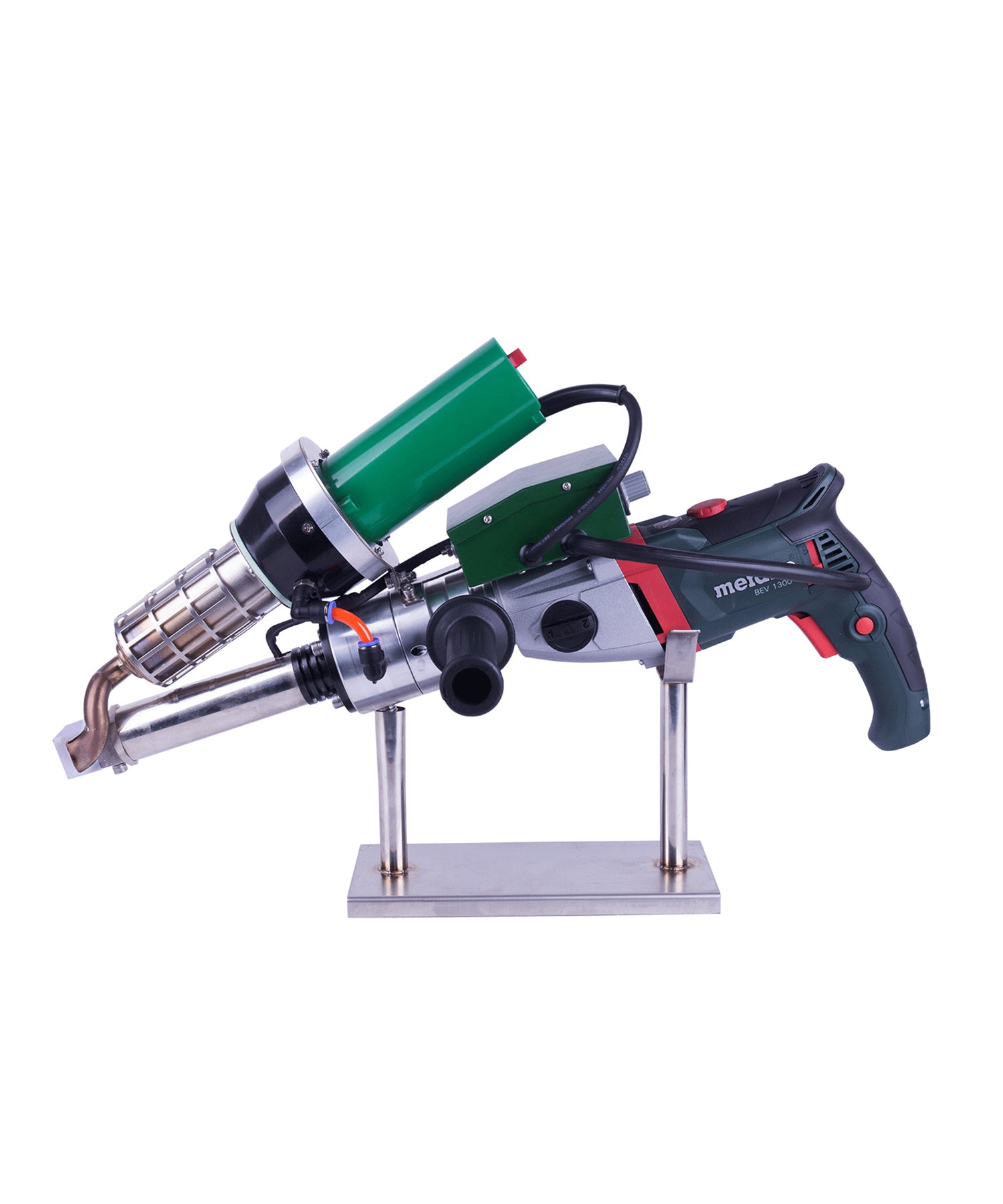
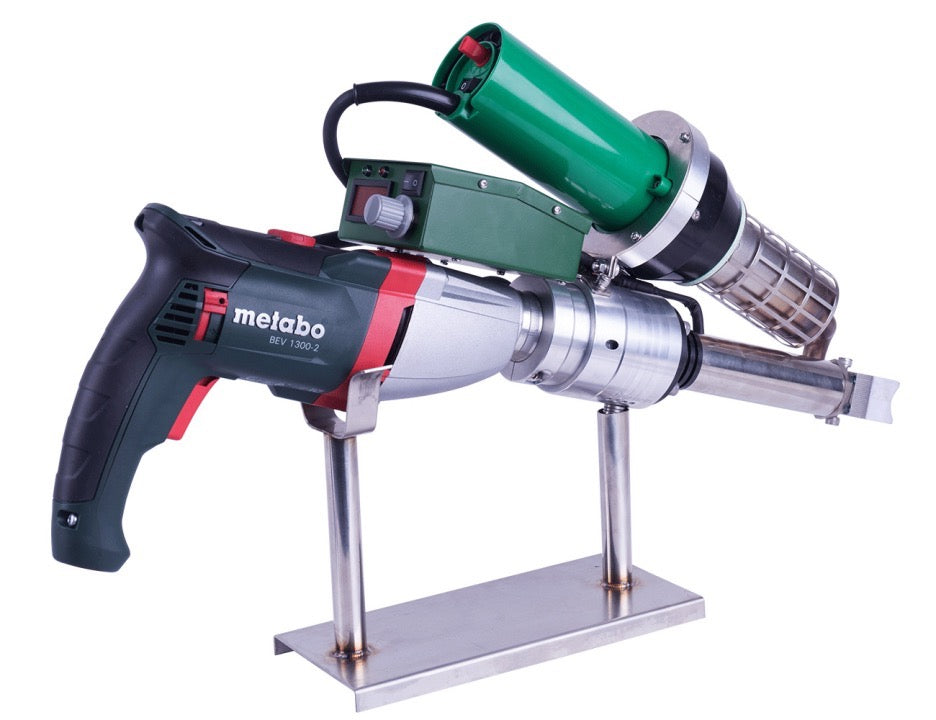
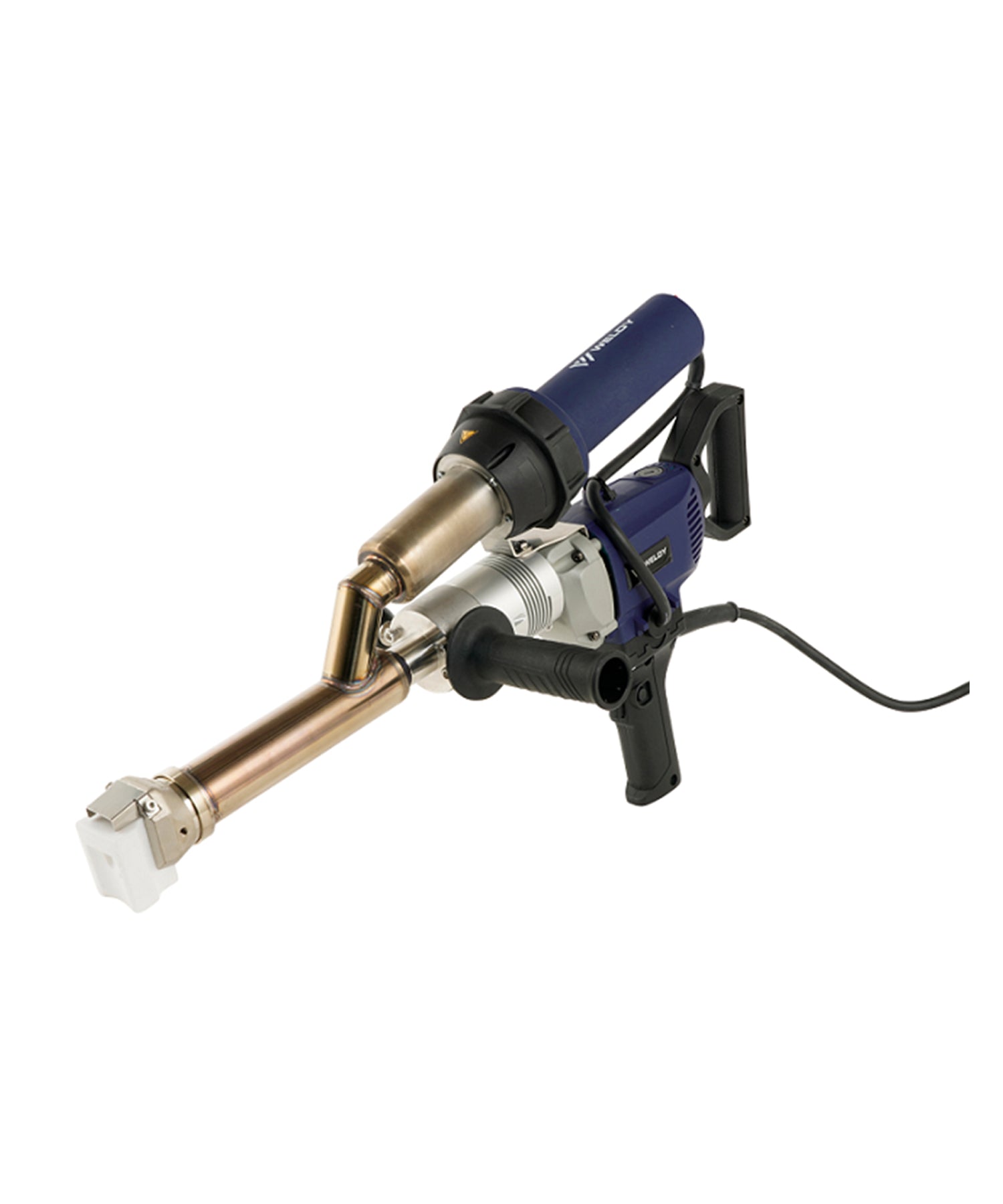
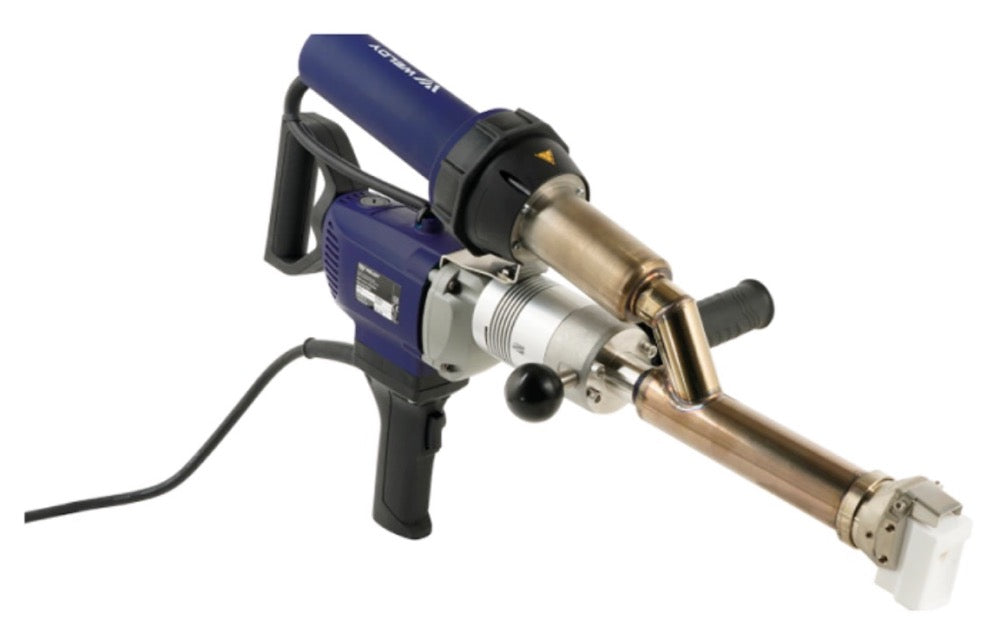
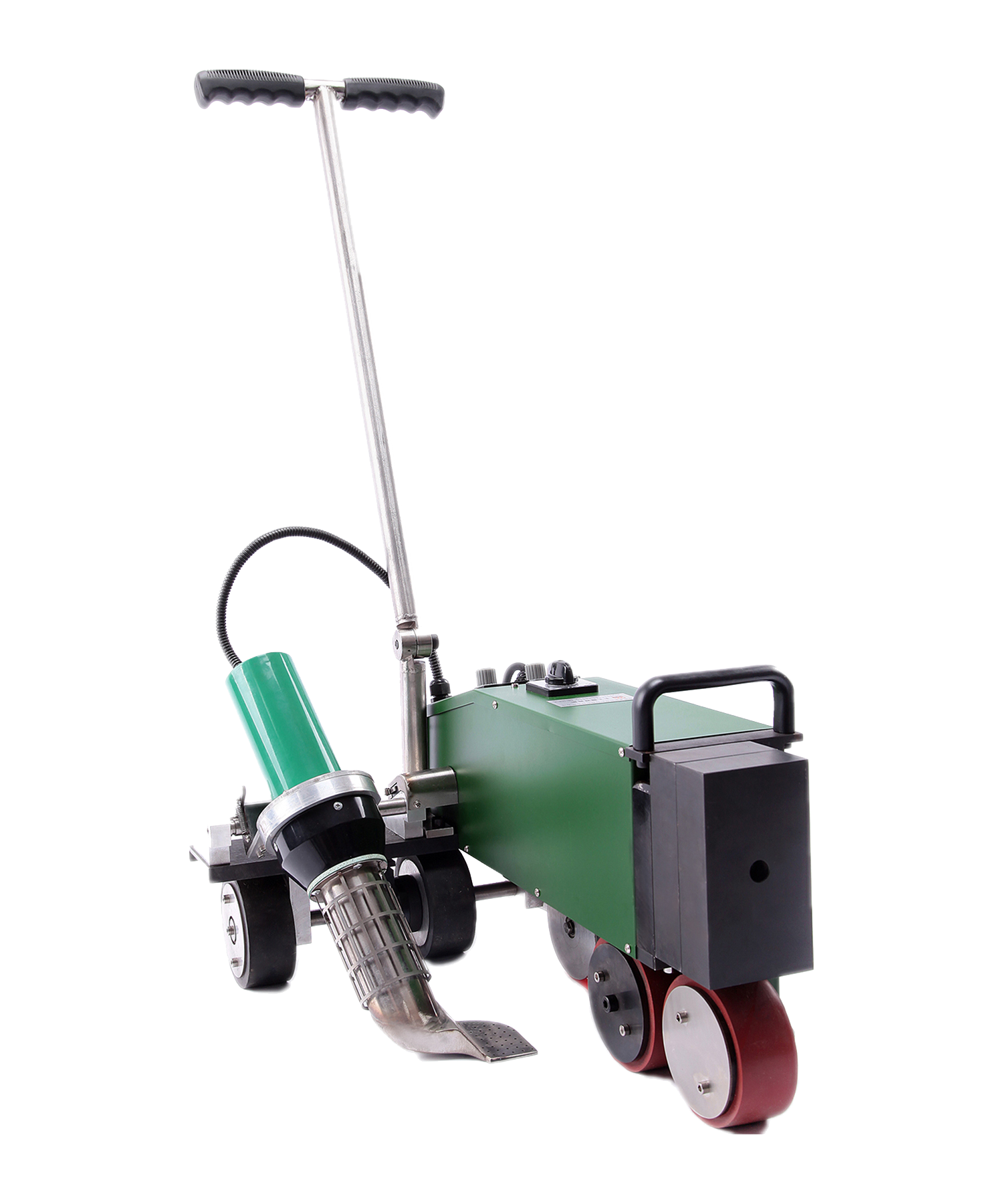
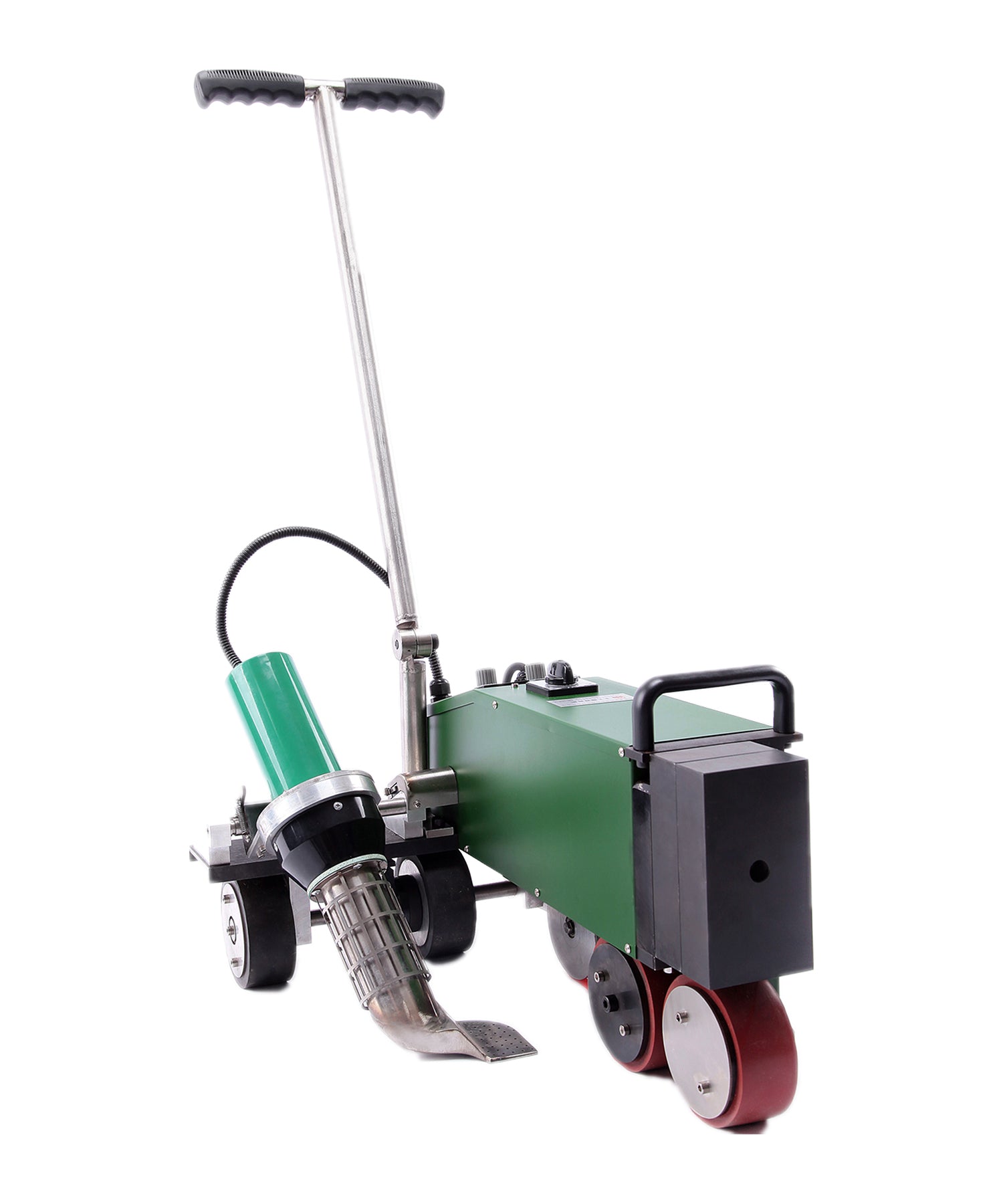
An extrusion welder feeds filler through a heated barrel and lays it into a prepared groove or joint. For HDPE boat repair this is the common path where the manufacturer's repair procedure calls for extrusion welding — on hull panels, structural sections, longer seams or thicker material where a hand-welded overlap is not what the procedure allows. In boat-repair work the filler is typically a 3–4 mm welding rod, but extrusion welding covers more than that; the filler form is set by the manufacturer's procedure, not by the tool on the shelf.
Two Weldy BOOSTER hand extruders are stocked in the Store:
- BOOSTER EX2 — 3,000 W, 6.4 kg.
- BOOSTER EX3 — 3,000 W, 6.9 kg.
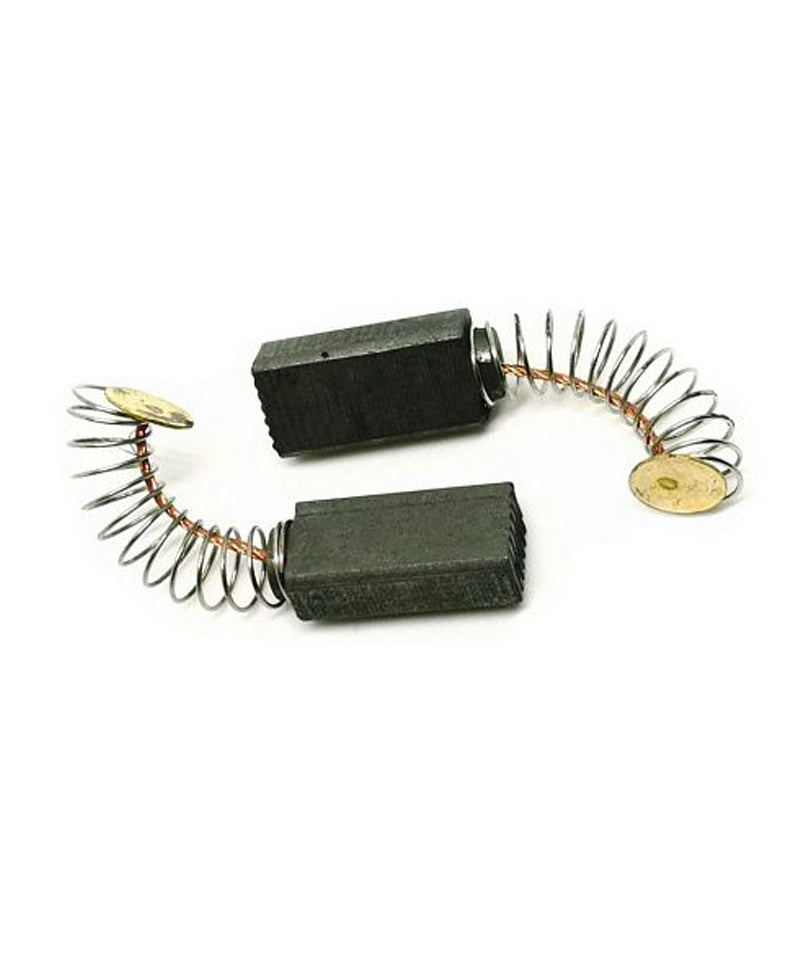
Both machines share the Ø 3–4 mm filler rod format, and the same 115.069 carbon brushes. They have different output ratings; the size of weld the manufacturer's procedure specifies, and the application demand of the repair, are what should drive which extruder is the right one to pick up — not a generic material-thickness rule. Confirm the model on the product page before ordering.
Choosing the Right Accessories
The tool is only half of the setup. The nozzle, roller or welding shoe fitted to it decides what geometry the repair can actually be carried out in.
For hot air welding
- Tubular nozzle (147.250) — the Ø 31.5 mm base tube that the speed welding nozzle and the tacking nozzle mount into. Wide slot nozzles fit the gun directly and do not require the tubular nozzle.
- Speed welding nozzle (5 mm: 125.315; 4 mm: 146.740) — mounts into the tubular nozzle, guides the filler rod and directs hot air onto both the rod and the parent material. The operator maintains the required welding pressure through the rod/nozzle setup. A silicone pressure roller is used for overlap welding, not for normal speed welding.
- Wide slot nozzle (20 mm: 124.772; 40 mm: 124.777) — a different working width and seam geometry, useful for broad patches and wider overlap where the procedure allows. Mounts directly on the gun.
- Silicone pressure roller (40 mm: 130.611; 30 mm: 130.146) — consolidates hand-welded overlap and patch seams in hot-air work. This is a hot-air-consolidation tool, not a part of the extrusion welding setup.
For extrusion welding
- Filler rod — the Weldy welding rod (115.366) stocked in the Store is a starting reference, but the rod actually used must be a manufacturer-approved, materially compatible filler for the installed hull — not a generic HDPE rod. Cross-family or same-family rod is a project decision set by the repair procedure.
- Welding shoe — the shoe fitted to the extruder dictates the bead profile. Check the shoe geometry on the EX2 or EX3 product page before ordering.
Repair-procedure check. Whether a hand-welded overlap or extrusion welding is the right call — and the filler form, geometry, preheat, ambient and inspection steps that go with it — is set by the boat builder or the manufacturer of the installed material. Confirm those points with the procedure on file before any weld is made.
Confirm the Repair With the Manufacturer-Approved Procedure
This is the step that decides whether the repair is a long-term fix or a temporary patch. The two tool families above cover the most common situations, but the procedure on file for the boat sets:
- Whether a hand-welded overlap or extrusion welding is permitted for the damaged area, and on what minimum patch geometry.
- The filler material that is approved for the installed hull.
- How the welded area is to be prepared, preheated and inspected (trial weld against the same material, visual check, mechanical check, or whatever the procedure lists).
- How the repair is recorded — what goes in the boat's maintenance log, and who signs it off.
If the procedure is not on hand, request it from the boat builder or the manufacturer of the installed material before heating up any tool. Weissenberg supplies the equipment; the procedure remains the project's responsibility.
Safety Notes for HDPE Boat Repair
- Disconnect power before changing nozzles, shoes or rods. Hot barrels, heater channels and nozzles stay hot enough to burn for a while after the tool is switched off.
- Work in a ventilated area. HDPE heated above its working range can release fumes; ventilation keeps the area inside the boat safe.
- Keep a fire watch. Hot-air work inside a hull or near tank linings means a clear area, no loose solvent and a means to smother a flame within reach.
- Do not run the tool unattended. Both the gun and the extruder should be set down on a stable surface between welds.
- Follow the tool's operating instructions for first-time use, daily checks and end-of-day cleaning.
Specifications at a Glance
| Tool | Power | Airflow / Output | Temperature | Weight | Notes |
|---|---|---|---|---|---|
| Weldy HT1600 | 1,600 W | 240 l/min (fixed) | 40–700 °C stepless | 0.99 kg | 120 V or 230 V version — confirm before ordering |
| Weldy HT1600D | 1,600 W | 120–240 l/min (adjustable) | 40–620 °C LCD | 1.2 kg | 120 V or 230 V version — confirm before ordering |
| Weldy BOOSTER EX2 | 3,000 W | 3 mm rod: up to 1.5 kg/h · 4 mm: up to 2.2 kg/h | Open-loop hot-air preheat | 6.4 kg | Different output rating from the EX3 |
| Weldy BOOSTER EX3 | 3,000 W | 3 mm rod: up to 2.5 kg/h · 4 mm: up to 3.6 kg/h | Open-loop hot-air preheat | 6.9 kg | Different output rating from the EX2 |
Not sure which tool or accessory fits your repair? Send us the boat builder, the panel thickness and the manufacturer's repair procedure, and we will help you match the equipment to the procedure on file.
About this article. Written by the Weissenberg Technical Team. Weissenberg supplies genuine Weldy hot air tools, extruders and accessories; the boat manufacturer's repair procedure remains the source of truth for any HDPE boat repair.





Leave a comment
This site is protected by hCaptcha and the hCaptcha Privacy Policy and Terms of Service apply.