
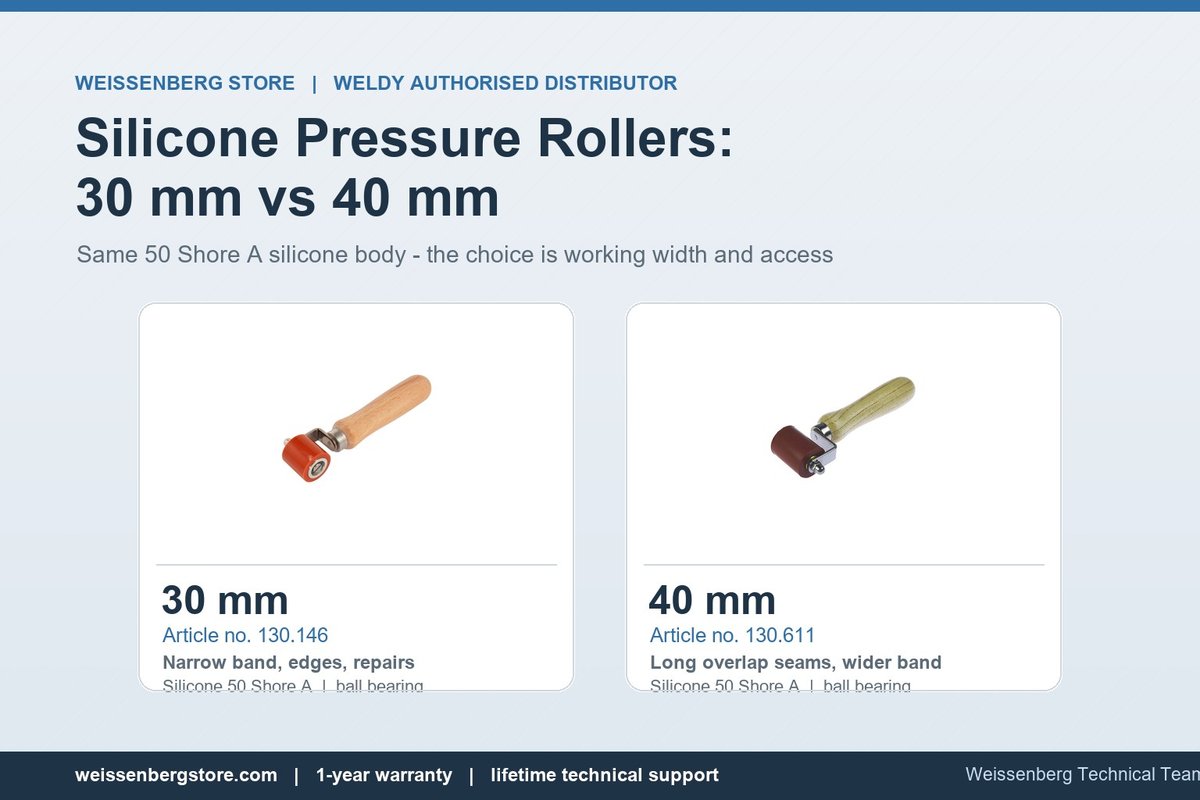
A hot air gun heats an overlap seam — it does not close it. The weld is finished by the roller that follows behind the nozzle, pressing the softened sheets together before they cool. The key specified difference between the two silicone rollers is working width: 30 mm versus 40 mm. Here is how to choose, from the Weissenberg Technical Team — 19+ years in plastic fabrication.
What a Pressure Roller Actually Does
The nozzle delivers heat until both surfaces soften. Heat alone leaves a joint full of trapped air; the roller closes the gap, pushes the air out and holds the sheets in contact while the polymer cools and sets. Silicone is used for the roll face because hot polymer releases from it cleanly and it does not mark the sheet the way a bare metal face can.
Timing and consistent pressure matter equally. Roll while the heated surfaces remain properly plasticized, and keep the pressure even along the weld zone so the seam consolidates correctly. Roll too late, or press unevenly, and the seam may not consolidate — the “zipper” defect that can separate later under load.
30 mm vs 40 mm: Same Silicone, Different Working Width
| Specification | 30 mm roller | 40 mm roller |
|---|---|---|
| Weldy article no. | 130.146 | 130.611 |
| Working width | 30 mm | 40 mm |
| Roll material | Silicone, 50 Shore A | Silicone, 50 Shore A |
| Bearings | Ball bearing | Ball bearing |
| Typical use | Narrow laps, edges, corners, patches | Long straight overlap seams, wider bands |
Because the roll material and the bearings are the same on both, there is no “better” roller — only the better roller for a given seam. Working width decides how much of the band you press at a time and how easily the roller stays on the weld.
The 30 mm Roller: Narrow Work and Tight Access

The 30 mm silicone pressure roller is the one for confined work: narrow overlaps, edge and corner details, small repair patches, reinforcing strips and pipe collars. A shorter face concentrates your hand pressure on a narrower band and is easier to keep inside a narrow lap, where a broader roller tends to wander off the bonded area onto cold, unbonded sheet. Keep one in the toolbox even if most of your work is wide — detail work is where hand welding usually goes wrong first.
The 40 mm Roller: Long Overlap Seams

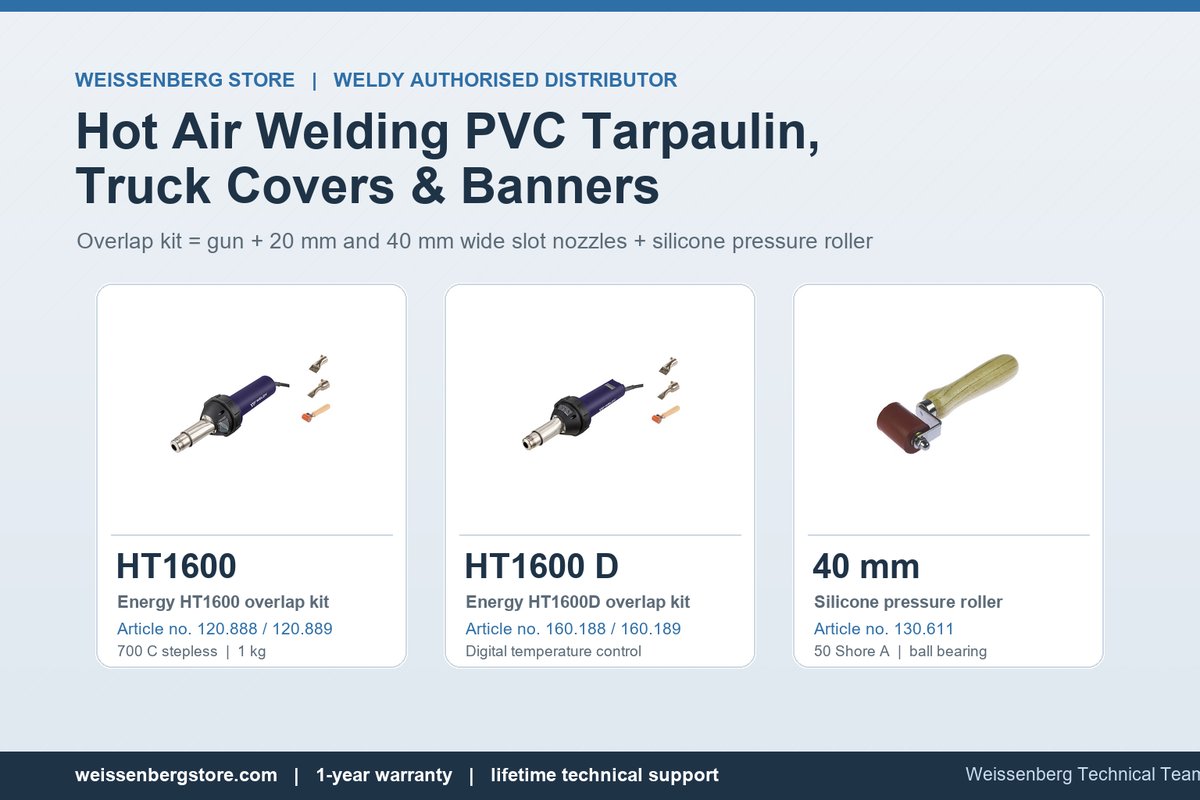
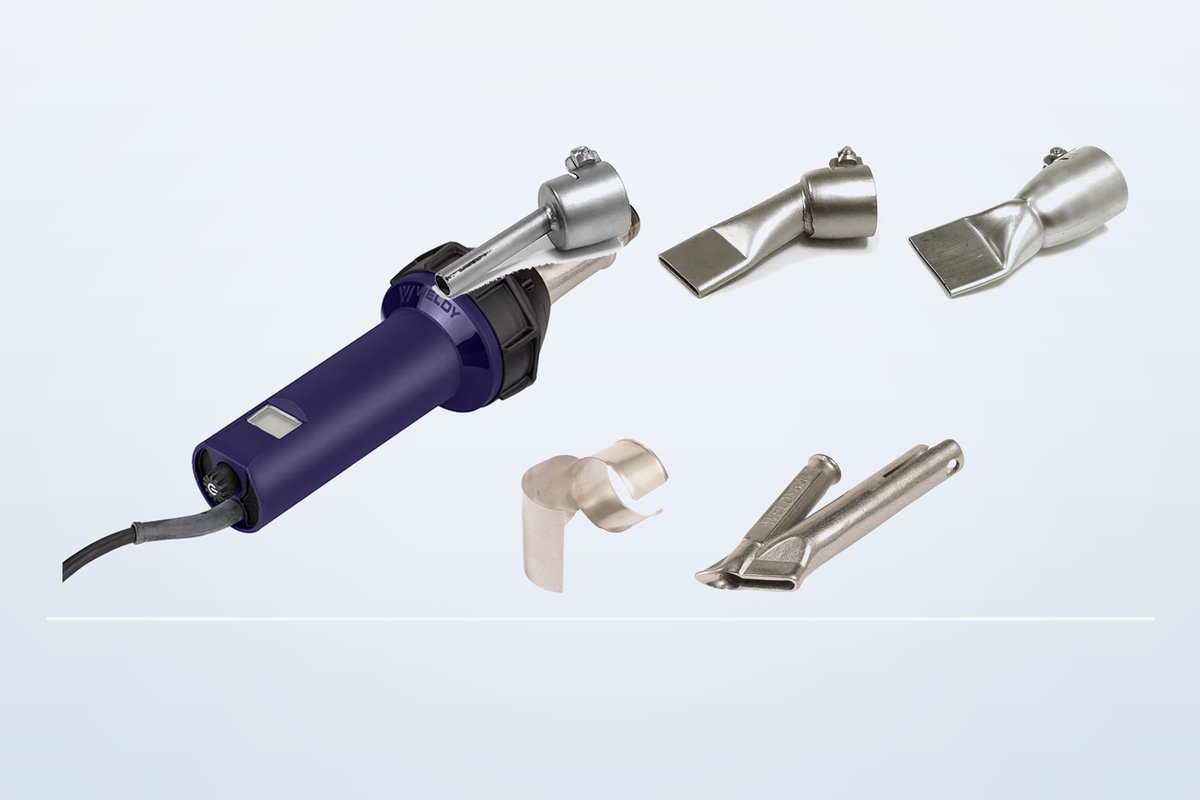
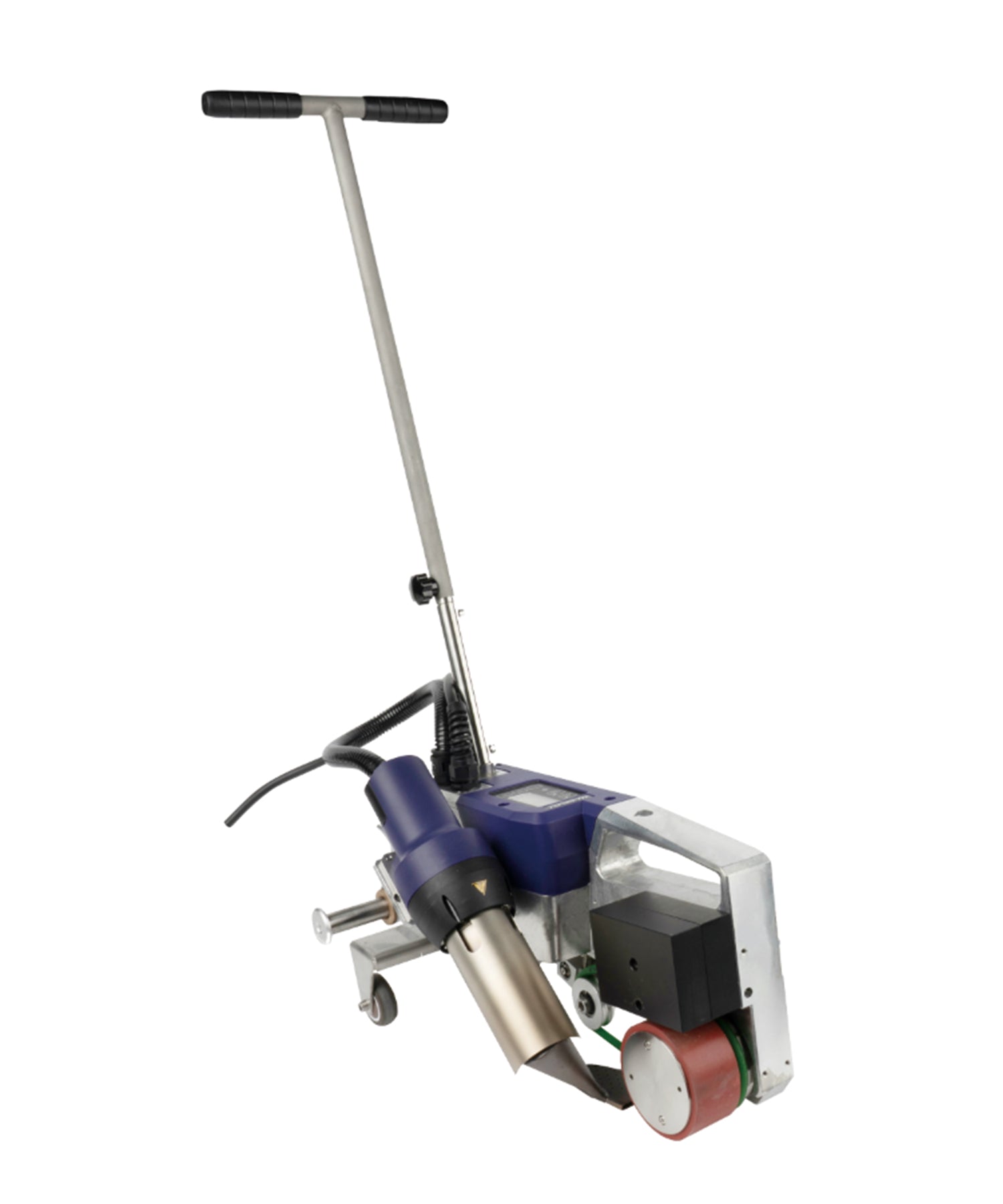
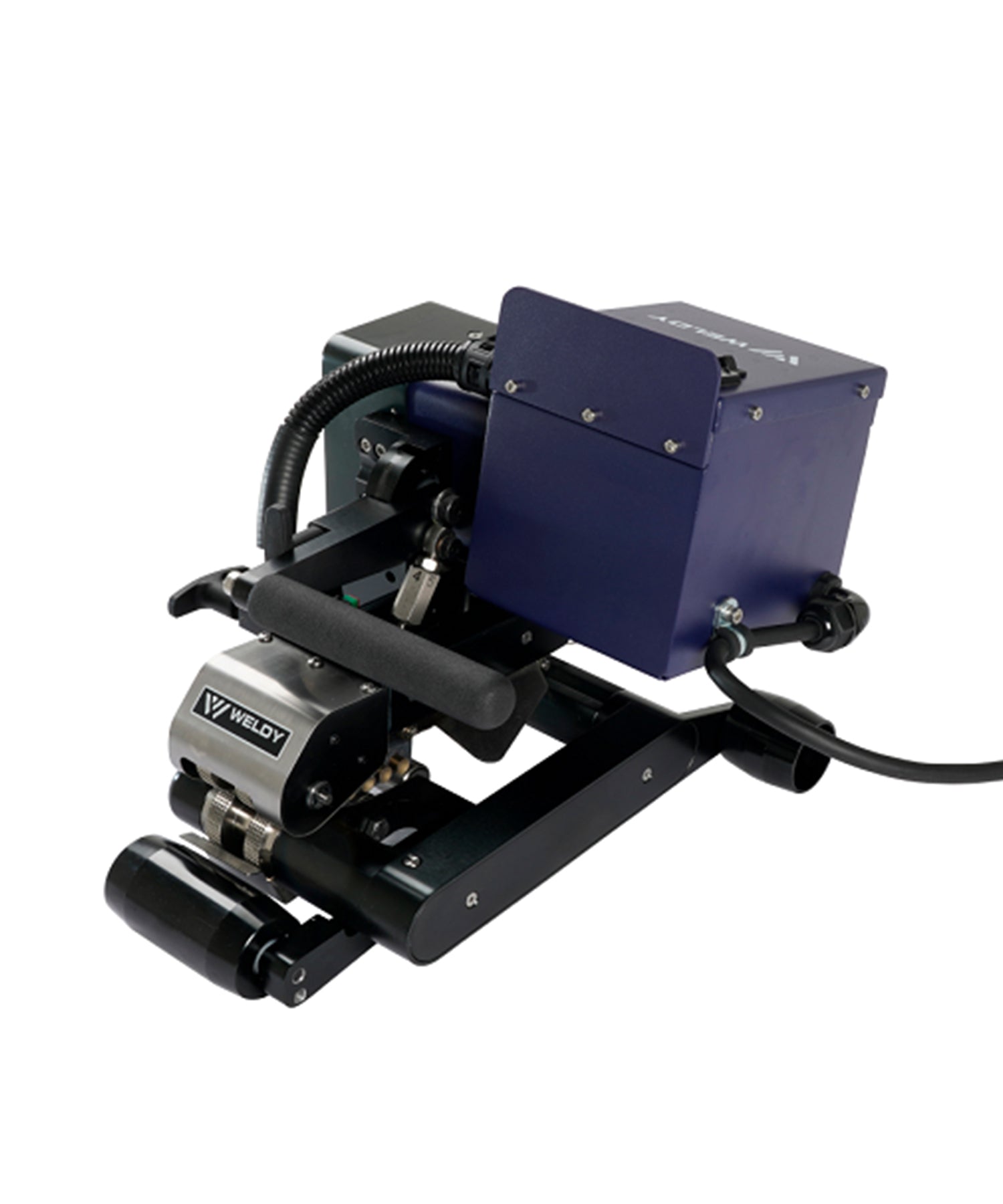
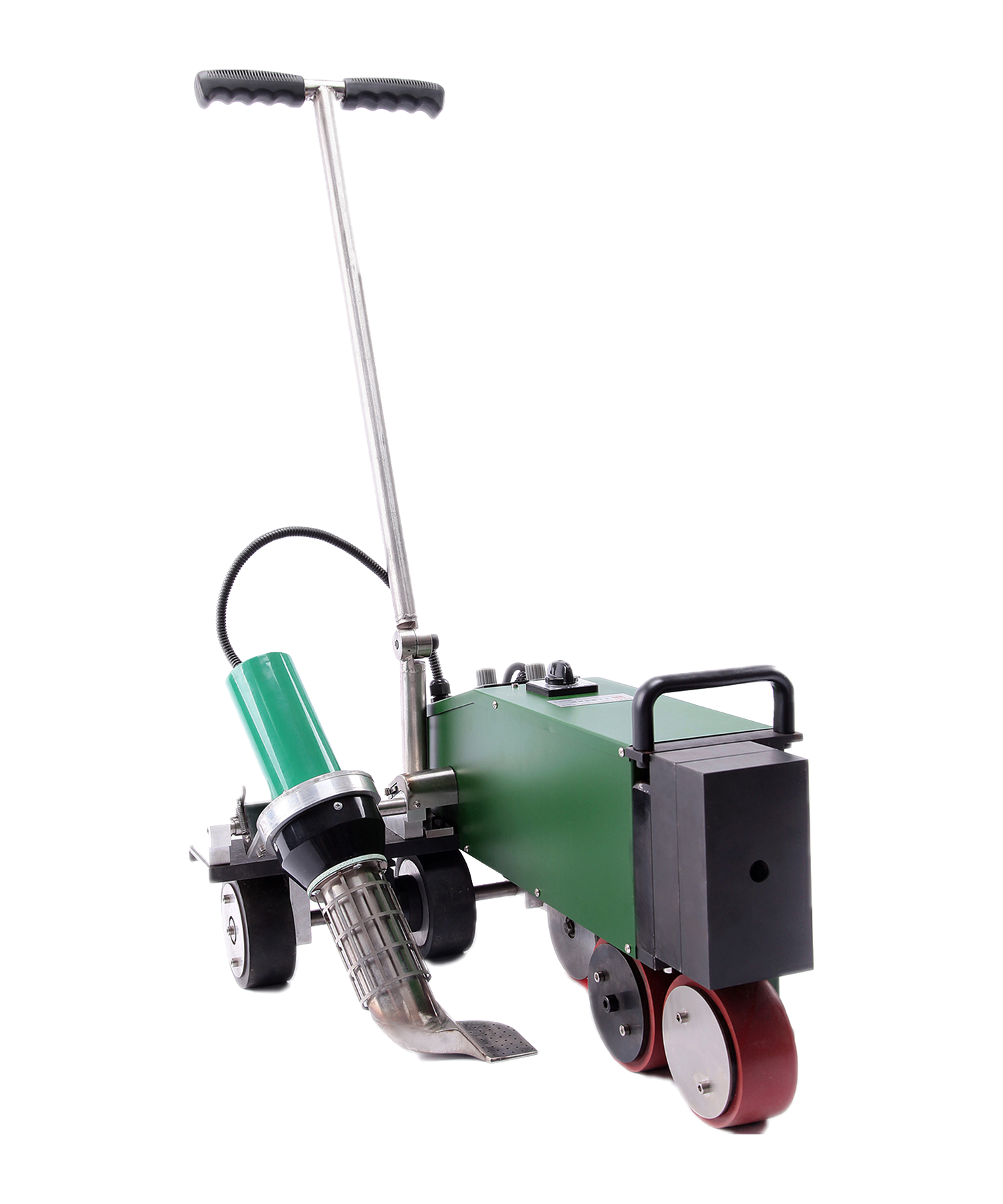
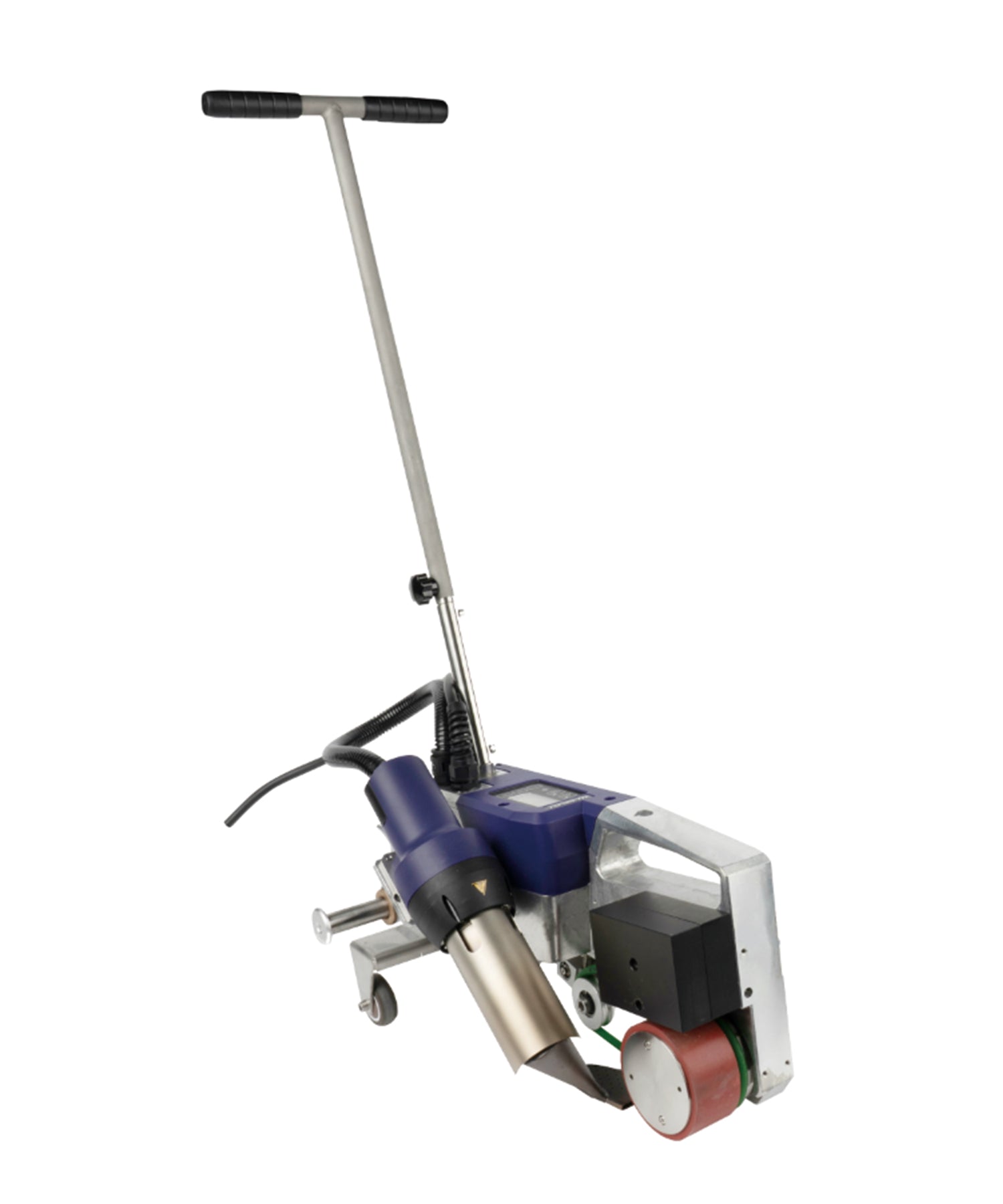
The 40 mm silicone pressure roller is the everyday production roller. With 40 mm of face you cover more of the seam per roll, follow a long lap with fewer strokes and steer straight more easily. Weldy’s Energy HT1600 and HT1600D overlap welding kits include this roller, article no. 130.611. Typical work runs from PVC and TPO roofing membranes to tarpaulins, truck covers, awnings, banners and pond liners.
Rolling Technique: Where Most Seams Are Lost
- Roll behind the nozzle, not after it. Keep the roller following close behind the nozzle so the seam is pressed while it is still hot.
- Keep the pressure even. Work at a steady speed and let the strokes pass over the full width of the lap so no part of the seam is missed.
- Keep it flat. Roll parallel to the seam; tilting it edge-loads one side of the lap.
- Work to your trial weld. Use the temperature, gun travel and roller pressure that your trial weld showed to suit this sheet.
Care and Inspection of a Silicone Roller
Inspect and clean the roll face before use and as needed — residue picked up on one job can transfer onto the next seam. Spin it before use: the bearing should turn freely and quietly, because a rough roller drags across the seam instead of pressing it. Replace it once the silicone has hardened, glazed or gone out of round.
Possible Causes of a Weak Overlap Seam
| Observation | Possible causes | Where to check |
|---|---|---|
| Bubbles or lifting along the seam edge | Pressure applied too late or too lightly; moisture or contamination in the lap; gun travel too fast for the sheet | Roller position and pressure; sheet cleanliness; gun travel speed |
| Glossy streaks or surface marks | Seam running too hot; roller pressed too hard; residue on the roll face | Temperature setting; roller pressure; roll face condition |
| Roller drags, squeals or wobbles | Worn or dirty bearing; damaged roll face; roller held at an angle to the seam | Spin test; roll face; roller angle |
| Seam looks smooth but separates under load | Seam not consolidated while hot; temperature or travel speed not suited to the sheet; lap narrower than the membrane manufacturer specifies | Timing of the roll; gun settings; specified overlap |
Confirm the Weld Before You Run the Seam
Make a trial weld on offcuts of the actual material, then evaluate the result against the membrane manufacturer’s instructions, the applicable welding procedure specification (WPS) and the project’s acceptance criteria. Those documents — not a rule of thumb — define the seam width, temperature and travel speed your job requires.
Choosing Your Plastic Welding Roller

For long overlap seams on membranes, tarpaulins or covers, order the 40 mm silicone pressure roller. For edges, corners, patches and narrow laps, add the 30 mm roller. Most workshops end up with both — they cover the two geometries you meet in a normal week.
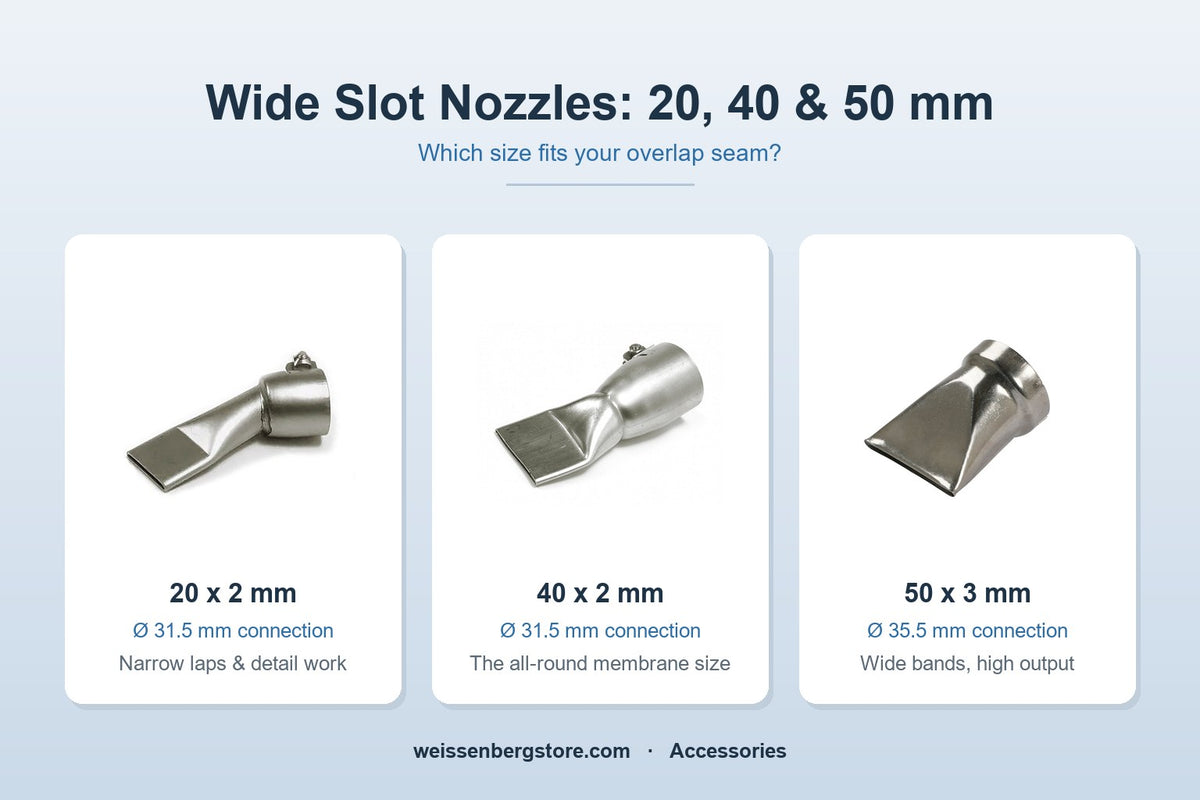
Both are genuine Weldy spare parts shipped by Weissenberg Store, the Weldy authorised distributor, and each carries our 1-year warranty with lifetime technical support. Still choosing the tool? Start with the Weldy Energy HT1600D or the hot air gun range, then use the plastic welding nozzle guide and the wide slot nozzle size guide to pair the right nozzle with your roller. Unsure which width suits your material and overlap? Send us the sheet type, thickness and lap width and we will tell you which roller to run.




Leave a comment
This site is protected by hCaptcha and the hCaptcha Privacy Policy and Terms of Service apply.