
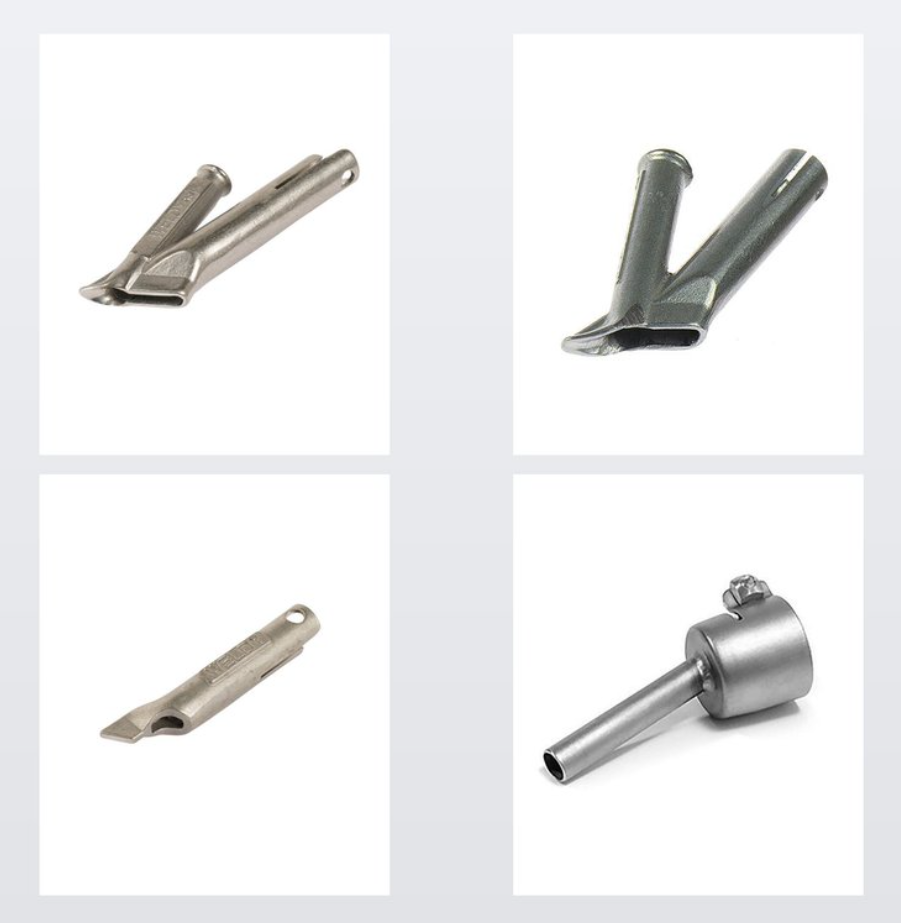
Rough, porous or under-filled HDPE/PP joints are rarely the gun's fault — they usually come from a speed welding nozzle that does not match the rod diameter. Weldy speed welding nozzles are sized to the Profile D filler rod they feed, and "4 mm or 5 mm?" is one of the most common speed welding nozzle sizes questions we answer. The rule is simple: let your joint and welding procedure decide the rod, then match the nozzle to the rod — and never force a 5 mm rod through a 4 mm nozzle.
What the "4 mm or 5 mm" Rating Actually Means
The number refers to the Profile D welding rod diameter the nozzle guides, not the air outlet. A speed (quick) welding nozzle is a push-fit collar that slides over the 5 mm tubular nozzle on the gun seat; its channel centres the rod at the right angle while hot air pre-heats joint and rod together. Fit the wrong rod and you get skidding, erratic melting and cold spots.
4 mm vs 5 mm at a Glance
| Nozzle (Profile D) | Weldy Part No. | Rod Diameter | Where It Shows Up |
|---|---|---|---|
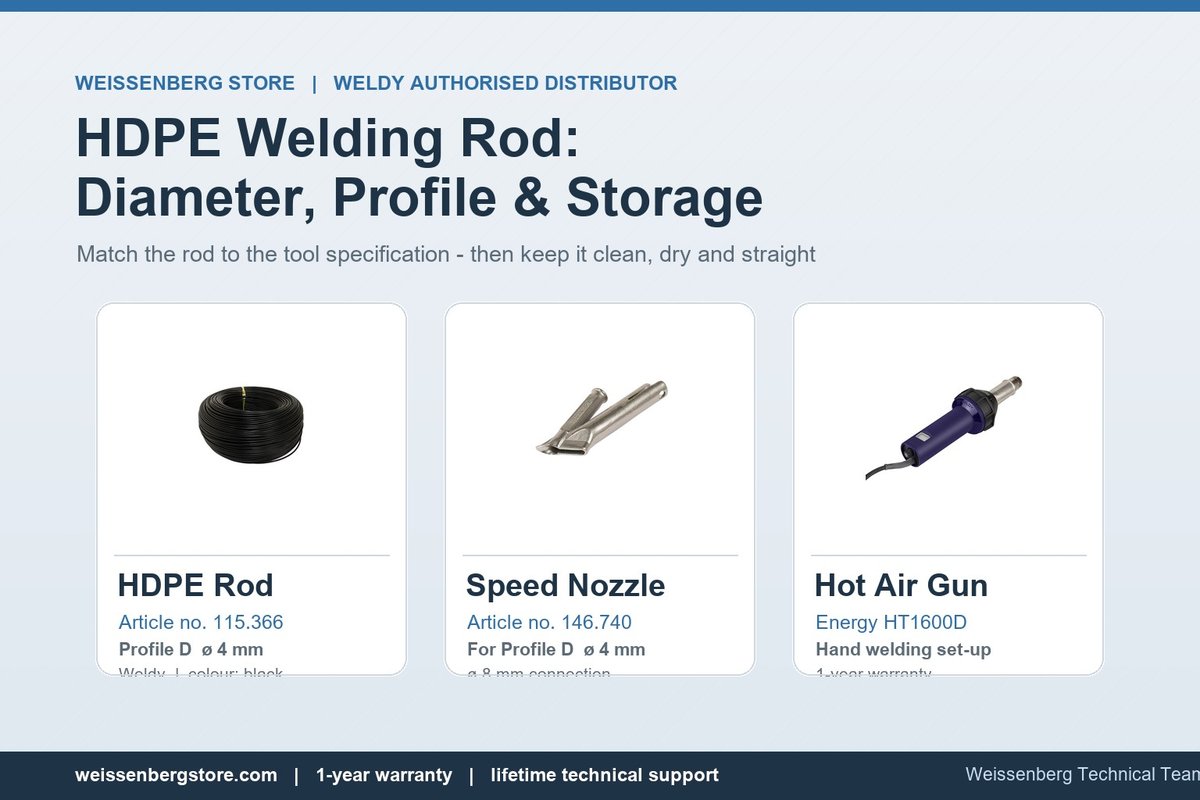
| Speed nozzle Ø 4 mm | 146.740 | Profile D Ø 4 | General tank, duct and liner fabrication |
| Speed nozzle Ø 5 mm | 125.315 | Profile D Ø 5 | Larger fillets and joints that need more filler |
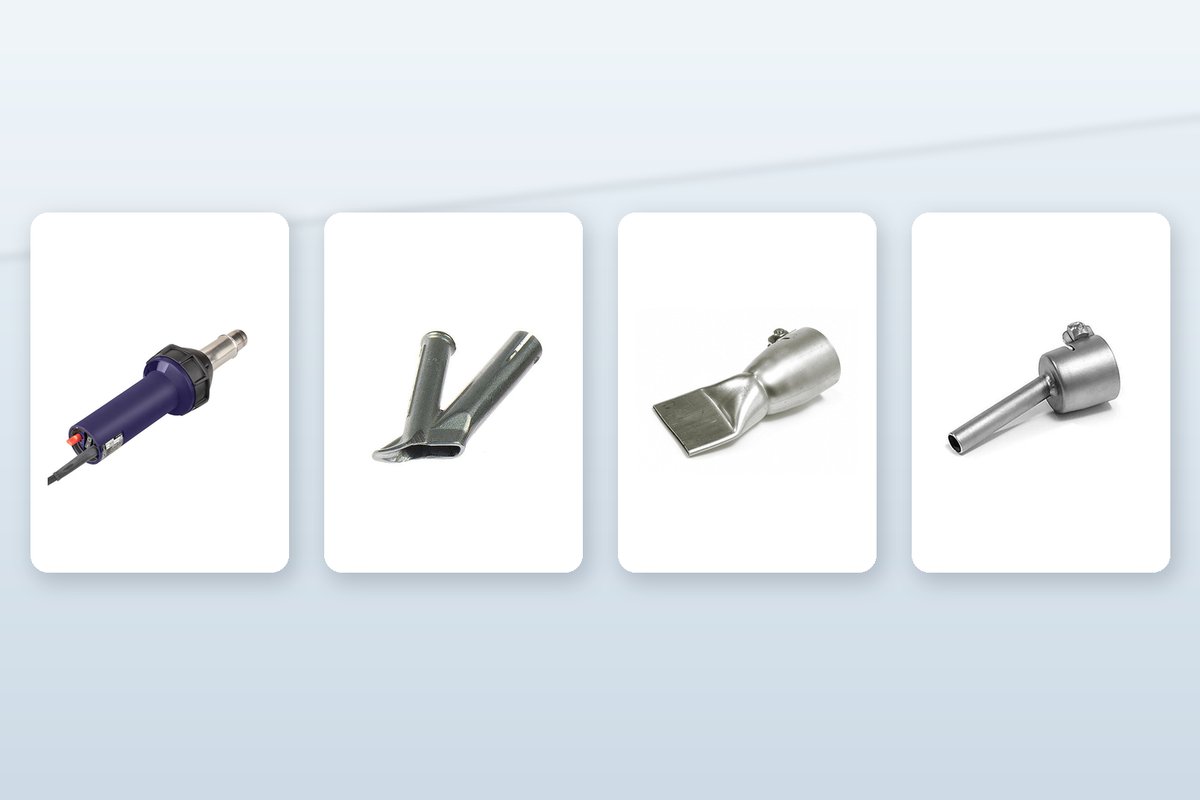
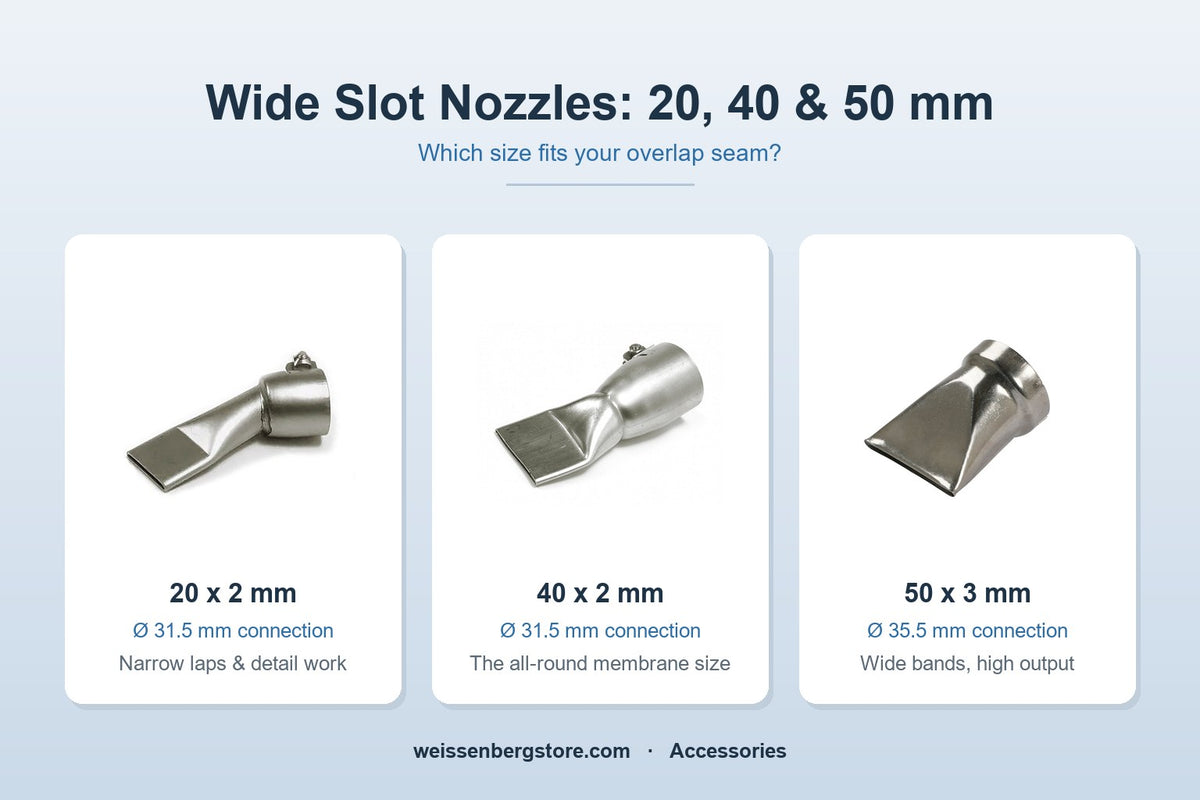
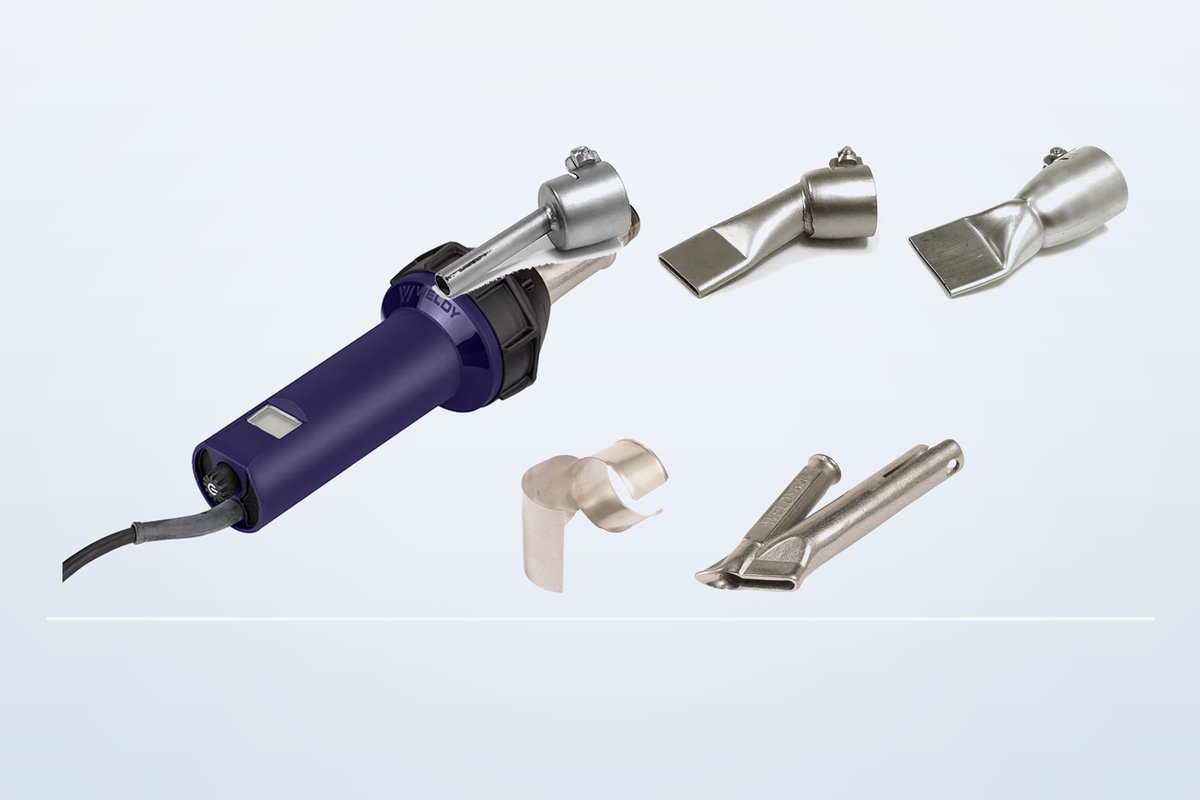
Both sizes use the same Ø 8.0 mm push-fit connection and mount on the 5 mm tubular nozzle (Weldy 147.250) — so one gun and one base nozzle cover both. Not sure where speed nozzles fit alongside wide-slot and tubular types? Start with our Plastic Welding Nozzle Guide: Speed vs Wide Slot vs Tubular Nozzles, then come back here to settle on 4 mm or 5 mm.
4 mm Speed Nozzle: The All-Rounder for Tanks and Fabrication
For fabricators whose day-to-day mix is HDPE/PP tanks, ducting and liners, the 4 mm speed welding nozzle (Weldy 146.740) is where most customers start — the joints these projects produce are usually filled cleanly and comfortably with a Profile D Ø 4 rod. Paired with a genuine HDPE welding rod Ø 4 mm, it is also the size we see on boat building, flexible tank work and aquaculture structures. If your welding procedure calls for a 4 mm rod, this is the nozzle for it.

5 mm Speed Nozzle: Higher Throughput on Thick Sections
When the joint design calls for more filler — thick tank floors, large fillet welds, pipe and tube welding — that is where the 5 mm speed welding nozzle (Weldy 125.315) earns its place. The Ø 5 rod simply puts more material down with each pass. Choose it when your welding procedure specifies a Profile D Ø 5 rod.

Selection Logic: Joint / WPS → Rod → Nozzle
- Read the joint first — your welding procedure specification or joint design (wall thickness, weld size, position) defines the filler volume, and that points you to the Profile D rod diameter.
- Then match the nozzle to the rod — a 4 mm rod takes the 4 mm Weldy speed nozzle, a 5 mm rod the 5 mm version. Never mix.
- Validate heat and speed on a scrap piece — you want a shiny, evenly melted bead with no charring before welding the real part.
Welding tip: hold parts in position first with a tacking nozzle (Weldy 147.248), then run the final speed-nozzle pass. Tack spacing should follow your welding procedure specification, not guesswork.
Compatibility Check Before You Order
Speed and tacking nozzles do not mount directly on the gun. The correct stack: hot air gun with a Ø 31.5 mm seat (Energy 1600 / HT1600 / HT1600D / Plus / HG-530-A class) → 5 mm tubular nozzle (147.250) → push-fit speed nozzle (Ø 8.0 mm collar). If your gun uses the larger Ø 50.0 mm connection (3400 W class), the stack differs — check the Accessories collection or ask us before ordering. Every genuine Weldy nozzle ships with our 1-year warranty and lifetime technical support.
FAQ: Speed Welding Nozzle Sizes
Can I weld a 5 mm rod with a 4 mm speed nozzle?
No. The rod will jam, skid and melt unevenly — always match the nozzle to the rod diameter.
Do I need a different gun for each nozzle size?
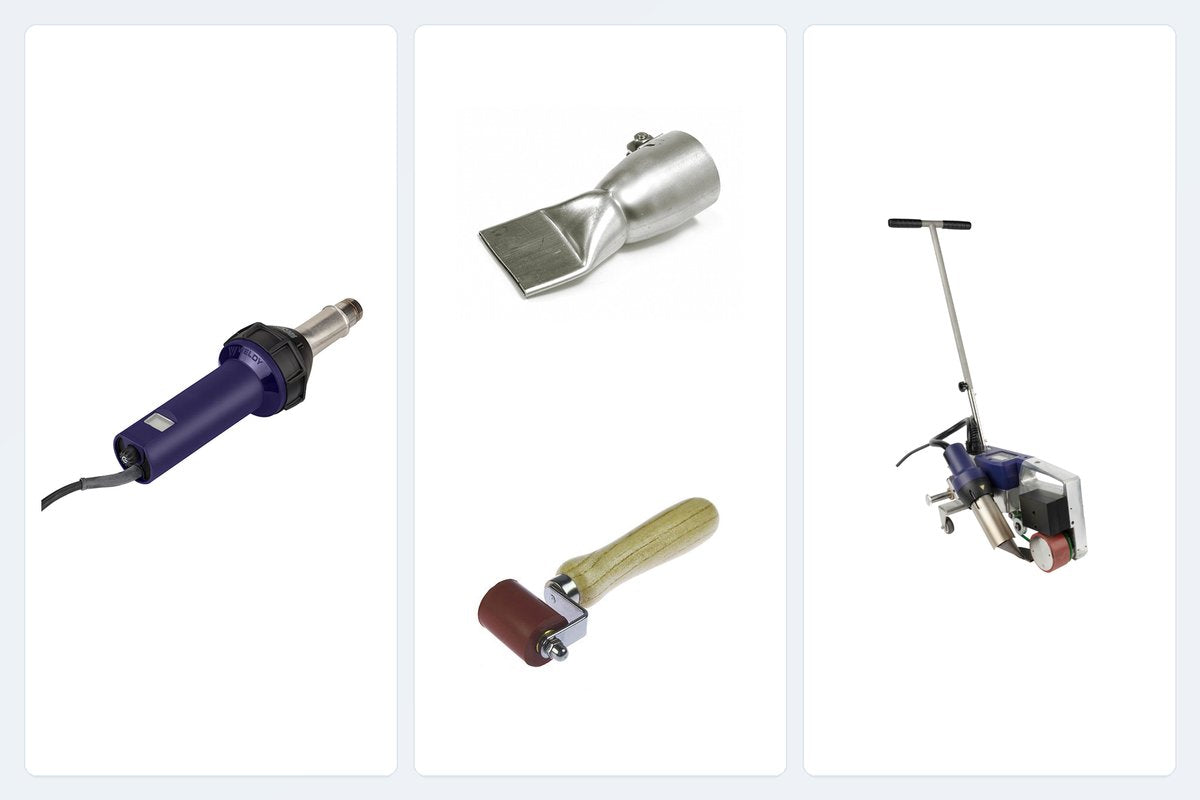
No. One hot air gun, one 5 mm tubular base nozzle, plus the push-fit speed nozzles for the rod sizes you use covers almost any hand-welding job. Browse the plastic welding tools range to build your kit.
Still unsure between 4 mm and 5 mm?
The decision belongs to your joint: check the wall thickness and weld size in your welding procedure to fix the rod, then choose the matching nozzle. For a workshop whose work is mostly general tank and liner fabrication, customers most often start with the 4 mm (146.740) — but tell our team your gun model and typical jobs and we will confirm the fit before you order.
Not sure which nozzle fits your gun?
Tell our team your gun model and rod size — we will confirm the correct speed welding nozzle before you order.
Shop Nozzles & Accessories · Contact Online Service at weissenbergstore.com
19+ years in plastic welding equipment. Authorized Weldy distributor and manufacturer of the RYG, RYH, RYA, CONDOR, HAWK and GOPHER lines, built to the same quality standard.




Leave a comment
This site is protected by hCaptcha and the hCaptcha Privacy Policy and Terms of Service apply.